
Improving observational skills Math Worksheets for Ages 8-9
3 filtered results
Difficulty Level
Grade
Age
-
From - To
Subject
Activity
Standards
Enhance your child's learning experience with our "Improving Observational Skills Math Worksheets" designed specifically for ages 8-9. These engaging worksheets focus on developing critical observational skills through fun, interactive math problems. Students will practice identifying patterns, making comparisons, and analyzing data, all while strengthening their foundational math abilities. Each worksheet is thoughtfully created to capture your child's attention and encourage a love for learning. Perfect for in-class activities or homework, these resources foster independent thinking and problem-solving skills. Download and print our worksheets today to help your child excel in observational math skills while having fun!
Favorites
With answer key
Interactive
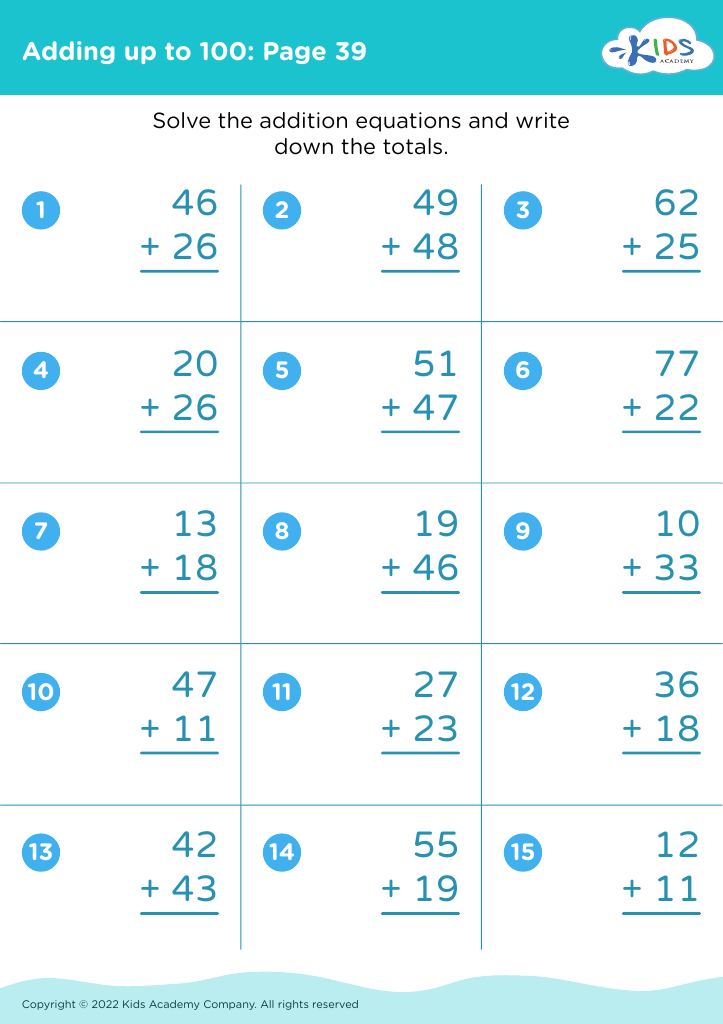
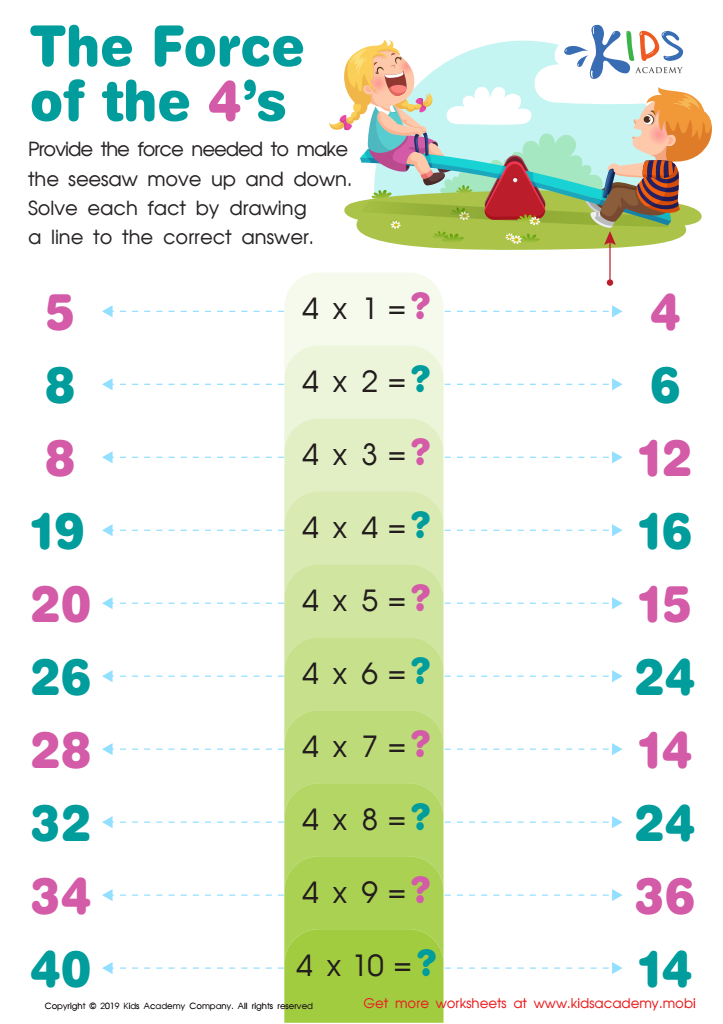
The Force of the 4's Worksheet
Ride a seesaw with your child and explore the physics behind it! Explain how it needs two people and how force makes it go up and down. Use the memories of the pleasurable experience to teach your kid a lesson in force. Show them how to solve the worksheet by drawing a line to the correct answer. This way, they'll learn the force needed for the seesaw to move.
 Assign to My Students
The Force of the 4's Worksheet
Worksheet
Join Kids Academy for Free
Who is primarily going to use this learning content?







Improving observational skills in math for children aged 8-9 is crucial for their overall development and understanding of mathematical concepts. At this stage, children's cognitive abilities are rapidly maturing, allowing them to absorb and apply new skills effectively. Observational skills enable children to notice patterns, make connections, and analyze data, which are fundamental for problem-solving and critical thinking.
Parents and teachers should prioritize cultivating these skills, as they directly contribute to a child's ability to grasp more complex math concepts, such as fractions, measurement, and geometry. By enhancing observational skills, children learn to observe details and relationships, which helps them in identifying and applying mathematical concepts in everyday situations.
Moreover, fostering strong observational skills can make math more engaging and enjoyable for children. When they learn to explore and observe their surroundings, they develop a natural curiosity that transforms abstract concepts into tangible experiences. This, in turn, can lead to improved confidence in their math abilities and a more positive attitude toward learning. Investing in observational skills today can pave the way for a lifetime of achievement in mathematics and higher-level cognitive skills. Thus, parents and teachers play a pivotal role in nurturing these essential abilities.








