Mental arithmetic skills Math Worksheets for Ages 8-9
4 filtered results
-
From - To
Develop your child’s mental arithmetic skills with our specially designed math worksheets for ages 8-9. These worksheets from Kids Academy offer engaging exercises that enhance mental math abilities, focusing on addition, subtraction, multiplication, and division. By practicing with our fun, age-appropriate materials, children can improve their numerical fluency, problem-solving speed, and overall confidence in math. Suitable for students seeking extra practice or a refreshing challenge, these worksheets are an excellent resource for parents and teachers to support the development of essential arithmetic skills in young learners. Unlock your child’s math potential today!
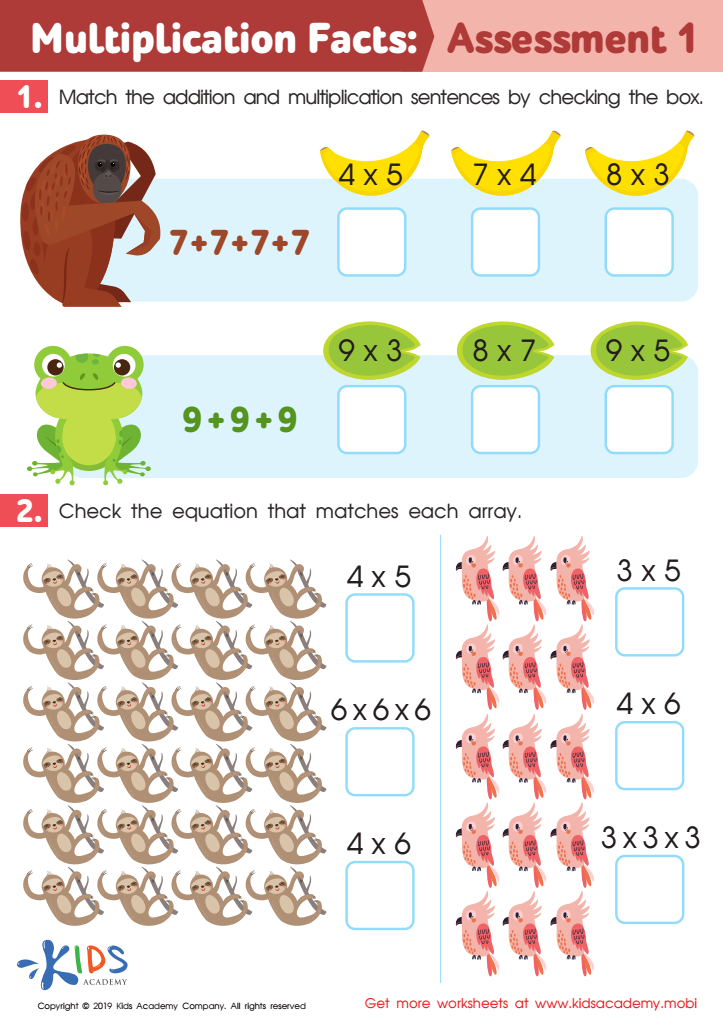
Multiplication Facts: Assessment 1 Worksheet
 Assign to My Students
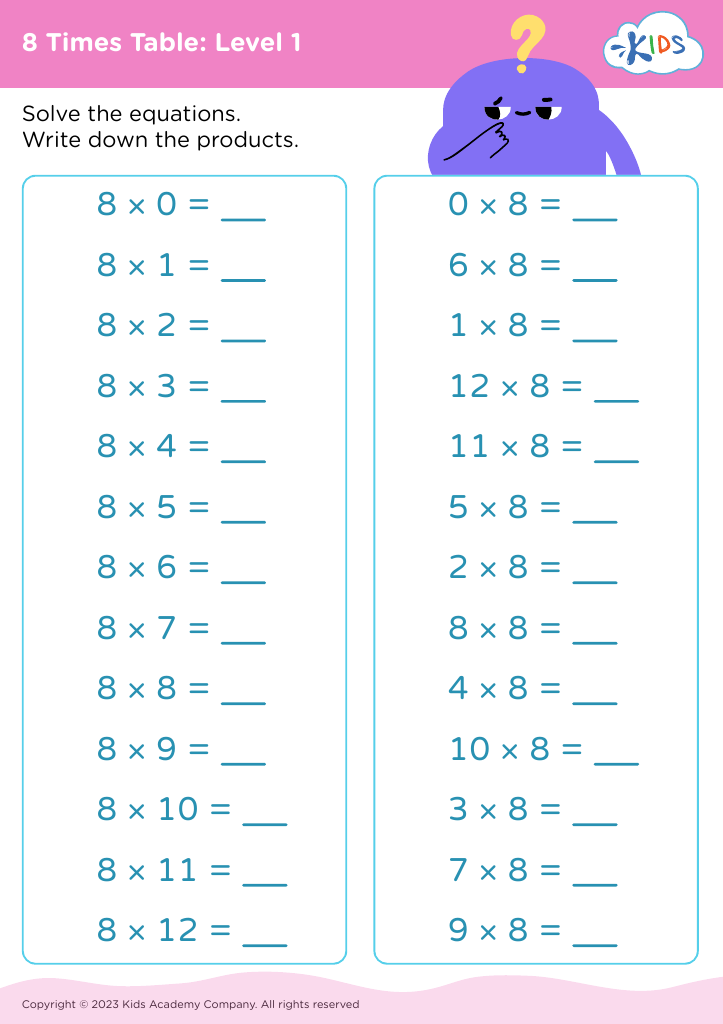
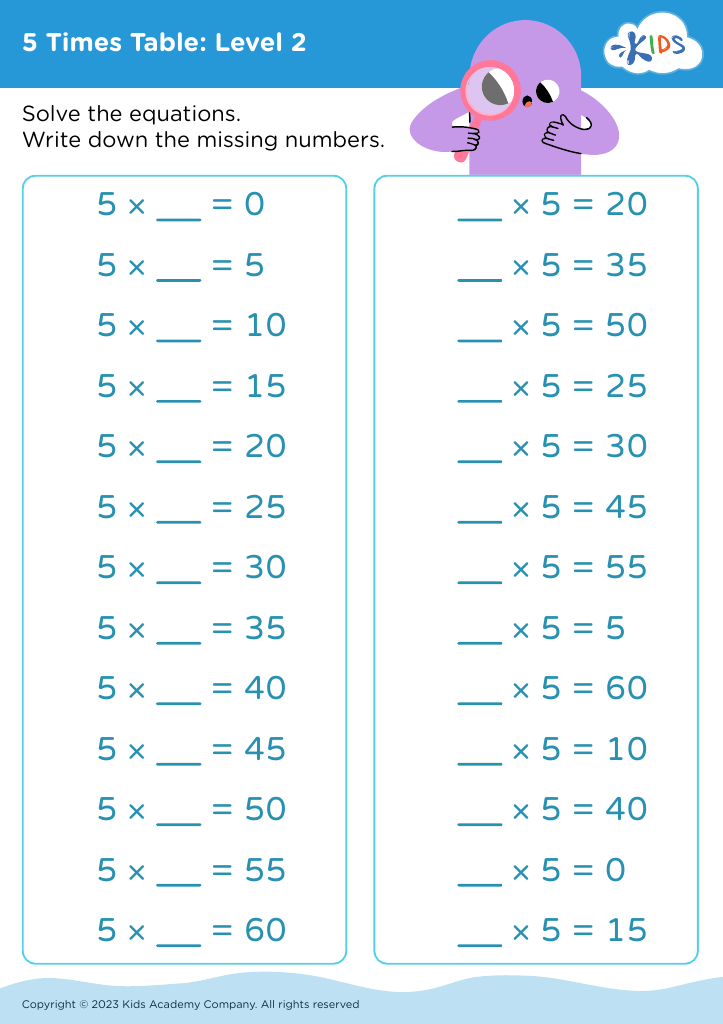
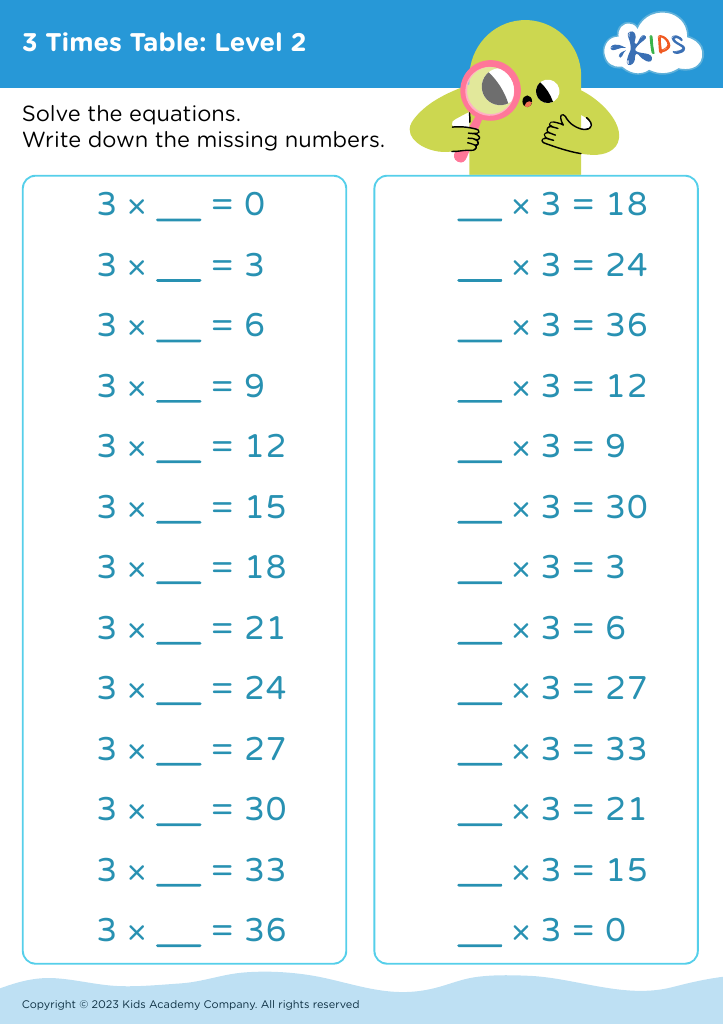








Developing mental arithmetic skills in children aged 8-9 years is crucial for several reasons. First, it enhances cognitive abilities such as problem-solving, logical reasoning, and working memory. These are foundational skills not just in mathematics, but in daily life. Kids who can perform mental math quickly are often better at subjects beyond math, including science and reading comprehension, due to improved focus and analytical skills.
Secondly, mental arithmetic builds confidence. When children can solve math problems without paper or a calculator, they gain a sense of accomplishment. This self-assurance can increase their overall enthusiasm for learning and encourage them to tackle more challenging subjects and tasks with a positive mindset.
Additionally, strong mental arithmetic skills lay an essential groundwork for advanced mathematical concepts they will encounter later in their academic journey. By making these processes second nature, children are able to understand fractions, algebra, and geometry more easily in middle and high school.
Finally, practical applications are many: from making quick calculations on the fly, like estimating the total cost while shopping or dividing up a bill at a restaurant, to managing time efficiently. For these reasons, both parents and teachers should prioritize mental arithmetic skills, fostering not only academic excellence but a versatile and empowered mind.








