Mental math improvement Math Worksheets for Ages 8-9
6 filtered results
-
From - To
Unlock your child's math potential with our Mental Math Improvement Worksheets designed for ages 8-9. Tailored to enhance arithmetic skills, these engaging printables focus on quick calculations, number fluency, and problem-solving practice. Whether it's addition, subtraction, multiplication, or division, our expertly crafted worksheets help students build confidence and speed. Ideal for at-home practice or classroom use, each worksheet is created to challenge and motivate young learners, making math both fun and educational. Strengthen your child's mental math abilities today and watch their confidence grow with our top-tier resources at Kids Academy!
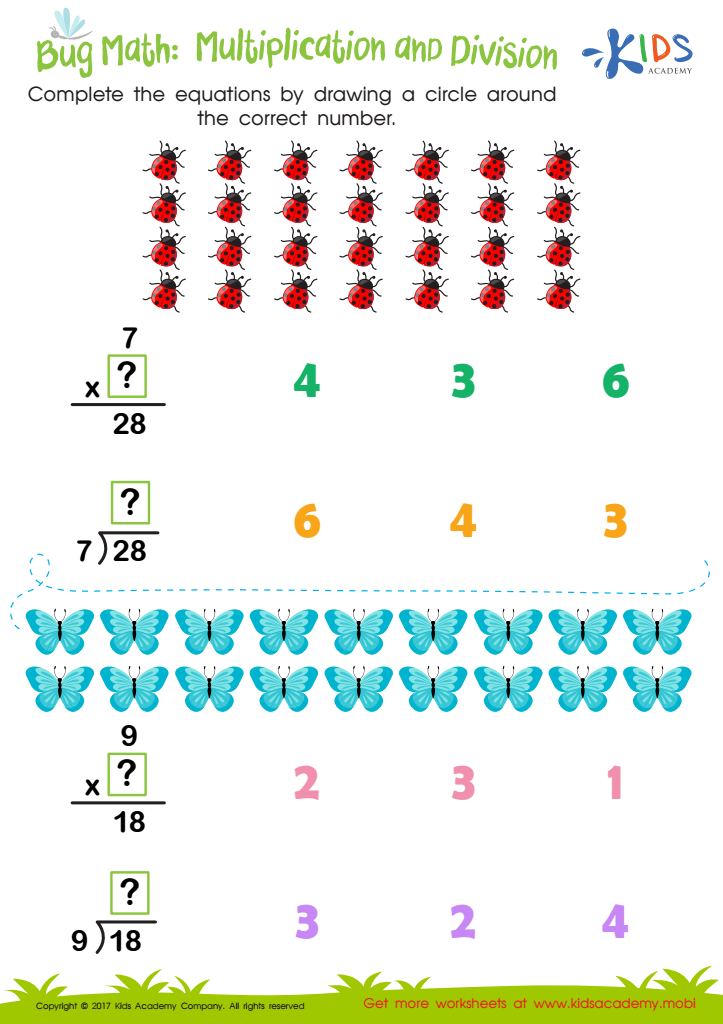
Multiplication and Division Worksheet
 Assign to My Students
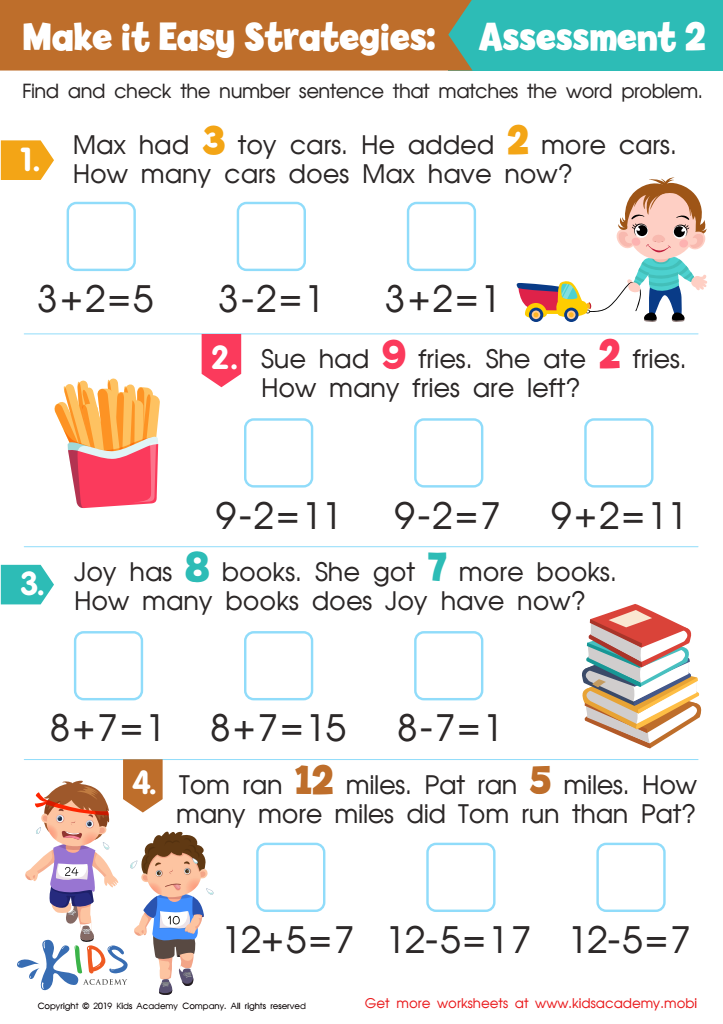
Make it Easy Strategies: Assessment 2 Worksheet
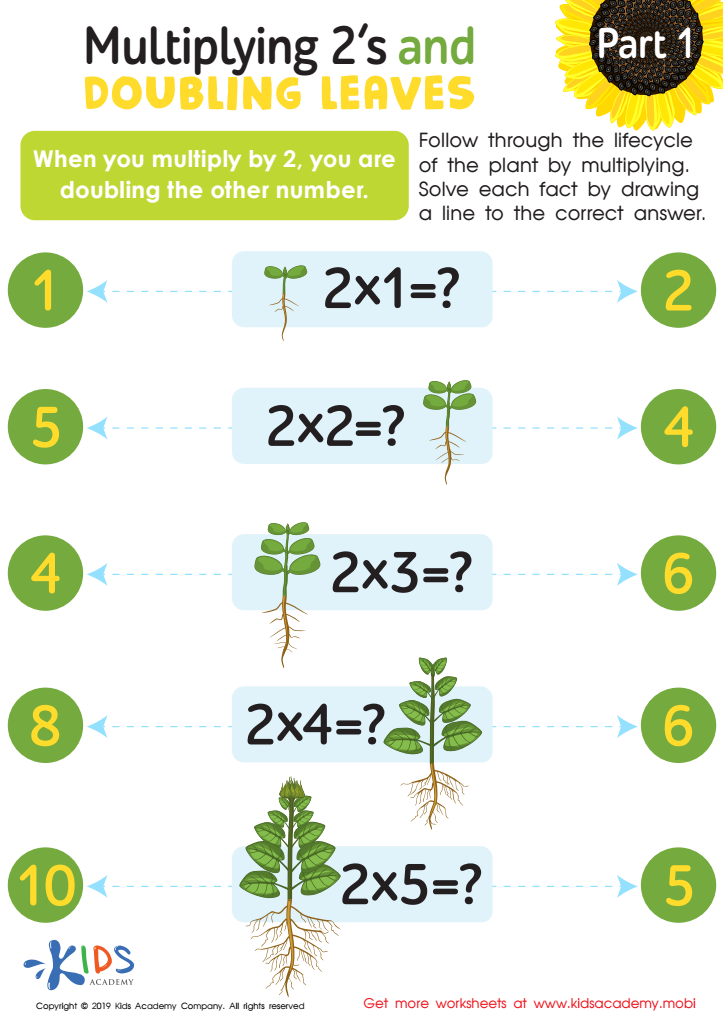
Multiplying 2’s and Doubling Leaves Part 1 Worksheet
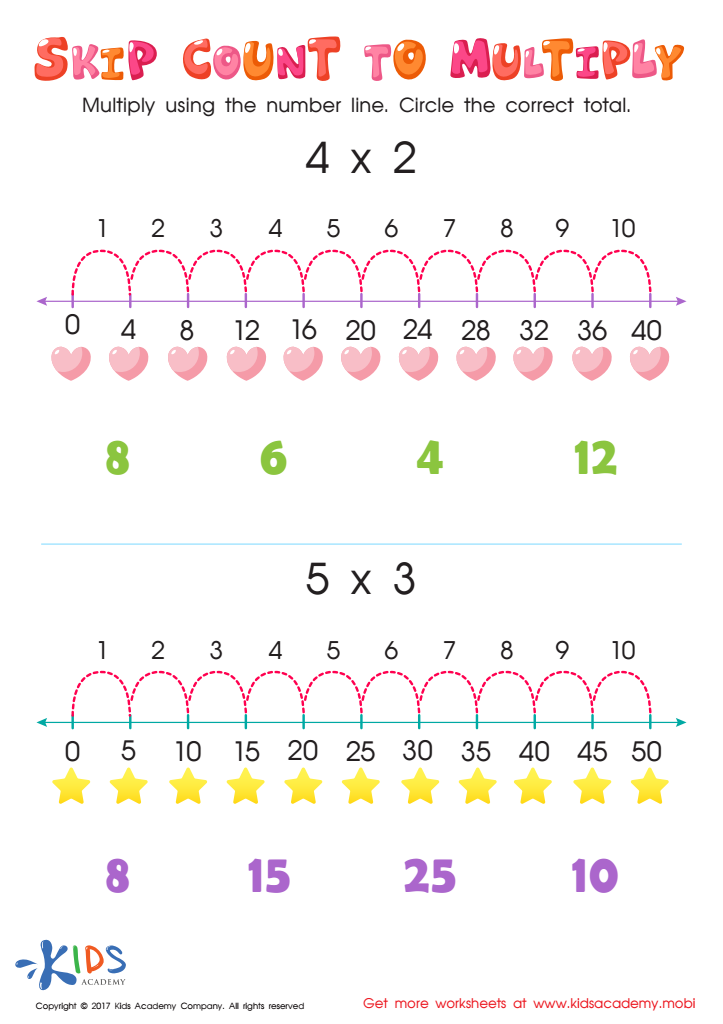
Skip Count Multiplication Worksheet
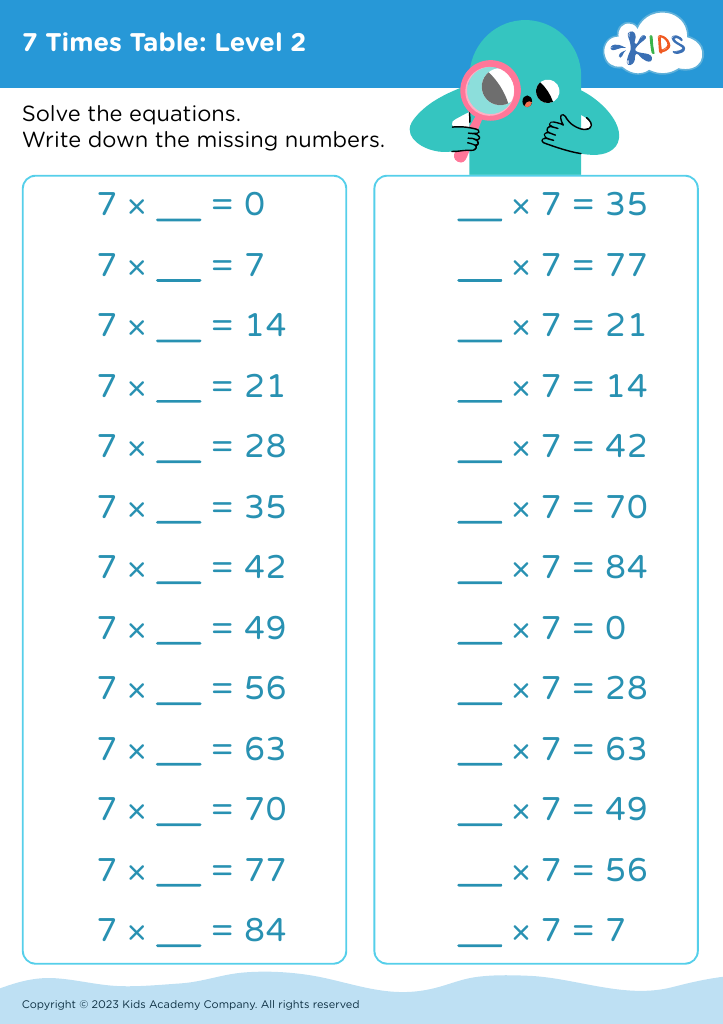
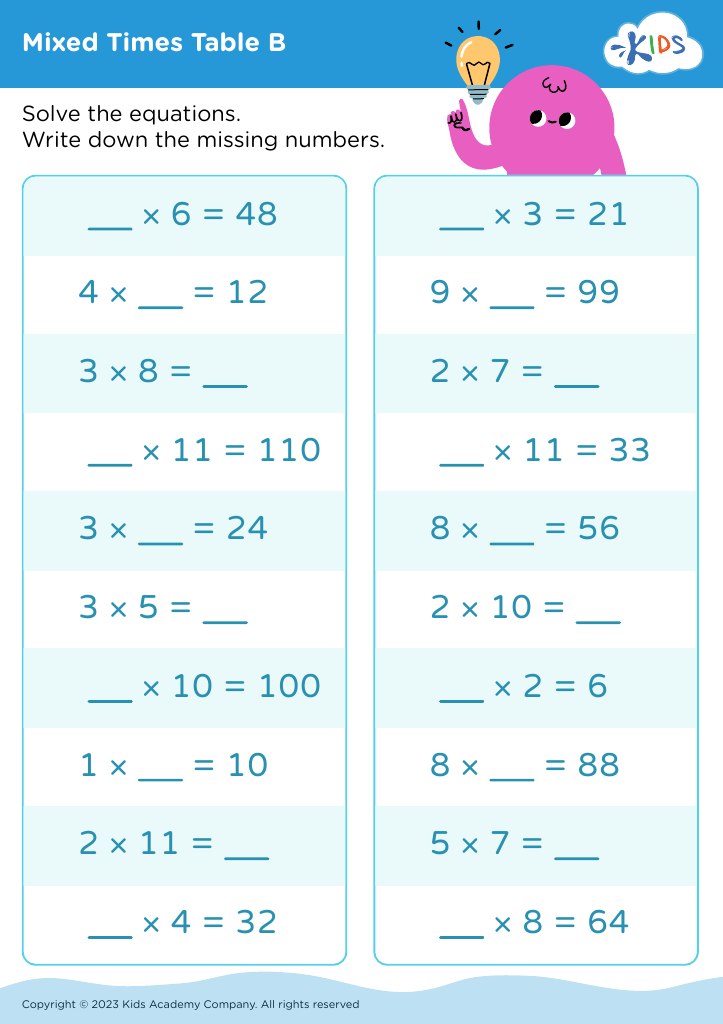








Parents and teachers should prioritize mental math improvement for children aged 8-9 for several important reasons. First, developing strong mental math skills enhances a child’s overall mathematical fluency, enabling them to quickly and accurately solve everyday problems. This fluency fosters confidence, reducing math-related anxiety and promoting a positive attitude toward the subject.
Mental math also strengthens cognitive abilities including memory, logical thinking, and problem-solving skills, which are foundational for future academic success. Children who practice mental math regularly develop faster thinking speeds, giving them an edge in timed tests and quick decision-making situations.
Moreover, early proficiency in mental math prepares students for more complex mathematical concepts they will encounter in later years. It lays the groundwork for algebra, geometry, and higher-level math by establishing a solid understanding of numbers and their relationships.
In a practical sense, mental math equips children with life skills they will use daily, such as making quick calculations while shopping, budgeting, and managing time effectively.
Overall, investing in mental math at an early age is crucial. It not only builds a strong mathematical foundation but also promotes intellectual growth, helping children become more self-assured and versatile learners. Hence, fostering these skills is invaluable in both academic and real-world contexts.








