
Pattern recognition Math Worksheets for Ages 8-9
8 filtered results
Difficulty Level
Grade
Age
-
From - To
Subject
Activity
Standards
Explore our engaging Pattern Recognition Math Worksheets designed specifically for children ages 8-9. These interactive resources help young learners develop critical thinking and problem-solving skills by identifying and analyzing patterns in various mathematical contexts. From visual sequences to numerical series, our worksheets provide a comprehensive approach that fosters creativity and enhances cognitive abilities. Ideal for classroom use or at-home learning, these worksheets are easy to print and align with educational standards. Encourage your child’s mathematical journey and assist them in mastering crucial concepts through fun, challenging activities that make math enjoyable. Begin nurturing their pattern recognition skills today!
Favorites
With answer key
Interactive
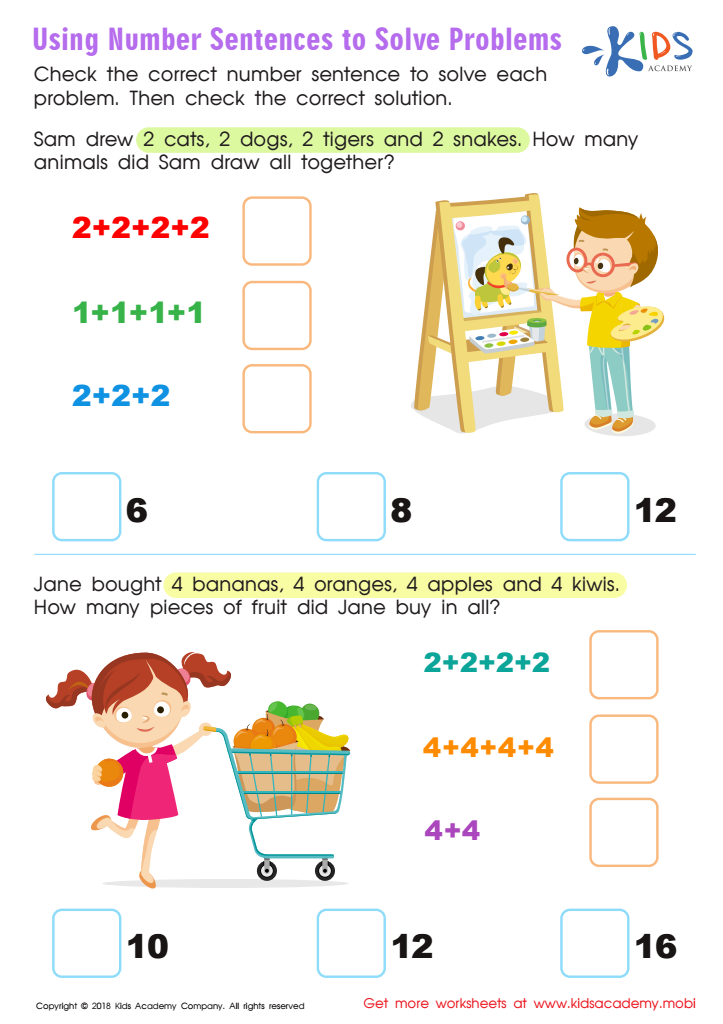
Using Number Sentences to Solve Problems Worksheet
Solving math problems requires an efficient strategy. Picture representation can help young mathematicians with basic addition problems, especially when it involves repeated addends. As they gain confidence, they'll be able to apply their number sentence solving abilities to more complex equations.
 Assign to My Students
Using Number Sentences to Solve Problems Worksheet
Worksheet
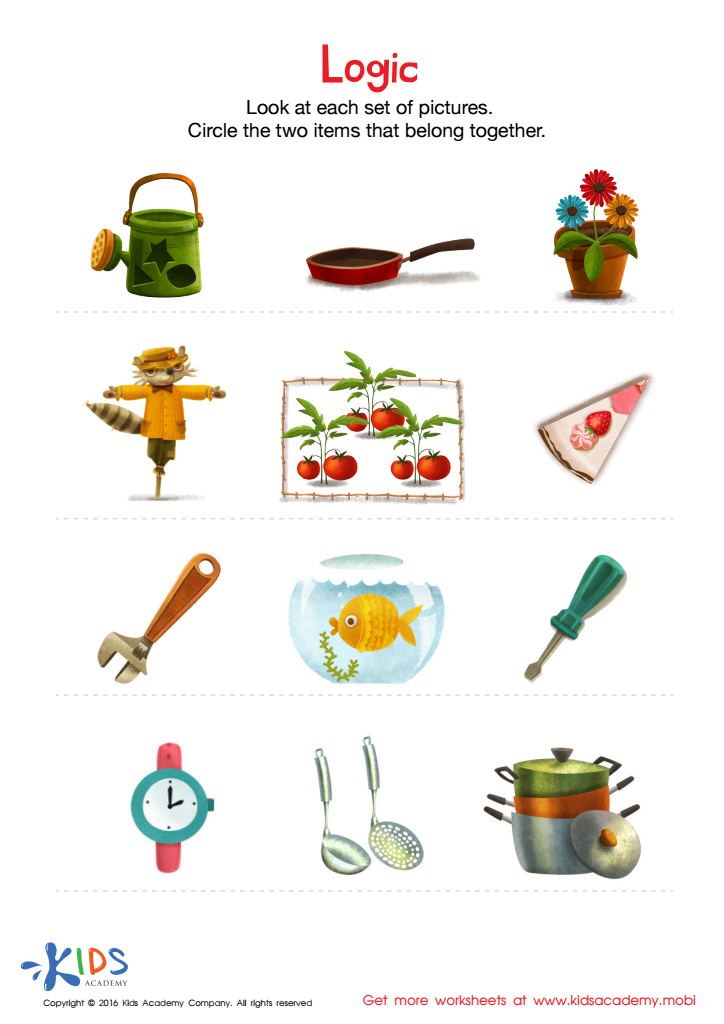
Logic Game Sorting Worksheet
Start your child's logic and reasoning development early with this fun matching worksheet! Through cute images and simple conversations, your little one can learn problem-solving, categorization, and matching skills. Plus, it's a great way for children to explore how items are used in real life. Try it and watch them boost skills with ease and fun!
Logic Game Sorting Worksheet
Worksheet
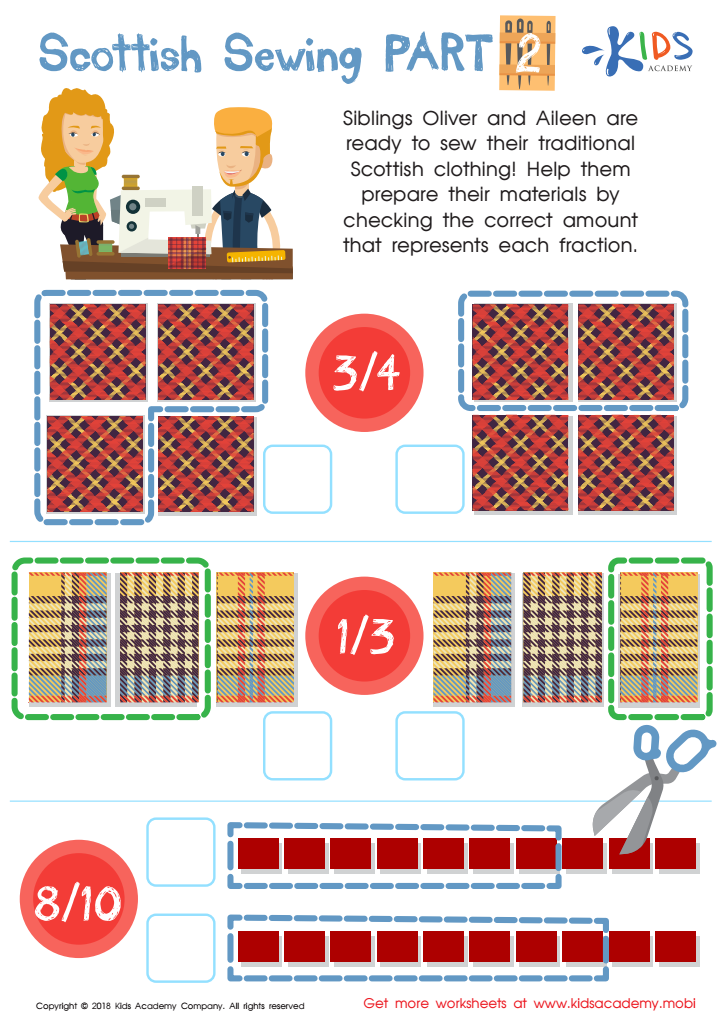
Scottish Sewing Part 2 Worksheet
Oliver and Alleen are sewing traditional Scottish attire. Help your kids count the cloth and check the correct fraction to support them. Have your kids check the correct amount that represents each fraction to help the brother-sister duo prepare their material.
Scottish Sewing Part 2 Worksheet
Worksheet
Join Kids Academy for Free
Who is primarily going to use this learning content?





Pattern recognition is a crucial aspect of mathematical understanding for children aged 8-9. During this stage, students begin to transition from concrete thinking to more abstract reasoning. Understanding patterns allows children to identify relationships between numbers and shapes, fostering their problem-solving skills and enhancing logical thinking.
Parents and teachers should care about pattern recognition because it forms the foundation for higher-level math concepts, such as algebra and geometry. As children learn to identify and create patterns, they develop essential skills that promote critical thinking and reasoning. This skill set not only aids in mathematics but also transfers to other subjects and real-life situations, helping children recognize trends and make predictions.
Moreover, engaging children in pattern recognition activities can boost their confidence in math. When students discover patterns, they gain a sense of accomplishment, motivating them to explore more complex concepts. Providing a supportive environment where children can experiment and discuss patterns empowers them academically and fosters a lifelong love for learning. In essence, prioritizing pattern recognition in math education equips children with valuable skills for their academic journey and everyday life.








