
Practical application Math Worksheets for Ages 8-9
6 filtered results
Difficulty Level
Grade
Age
-
From - To
Subject
Activity
Standards
Discover the ultimate resource for mastering essential math skills with our practical application math worksheets for ages 8-9! These engaging printables make learning fun by connecting mathematical concepts to real-world scenarios, enhancing problem-solving abilities and critical thinking. Perfectly tailored for third graders, our worksheets cover a wide range of topics, including time, money, measurements, and data interpretation. Each exercise encourages hands-on practice, fostering a deeper understanding and boosting confidence in young learners. Ideal for both classroom and homeschooling environments, our worksheets ensure that math becomes a favorite subject through practical and interactive learning experiences.
Favorites
With answer key
Interactive
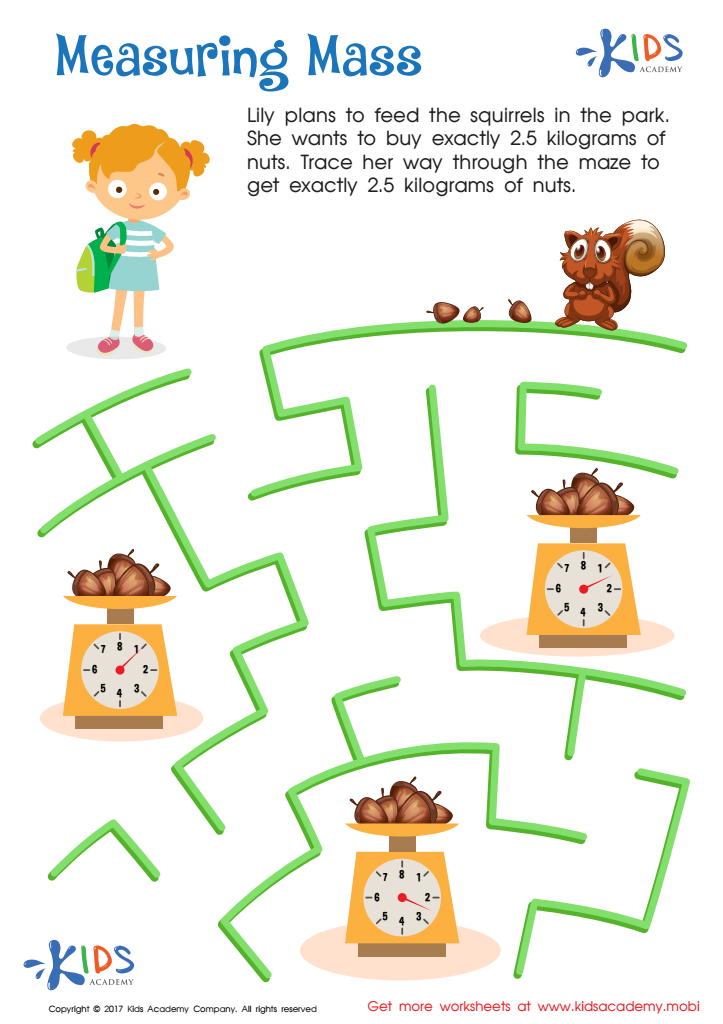
Measuring Mass Worksheet
Lily needs your child's help to find the right number of nuts to feed the squirrels. Ideal for 3rd grade!
 Assign to My Students
Measuring Mass Worksheet
Worksheet
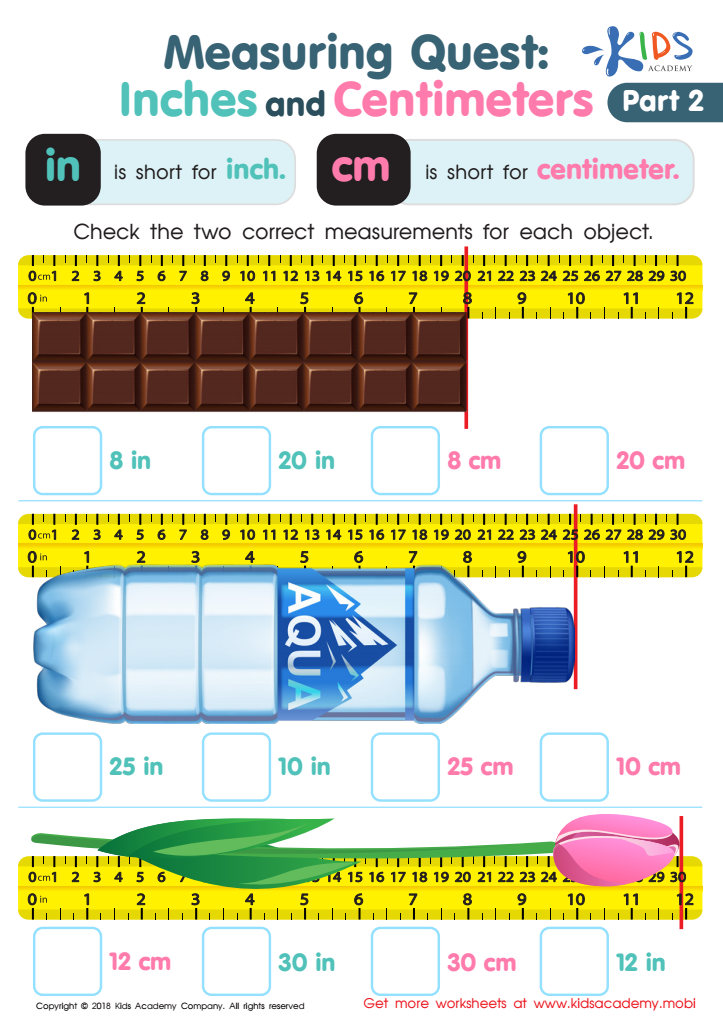
Measuring Quest: Inches and Centimeters - Part 2 Worksheet
This worksheet teaches kids how inches and centimeters measure up. It features rulers with centimeter measurements at the top, and inches at the bottom. Kids must choose the correct measurement for each object among the options provided.
Measuring Quest: Inches and Centimeters - Part 2 Worksheet
Worksheet
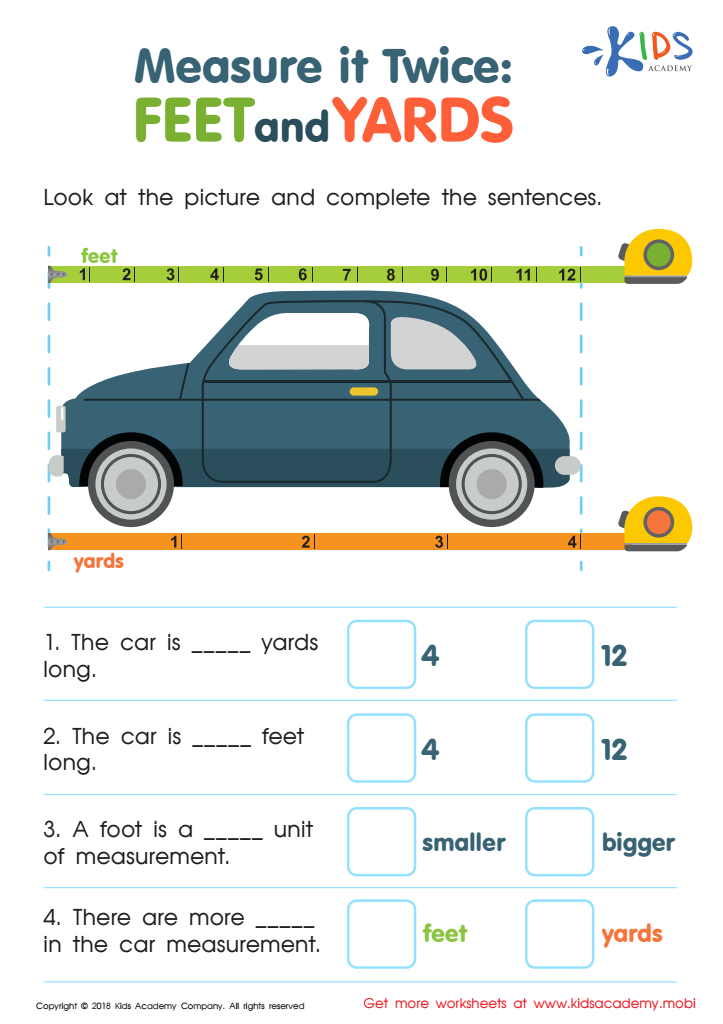
Measure It Twice: Feet and Yards Worksheet
A car is pictured with a metric ruler in feet at the top and a yard ruler at the bottom. Get your child to look at the picture and complete sentences about it; for example, how many yards long is the car? Is a foot a bigger or smaller unit of measurement? It'll teach them that 1 yard is equal to 3 feet.
Measure It Twice: Feet and Yards Worksheet
Worksheet
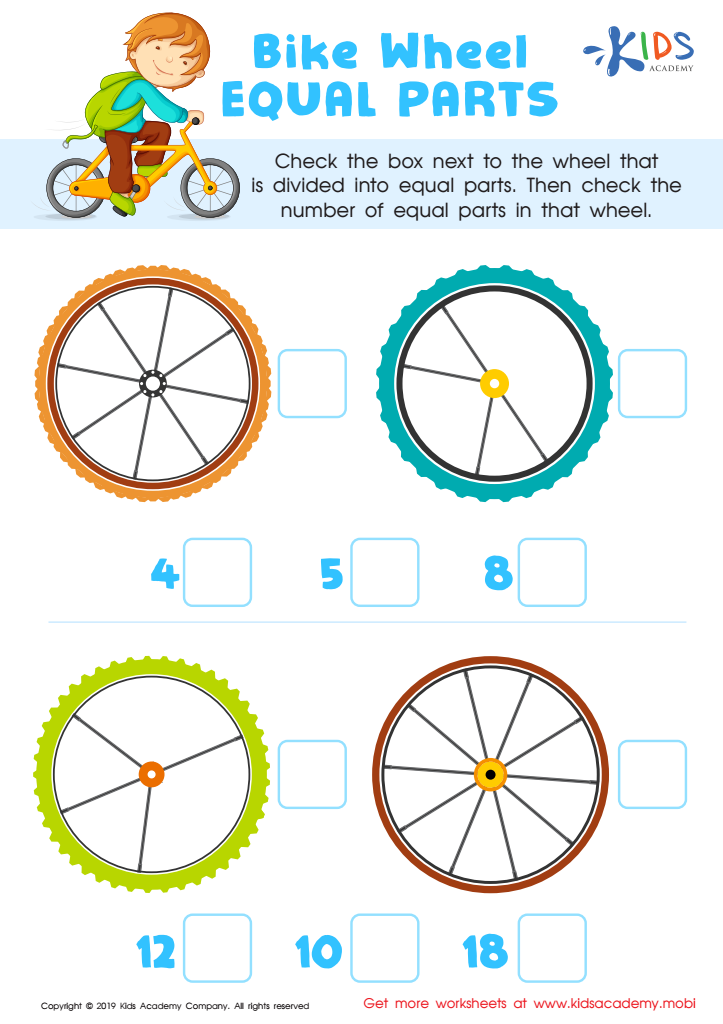
Bike Wheel Equal Parts Worksheet
Help your kids have fun while they learn! Ask them to identify the object in the picture with four wheels. Guide them to count the spokes, then check the box on the wheel with equal parts. Lastly, check how many equal parts the wheel is divided into.
Bike Wheel Equal Parts Worksheet
Worksheet
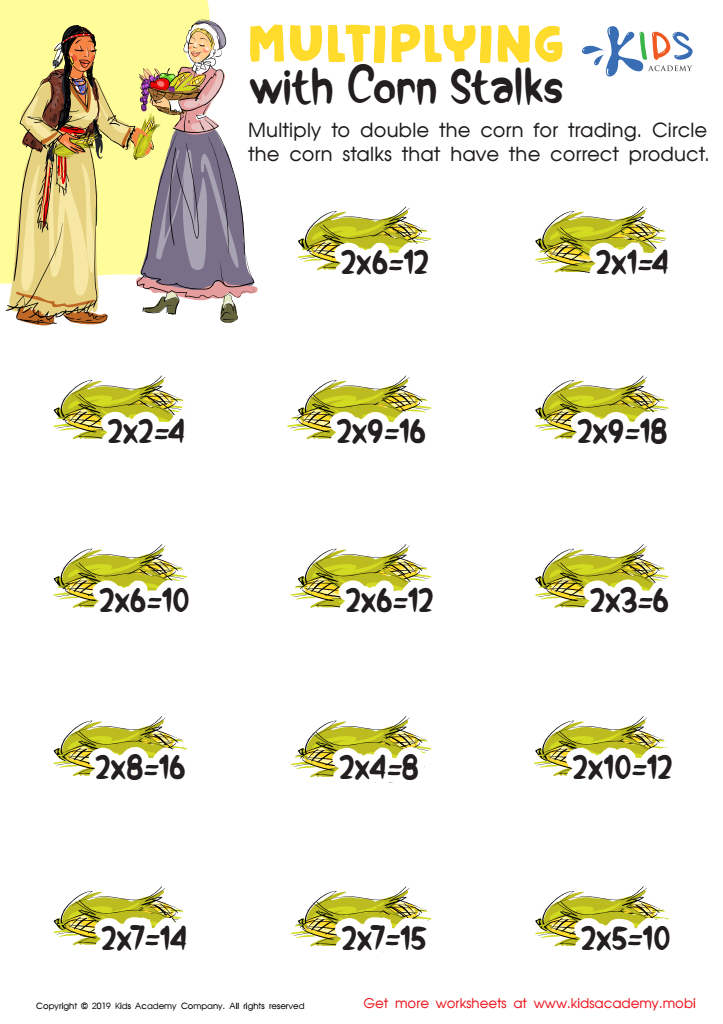
Multiplying With Corn Stalks Worksheet
Farming is profitable; corn is a versatile crop used for many things. Ask your kids what products come from corn! This worksheet is a fun way to teach multiplying with corn stalks. Farmers must multiply the stalks to double their number for trading and increase their profits. Challenge your kids to circle the correct products.
Multiplying With Corn Stalks Worksheet
Worksheet
Join Kids Academy for Free
Who is primarily going to use this learning content?








Parents and teachers should prioritize the practical application of math for children aged 8-9 because it bridges the gap between theoretical learning and real-world use, fostering a deeper understanding of mathematical concepts. At this developmental stage, children are building foundational skills that they will rely on for future academic endeavors and everyday problem-solving. By integrating practical math, such as measuring ingredients for a recipe, budgeting pocket money, or calculating time and distance, children can see the relevance of their lessons, making them more engaging and less abstract.
Practical applications help in developing critical thinking and analytical skills. When children apply math in contexts they encounter daily, they learn to approach problems systematically and make informed decisions. This hands-on experience builds confidence, as students recognize their capability to tackle real-life challenges using math.
Moreover, involving children in activities that require math enhances their abilities in both collaborative and independent work. It encourages them to communicate their thought processes, refine their reasoning, and learn from experimentation and practice. Engaging in practical math tasks can also cater to diverse learning styles, making the subject accessible and enjoyable for different types of learners. Thus, practical application in math not only supports academic growth but also equips children with essential life skills.








