Check out this FREE Trial Lesson on Math for age 8-9!

Cut Rectangles: Thirds and Fourths

Favorites
With answer key
Interactive
  • 8-9
  • Recognizing shapes
  • Math
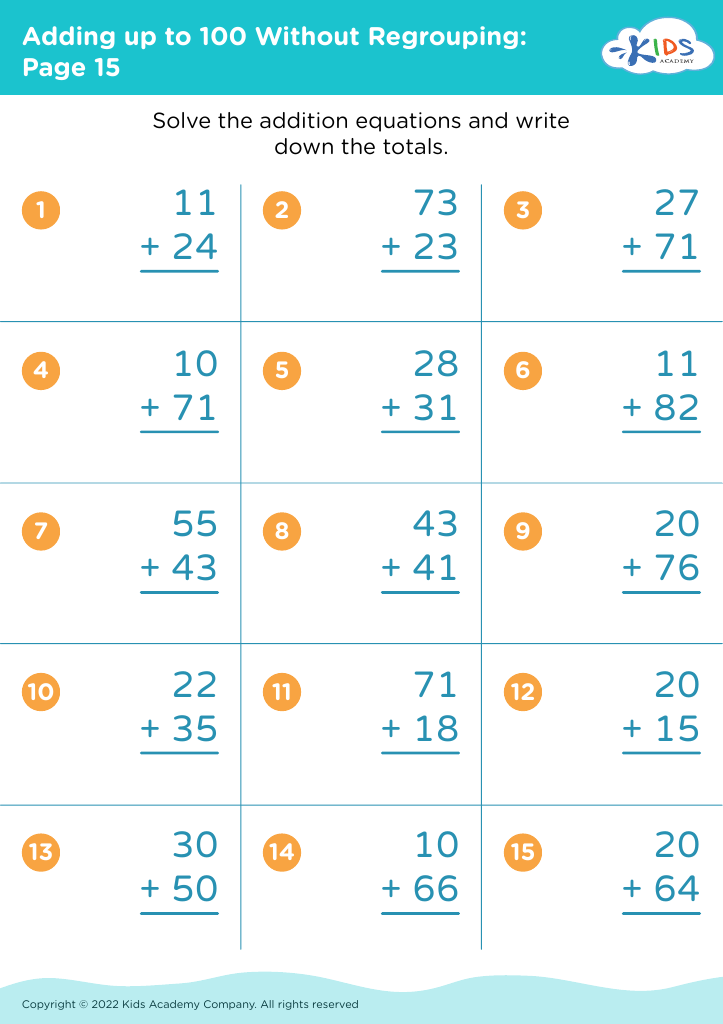
Adding up to 100 Without Regrouping: Page 15
Worksheet
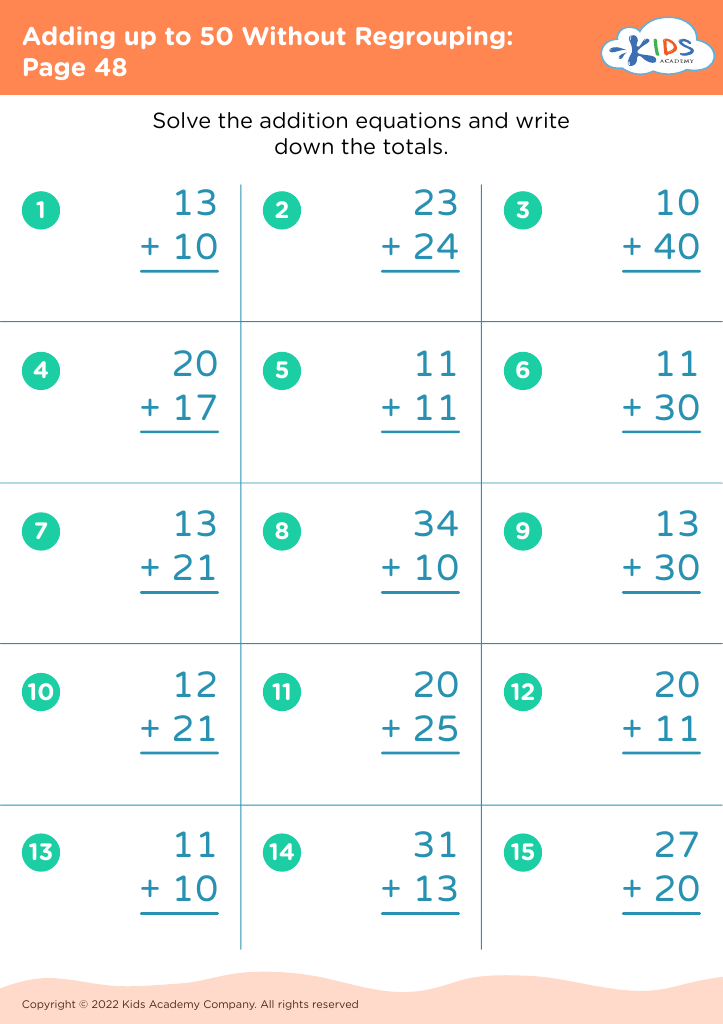
Adding up to 50 Without Regrouping: Page 48
Worksheet
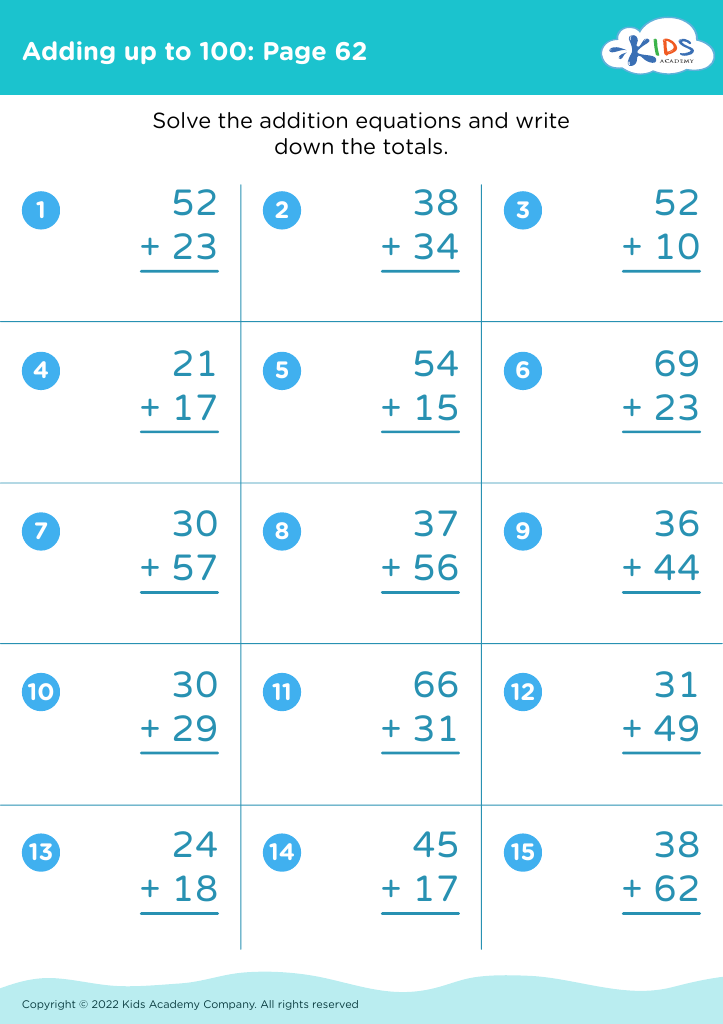
Adding up to 100: Page 62

Adding up to 100: Page 62

Adding up to 100: Page 62
Worksheet
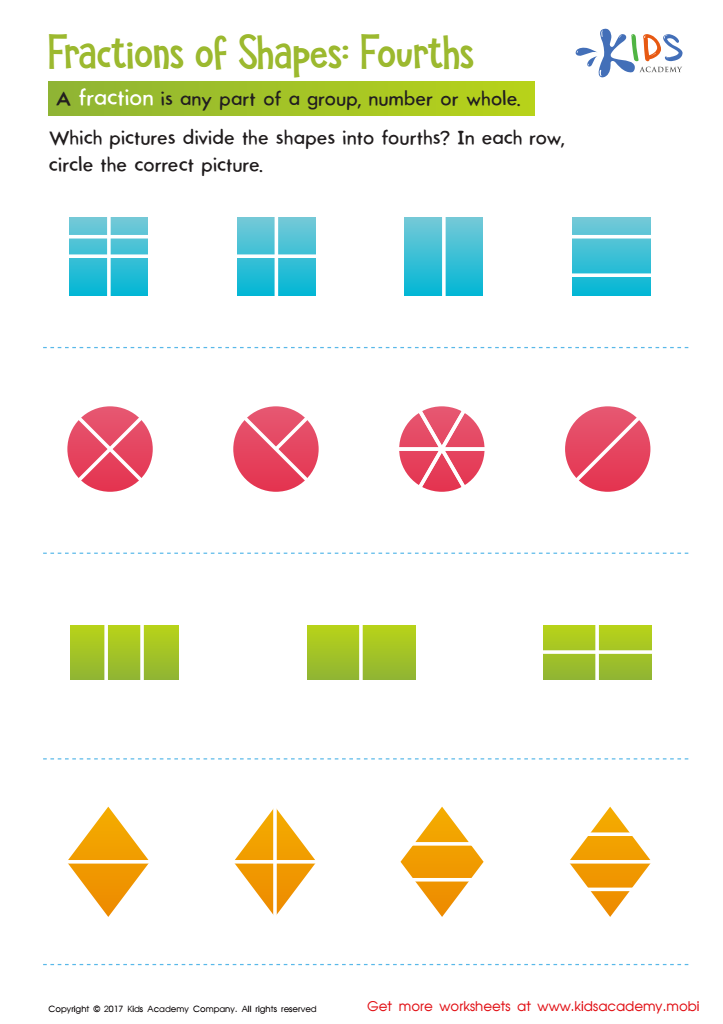
Fractions of Shapes Printable Worksheet

Fractions of Shapes Worksheet

It will also show them how fractions are represented in everyday shapes.
Fractions of Shapes Worksheet
Worksheet
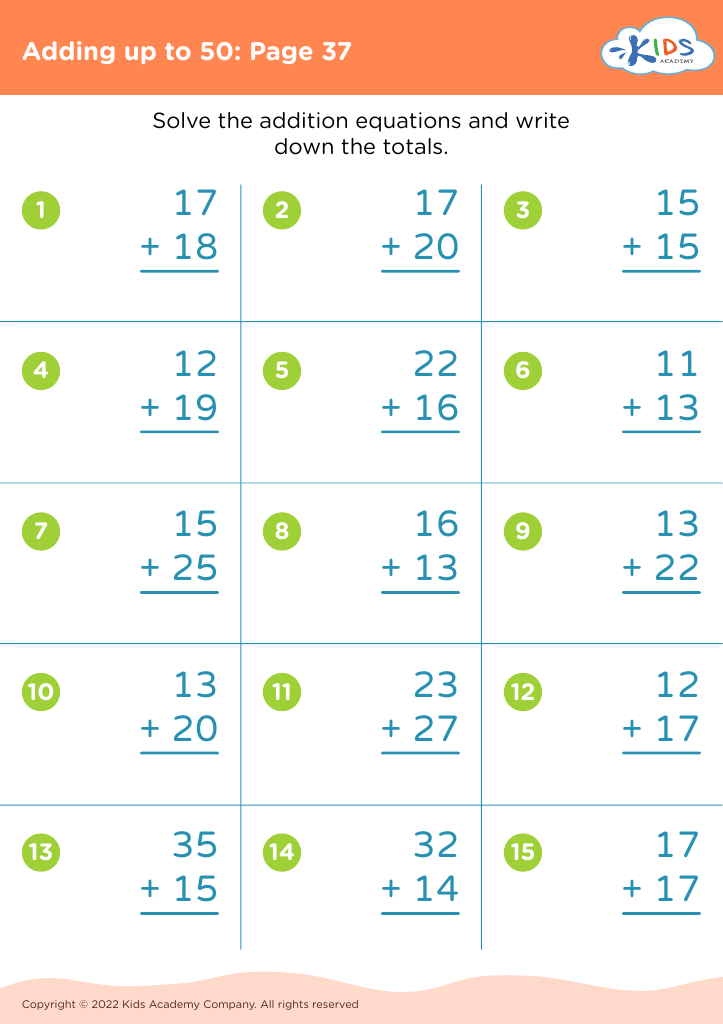
Adding up to 50: Page 37

Adding up to 50: Page 37

Adding up to 50: Page 37
Worksheet
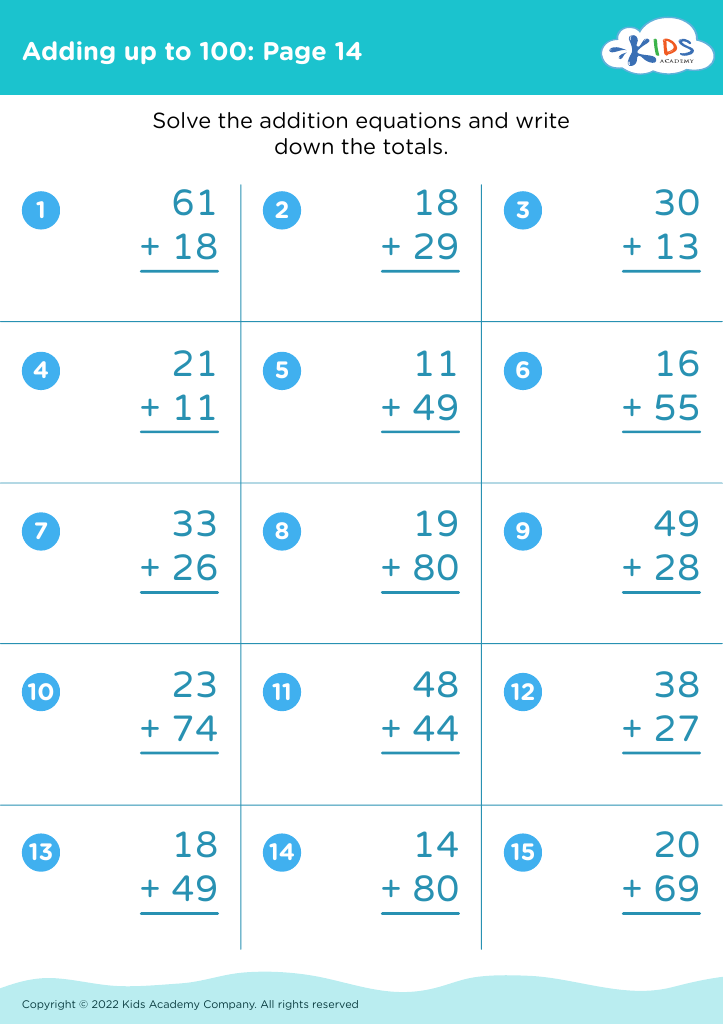
Adding up to 100: Page 14

Adding up to 100: Page 14

Adding up to 100: Page 14
Worksheet
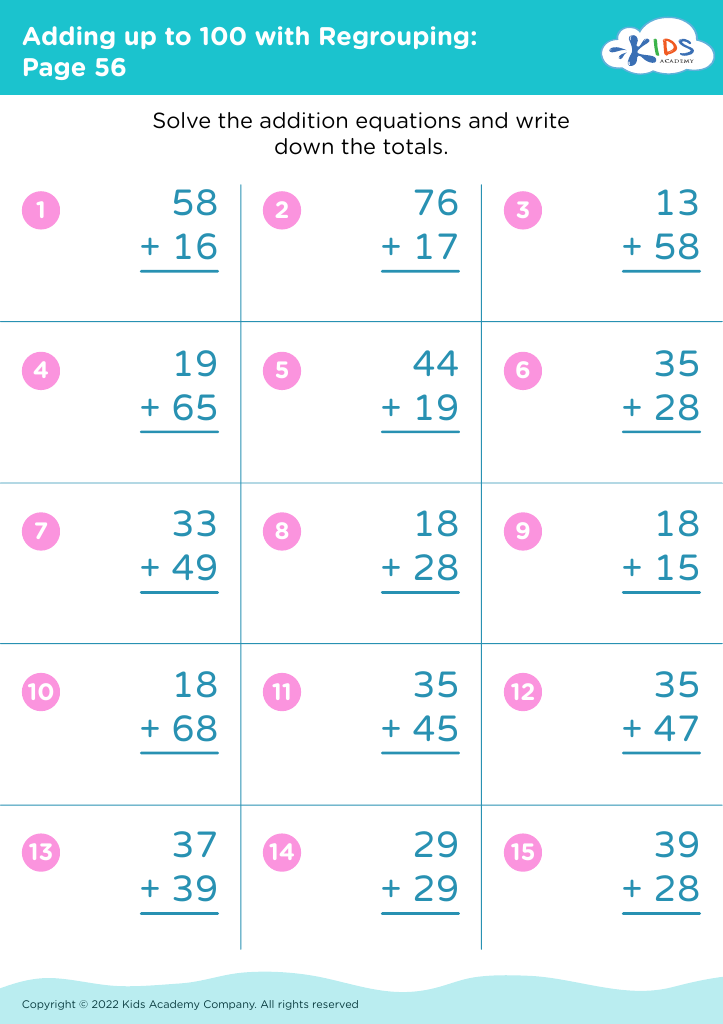
Adding up to 100 with Regrouping: Page 56
Worksheet
What Is a Quadrilateral? Worksheet

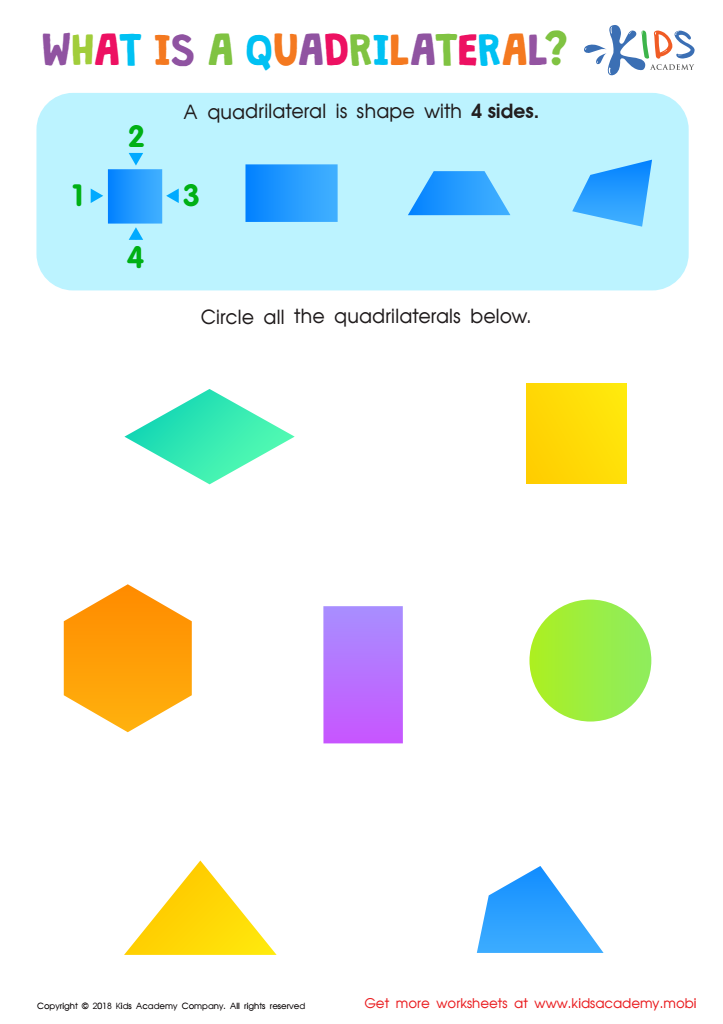
What Is a Quadrilateral? Worksheet

Does your kid know what a quadrilateral is? If not, this worksheet can help teach them. Explain that a quadrilateral is a shape with four sides and give examples, like a square or a rectangle. Then ask them to circle the quadrilaterals in the pictures. If they already know what a quadrilateral is, this task might be too easy.
What Is a Quadrilateral? Worksheet

Worksheet
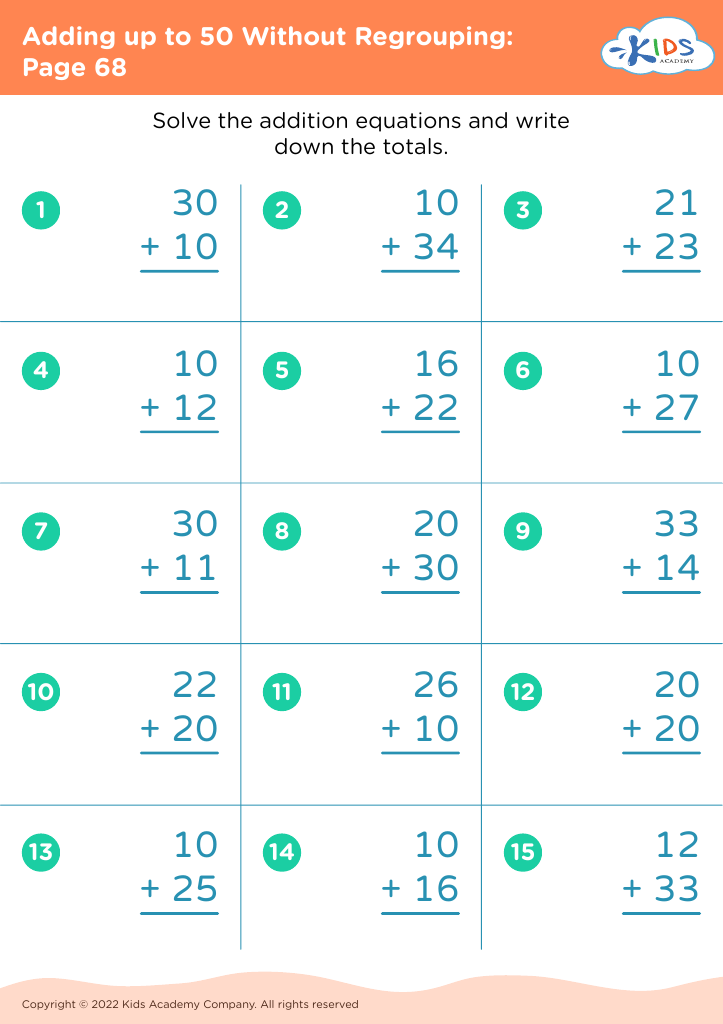
Adding up to 50 Without Regrouping: Page 68
Worksheet


Recognizing shapes is a foundational math skill that plays a critical role in the cognitive development of children aged 8-9. At this stage, children are not merely memorizing shapes; they are developing spatial reasoning and problem-solving abilities that are essential for success in more advanced math concepts. By recognizing shapes, children learn to identify properties such as sides, angles, and symmetry, which can enhance their analytical thinking.

Moreover, shape recognition supports a child's understanding of the world around them. From architecture to nature, shapes are everywhere. Engaging in shape-related activities fosters observational skills and encourages artistic creativity, as children begin to see connections between math and everyday life.

Additionally, recognizing shapes serves as a gateway to geometry, a vital area of mathematics that becomes more complex in subsequent grades. Early mastery of shapes can aid in a smoother learning transition, preventing confusion later on.

Parents and teachers should prioritize shape recognition not only for its academic benefits but also to build a solid foundation for critical thinking and creativity. Ultimately, this essential skill aids in developing a confident, competent learner ready to tackle the challenges of advanced mathematics and beyond.