
Understand patterns Math Worksheets for Ages 8-9
6 filtered results
Difficulty Level
Grade
Age
-
From - To
Subject
Activity
Standards
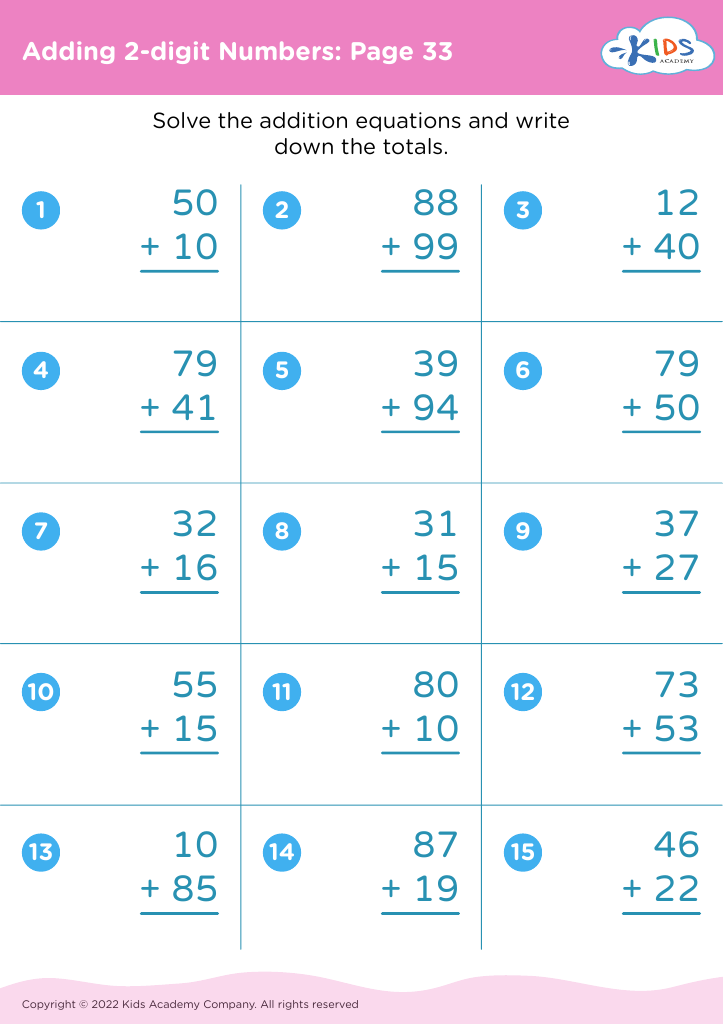
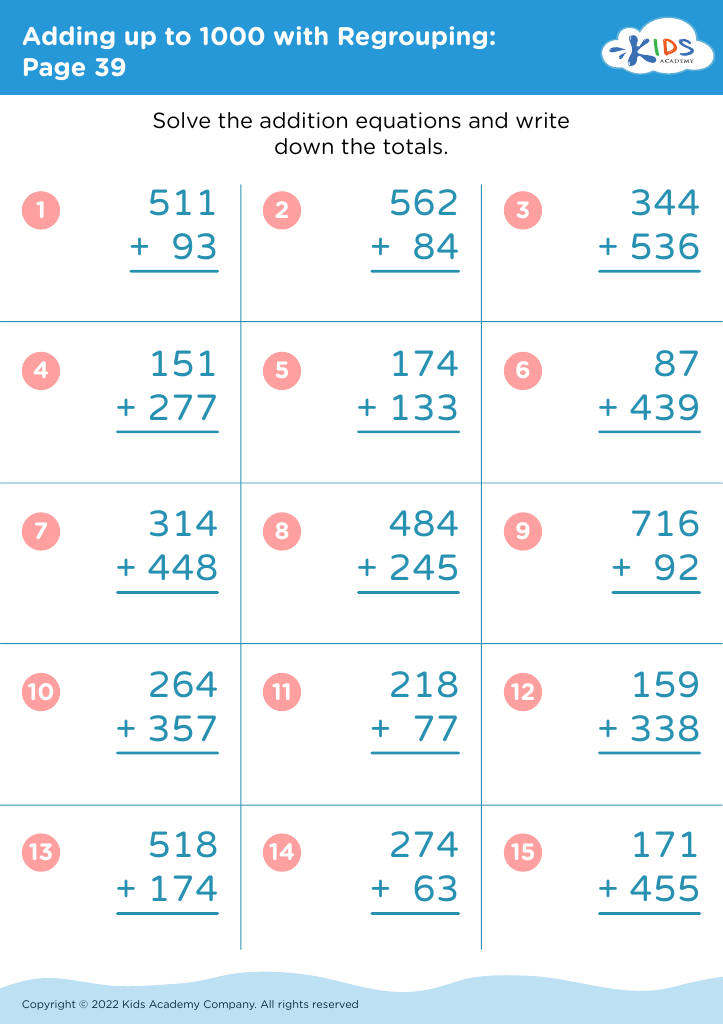
Unlock your child's mathematical potential with our "Understand Patterns" Math Worksheets designed specifically for ages 8-9. These engaging, printable resources enhance critical thinking and problem-solving skills by focusing on recognizing, creating, and extending patterns. Each worksheet features exciting activities that promote active learning and help reinforce key concepts in a fun, interactive way. Ideal for homeschooling or supplemental practice, our worksheets cater to different learning styles and evolve with your child’s progress. Equip your young learners with the tools they need to excel in math while enjoying the process. Start exploring our collection and inspire a love for learning today!
Favorites
With answer key
Interactive
Join Kids Academy for Free
Who is primarily going to use this learning content?






Understanding patterns in mathematics is crucial for children aged 8 to 9, as it lays the foundation for more advanced mathematical concepts and problem-solving skills. At this developmental stage, children begin to make connections between numbers and their relationships, fostering logical thinking and critical analysis. Recognizing patterns helps students identify sequences, which is essential in areas such as addition, multiplication, and algebra.
For parents and teachers, nurturing an appreciation for patterns can enhance a child's confidence in math and encourage positive attitudes towards the subject. Engaging children in pattern recognition activities can transform complex mathematical concepts into fun and relatable experiences. This not only reinforces their knowledge but also promotes creativity and inquiry-based learning.
Moreover, pattern recognition contributes to essential life skills, such as predicting outcomes and making informed decisions—a skill set that extends beyond the classroom. By supporting children in understanding and exploring mathematical patterns, educators and parents can cultivate a love for learning and better prepare them for future academic challenges. In essence, a focus on patterns fosters analytical skills, enriches understanding, and builds a solid mathematical foundation that is critical for lifelong success in various fields.








