Understanding addition Math Worksheets for Ages 8-9
8 filtered results
-
From - To
Discover our comprehensive "Understanding Addition Math Worksheets for Ages 8-9," designed to enhance your child's arithmetic skills in a fun and engaging way. These worksheets focus on key addition concepts, helping young learners grasp fundamental principles through a variety of exercises. With both visual aids and practical problems, children will practice adding single and double-digit numbers, cultivate number sense, and boost confidence in their math abilities. Perfect for classroom use or at-home learning, our resources cater to diverse learning styles and ensure an enjoyable educational experience. Dive into the world of addition and watch your child thrive in math!
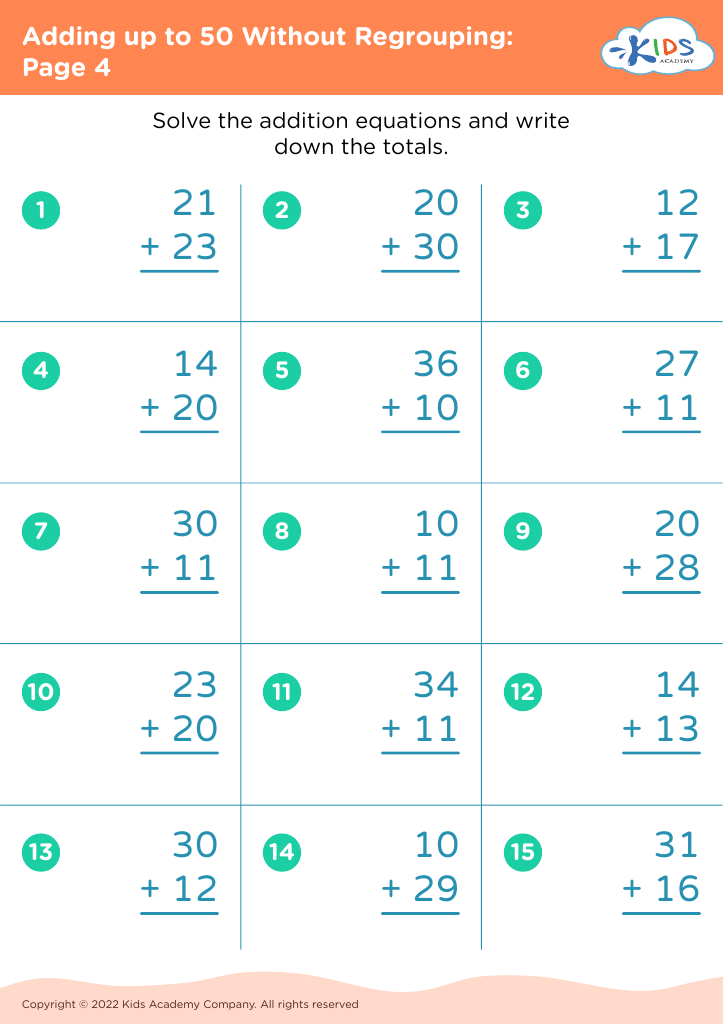
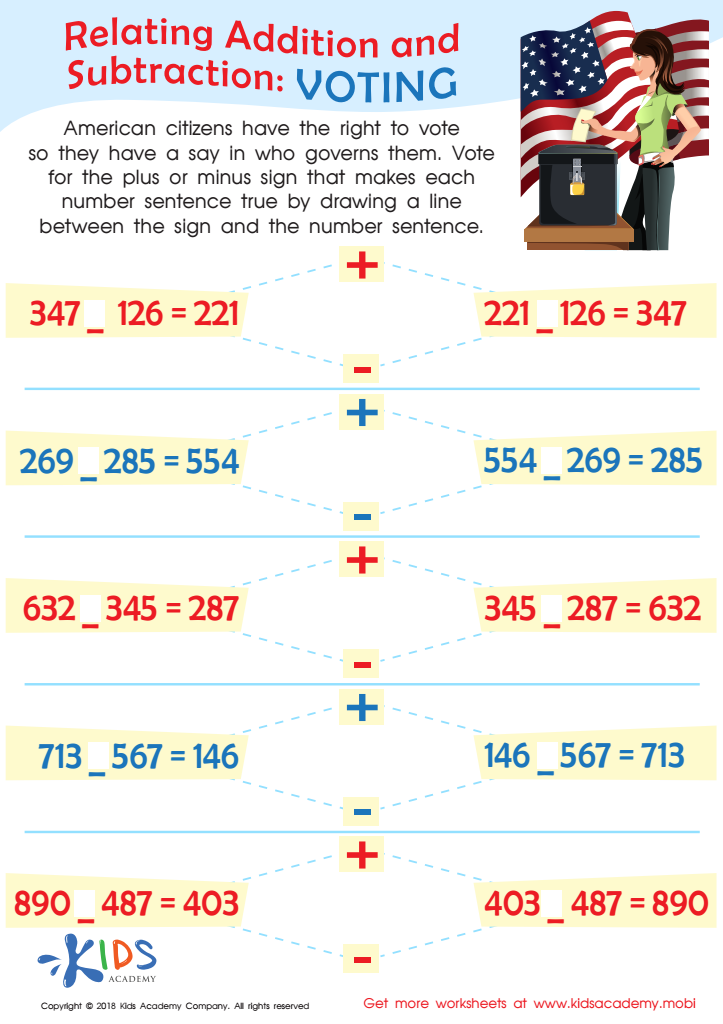
Voting Worksheet
 Assign to My Students
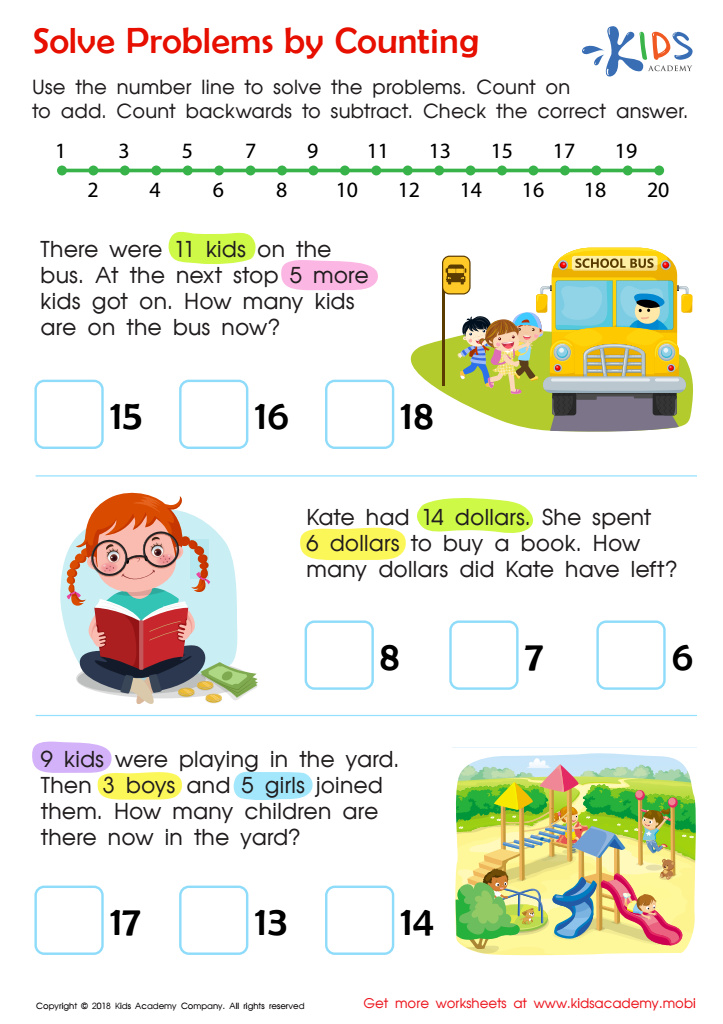
Solve Problems by Counting Worksheet
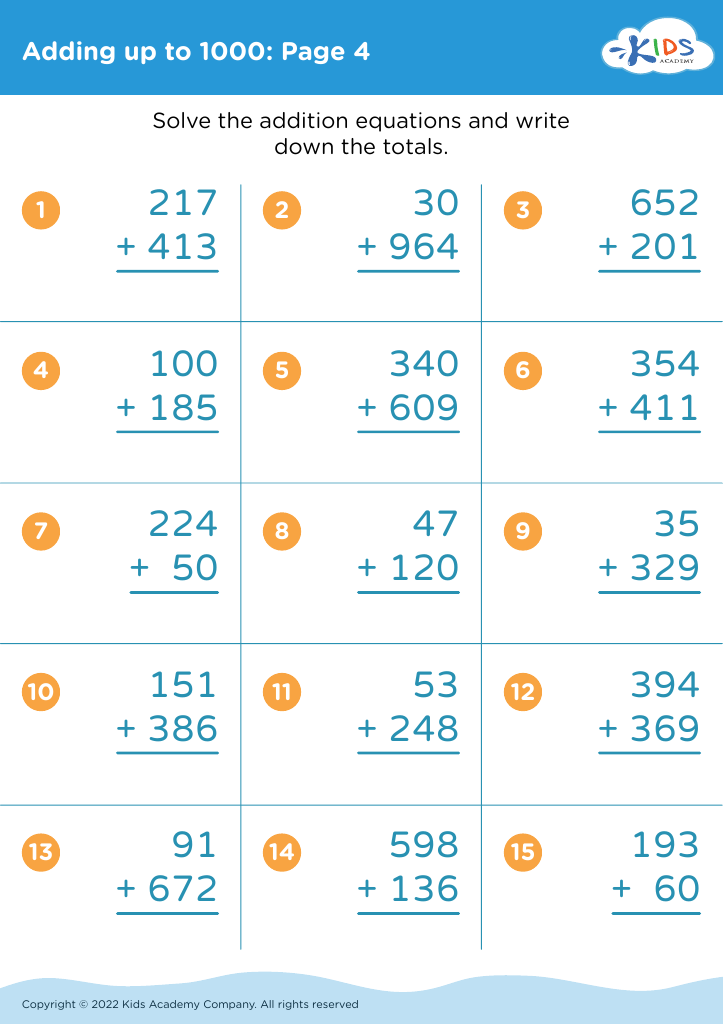
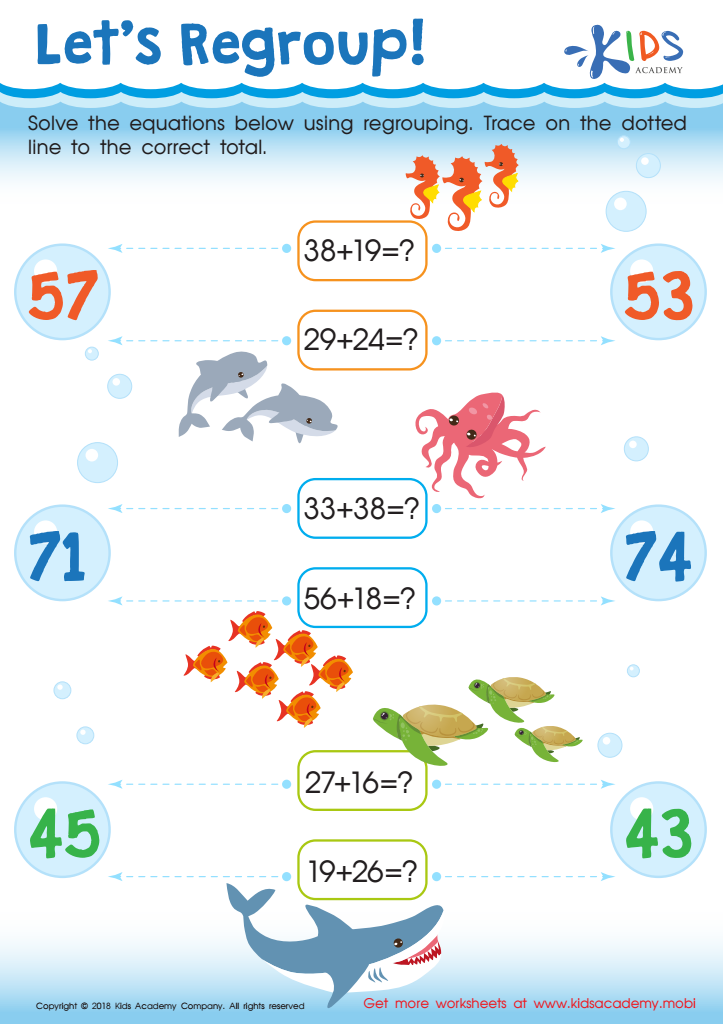
Let's Regroup! Worksheet
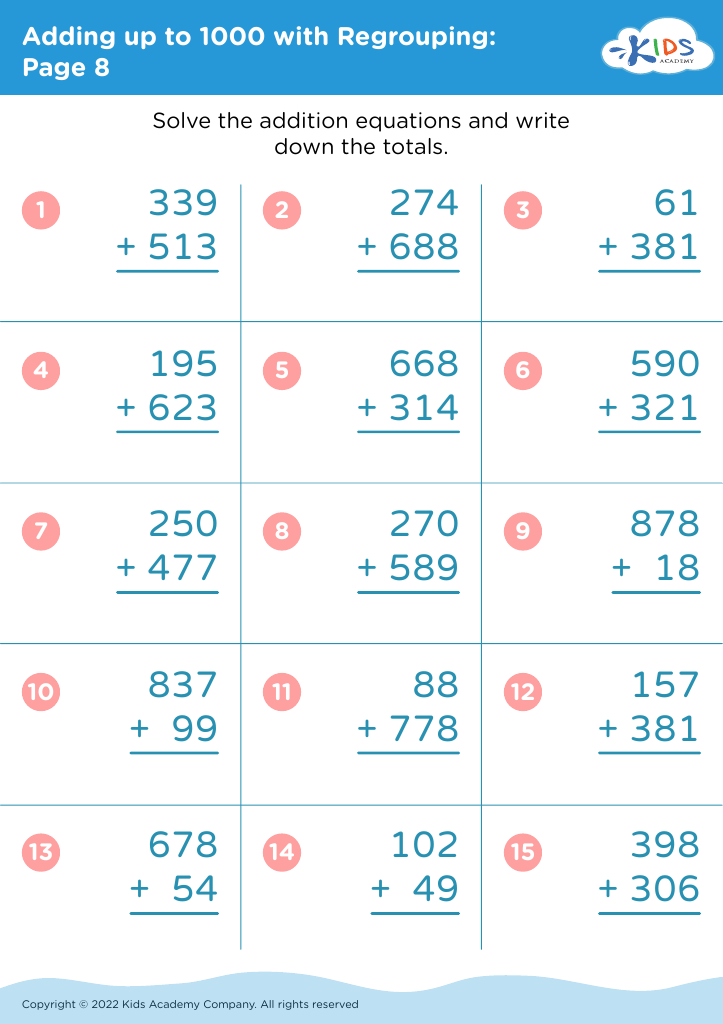
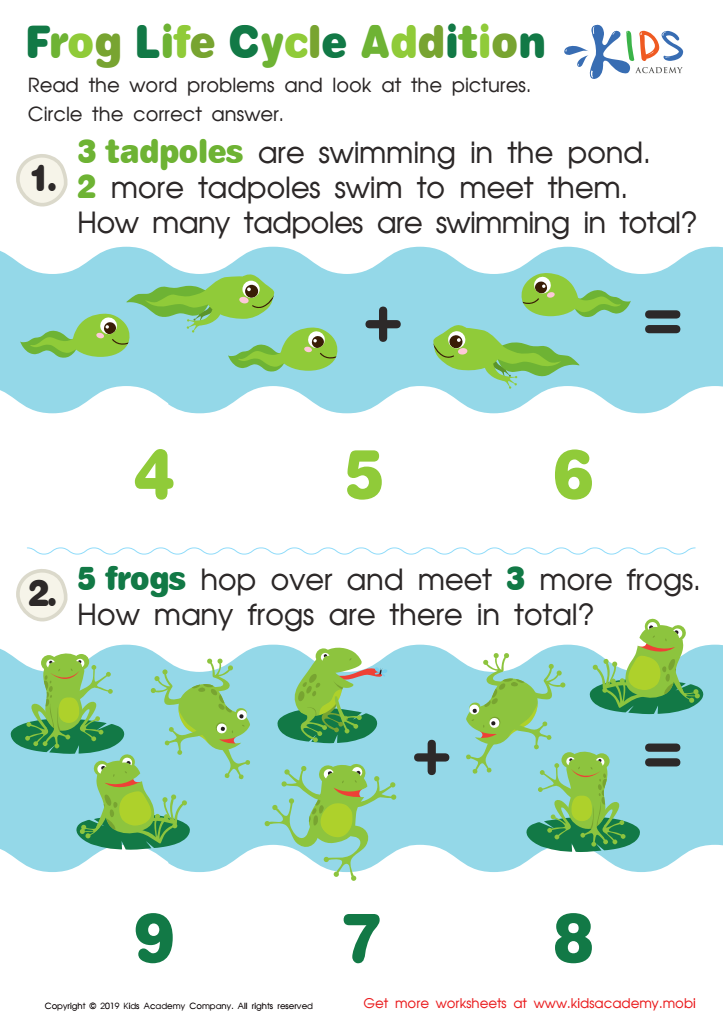
Frog Life Cycle Addition Worksheet
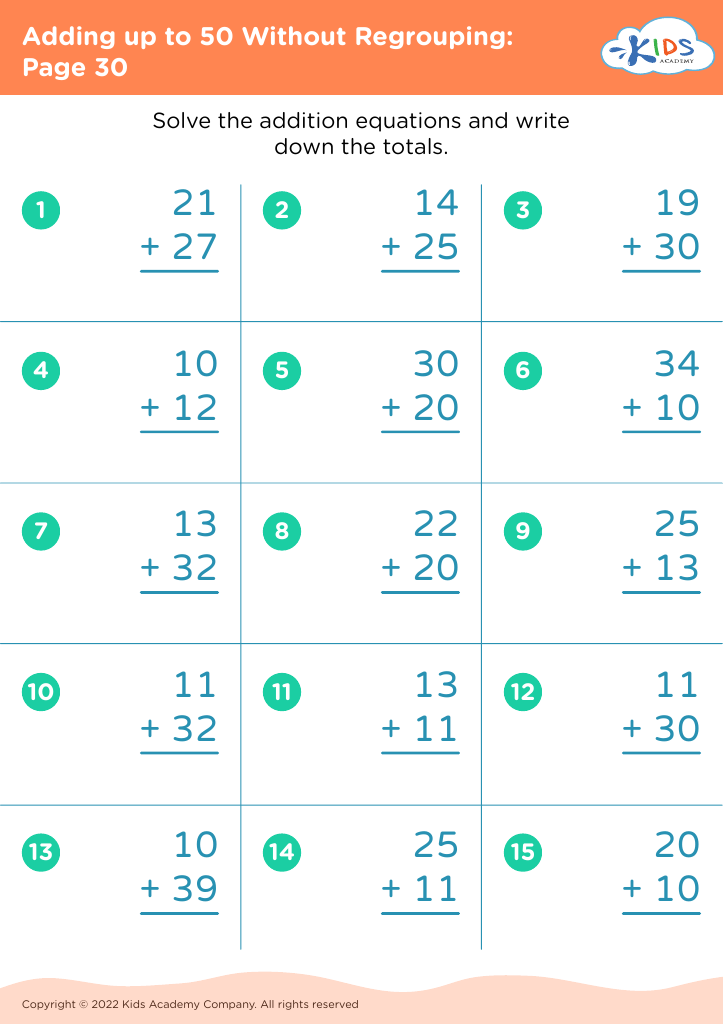



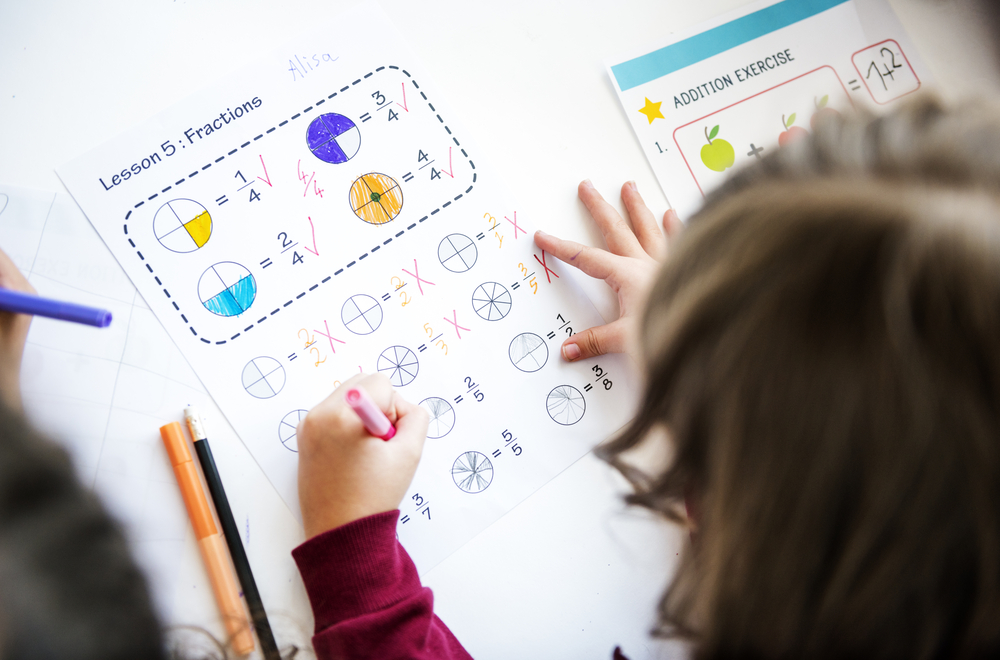




Understanding addition is crucial for children aged 8-9 as it forms the foundation for more complex mathematical concepts and everyday problem-solving. At this developmental stage, children are moving beyond simple arithmetic to explore multi-digit addition, properties of numbers, and problem-solving strategies. Mastery of addition leads to increased confidence and enjoyment in math, making it a pivotal skill for academic success.
Moreover, a strong grasp of addition supports critical thinking. Children encounter real-world applications of addition, such as budgeting, cooking, and measuring, fostering practical life skills. Furthermore, engaging with addition through games, puzzles, and collaborative activities encourages social interaction and teamwork, enhancing their social and emotional development.
For parents and teachers, nurturing a child’s understanding of addition can help identify any learning difficulties early on, allowing for timely intervention and support. Encouragement and positive reinforcement can boost their motivation to learn. By prioritizing addition education during these formative years, parents and teachers can lay a solid groundwork for lifelong mathematical literacy, empowering children to approach future challenges with curiosity and resilience. Ultimately, embracing the significance of addition paves the way for a generation of confident, capable learners.








