Check out this FREE Trial Lesson on Math for age 8-9!

A

Favorites
With answer key
Interactive
  • 8-9
  • Understanding patterns
  • Math
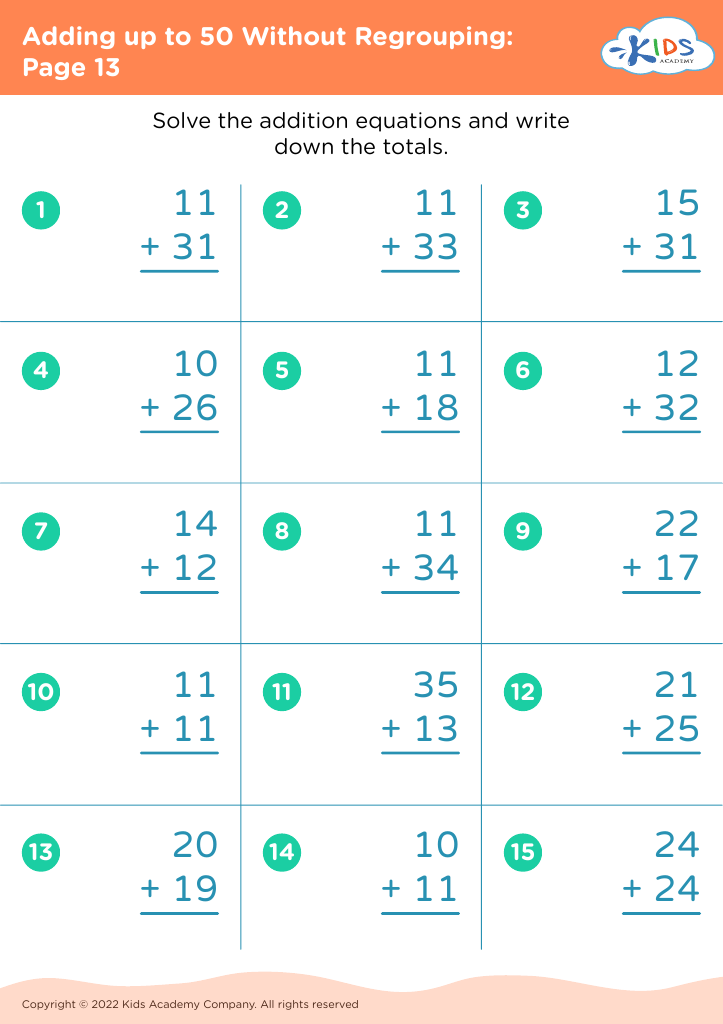
Adding up to 50 Without Regrouping: Page 13
Worksheet
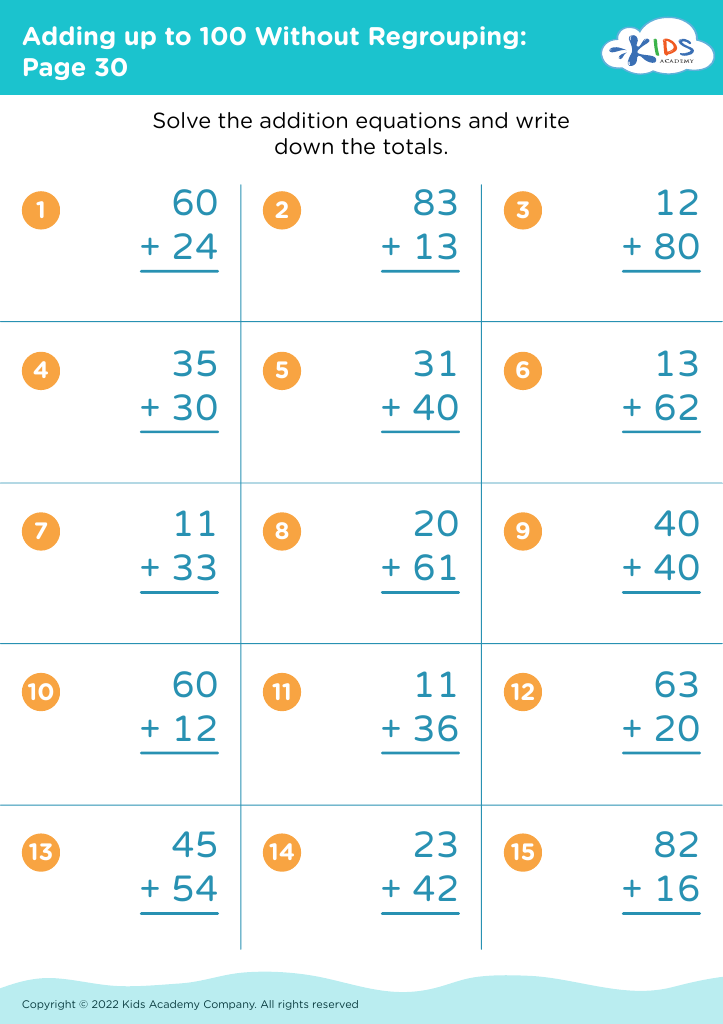
Adding up to 100 Without Regrouping: Page 30
Worksheet
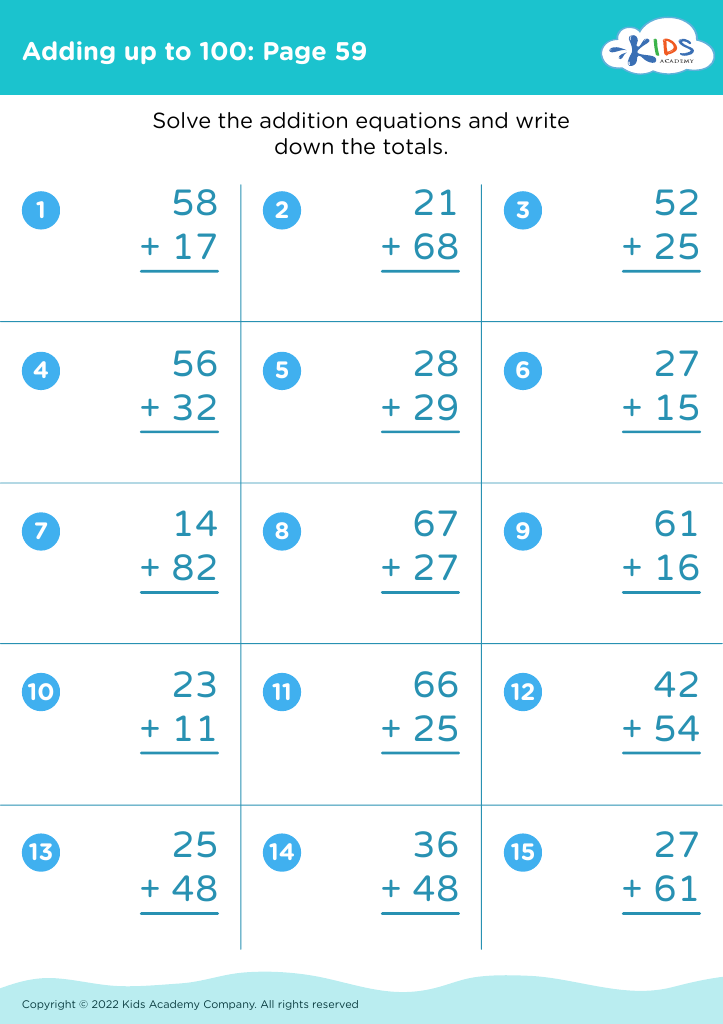
Adding up to 100: Page 59

Adding up to 100: Page 59

Adding up to 100: Page 59
Worksheet
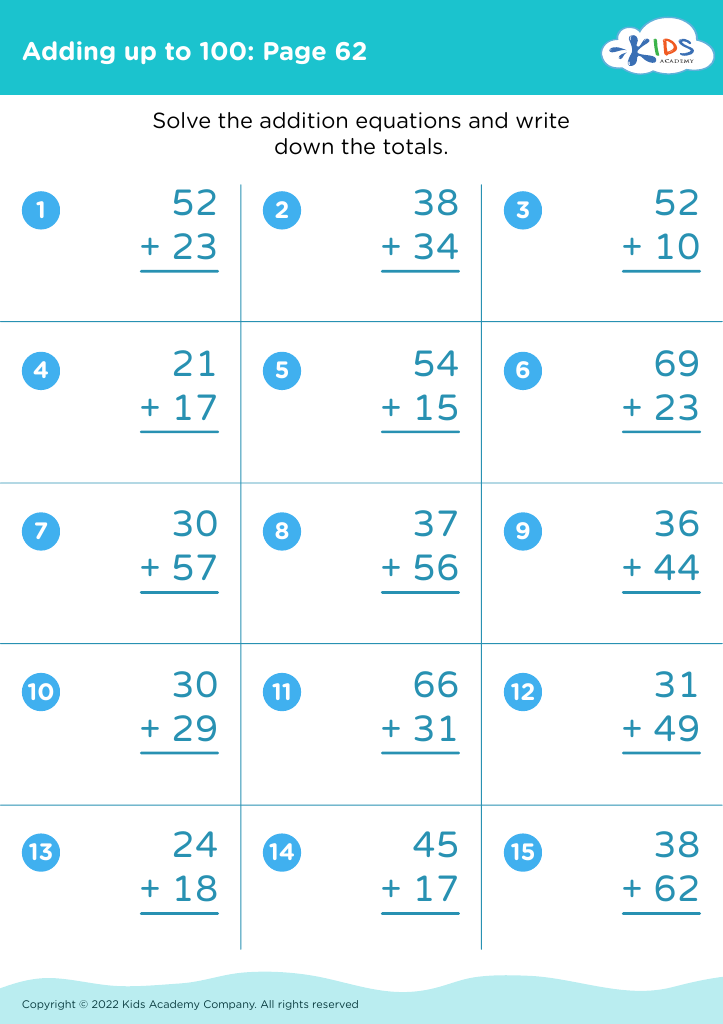
Adding up to 100: Page 62

Adding up to 100: Page 62

Adding up to 100: Page 62
Worksheet
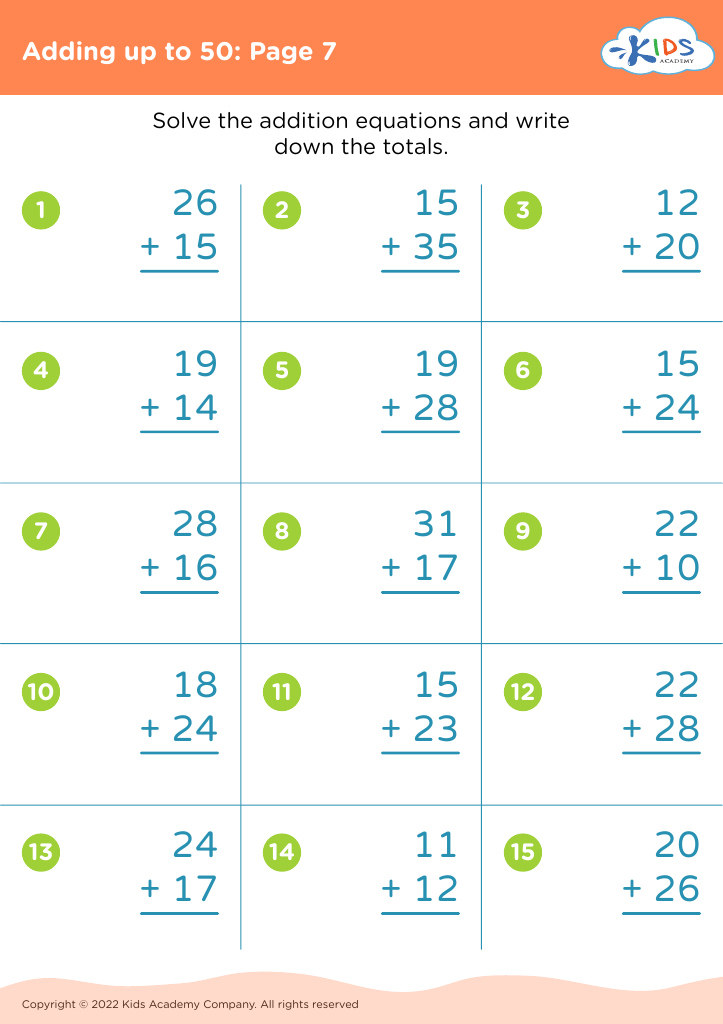
Adding up to 50: Page 7

Adding up to 50: Page 7

Adding up to 50: Page 7
Worksheet
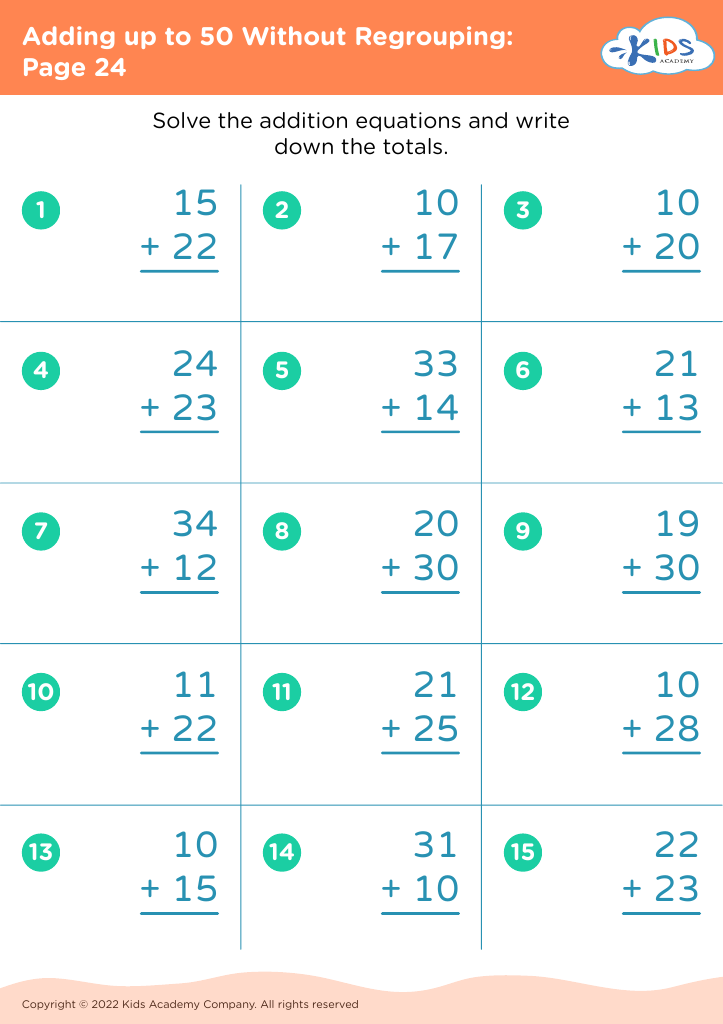
Adding up to 50 Without Regrouping: Page 24
Worksheet
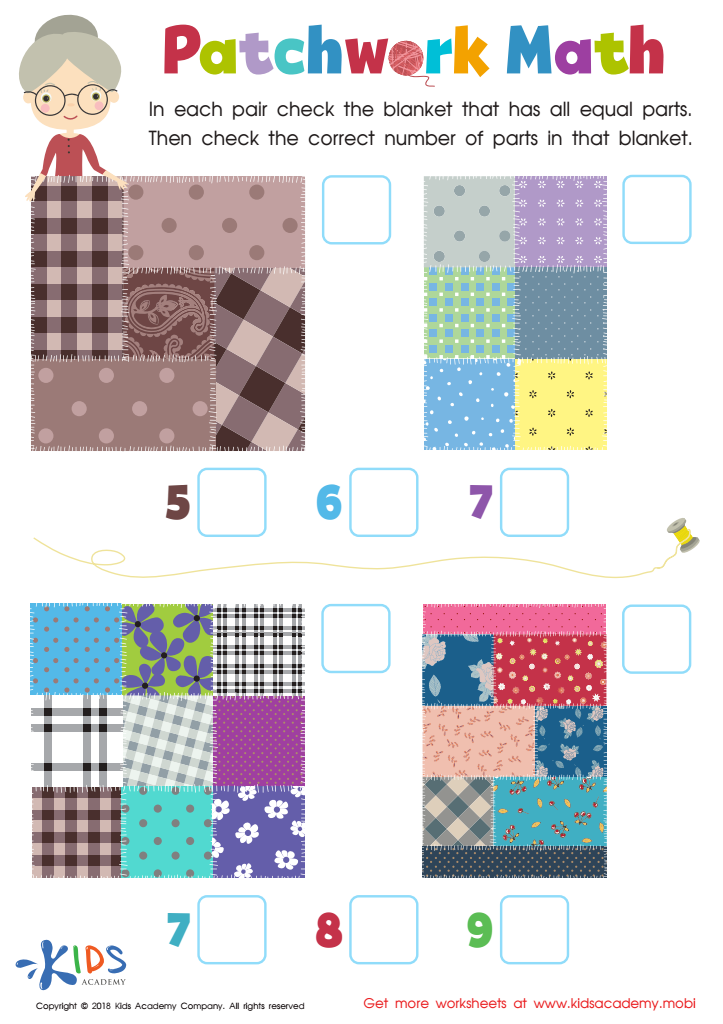
Patchwork Math Worksheet

Patchwork Math Worksheet

Test your children's knowledge with this colorful worksheet. They'll need to identify which of the blanket pairs have been cut in equal parts and count the number of parts. Check the provided options to ensure the correct answer.
Patchwork Math Worksheet
Worksheet
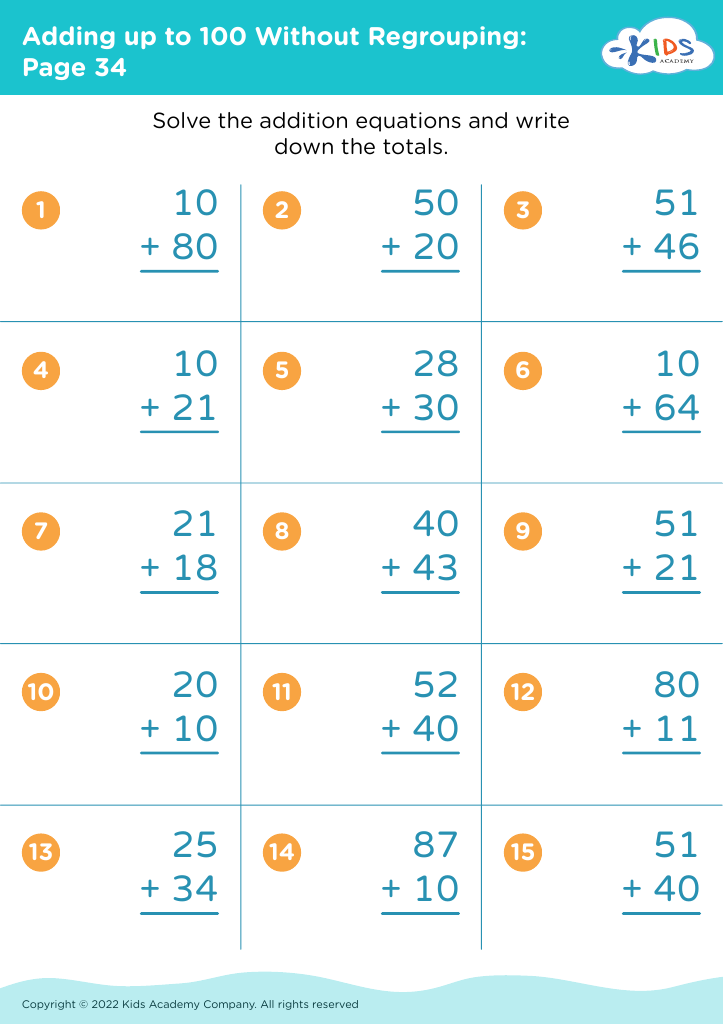
Adding up to 100 Without Regrouping: Page 34
Worksheet
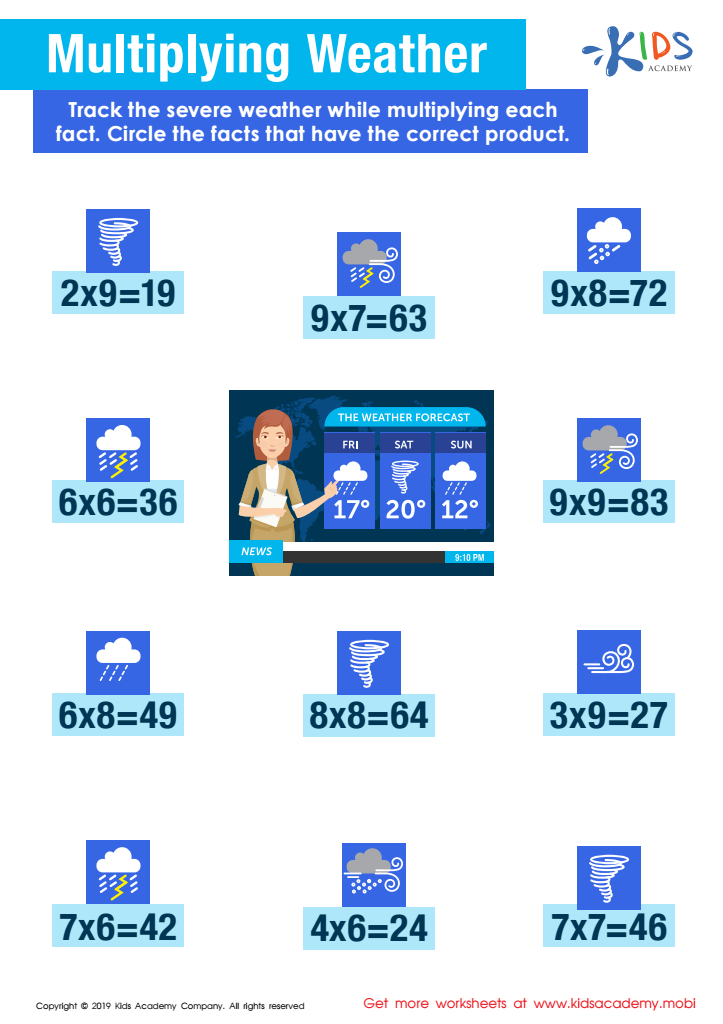
Multiplying Weather Worksheet

Multiplying Weather Worksheet

Most kids love playing outdoors, but weather can affect what we can do. Rain and snow can keep us from getting outside and even cancel school! Weather forecasters help us prepare for the day. In this worksheet, multiply facts to track severe weather and circle the ones with the right answer.
Multiplying Weather Worksheet
Worksheet
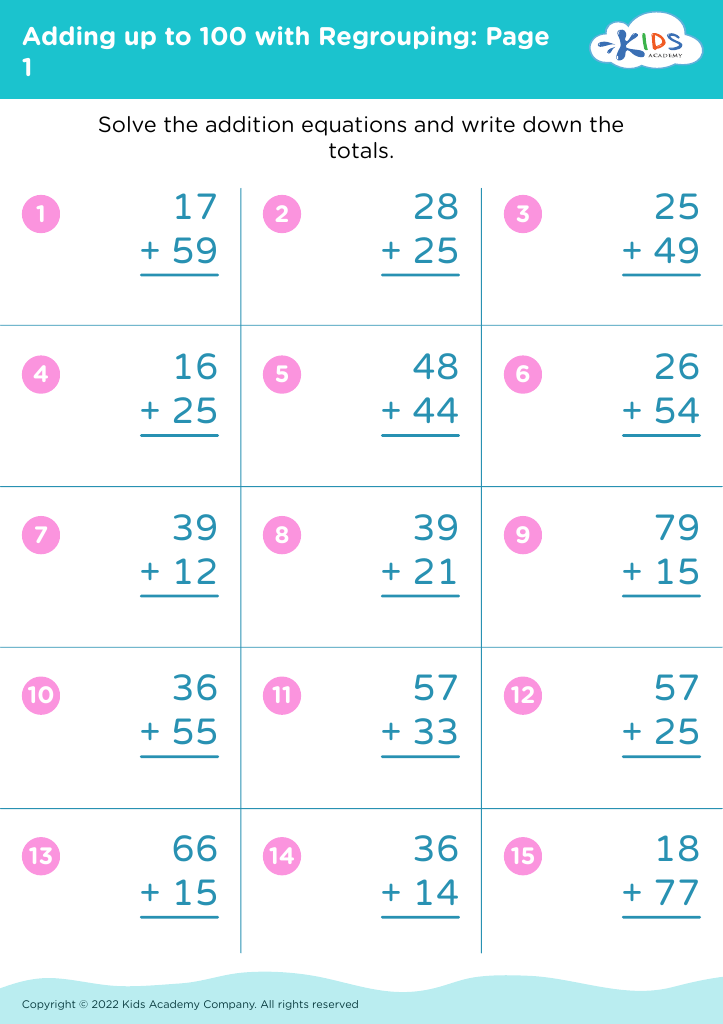
Adding up to 100 with Regrouping: Page 1
Worksheet
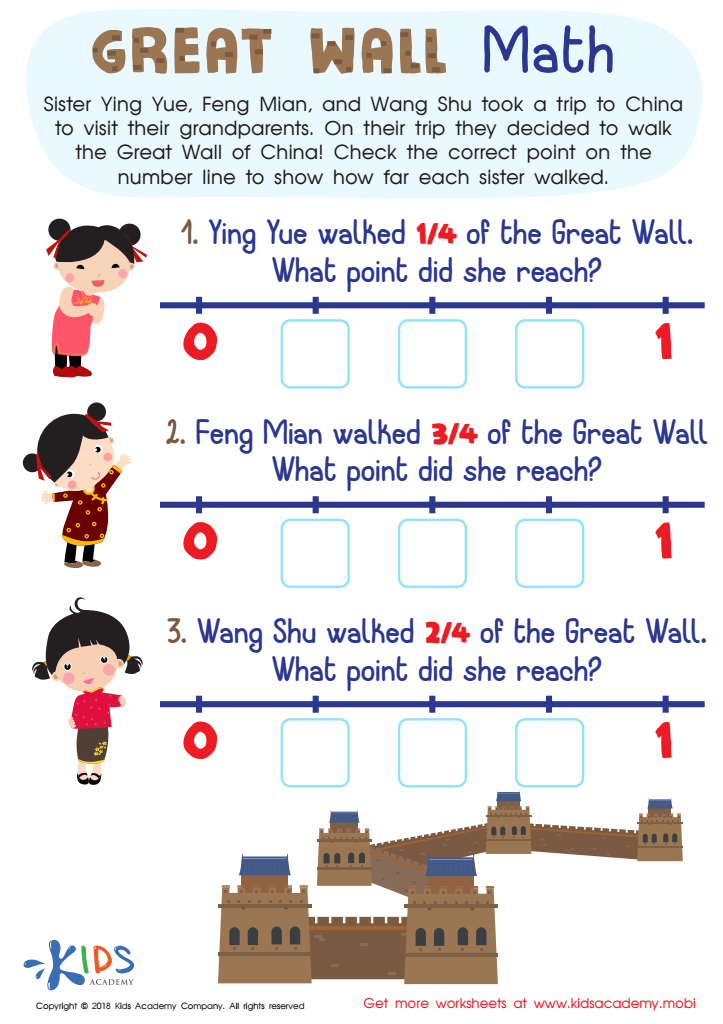
Great Wall Math Worksheet

Great Wall Math Worksheet

Let your kids learn about fraction and history with this printout about the Great Wall of China. Three sisters take a trip to China to visit their grandparents and decide to walk the Great Wall. Ask them to study the pictures and pick the correct point on the number line to show how far each sister went. How about you: has your child ever been to China?
Great Wall Math Worksheet
Worksheet
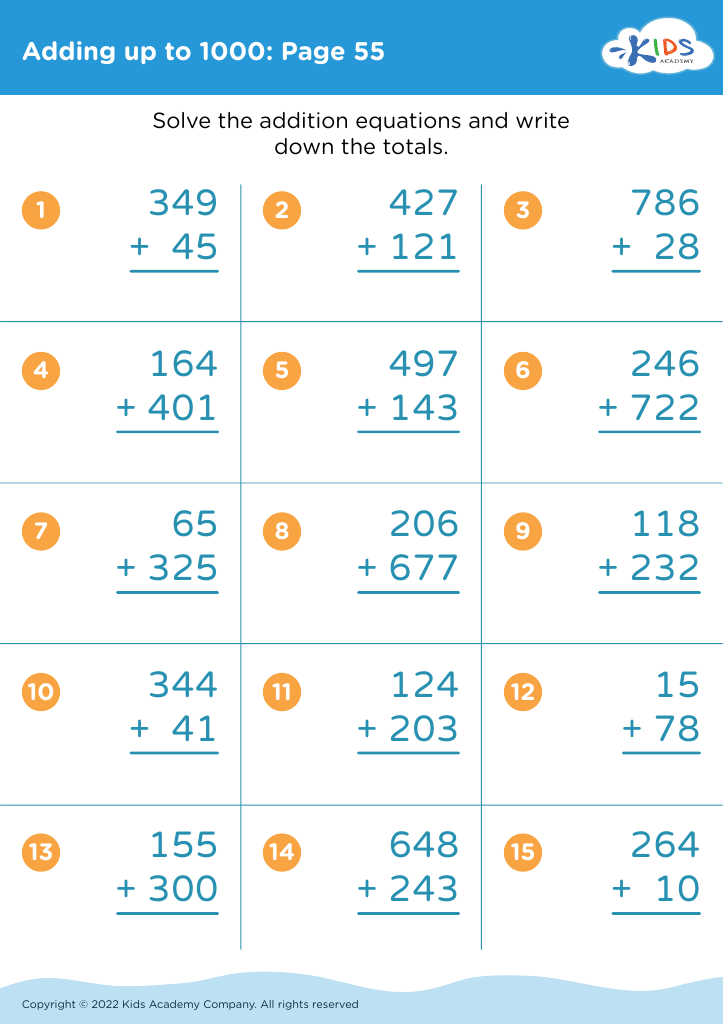
Adding up to 1000: Page 55

Adding up to 1000: Page 55

Adding up to 1000: Page 55
Worksheet
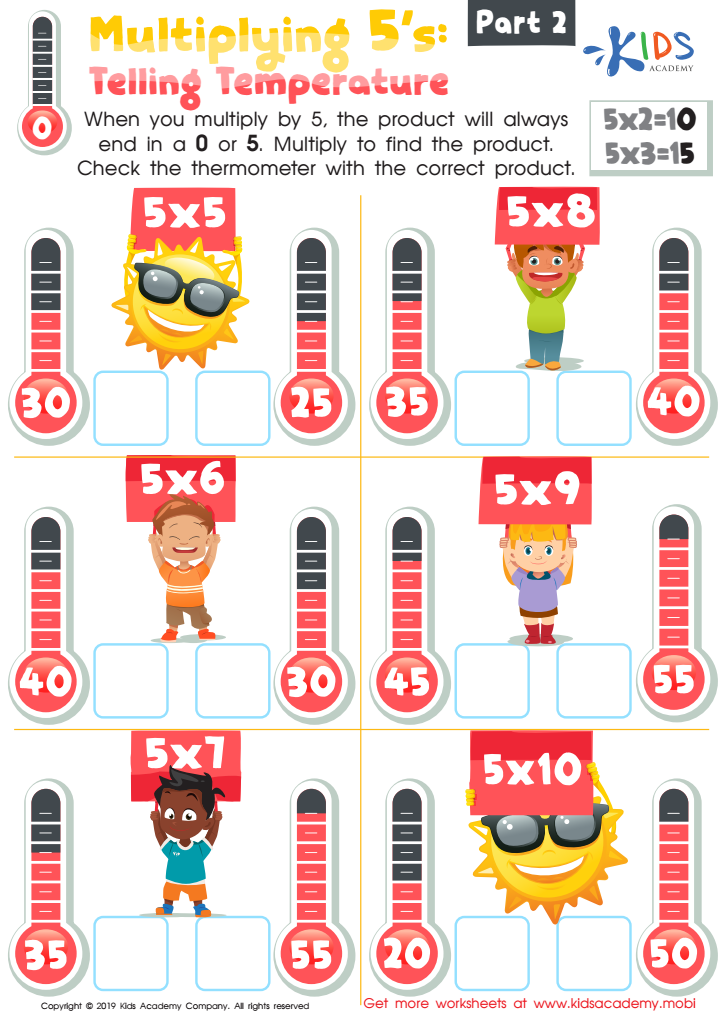
Multiplying 5’s: Telling Temperature Part 2 Worksheet
Multiplying 5’s: Telling Temperature Part 2 Worksheet

To help your child with multiplication, teach them some simple tricks. For example, when multiplying 10's the product always ends in a 0, and when multiplying by 5, the product will end in 0 or 5. Look at the problems in this worksheet and help your child find the product. Then, check the thermometer with the correct answer.
Multiplying 5’s: Telling Temperature Part 2 Worksheet
Worksheet
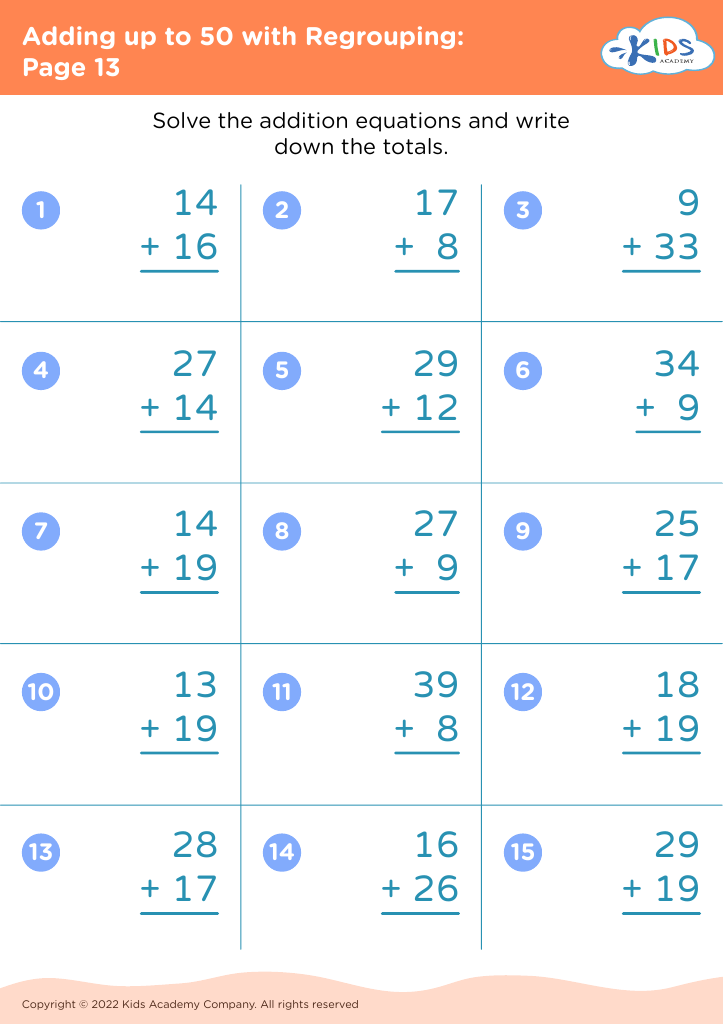
Adding up to 50 with Regrouping: Page 13
Worksheet
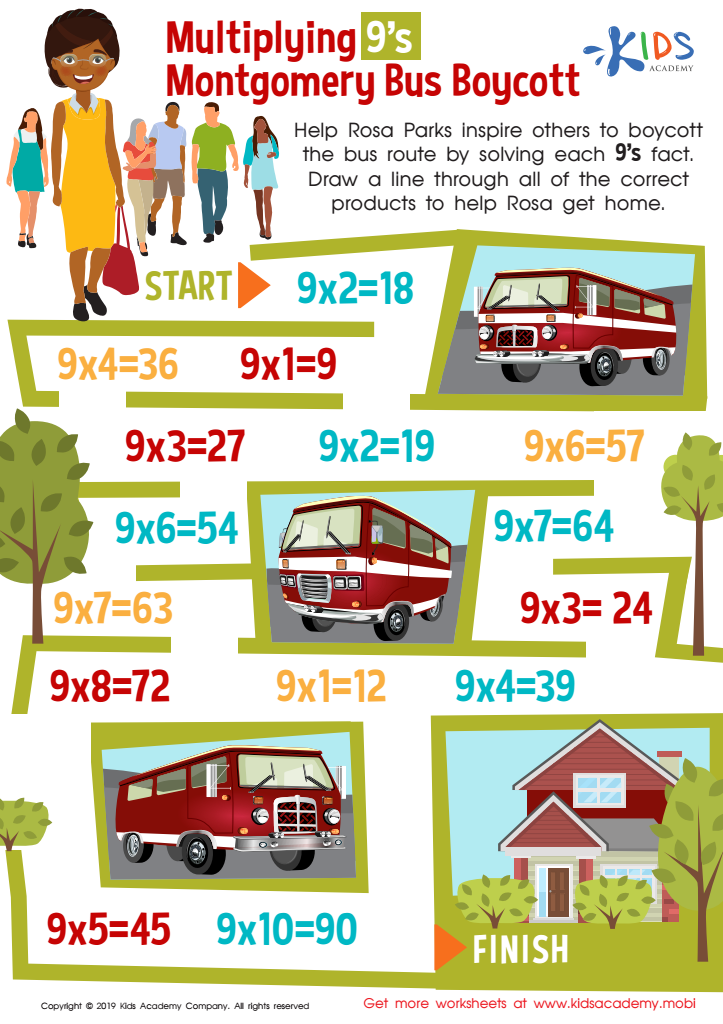
Multiplying 9’s Montgomery Bus Boycott Worksheet
Multiplying 9’s Montgomery Bus Boycott Worksheet
As your students learn math, the numbers get bigger. This worksheet is great for learning the nine times table. Help Rosa Park get home - ask them to solve each multiplication fact, then draw a line through the correct products. Encourage your students to stand up for what's right!
Multiplying 9’s Montgomery Bus Boycott Worksheet

Worksheet
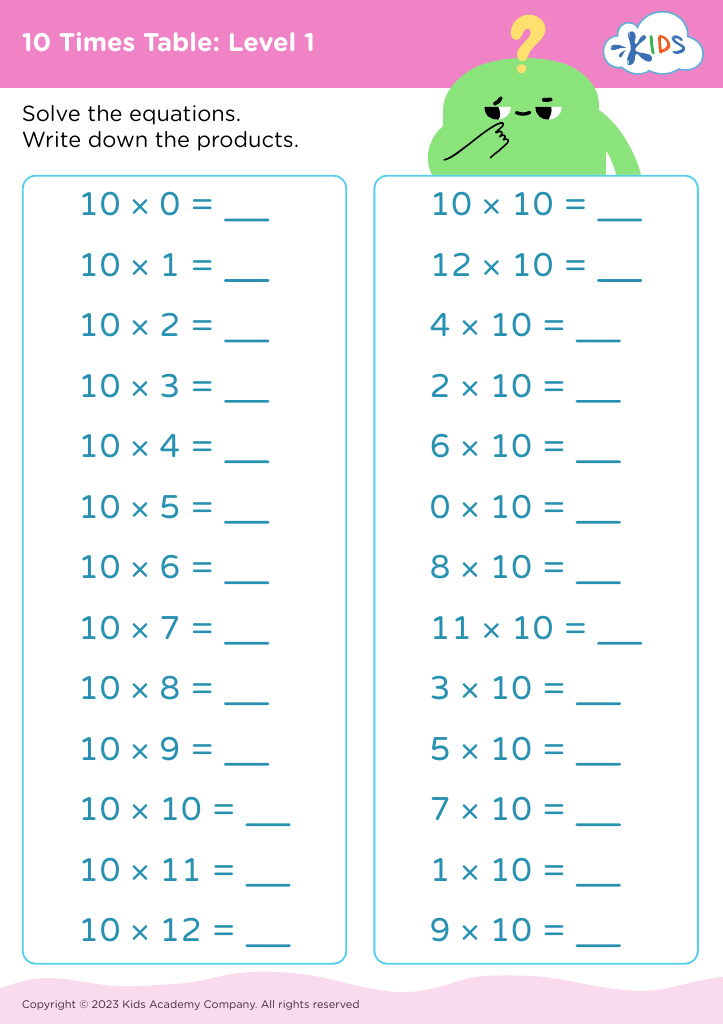
10 Times Table: Level 1

x10 Multiplication Chart

x10 Multiplication Chart
Worksheet
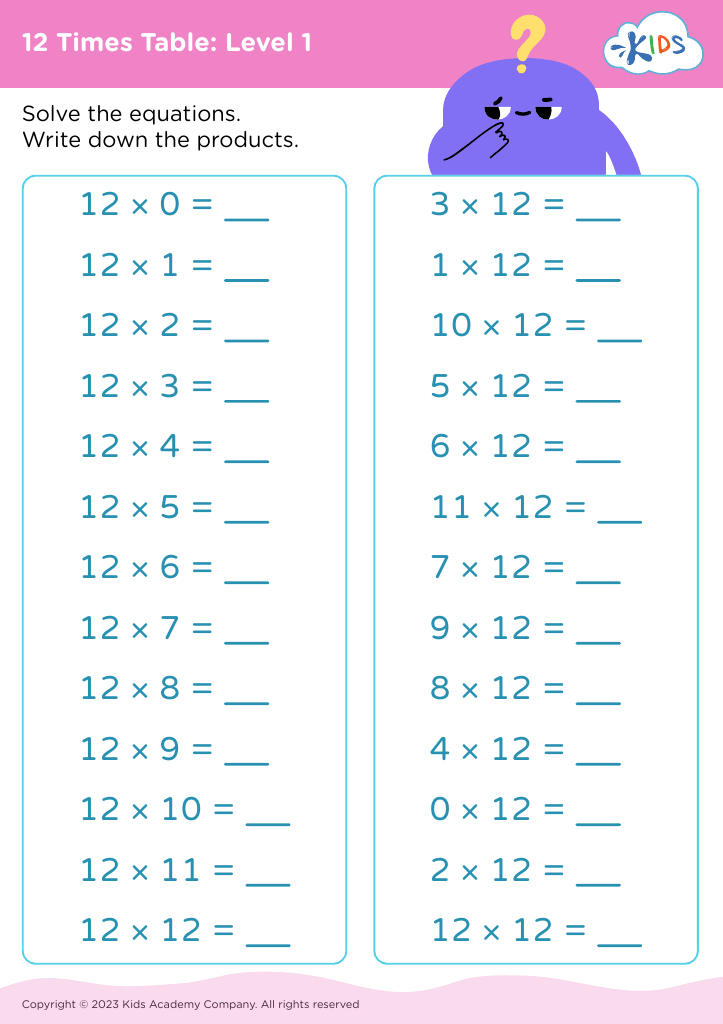
12 Times Table: Level 1

x12 Multiplication Chart

x12 Multiplication Chart
Worksheet
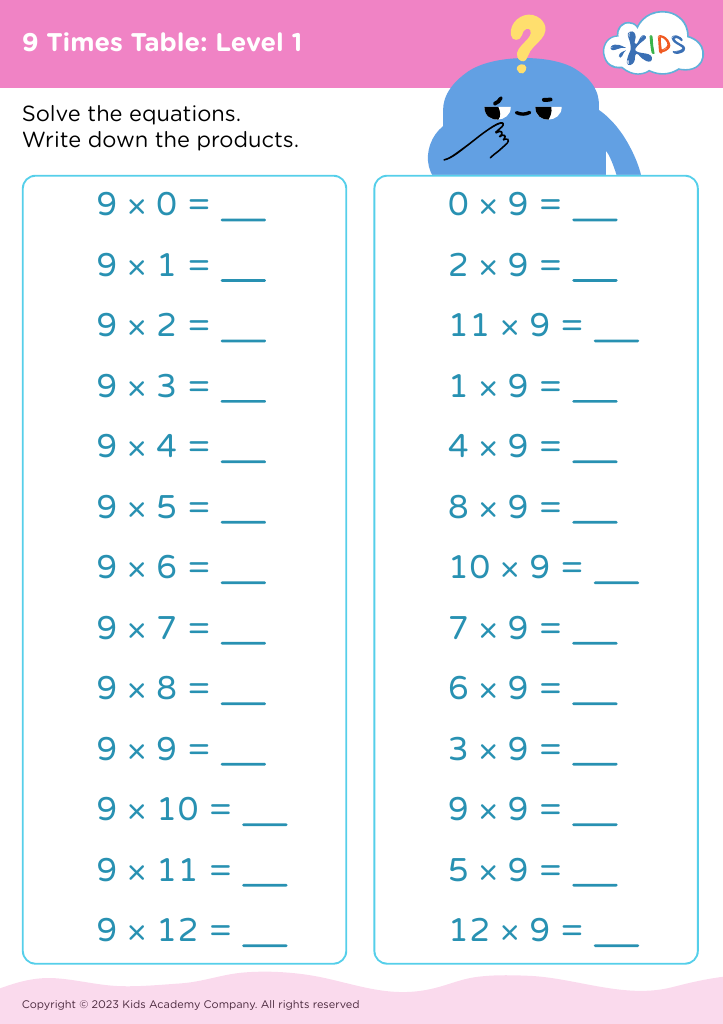
9 Times Table: Level 1

x9 Multiplication Chart

x9 Multiplication Chart
Worksheet


Understanding patterns in math for ages 8-9 is crucial for several reasons. Firstly, recognizing patterns is foundational to mathematical thinking, promoting critical thinking and problem-solving skills. Patterns help children predict what comes next, fostering a more organized and logical approach to both math and everyday situations.

Patterns also enable students to grasp complex concepts more easily. For instance, understanding number patterns can simplify learning multiplication tables and arithmetic sequences. This forms a solid groundwork for future math topics like algebra, geometry, and calculus.

Moreover, patterns extend beyond math. They are evident in reading, music, and nature, aiding children's comprehension of the world around them. Recognizing rhythmic patterns contributes to language learning, while spotting visual patterns helps with spatial awareness and art.

Parents and teachers should promote pattern recognition because it boosts cognitive abilities and encourages curiosity and exploration. It also provides a fun and engaging way to learn math, making children more inclined to enjoy and excel in the subject. By integrating patterns into early education, we not only enhance math skills but also nurture versatile thinkers prepared for diverse challenges.

Ultimately, caring about pattern understanding at this age sets children up for academic success and enriches their overall intellectual development.