Understanding seasons Math Worksheets for Ages 8-9
4 filtered results
-
From - To
Dive into our "Understanding Seasons Math Worksheets for Ages 8-9" and make learning math engaging and fun for your child. These printable worksheets help young learners grasp seasons-related concepts through interactive math problems and activities. Perfect for children aged 8-9, our worksheets cover essential topics such as counting, addition, subtraction, and more, all framed within the theme of seasons. Each worksheet is designed to enhance problem-solving skills and make mathematical concepts relatable by using real-world seasonal examples. Equip your child with the tools they need to excel in math while exploring the wonders of seasonal changes.
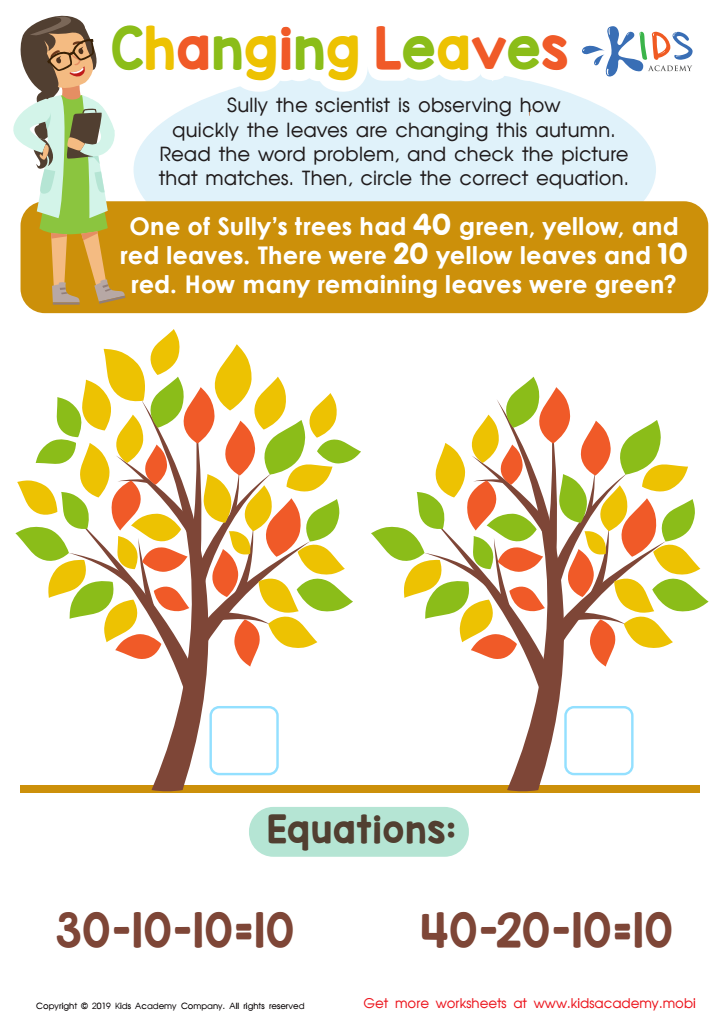
Changing Leaves Worksheet
 Assign to My Students








Understanding seasons is a critical part of education for children ages 8 to 9, not just in science, but also through the lens of math. Parents and teachers should care about this because it allows kids to apply mathematical concepts to real-world scenarios, enhancing their comprehension and retention. When children learn about seasons, they encounter patterns, sequences, and cycles—core principles in math.
For example, recognizing that each year has four seasons, each lasting about three months, introduces basic division and multiplication. Tracking the length of days can involve graphs and charts, instilling skills in data representation and interpretation. Addressing these ideas in relatable contexts helps students grasp abstract concepts like fractions (such as quartering a year for seasons).
Moreover, intertwining math with seasonal learning promotes holistic education. Activities like measuring daylight hours or calculating daylight change rates tie in math with daily life, making lessons both educational and practical. This interdisciplinary approach nurtures critical thinking and problem-solving skills.
Parents and teachers providing a robust understanding of the seasons via math help students build a sustainable interest in both subjects, foster a smoother academic progression, and prepare them for more advanced studies, all while highlighting the ubiquity and importance of math in understanding the world around them.








