
Understanding Sequences Math Worksheets for Ages 8-9
14 filtered results
Difficulty Level
Grade
Age
-
From - To
Subject
Activity
Standards
Discover our "Understanding Sequences Math Worksheets" expertly crafted for ages 8-9. These engaging worksheets help young learners grasp the concept of sequences through fun and interactive activities. With a focus on ordinal numbers, patterns, and logical thinking, students enhance their math skills while enjoying the learning process. Each worksheet is designed to challenge growing minds and reinforce foundational math abilities, preparing them for more advanced concepts. Perfect for both classroom use and at-home practice, these resources encourage independent learning, critical thinking, and a love for mathematics. Explore now and watch your child's confidence in math soar!
Favorites
With answer key
Interactive
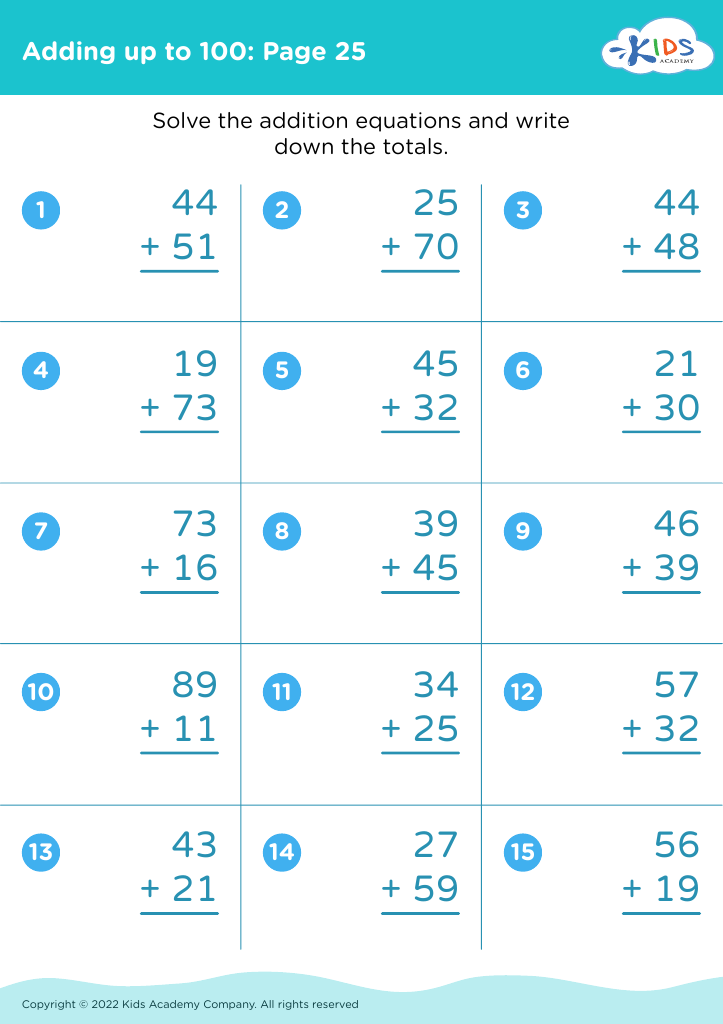
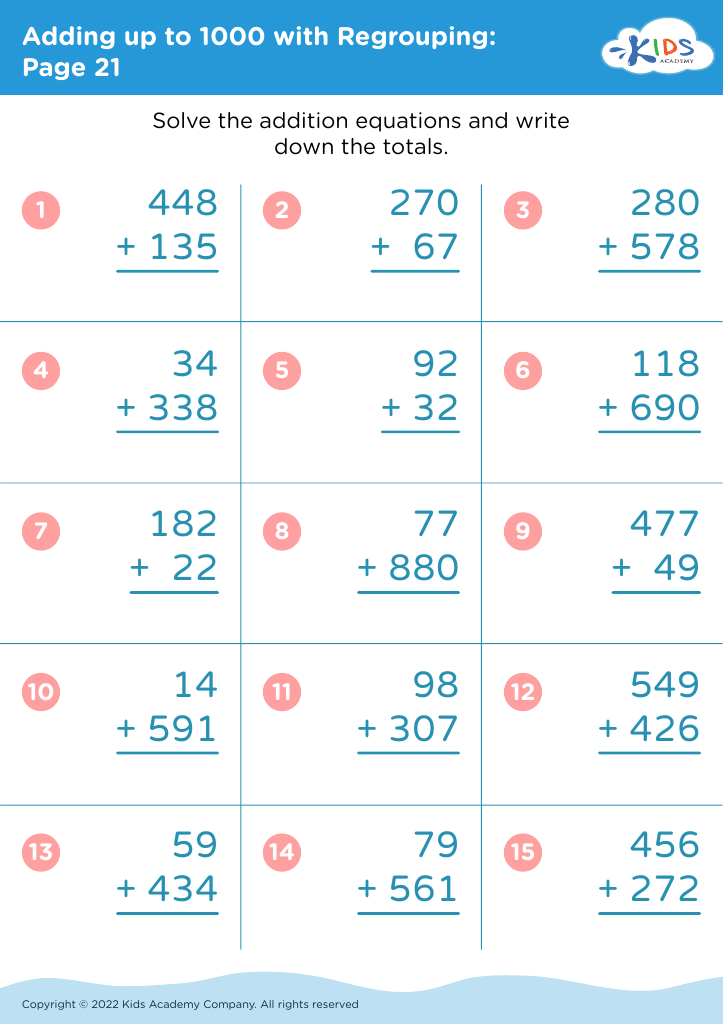
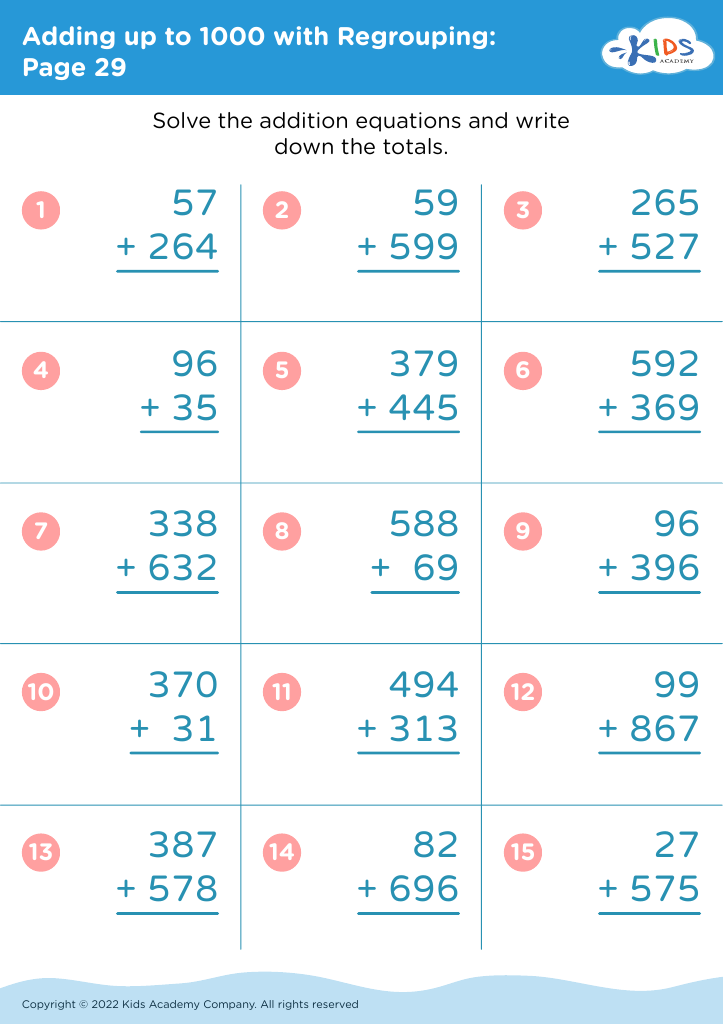
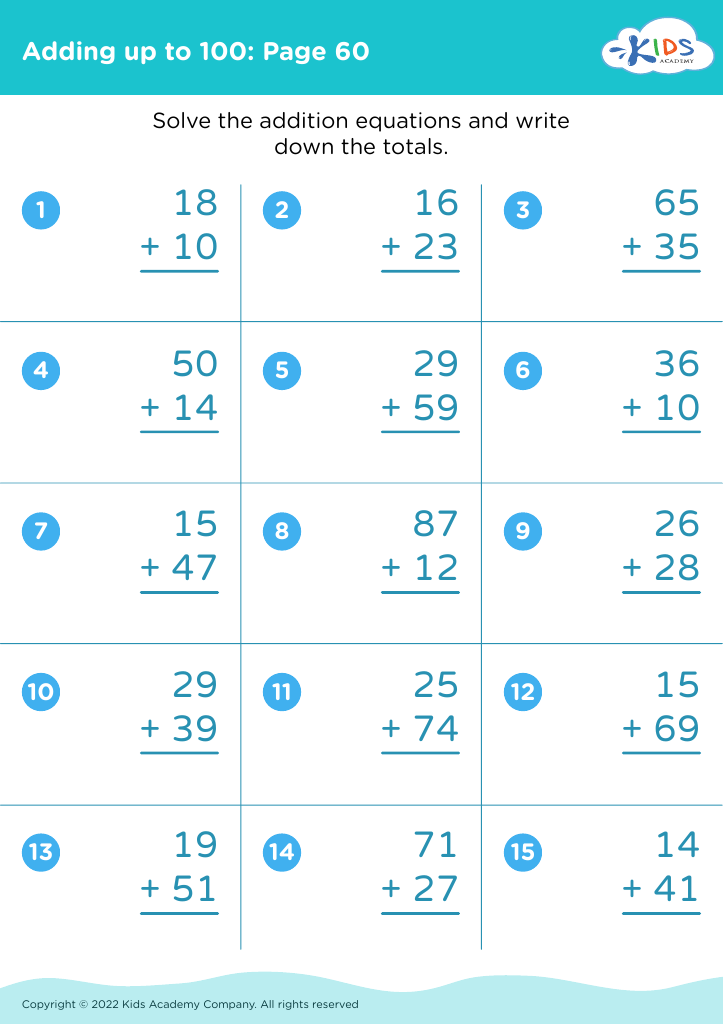
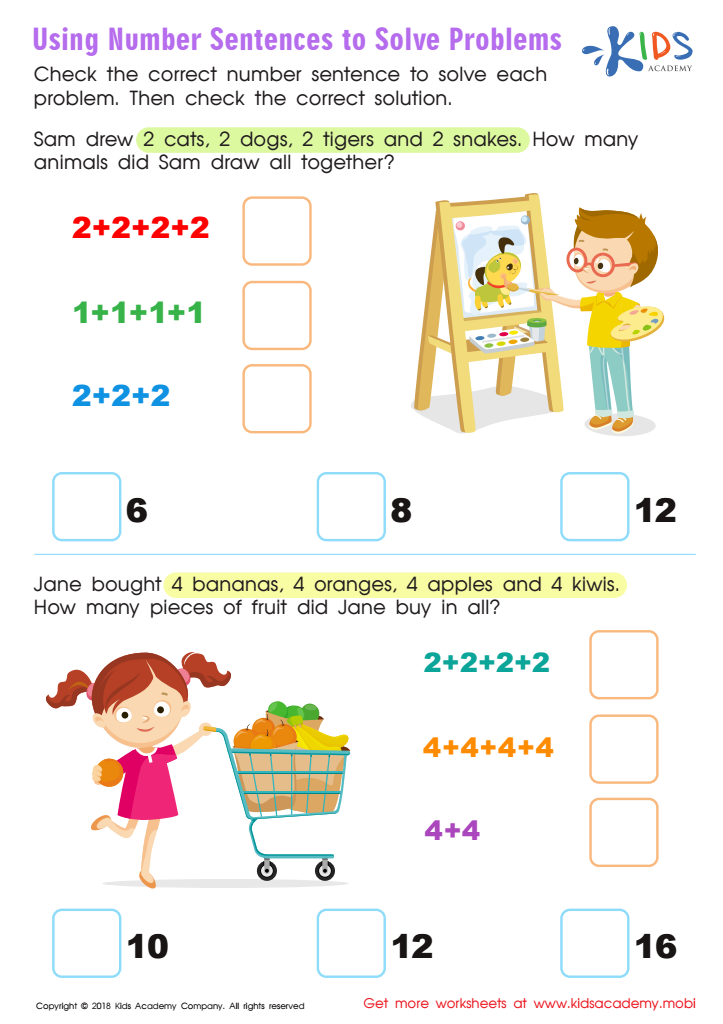
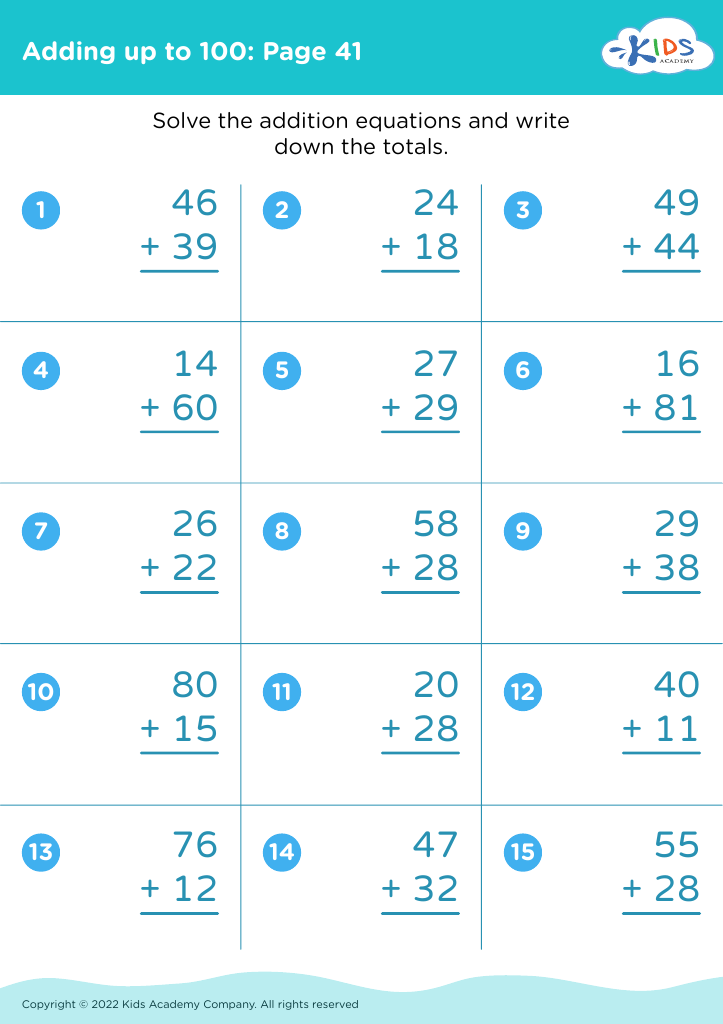
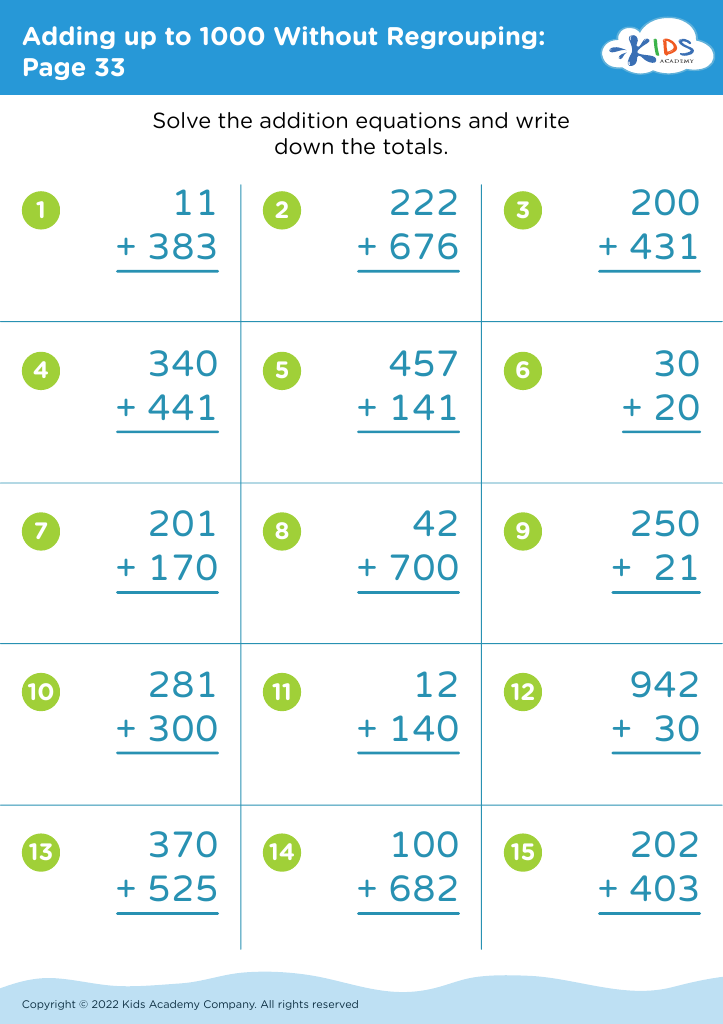
Using Number Sentences to Solve Problems Worksheet
Solving math problems requires an efficient strategy. Picture representation can help young mathematicians with basic addition problems, especially when it involves repeated addends. As they gain confidence, they'll be able to apply their number sentence solving abilities to more complex equations.
 Assign to My Students
Using Number Sentences to Solve Problems Worksheet
Worksheet
Join Kids Academy for Free
Who is primarily going to use this learning content?







Understanding sequences in math is crucial for children aged 8-9, as it lays a strong foundation for higher-level mathematical concepts and critical thinking skills. Sequences assist children in recognizing patterns, which is a core aspect of problem-solving across multiple disciplines.
Firstly, grasping sequences helps in arithmetic progression and lays the groundwork for algebraic thinking. Children learn to predict what comes next in a pattern, fostering their ability to make logical inferences. This skill is not only beneficial in math but also in real-life scenarios where predicting outcomes is essential.
Moreover, sequences enhance a child's number sense—understanding the relationship between numbers and developing spatial awareness. This knowledge supports more complex operations such as multiplication and division, which they will encounter later in their education.
In addition, learning sequences encourages discipline, curiosity, and attention to detail. As children learn to identify and extend sequences, they develop perseverance and confidence in their problem-solving abilities, impacting their academic performance positively.
Lastly, sequences are tied to STEM (Science, Technology, Engineering, Mathematics) activities, making them fundamental for any child who might be inclined towards these fields. Encouraging children to understand and practice sequences prepares them not just for academic success across various subjects but also for real-world challenges.








