Visual discrimination Math Worksheets for Ages 8-9
7 filtered results
-
From - To
Enhance your child's visual discrimination skills with our engaging math worksheets for ages 8-9. Our expertly designed printable activities help young learners differentiate shapes, patterns, and numbers to improve their ability to recognize differences and similarities—crucial for math proficiency. Through fun exercises, kids will boost their attention to detail, sharpen observational skills, and strengthen their foundational math knowledge. Perfect for classroom use or additional home practice, these worksheets support critical thinking and visual analysis, preparing children for more complex math concepts. Visit our web page to explore our collection and empower your child's learning journey today!
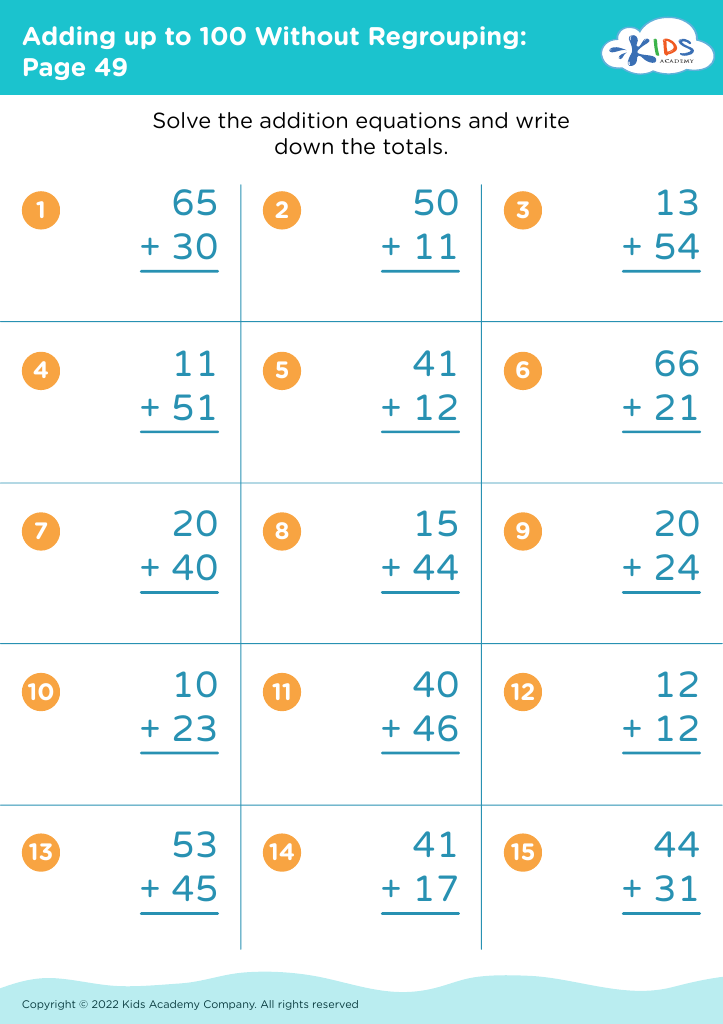
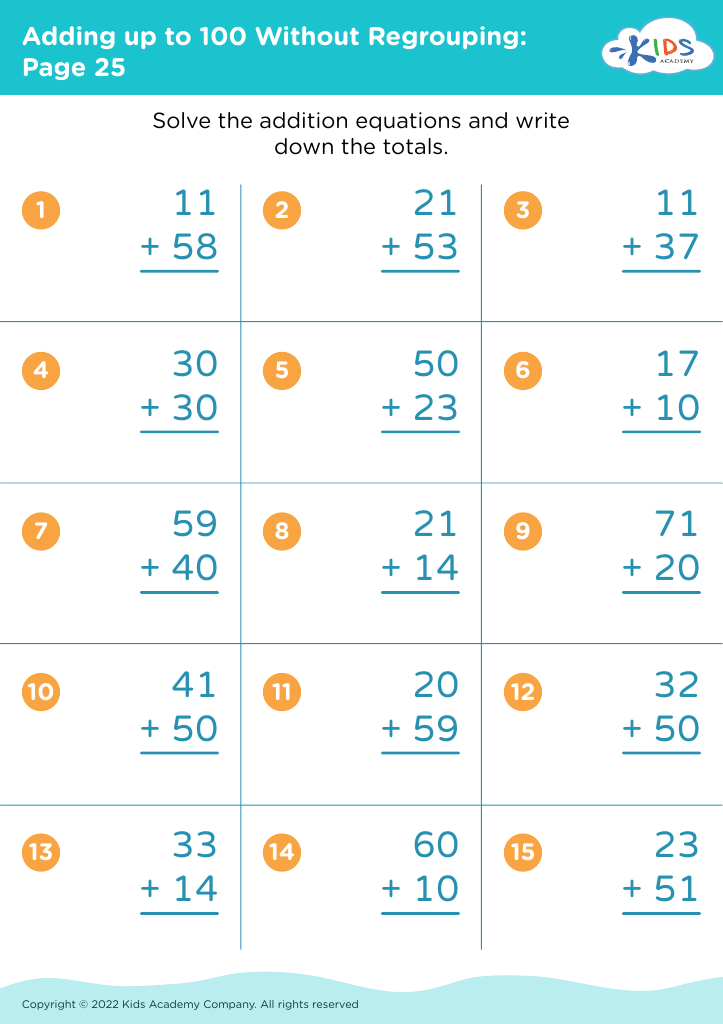
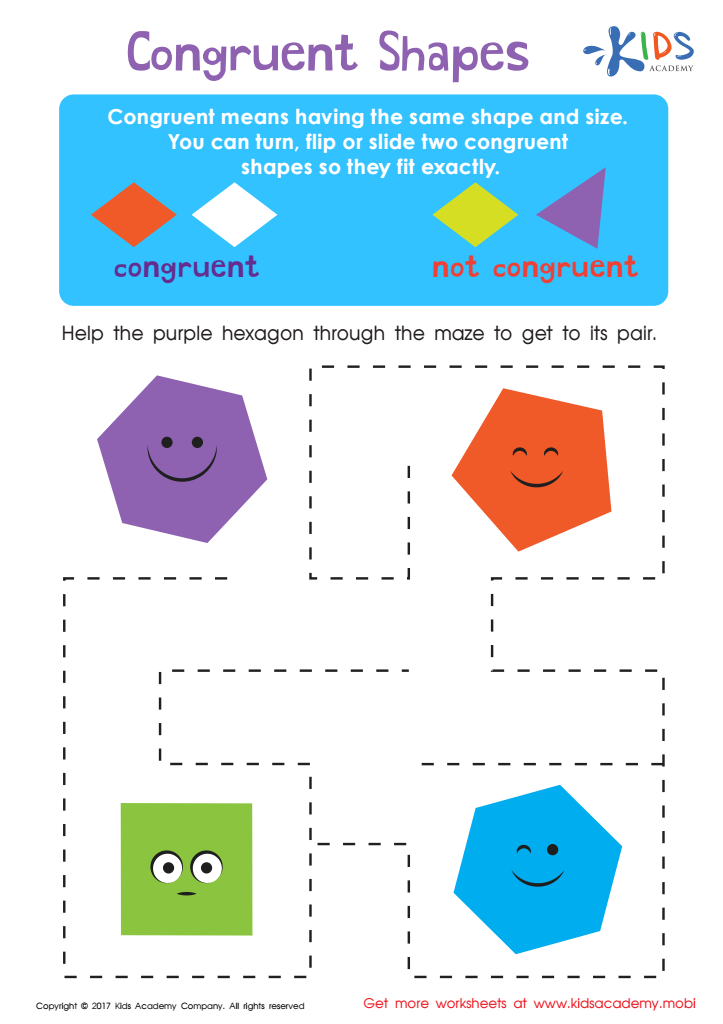
Congruent Shapes Worksheet
 Assign to My Students
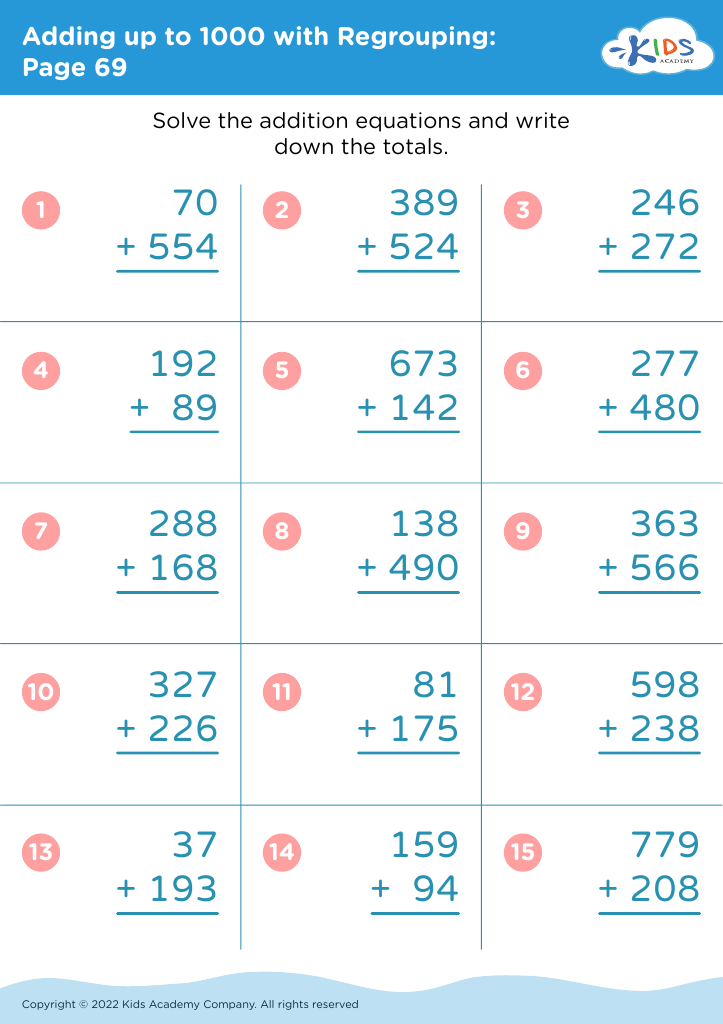
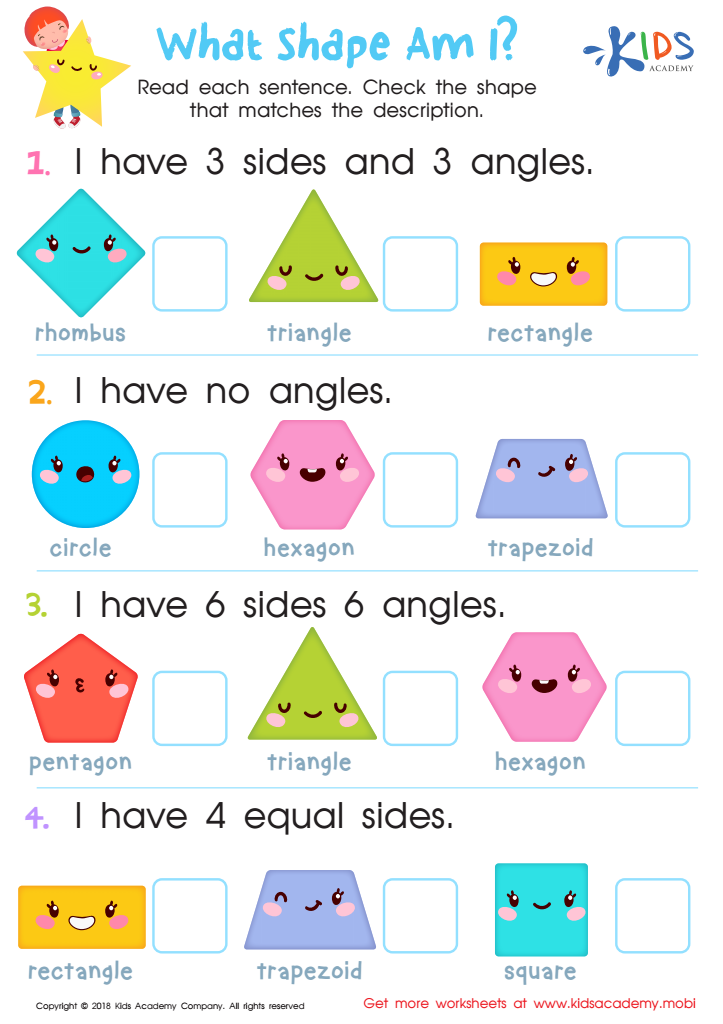
What Shape Am I? Worksheet
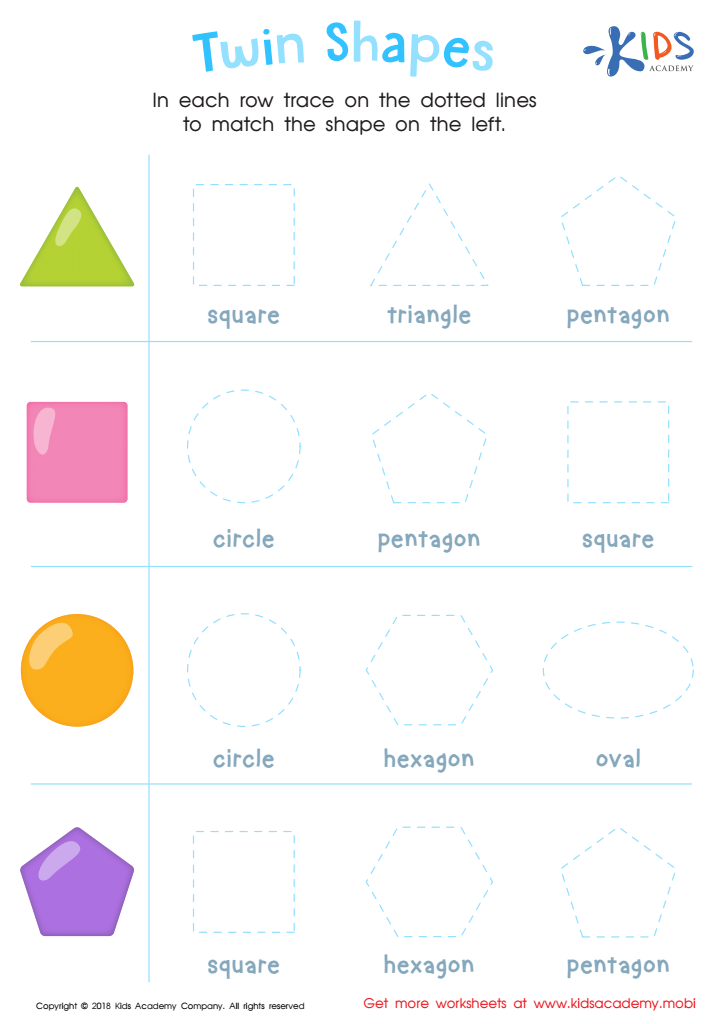
Twin Shapes Dot-to-Dot Worksheet







Visual discrimination in math for ages 8-9 is crucial because it forms the foundation for a child’s ability to understand and interpret mathematical concepts adequately. This skill involves the capacity to recognize differences and similarities in shapes, numbers, symbols, patterns, and objects - all vital elements in math.
Firstly, visual discrimination helps children distinguish between different numbers and mathematical symbols like "+" and "-", minimizing errors in computations and problem-solving. At this age, children begin to encounter more complex mathematics that requires precision in recognizing details. For example, distinguishing between "6" and "9" or "+" and "*".
Secondly, strong visual discrimination skills enhance spatial awareness, aiding children in geometry where identifying shapes and understanding their properties are fundamental. This foundation establishes a basis for future learning in math and related disciplines like science and engineering.
Furthermore, it contributes to the development of critical thinking and analytical skills. When students can differentiate and analyze visual information effectively, they can synthesize this into logical and coherent work, improving overall academic performance.
Lastly, focusing on this skill ensures that children do not become frustrated or discouraged by basic misunderstandings, keeping their confidence and interest in math alive. Therefore, parents and teachers should nurture visual discrimination skills to support children’s holistic development in mathematics and beyond.








