
Visual representation comprehension Math Worksheets for Ages 8-9
8 filtered results
Difficulty Level
Grade
Age
-
From - To
Subject
Activity
Standards
Explore our engaging Visual Representation Comprehension Math Worksheets designed for children ages 8-9! These worksheets help young learners enhance their mathematical understanding by utilizing visual aids such as graphs, charts, and diagrams. By connecting math concepts with visual representations, students strengthen their problem-solving skills and boost their confidence in tackling math challenges. Our carefully crafted exercises cater to various learning styles, making math both fun and accessible. Perfect for classroom use or at-home practice! Start inspiring your child's love of math today with these dynamic resources that promote critical thinking and comprehension skills essential for academic success.
Favorites
With answer key
Interactive
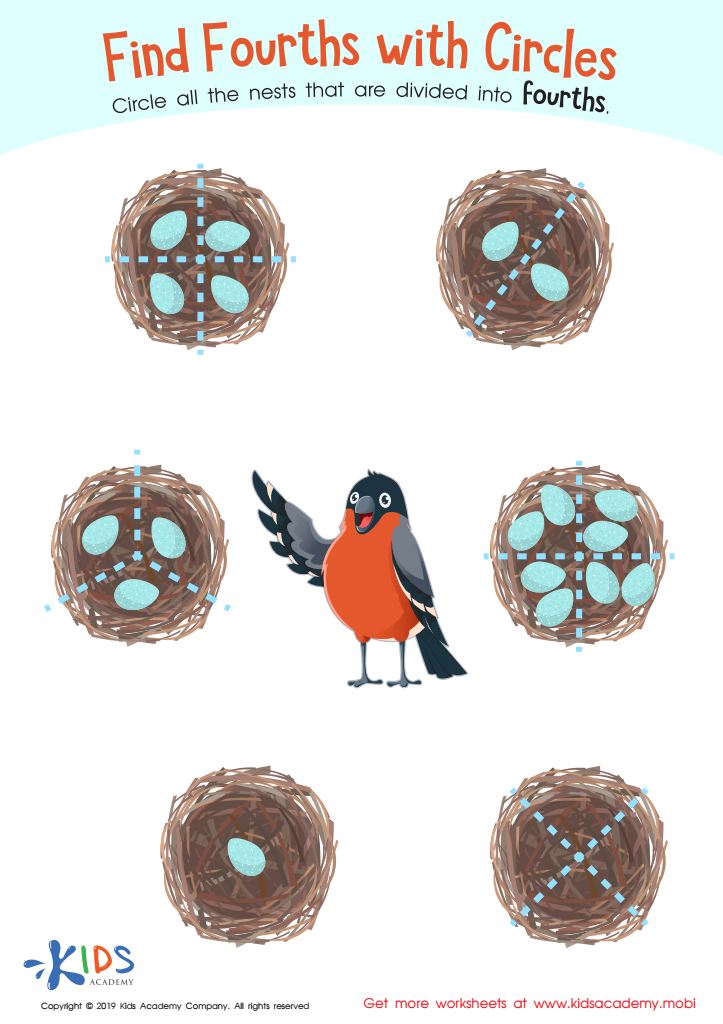
Find Fourths Circles Worksheet
Finding fractions with this Find Fourths with Circles worksheet can be fun! Your child will see a picture of circles divided into different fractions and circle the nests divided into fourths. With the help of their cheery bird friend, they can look for nests with four equal parts and be successful in finding the correct nest.
 Assign to My Students
Find Fourths Circles Worksheet
Worksheet
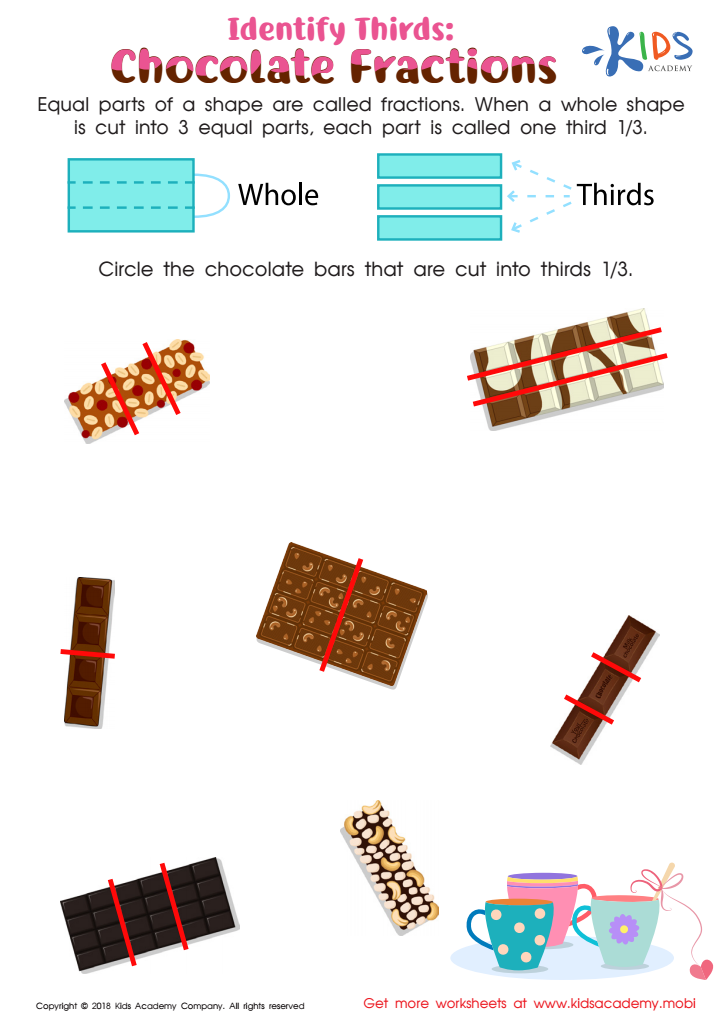
Identify Thirds: Chocolate Fractions Worksheet
Divide shapes into equal parts and explain fractions to your child. Show them a worksheet with pictures of chocolate bars cut into thirds (1/3) and ask them to circle them.
Identify Thirds: Chocolate Fractions Worksheet
Worksheet
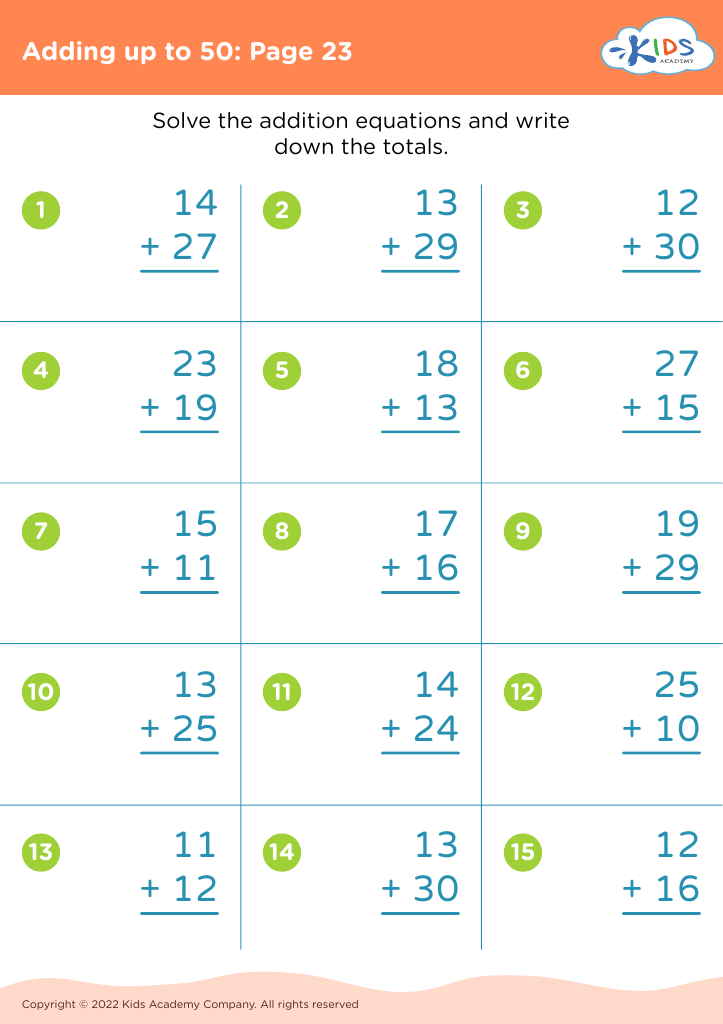
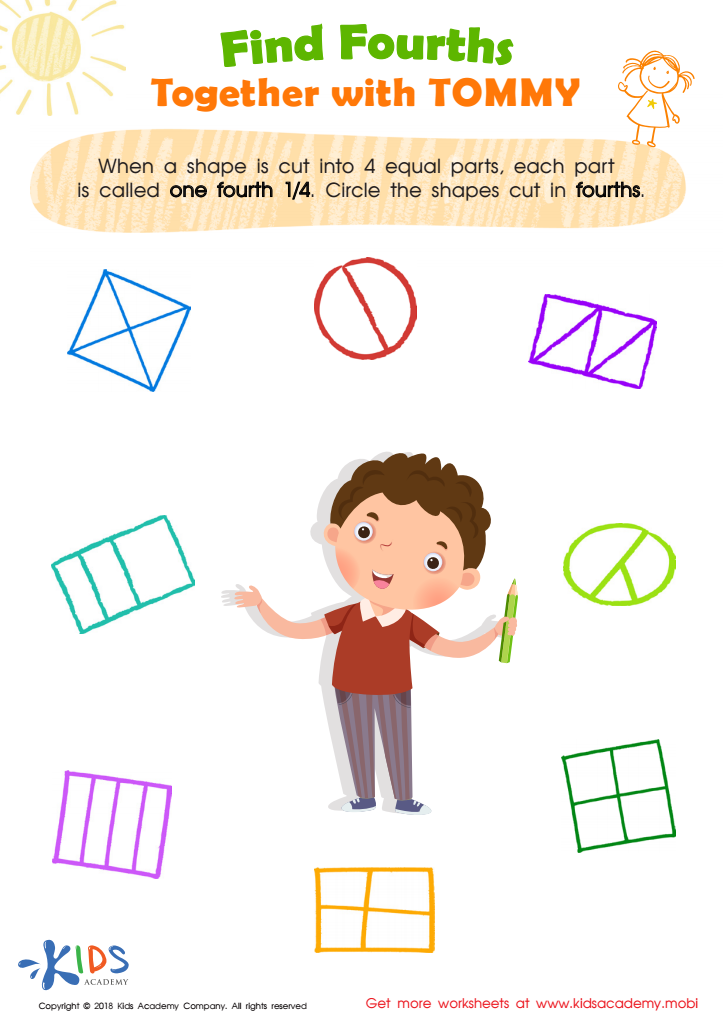
Find Fourths Together with Tommy Worksheet
Teach your kids fractions with this easy and fun worksheet! They should already know that two equal parts is a half, and three is a third. Now, help them understand one fourth (¼) by asking them to circle shapes that are divided into four parts. Make fractions learning stress-free for you and your children!
Find Fourths Together with Tommy Worksheet
Worksheet
Join Kids Academy for Free
Who is primarily going to use this learning content?







Visual representation comprehension in math is crucial for children ages 8-9, as it serves as a bridge between abstract concepts and tangible understanding. At this stage of development, children are beginning to tackle more complex math concepts, including fractions, geometry, and data interpretation. Utilizing visual aids, such as number lines, pie charts, and geometric shapes, helps students not only to grasp these concepts more easily but also to retain and apply their knowledge effectively.
When parents and teachers prioritize visual representation, they promote a deeper understanding of mathematical relationships and problem-solving strategies. This approach encourages students to visualize problems, which enhances critical thinking and strengthens cognitive skills. Moreover, visual representations cater to various learning styles, making math more accessible to students who may struggle with traditional methods.
Additionally, fostering strong comprehension of these visual tools can build confidence in young learners, reducing anxiety surrounding math. By caring about visual representation comprehension, parents and teachers empower students to become independent learners, adept at navigating mathematical challenges with greater ease and assurance. Overall, this foundational skill is essential in helping children become proficient and enthusiastic about math throughout their academic journey and beyond.








