Interpreting data Measurement Worksheets for Ages 8-9
4 filtered results
-
From - To
Enhance your child's math skills with our engaging "Interpreting Data Measurement Worksheets" designed for ages 8-9! These worksheets provide a fun and interactive way for young learners to develop essential data interpretation skills. Kids will explore and analyze various types of data, including graphs and charts, while strengthening their understanding of measurements. Each activity is tailored to meet age-specific learning goals, ensuring that your child builds a solid foundation in analyzing information. Perfect for classroom use or at-home learning, these worksheets foster critical thinking and problem-solving abilities. Download now and help your child become a confident data interpreter!
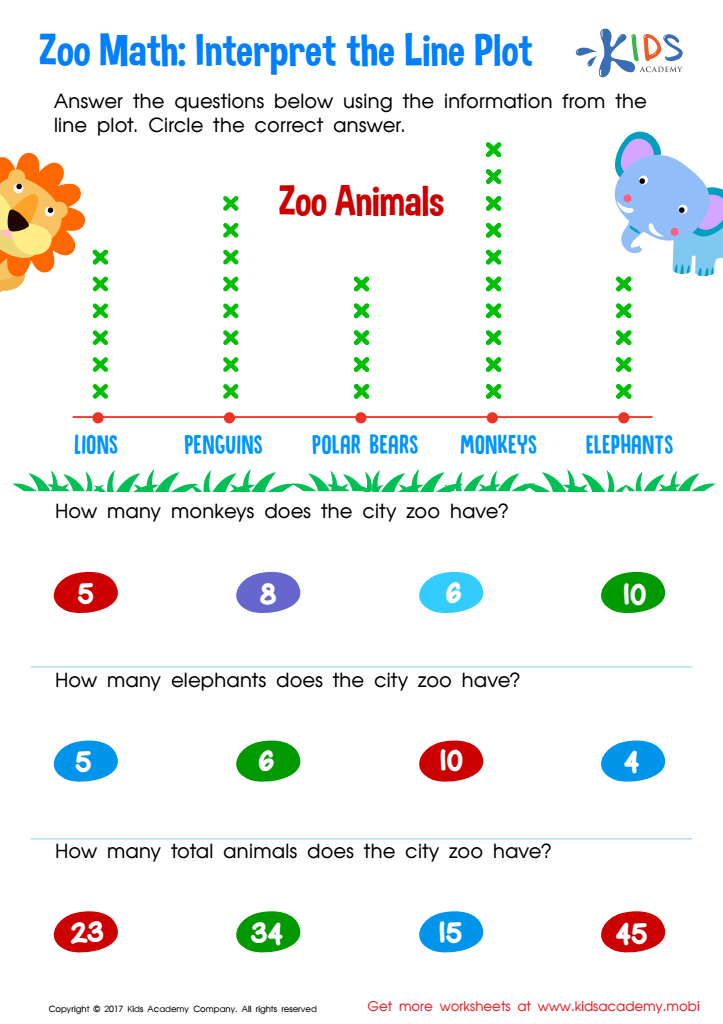
Interpret Line Plot Worksheet
 Assign to My Students
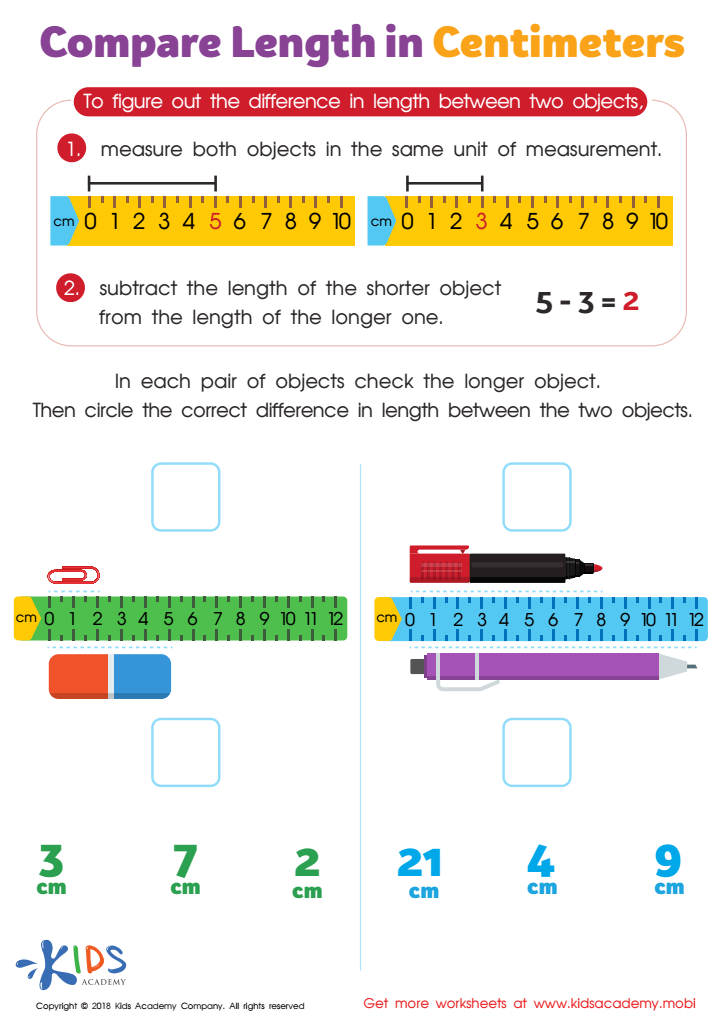
Compare Length in Centimeters Worksheet
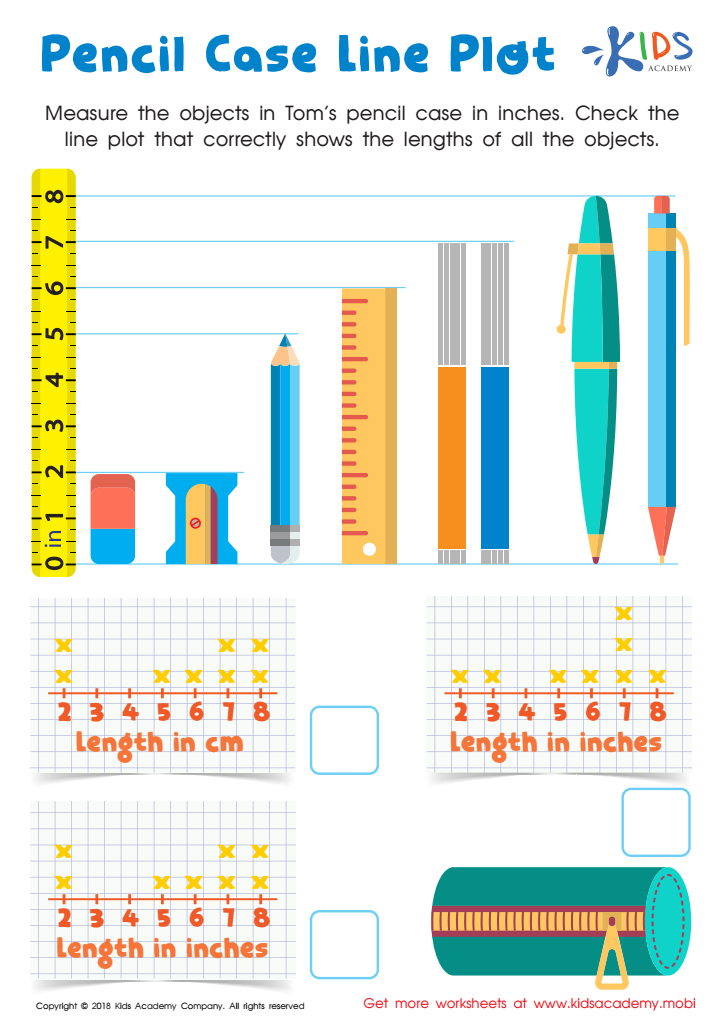
Pencil Case Line Plot Worksheet
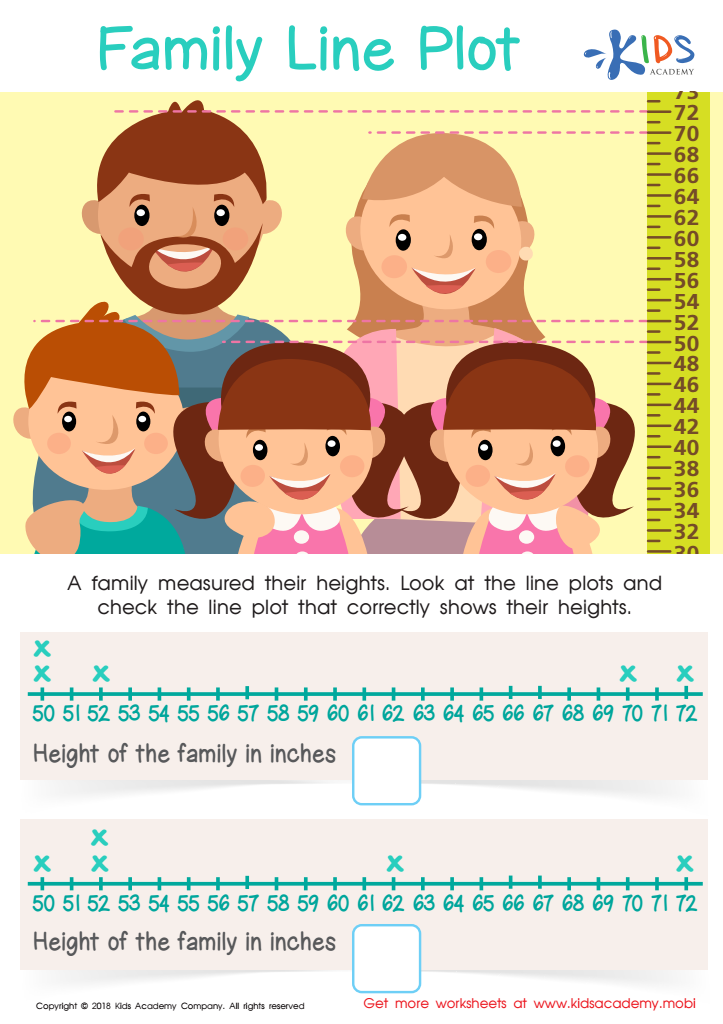
Family Line Plot Worksheet








Interpreting data measurement is a crucial skill for children aged 8-9, forming the foundation for later academic success and informed decision-making in their personal lives. At this age, students typically begin to experience more complex mathematical concepts, and data interpretation helps enhance their analytical thinking skills. Parents and teachers should care about this aspect of learning because it nurtures critical thinking and equips children with the ability to draw conclusions from various information sources.
Understanding data measurement includes recognizing scales, graphs, and other visual representations, which are increasingly used in everyday life. By engaging with these concepts, children learn to assess quantities, make predictions, and evaluate outcomes based on real-world information. This early exposure prepares them for higher-level topics in mathematics and science as they progress in their education.
Moreover, data interpretation fosters curiosity and encourages inquiry-based learning. When children interpret data, they can investigate questions that interest them, thereby becoming more engaged in their own education. Ultimately, the benefits extend beyond academics; data literacy is essential in our data-driven world, empowering children to become well-informed adults. For these reasons, parents and teachers should prioritize and support developing data interpretation skills in young learners.








