Understanding times tables Multiplication Worksheets for Ages 8-9
6 filtered results
-
From - To
Welcome to our "Understanding Times Tables Multiplication Worksheets" designed specifically for children ages 8-9! Our engaging worksheets provide a comprehensive approach to mastering multiplication concepts. Featuring a variety of exercises, these worksheets will help your child grasp times tables through fun activities and practical applications. As they practice, they’ll develop essential skills like problem-solving, critical thinking, and number fluency. These worksheets cater to different learning styles, making it easy for every child to improve their multiplication abilities at their own pace. Empower your child’s math journey today with our effective resources and watch them gain confidence in their skills!
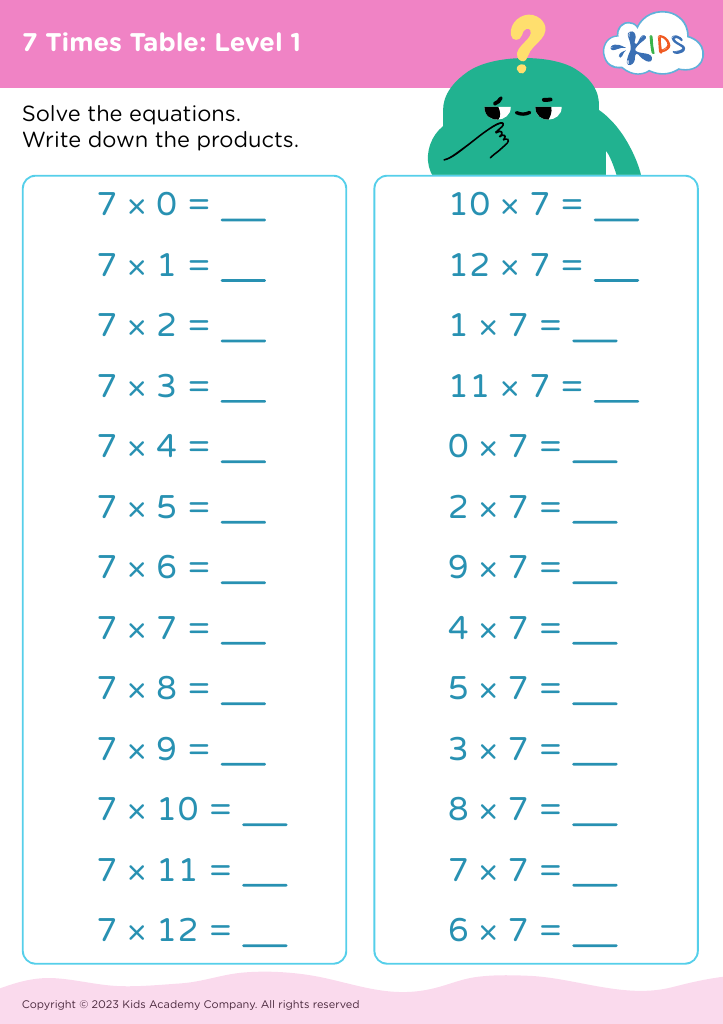
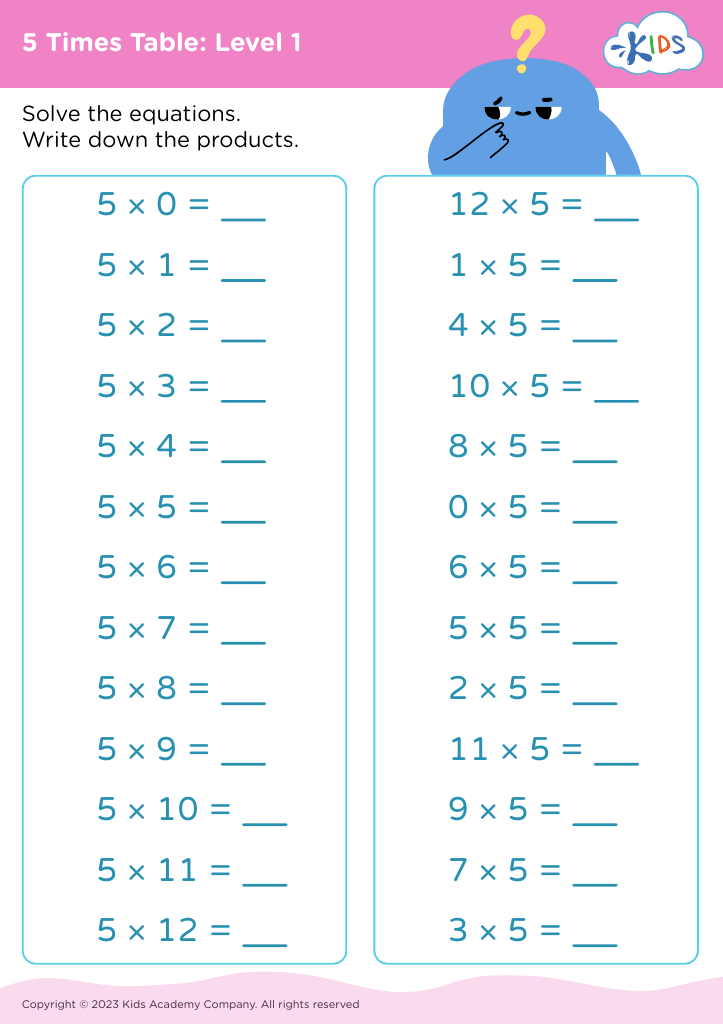
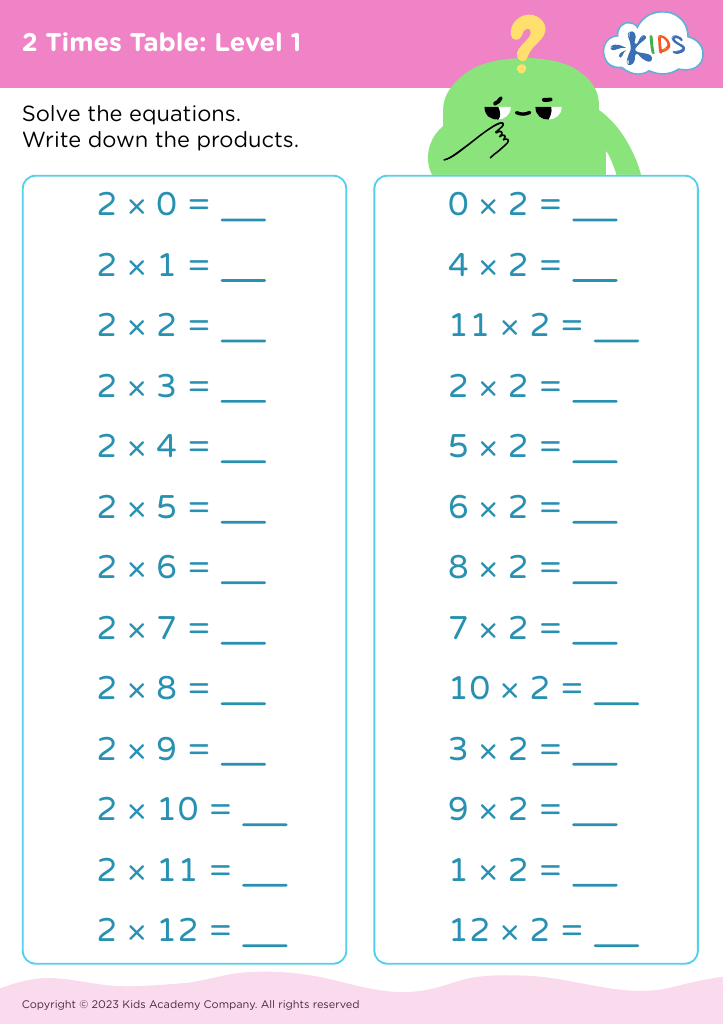
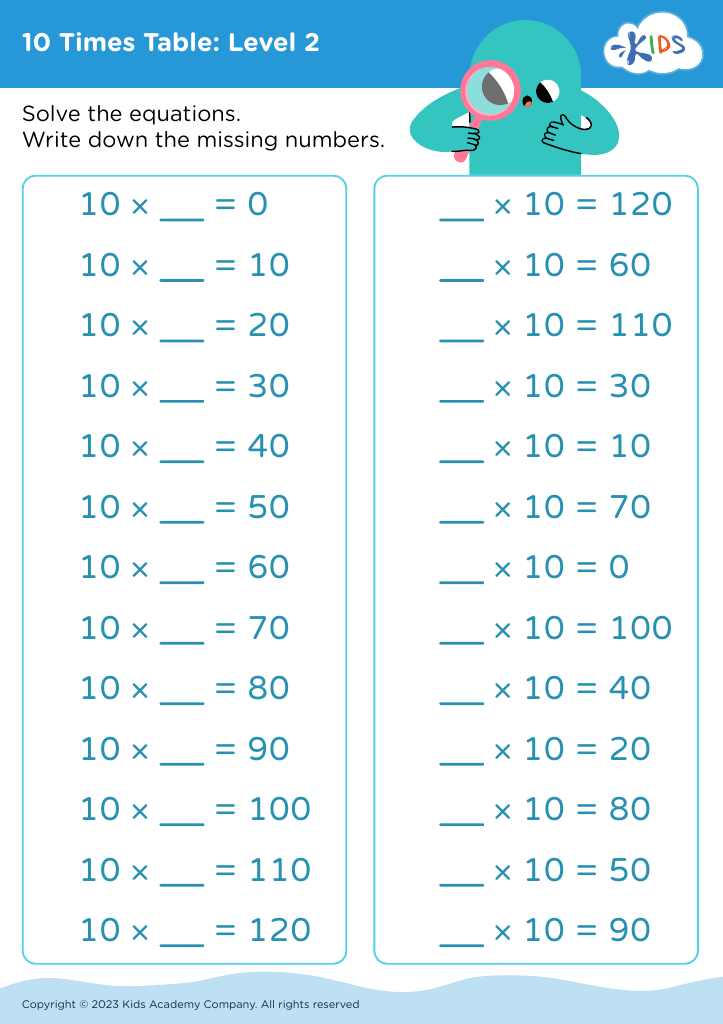
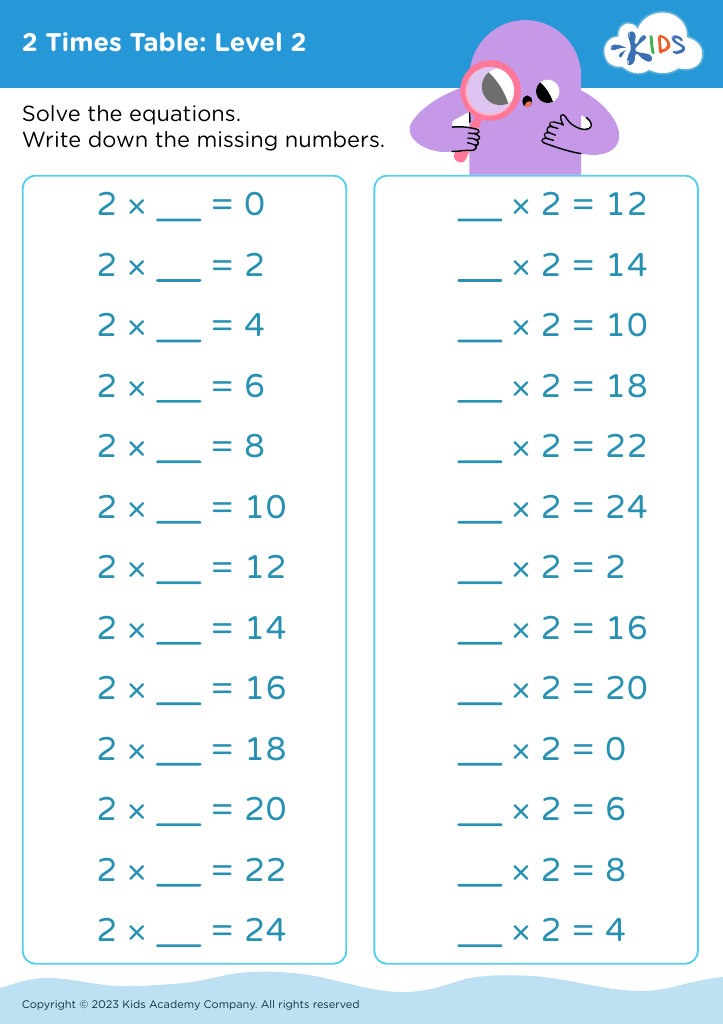
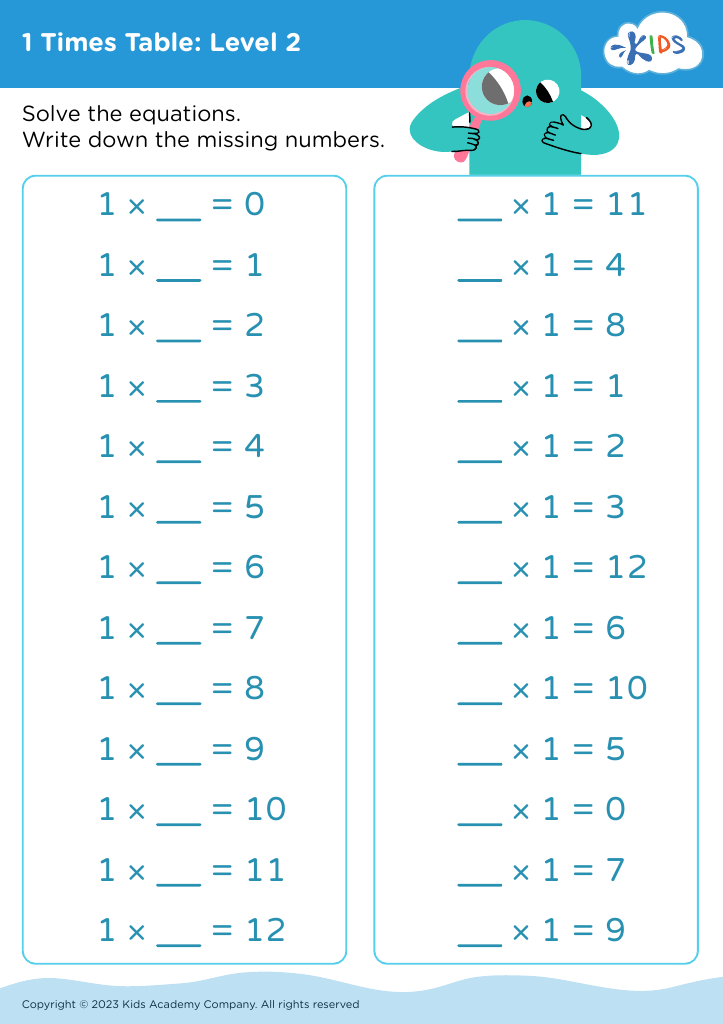








Understanding times tables is crucial for children aged 8-9 as it lays the foundation for their mathematical competence. At this stage, children are transitioning from basic arithmetic to more complex mathematical concepts, making mastery of multiplication essential.
Firstly, times tables enhance problem-solving skills. When children memorize and comprehend multiplication facts, it helps them tackle larger numbers and more advanced operations, such as division, fractions, and even algebra later on. This understanding builds confidence in their mathematical abilities, fostering a positive attitude towards learning.
Additionally, multiplication is universally applicable in daily life. From calculating expenses during shopping to measuring ingredients in a recipe, a solid grasp of times tables can empower children to handle practical situations independently.
Moreover, understanding multiplication can improve cognitive skills, developing logical thinking and memory. Engaging in fun activities, games, and techniques can help make learning easier and more enjoyable, encouraging a lifelong love for math.
Parents and teachers should prioritize teaching times tables because it is not just about numbers; it’s about equipping children with crucial life skills and a strong foundation for future academic success. Investing in this understanding will benefit children throughout their education and beyond.








