Multiplication practice Times Tables Worksheets for Ages 8-9 - Page 2
33 filtered results
-
From - To
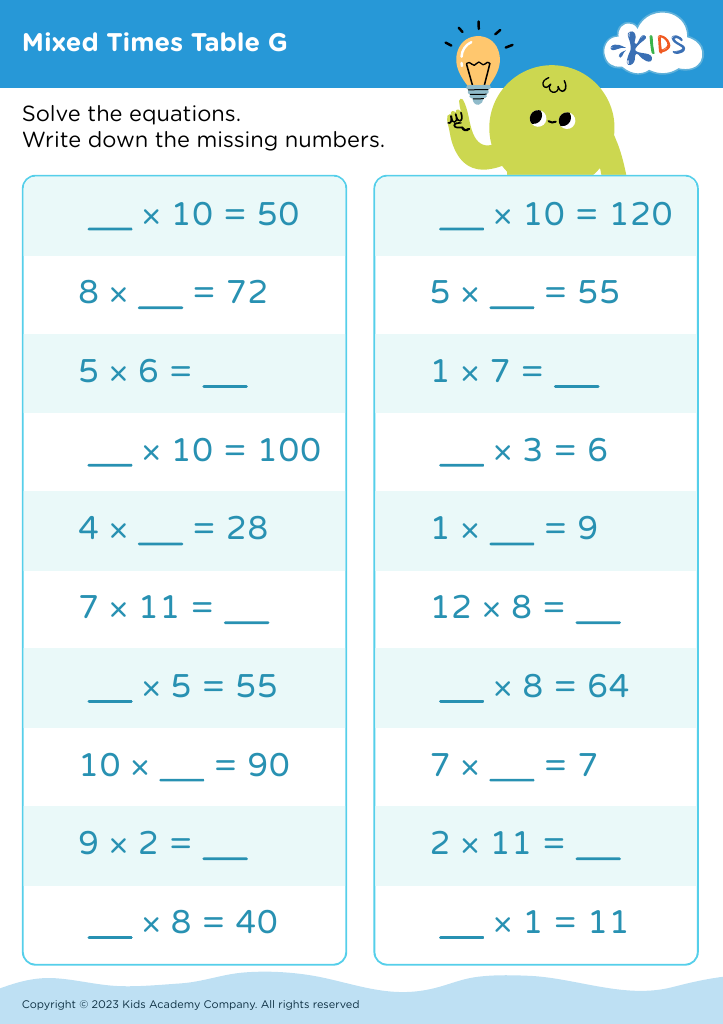
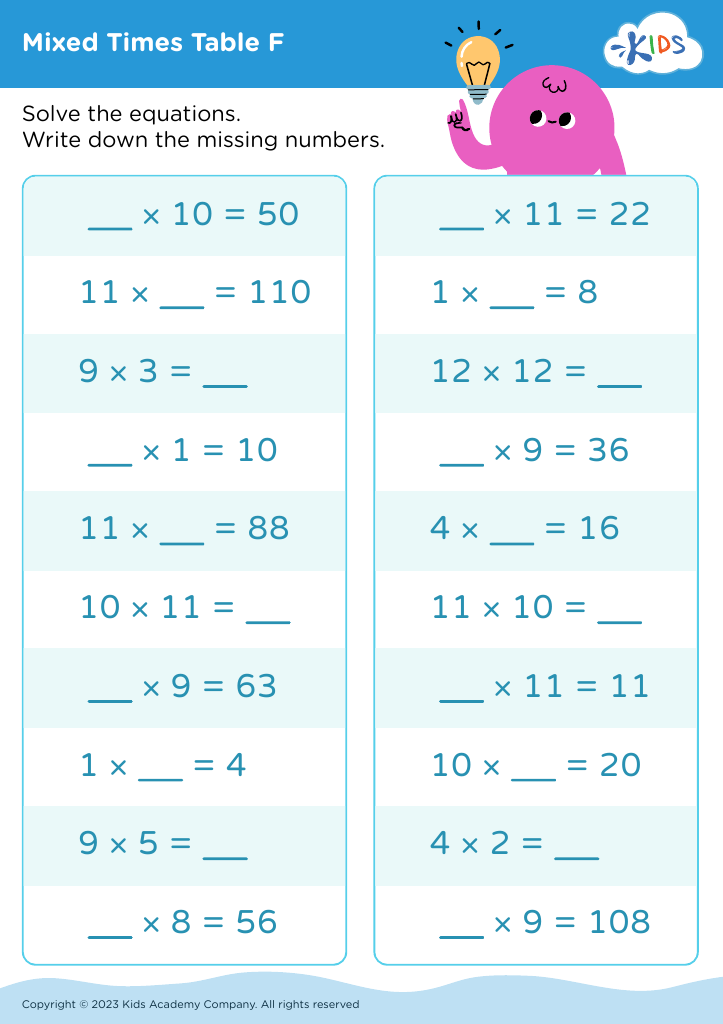
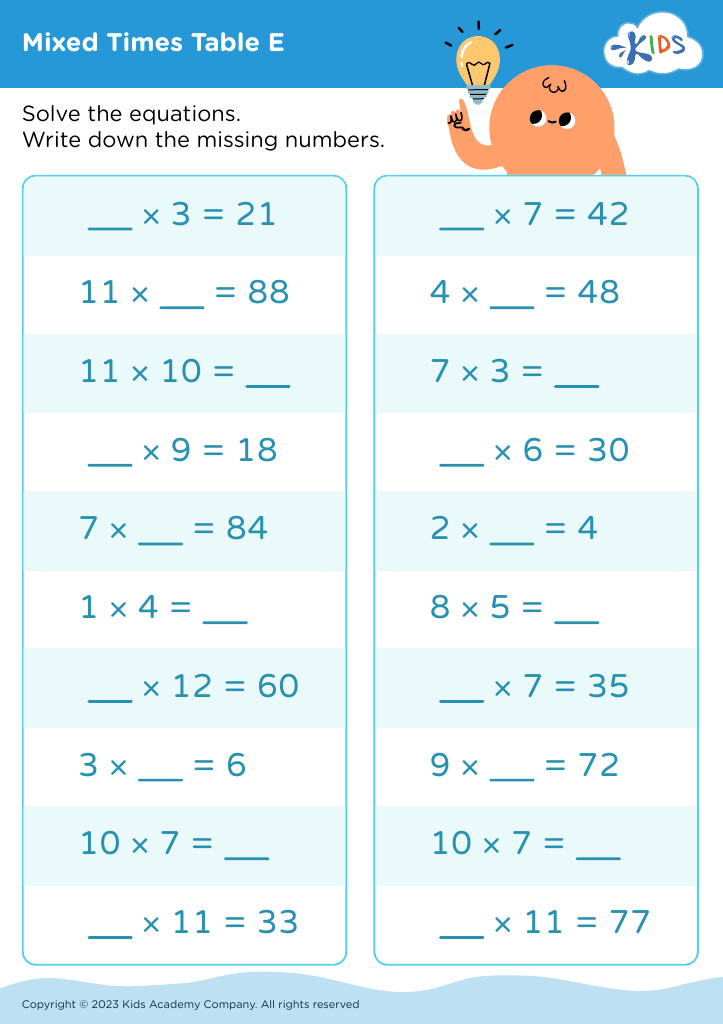
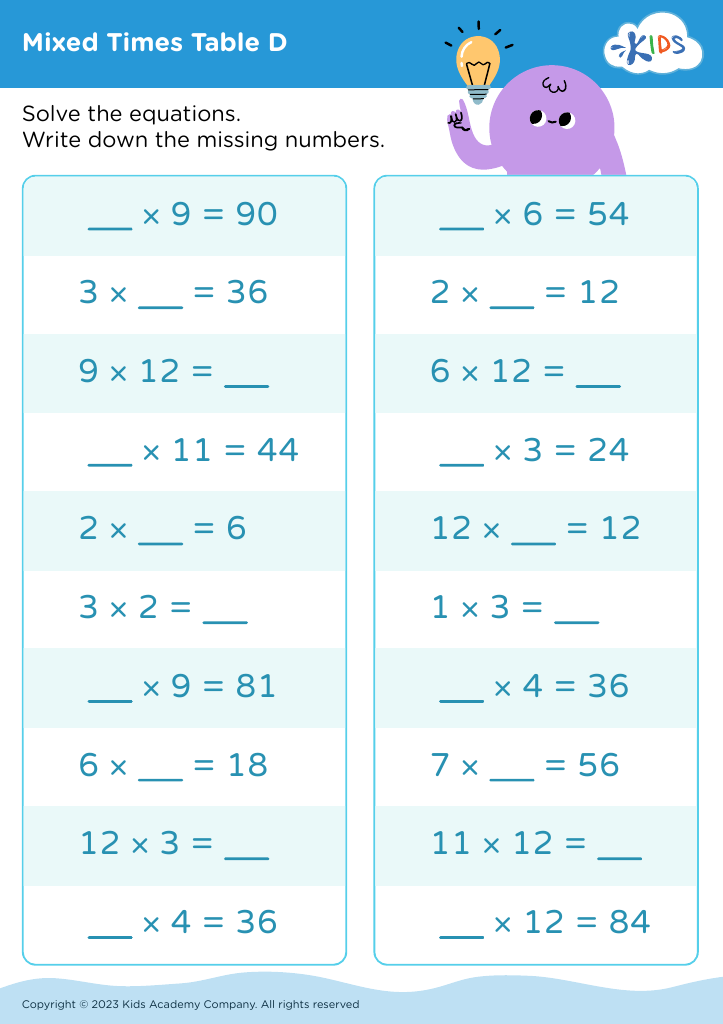
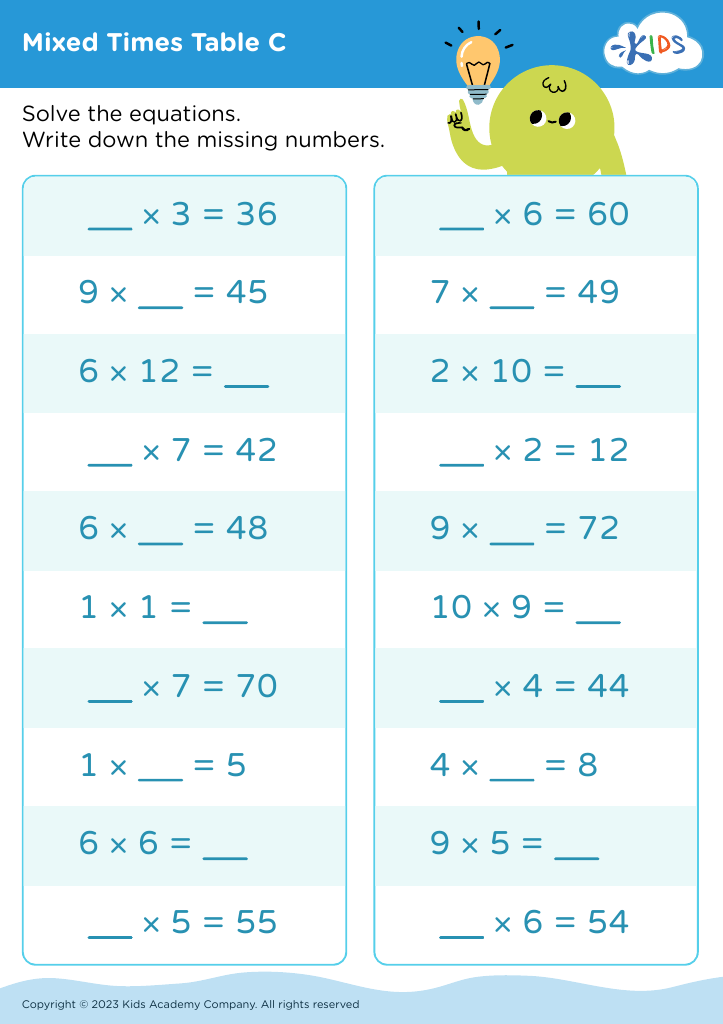
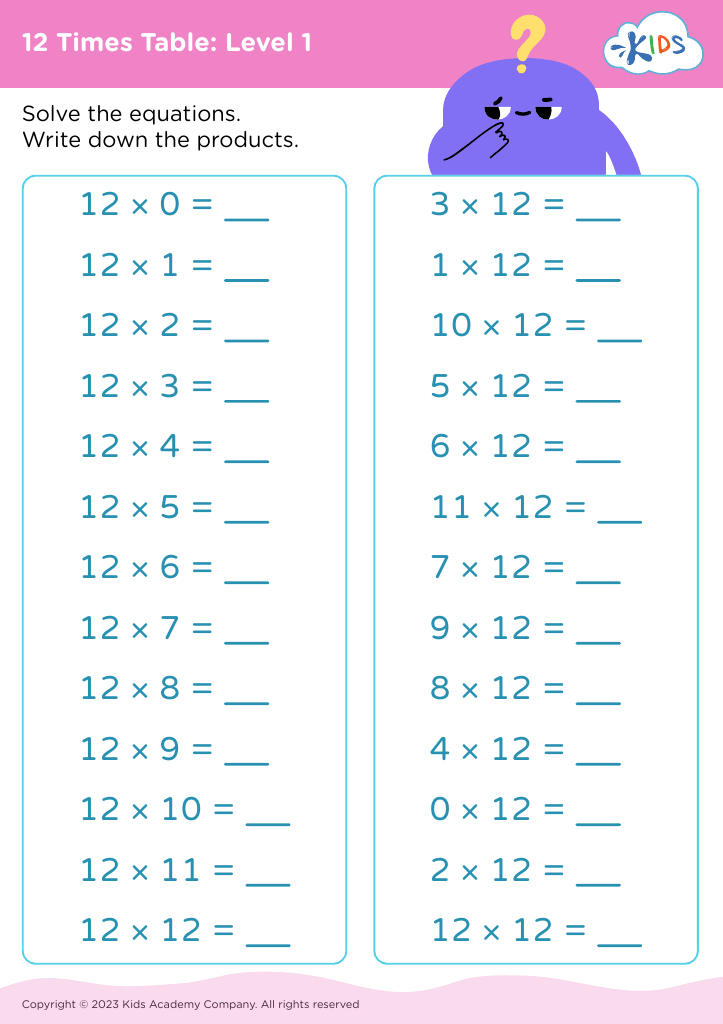
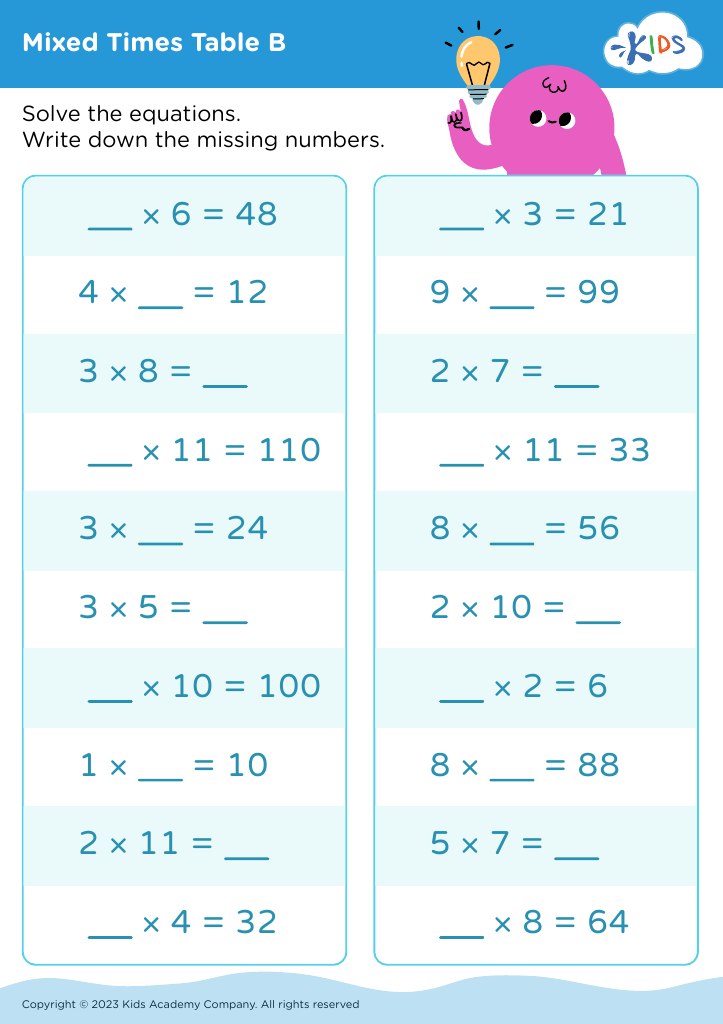
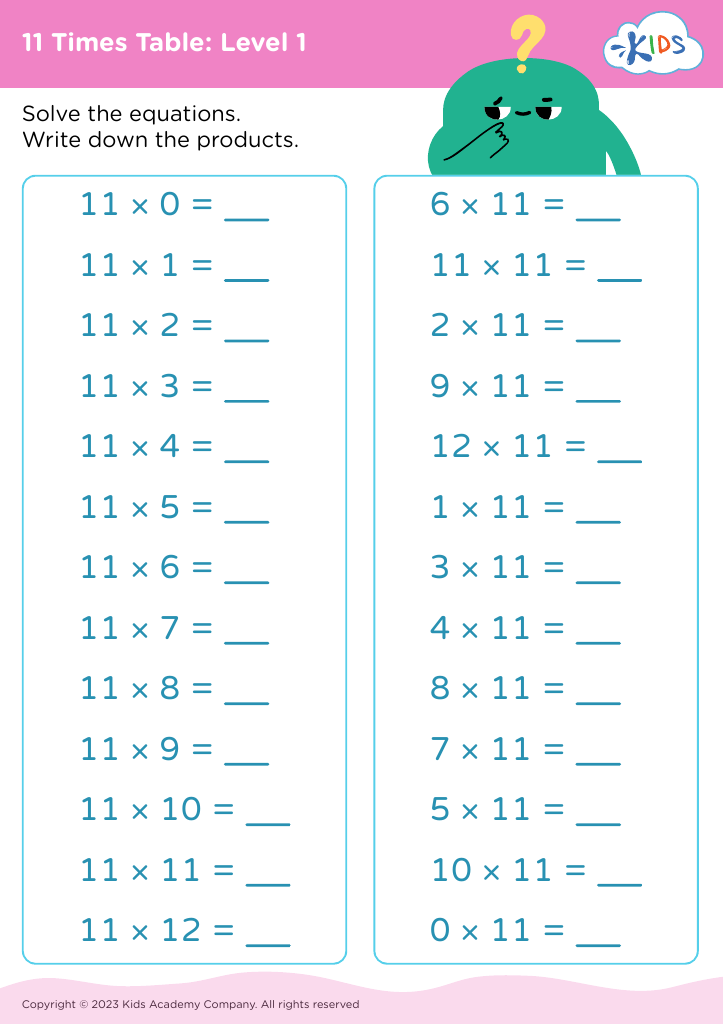
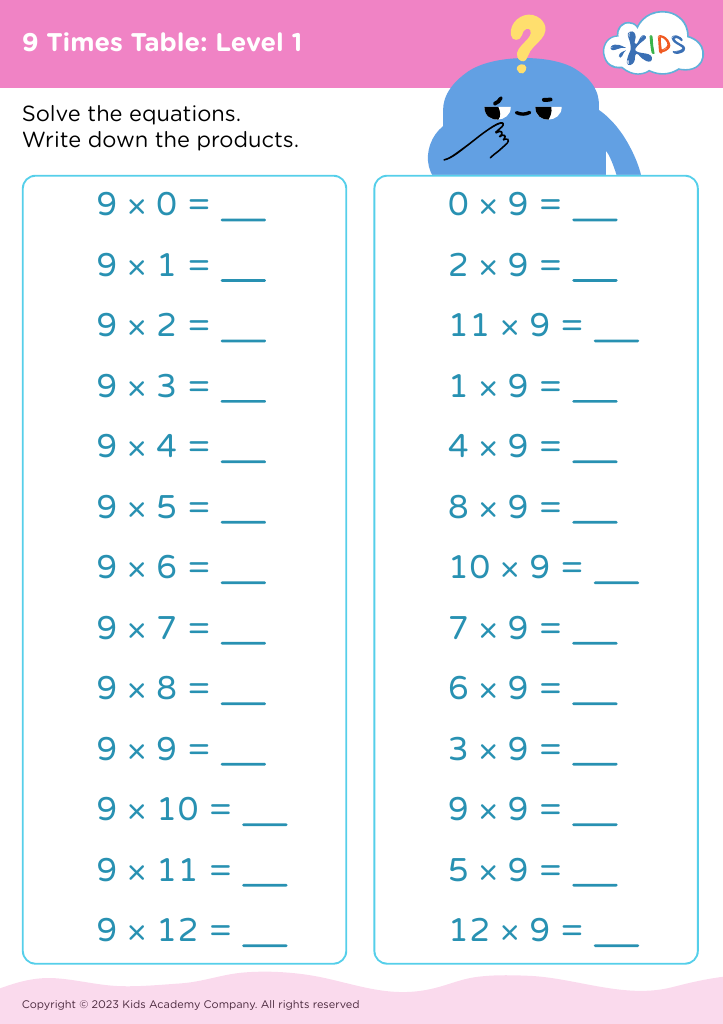





Parents and teachers should prioritize multiplication practice for children ages 8-9 because mastery of times tables is crucial for academic success and confidence in mathematics. At this age, students are transitioning from learning basic arithmetic concepts to applying them in more complex problem-solving situations. Proficiency in multiplication lays a strong foundation for future math subjects, including division, fractions, and algebra.
Moreover, fluency in times tables enables children to tackle word problems and mathematical reasoning with greater ease, reducing anxiety and building self-esteem. As they encounter real-life applications, such as budgeting, measuring, or sharing, their ability to quickly recall multiplication facts becomes invaluable.
Furthermore, consistent practice creates neural pathways that enhance overall cognitive skills. Engaging children in fun and interactive multiplication activities—like games, songs, or flashcards—can also make learning enjoyable. When parents and teachers work together, they can provide a supportive environment that encourages students to practice regularly.
Ultimately, emphasizing multiplication practice not only strengthens mathematical skills but also instills a lifelong appreciation for learning, critical thinking, and perseverance, setting children on a path to future academic achievement.








