Attention to Detail Building Vocabulary Worksheets for Ages 8-9
4 filtered results
-
From - To
Enhance your child's vocabulary skills with our "Attention to Detail Building Vocabulary Worksheets" designed specifically for ages 8-9. These engaging worksheets help young learners focus on the nuances of language, developing their ability to notice details in words and sentences. By involving students in fun activities such as word searches, matching exercises, and fill-in-the-blanks, these worksheets promote language retention and comprehension. Tailored to capture the interests of children, they provide a dynamic approach to learning. Encourage a love for reading and enhance critical thinking with our detailed, interactive vocabulary resources that support educational growth while making learning enjoyable!

The Dog and His Bone Worksheet
 Assign to My Students











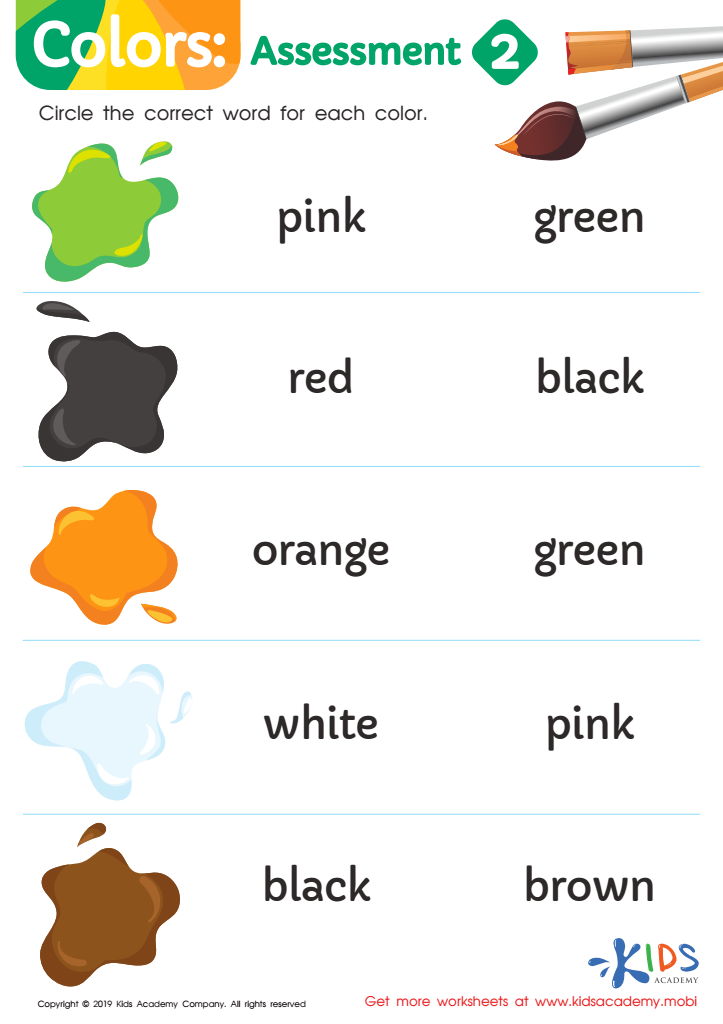
Colors: Assessment 2 Worksheet
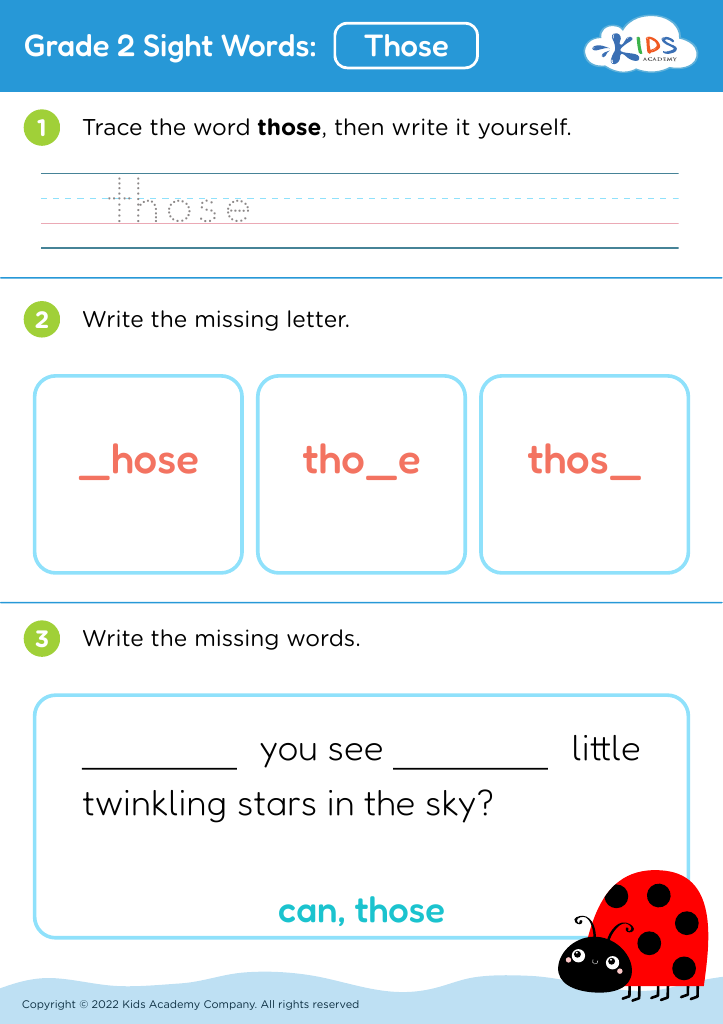
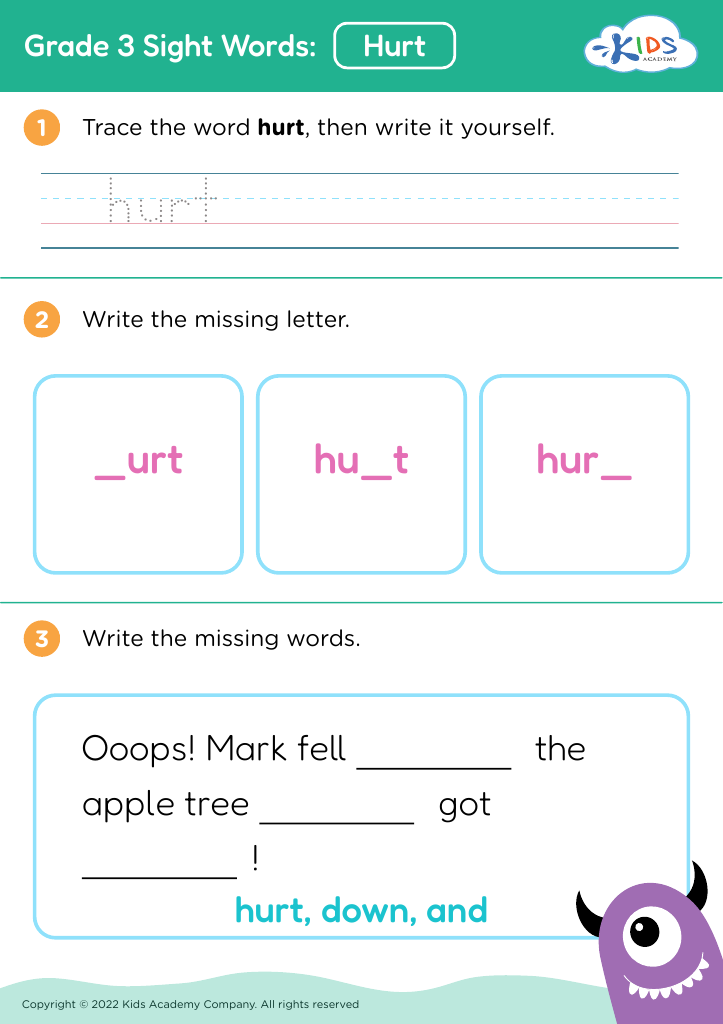








Attention to Detail and vocabulary building are crucial skills for children aged 8-9, as they form the foundation for effective communication, comprehension, and critical thinking. At this age, children are increasingly engaged in complex texts and assignments. A robust vocabulary allows them to express thoughts clearly and understand nuanced meanings, fostering academic success.
Moreover, attention to detail enhances focus and promotes a thorough approach to tasks. It helps children notice important information, improving their abilities in reading comprehension and problem-solving. When students can pay close attention to details, they often make fewer mistakes and develop better learning habits.
Additionally, fostering these skills at a young age encourages curiosity and a love for learning, as children are more likely to explore subjects deeply when equipped with a rich vocabulary and an eye for detail. This is particularly vital in subjects like science and social studies, where precise language is essential.
Ultimately, parents and teachers should prioritize these areas to support their children's educational trajectory, preparedness for future challenges, and overall confidence in their academic abilities. By investing time in vocabulary and attention to detail, they help children evolve into articulate, insightful, and effective learners.








