Contextual understanding Building Vocabulary Worksheets for Ages 8-9
5 filtered results
-
From - To
Our "Contextual Understanding Building Vocabulary Worksheets for Ages 8-9" offer an engaging way for young learners to enhance their vocabulary. These worksheets focus on teaching children how to infer the meaning of new words using the context in which they appear. Through a variety of exercises including reading passages, sentence completion, and creative activities, students will build critical thinking skills and deepen their reading comprehension. Suitable for classroom or home use, these resources provide essential practice to help children become confident, proficient readers who can easily grasp the nuances of language. Spark your child's love for learning with our expertly designed vocabulary worksheets.
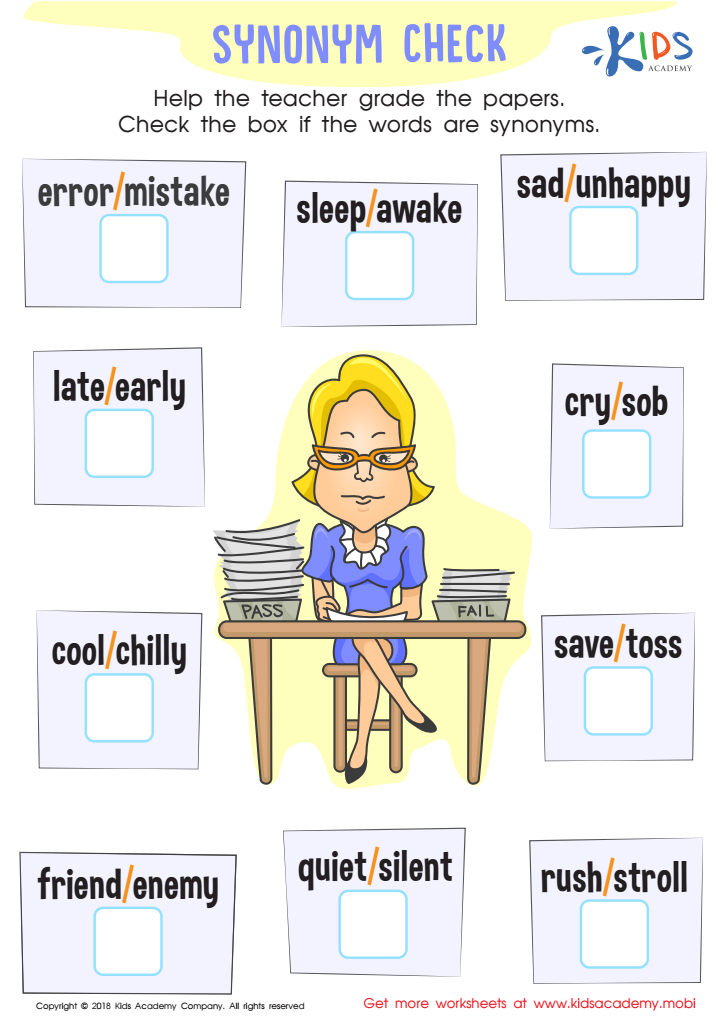
Synonym Check Worksheet
 Assign to My Students











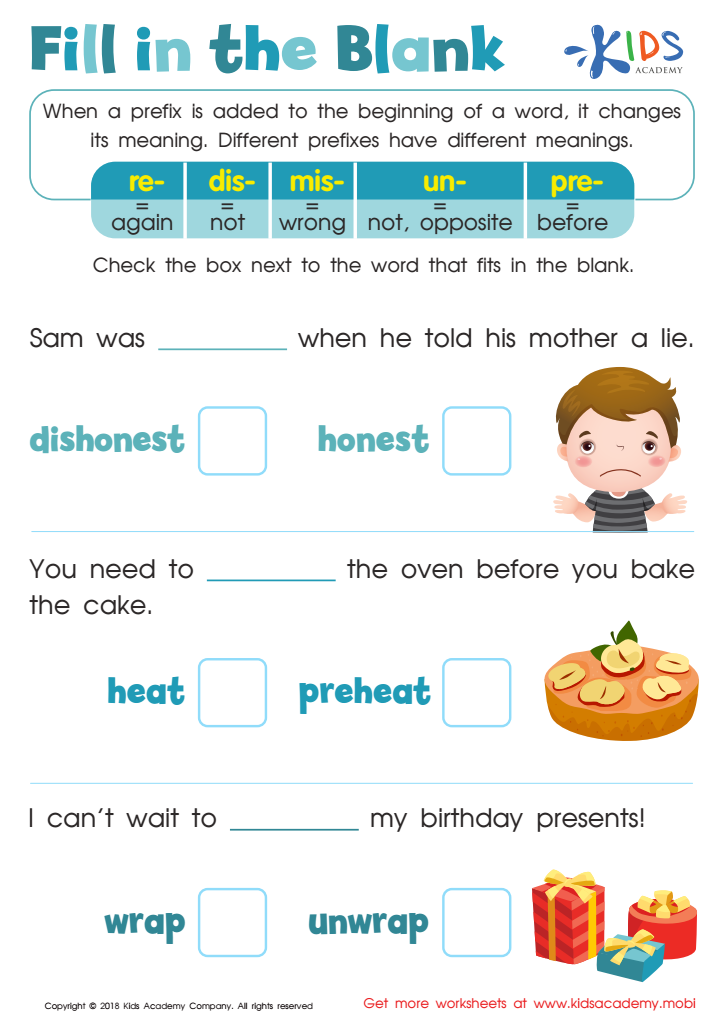
Reading: Fill in the Blank Worksheet
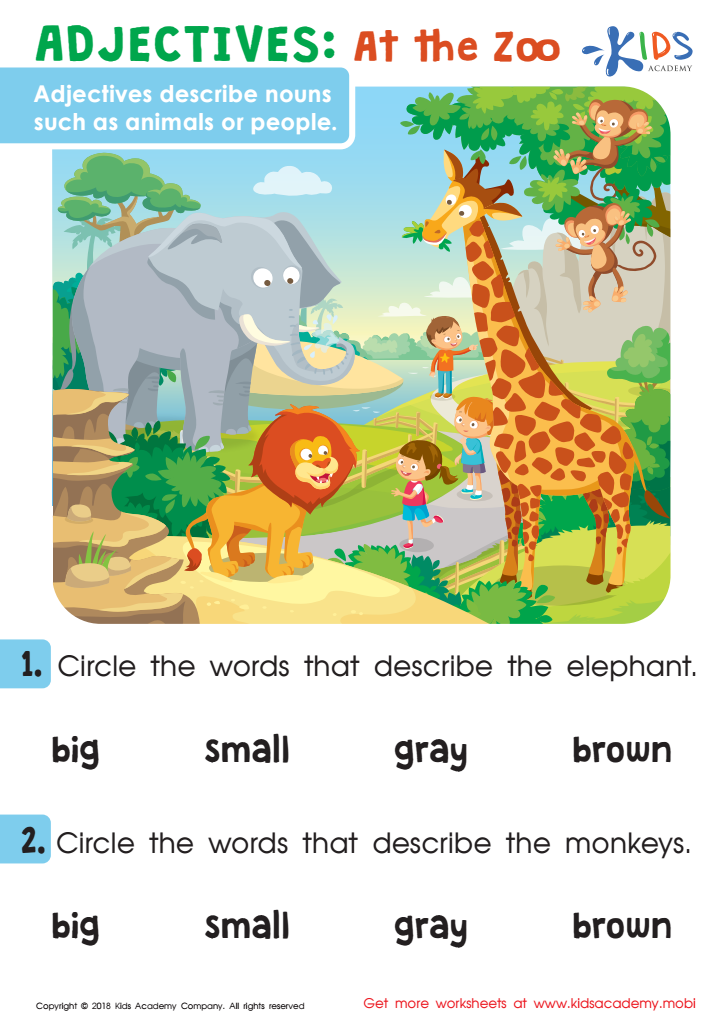
Adjectives: At The Zoo Worksheet
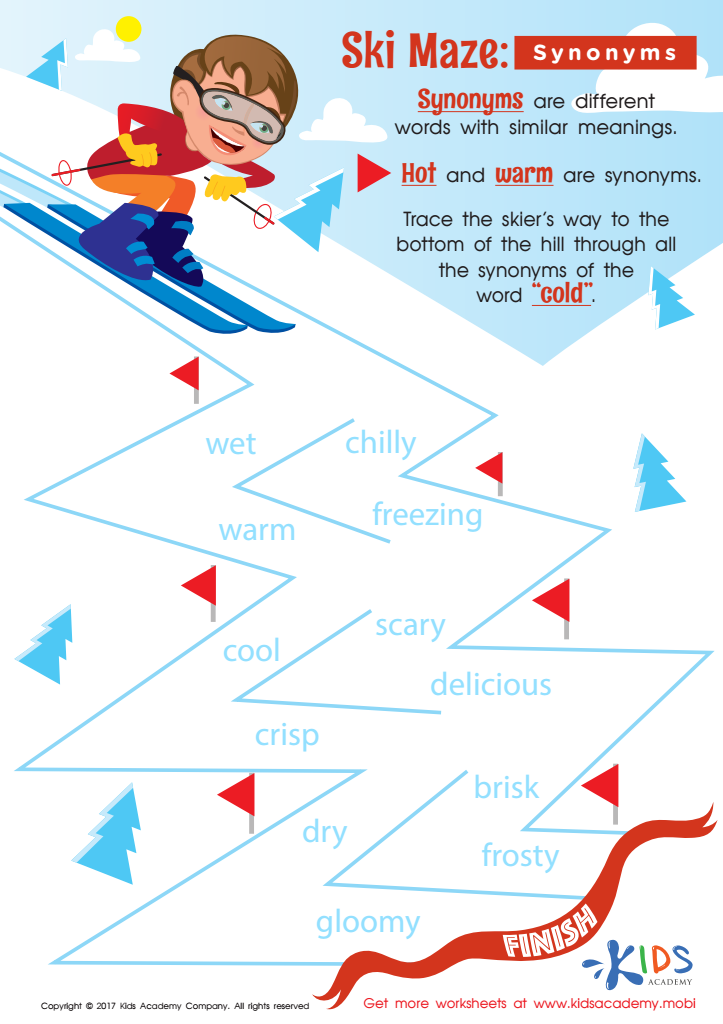
Free Printable Synonym Worksheet
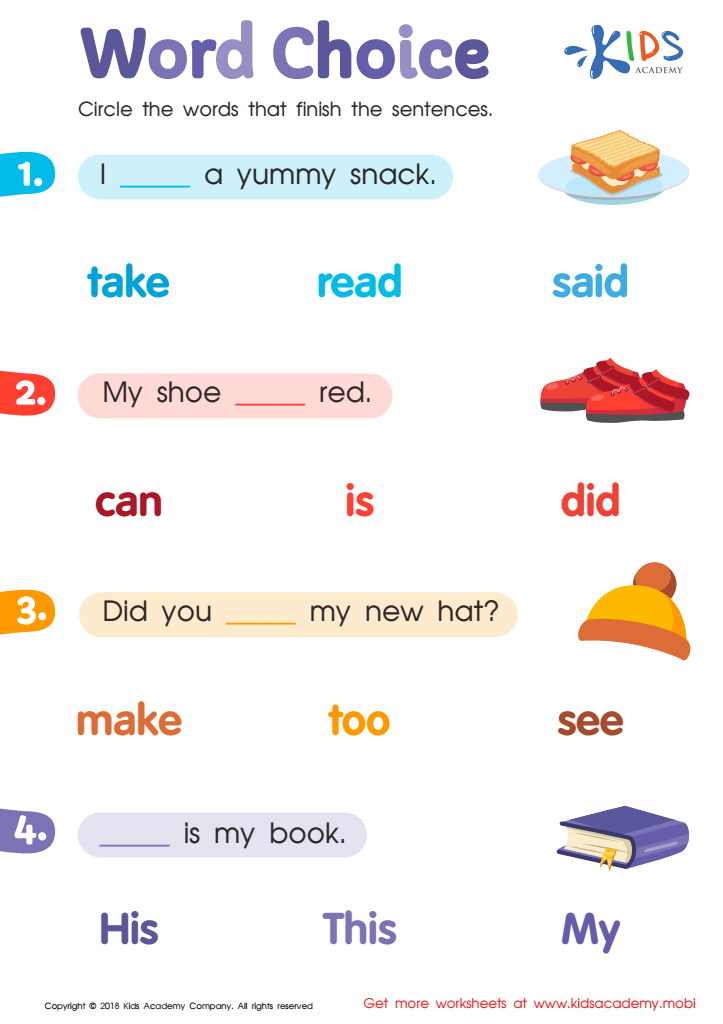
Word Choice Worksheet



.jpg)
.jpg)


Parents and teachers play a pivotal role in fostering contextual understanding and building vocabulary for children aged 8-9, which is a crucial developmental stage. At this age, children transition from basic reading to more advanced comprehension. By understanding context, they don’t just decode words but grasp meaning, improving comprehension and retention. For instance, learning words like “bark” through context can help children discern whether it refers to a tree or a dog’s sound.
Vocabulary is the foundation of effective communication. A robust vocabulary allows children to express themselves clearly, reason, debate, and understand complex ideas. It also contributes to academic success. Studies show that children with a richer vocabulary excel in subjects like reading, writing, and even math.
Moreover, contextual learning encourages critical thinking and problem-solving. When children encounter new words in different contexts, they learn to infer meanings, enhancing their cognitive development. This skill is indispensable in navigating real-life scenarios and fosters lifelong learning and curiosity.
Encouraging reading, conversations, and word games are practical methods to immerse children in diverse vocabularies and contexts. When parents and teachers prioritize these activities, they equip children with the tools needed for academic growth and effective communication, laying the groundwork for future success.








