
Geography knowledge Building Vocabulary Worksheets for Ages 8-9
4 filtered results
Difficulty Level
Grade
Age
-
From - To
Subject
Activity
Standards
Enhance your child's understanding of the world with our engaging Geography Knowledge Building Vocabulary Worksheets for ages 8-9. Tailored to children’s developmental stages, these worksheets introduce essential geography terms, reinforcing reading and comprehension skills while expanding their vocabulary. From continents and oceans to landmarks and natural phenomena, our printable activities are designed to make learning about our planet both fun and educational. Perfect for classroom use or at-home practice, these resources support academic growth in a captivating way. Visit Kids Academy to empower young explorers and develop their geography knowledge confidently.
Favorites
With answer key
Interactive
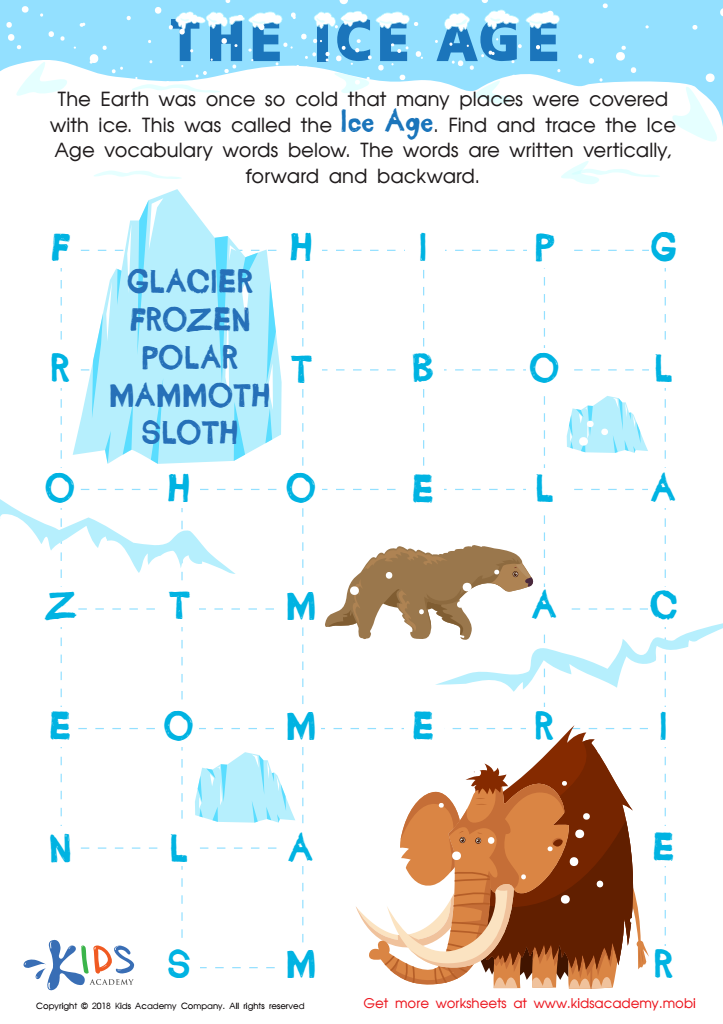
The Ice Age Worksheet
Let your child explore the Ice Age with this fun word search from Kids Academy! They can find words like glacier, frozen, polar, mammoth, and sloth. After finding each, discuss the meaning to help them build a better vocabulary and understanding of ancient history.
 Assign to My Students
The Ice Age Worksheet
Worksheet











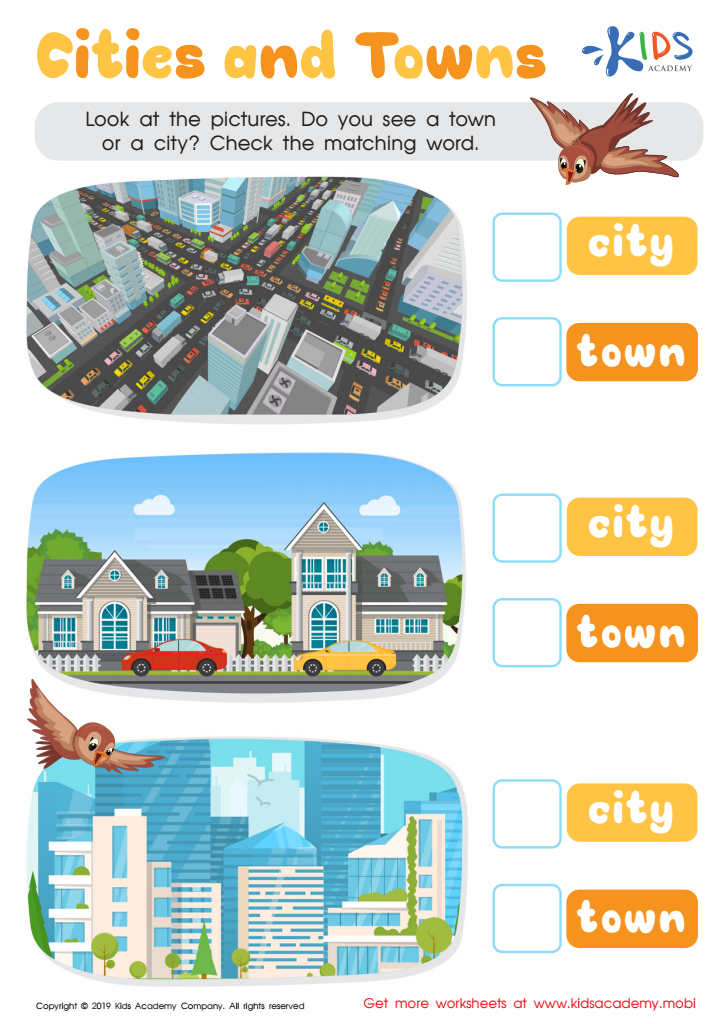
Cities and Towns Worksheet
Cities are buzzy and busy while towns tend to be peaceful. Ask your child if they can tell which one is which from a picture. This could be a great way to test their understanding of the differences between towns and cities. There are many businesses in cities, tall buildings and lots to do. Meanwhile towns are usually quieter.
Cities and Towns Worksheet
Worksheet
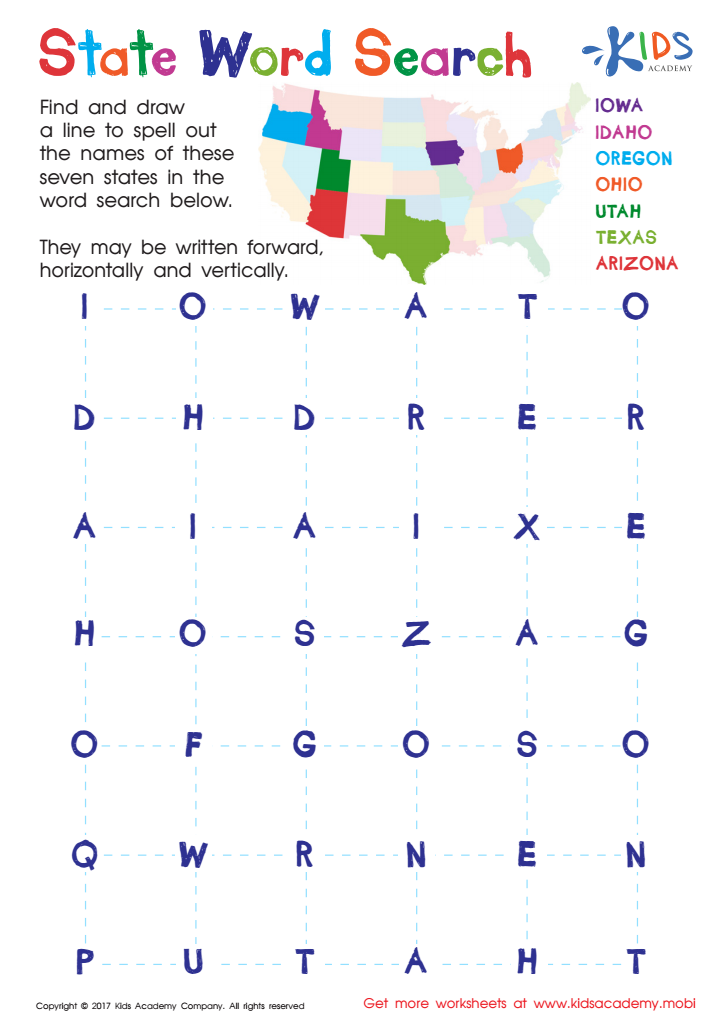
State Word Search Worksheet
Take a road trip across the US with this word search to help your child learn how to identify states. This engaging puzzle makes it easy to remember the 50 states. Get your kids to have fun and learn at the same time!
State Word Search Worksheet
Worksheet
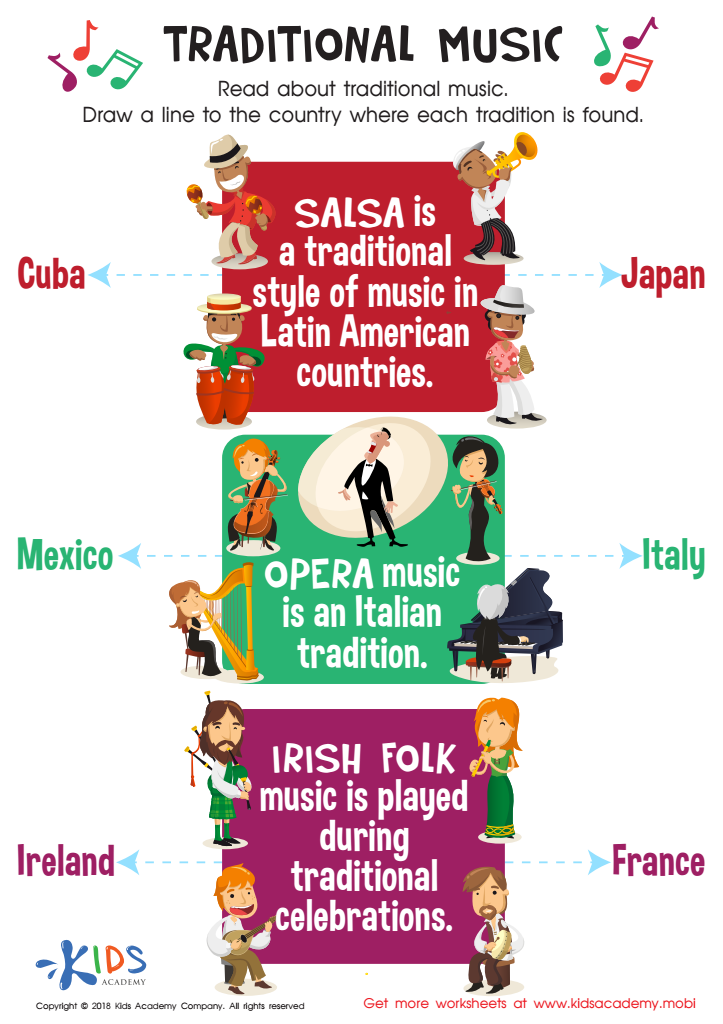
Traditional Music Worksheet
Exploring different countries' music is a great way for global learners to appreciate their place in the world. This worksheet helps them match music - like Salsa and Irish Folk - to various geographic regions with colorful visuals. It boosts reading comprehension while supporting their cultural understanding.
Traditional Music Worksheet
Worksheet
Join Kids Academy for Free
Who is primarily going to use this learning content?








Understanding geography is invaluable for young learners as it broadens their horizons, cultivates a global perspective, and builds their overall literacy. For children aged 8-9, developing a geographical vocabulary is an essential part of this education. When kids learn terms like "continent," "ocean," "climate," and "map," they not only gain an understanding of the world’s physical layout but also grasp diverse cultural contexts.
Parents and teachers should prioritize geography knowledge for several reasons. Firstly, it enhances academic performance. Many subjects, including social studies, science, and even math, incorporate geographic concepts. Mastery in this area strengthens their ability to grasp and relate to other topics effectively.
Secondly, geography nurtures curiosity and critical thinking. Confronted with terms and concepts that describe the earth’s features, students learn to ask meaningful questions like, “How do mountains form?” or “What effects do rivers have on human settlements?” These inquiries encourage analytical skills that are valuable throughout life.
Lastly, a strong geographical vocabulary helps build global citizenship. Understanding the world’s diversity fosters empathy and open-mindedness. Children become more aware of different cultures, languages, and ecosystems, planting the seeds for respectful, global collaboration in the future.
Incorporating geography into early education helps create informed, inquisitive, and empathetic individuals ready to engage with the world’s complexities.








