Reading Improvement Building Vocabulary Worksheets for Ages 8-9
5 filtered results
-
From - To
Enhance your child's reading skills with our engaging vocabulary worksheets designed specifically for ages 8 to 9. Our "Reading Improvement Building Vocabulary" resources provide fun and interactive activities that help boost word comprehension and usage. These worksheets cater to various learning styles, making vocabulary building enjoyable and effective. From matching games to fill-in-the-blank exercises, our materials are tailored to spark curiosity and strengthen reading abilities. Equipped with clear instructions and vibrant illustrations, these worksheets not only promote language development but also encourage a lifelong love of reading. Explore our collection today to support your child’s educational journey!
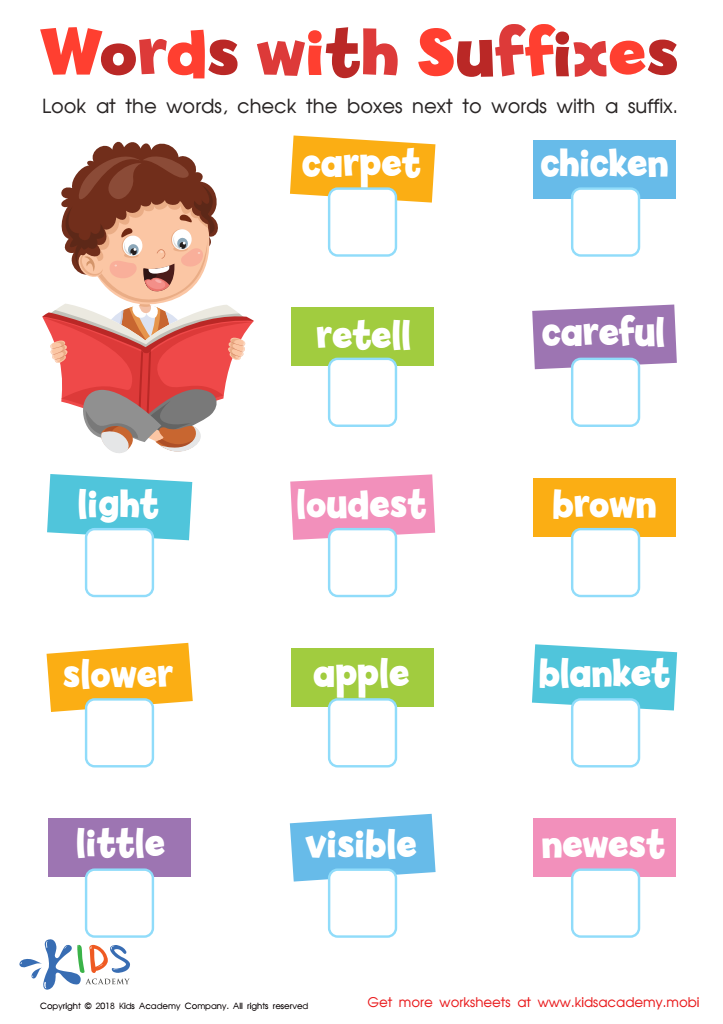
Reading: Words With Suffixes Worksheet
 Assign to My Students











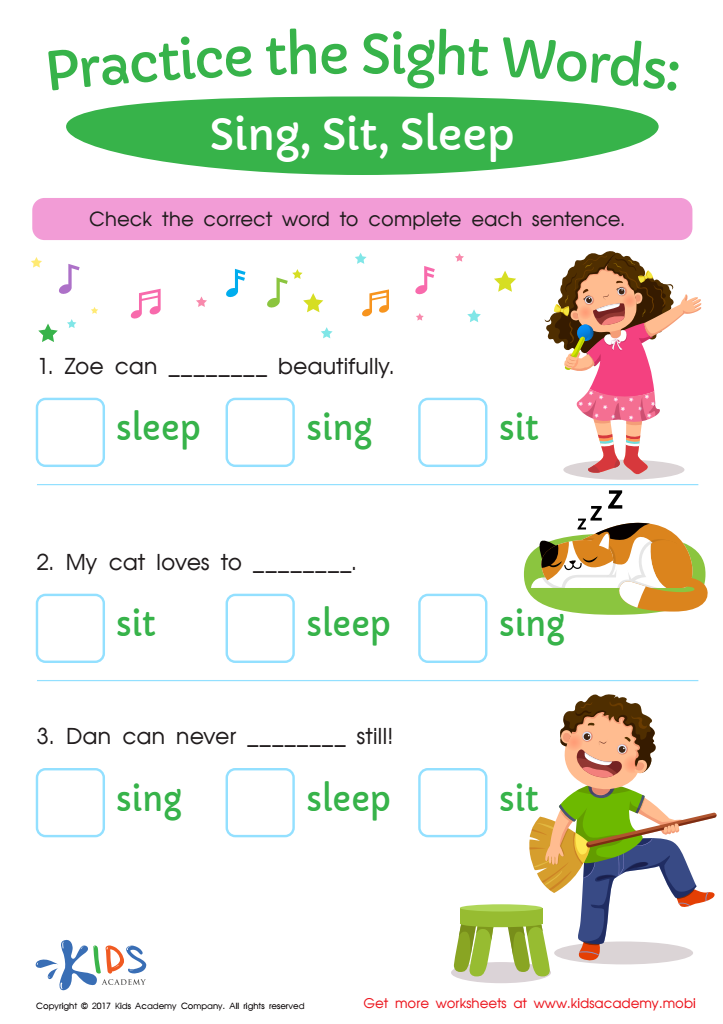
Sing, Sit, Sleep Sight Words Worksheet
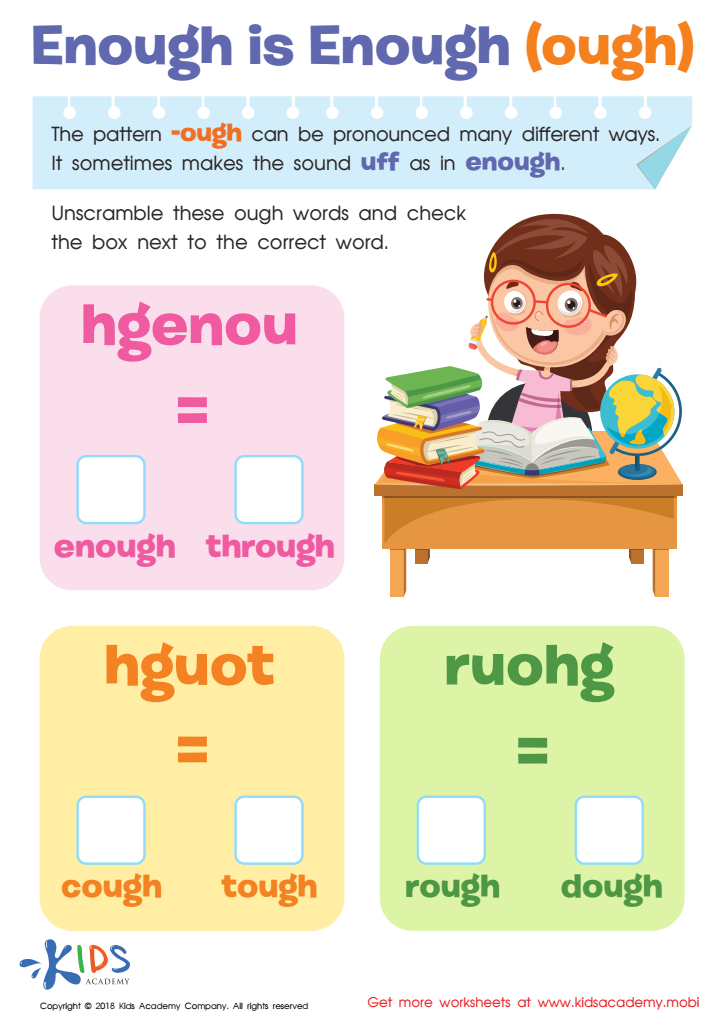
Enough Is Enough (ough) Worksheet
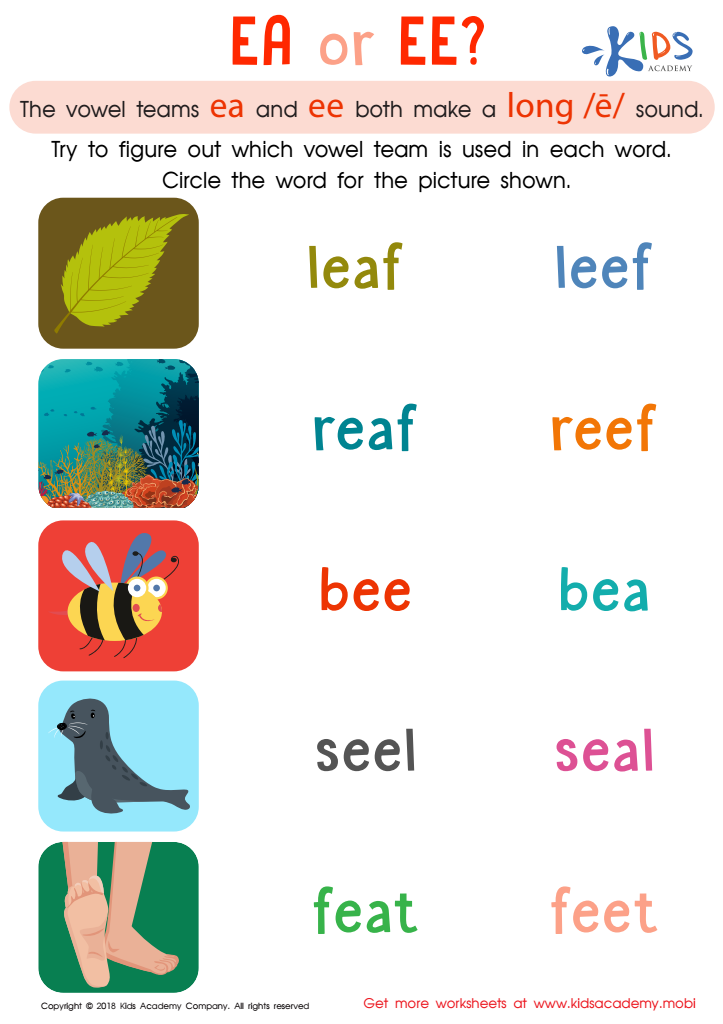
Reading: EA and EE Worksheet
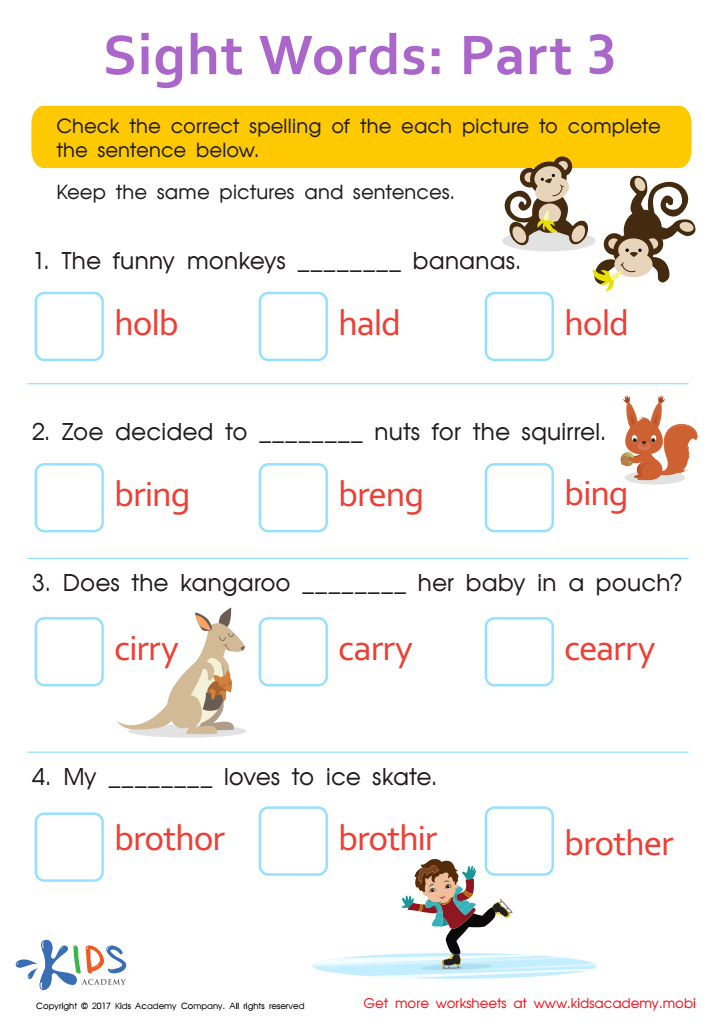
Hold, Bring, Carry, Brother Sight Words Worksheet







.jpg)
Parents and teachers should prioritize reading improvement and vocabulary building for children ages 8-9 for several compelling reasons. First, this age group is critical for language development. A robust vocabulary not only enhances comprehension but also enables children to express their thoughts and ideas more effectively. At this stage, children are transitioning from learning to read to reading to learn; thus, a strong vocabulary is crucial for academic success across subjects.
Improving reading skills at this age fosters a love for literature and a desire to explore new topics, ultimately cultivating lifelong learners. Additionally, a rich vocabulary boosts self-confidence in communication, both verbally and in writing, thereby enhancing social interactions and academic performance. Moreover, this foundational skill impacts future learning; studies show that a strong vocabulary in early years correlates with better outcomes in later grades.
Engaging in vocabulary-building activities, such as reading diverse texts and discussing new words, creates an enriching learning environment. This collaboration between parents and teachers not only reinforces skills but also strengthens the bond between home and school, ultimately benefiting children as they develop essential literacy skills that will assist them throughout their education and beyond.








