
Understanding context Building Vocabulary Worksheets for Ages 8-9
3 filtered results
Difficulty Level
Grade
Age
-
From - To
Subject
Activity
Standards
Explore our engaging "Understanding Context Building Vocabulary Worksheets" designed for children aged 8-9. These worksheets help young learners enhance their vocabulary by teaching them to infer the meaning of words within the context of sentences and passages. Through fun exercises, children practice identifying context clues, allowing them to gain confidence in language comprehension. Each worksheet fosters critical thinking skills while promoting literacy development. Perfect for classroom activities or at-home learning, these resources are an invaluable tool for educators and parents alike. Unlock the power of words and help your child thrive with our targeted vocabulary-building activities!
Favorites
With answer key
Interactive
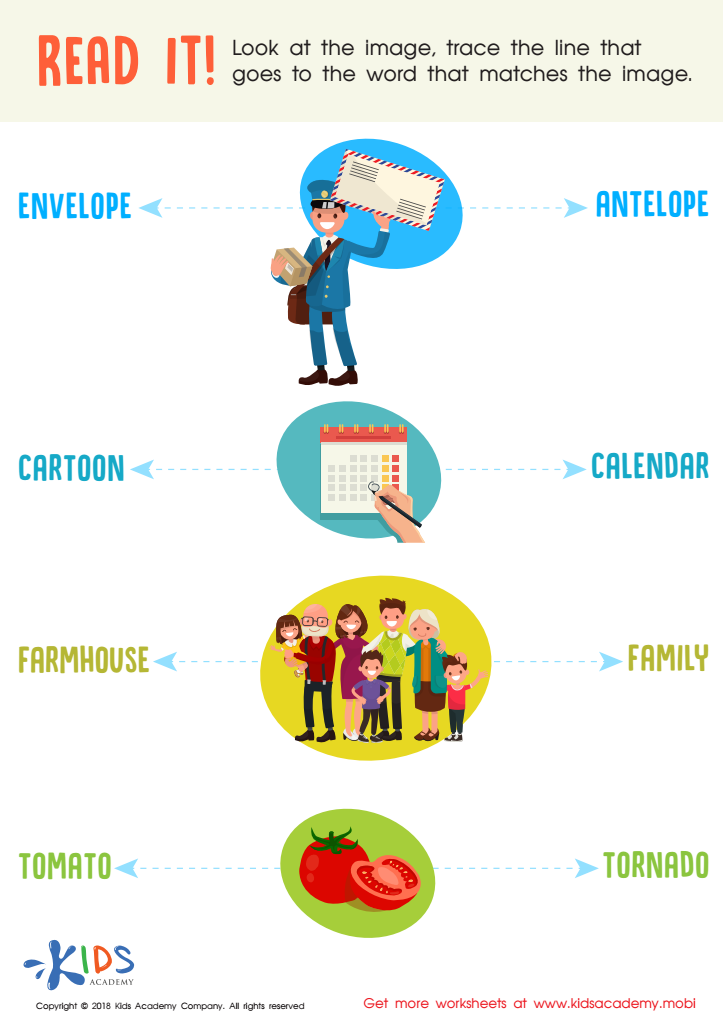
Read It! Worksheet
Point to each image on this worksheet, asking your child what it is. Read the 2 options then help your child trace the line to the correct word. It'll keep them engaged and provide visual stimulation.
 Assign to My Students
Read It! Worksheet
Worksheet











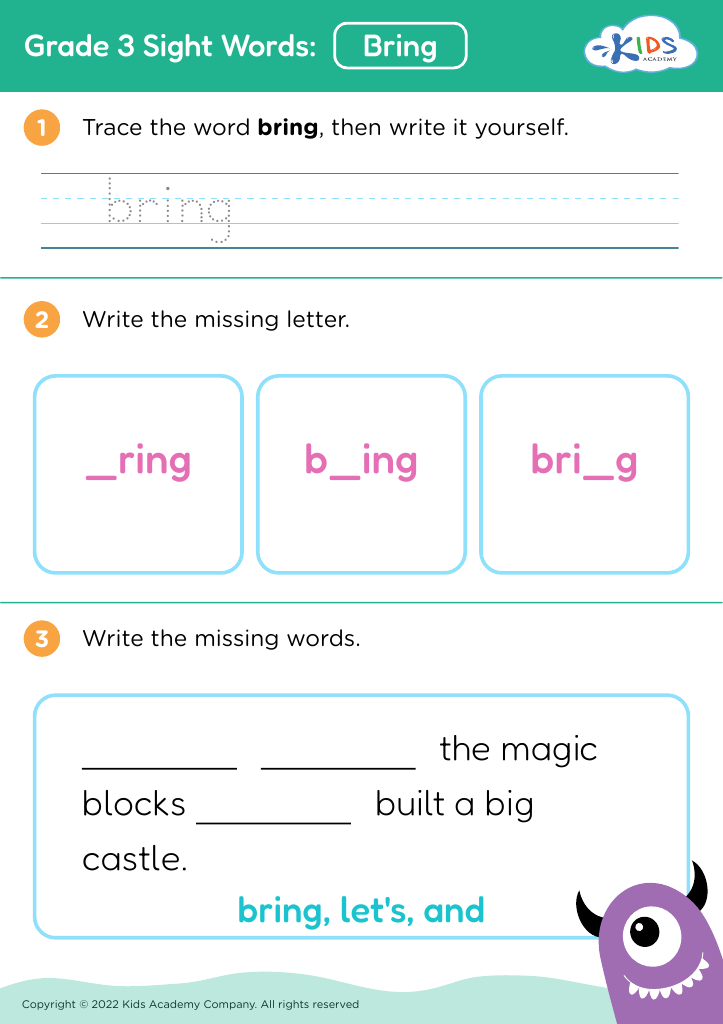
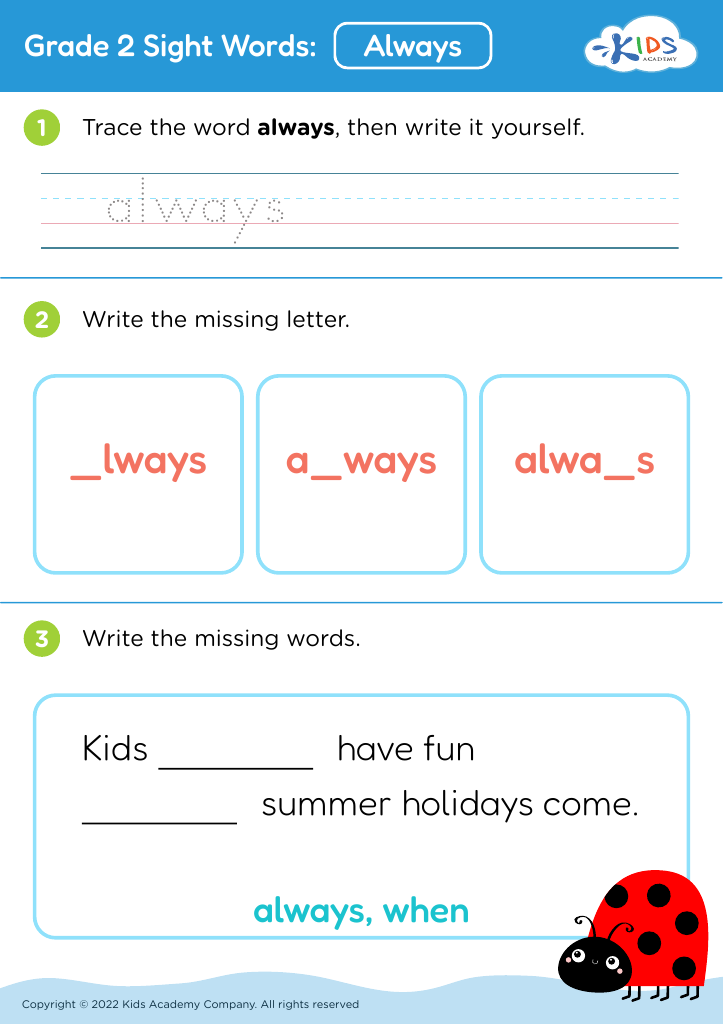
Join Kids Academy for Free
Who is primarily going to use this learning content?






.jpg)

Understanding context and building vocabulary are crucial components of literacy development for children aged 8 to 9. At this stage, children transition from learning to read to reading to learn, necessitating a deeper grasp of language nuances. Context helps children infer meaning from surrounding words and phrases, enhancing their comprehension skills. When they encounter unfamiliar words, context acts as a helpful guide, fostering independence in understanding texts.
Additionally, a robust vocabulary enables children to express themselves articulate more complex ideas and feelings. This skill not only augments their academic performance but also enriches their social interactions, allowing them to communicate effectively. By integrating vocabulary building activities—for instance, through reading diverse genres and engaging in discussions—parents and teachers can cultivate a rich language environment that supports cognitive growth.
Exercises that involve identifying synonyms, antonyms, or using words in sentences encourage deeper engagement with language. Moreover, a rich vocabulary contributes to higher self-esteem and confidence in young learners, preparing them for future challenges. Therefore, prioritizing context understanding and vocabulary enhancement in educational activities is essential for holistic development, setting students on a path toward lifelong learning and literacy success.








