Word identification Building Vocabulary Worksheets for Ages 8-9
4 filtered results
-
From - To
Enhance your child's reading skills with our "Word Identification Building Vocabulary Worksheets" designed specifically for ages 8-9! These engaging worksheets help young learners strengthen their vocabulary through exciting activities that promote word recognition and comprehension. With a variety of exercises, including matching words to definitions and fill-in-the-blank challenges, children will build their understanding of new terms while fostering a love for language. Ideal for classroom or home use, these resources support educational growth in a fun and interactive way. Dive into a world of words and watch your child's confidence and language abilities flourish! Download now to get started!
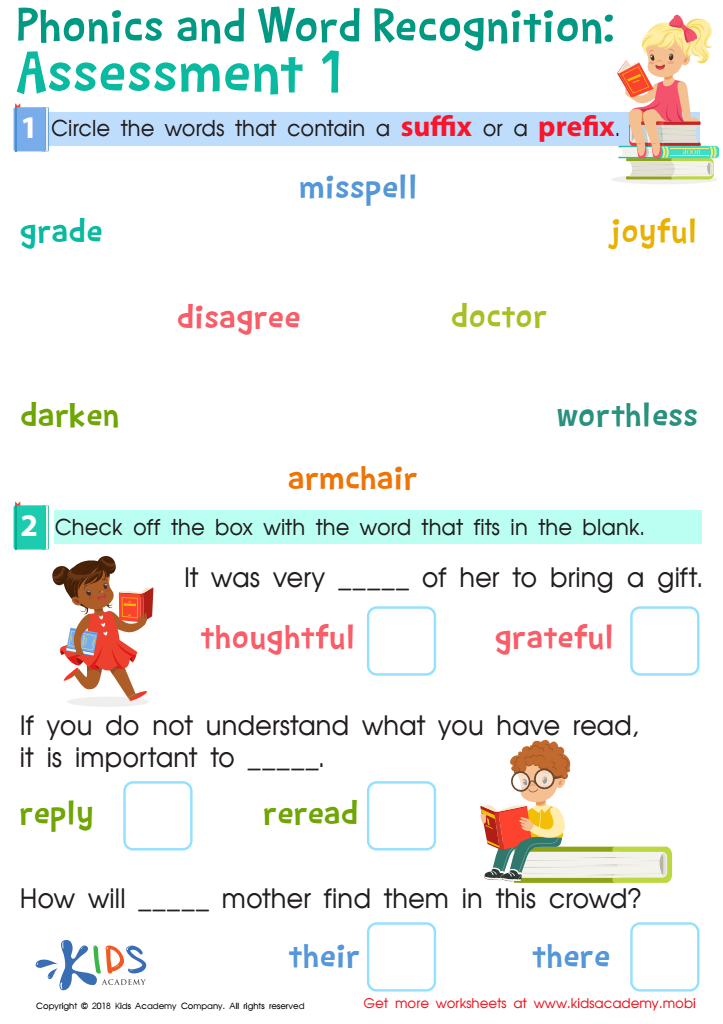
Phonics and Word Recognition: Assessment 1 Worksheet
 Assign to My Students











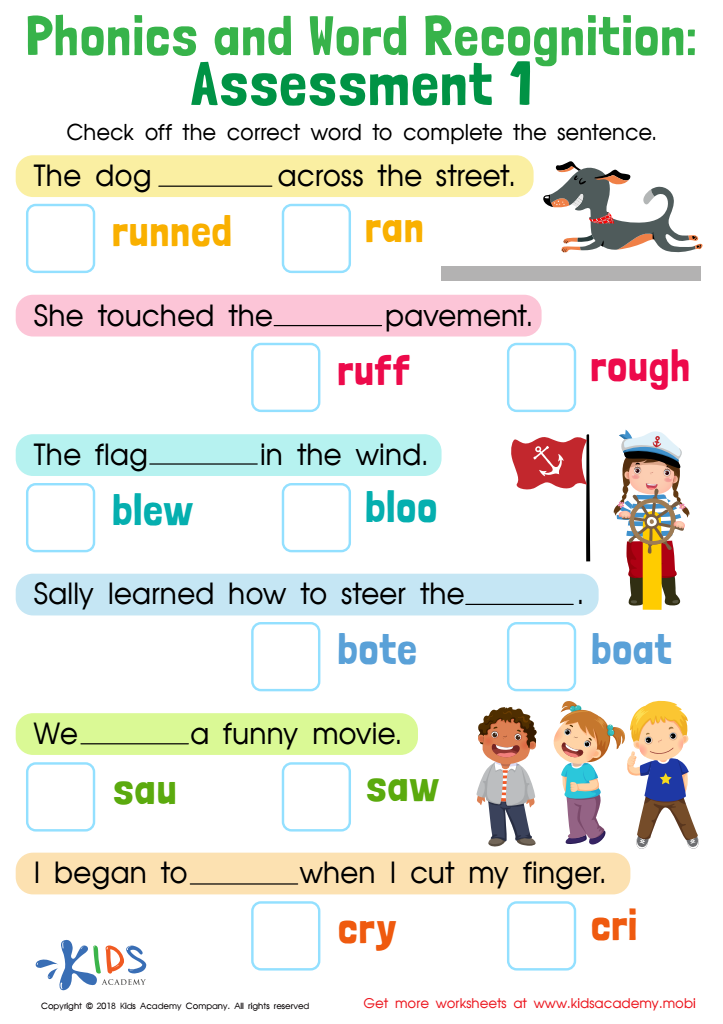
Phonics and Word Recognition: Assessment 1 Worksheet
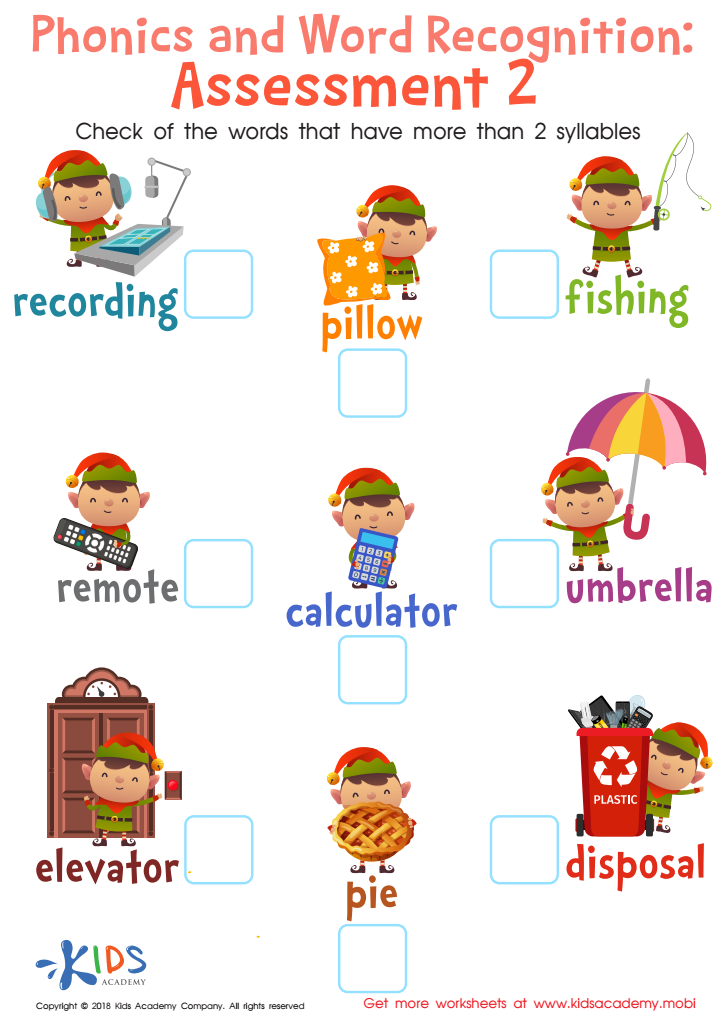
Phonics and Word Recognition: Assessment 2 Worksheet
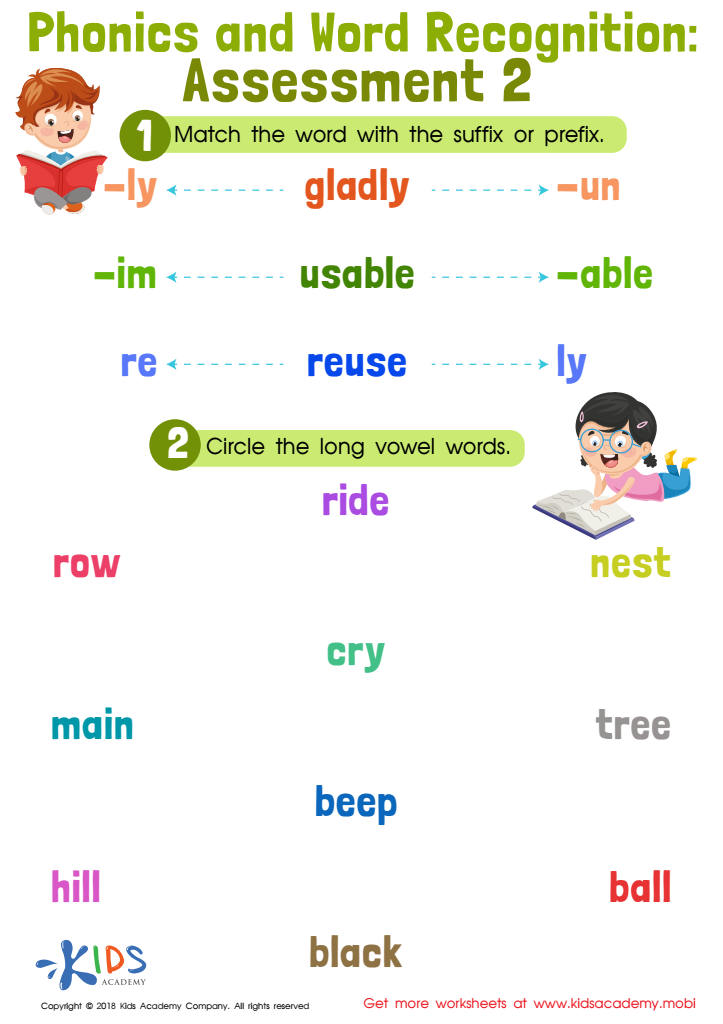
Phonics and Word Recognition: Assessment 2







For children aged 8-9, effective word identification and vocabulary building are crucial components of literacy development. At this stage, children begin transitioning from "learning to read" to "reading to learn." Strong word identification skills boost reading fluency, enabling students to recognize words automatically, which enhances comprehension. When students wild not need to pause to decode each word, they can focus on grasping the overall meaning of a text.
Building vocabulary simultaneously enriches their language skills, providing them with the necessary tools to effectively express thoughts and ideas. A robust vocabulary allows children to better understand nuances, themes, and concepts in reading materials, facilitating more meaningful engagement with various subjects.
Moreover, words are pivotal in improving critical thinking and fostering communication abilities. When parents and teachers invest time in enhancing children's vocabulary through reading, discussion, and practical activities, they equip them with the means to articulate feelings and viewpoints effectively.
In fostering word identification and vocabulary growth, we prepare students for academic success and lifelong learning. This attention to literacy sets a solid foundation, empowering children not only to excel academically but also to become confident communicators and thinkers in the broader world.








