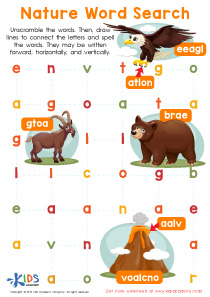
Basic Math Skills Sight Words Worksheets for Ages 8-9
3 filtered results
-
From - To
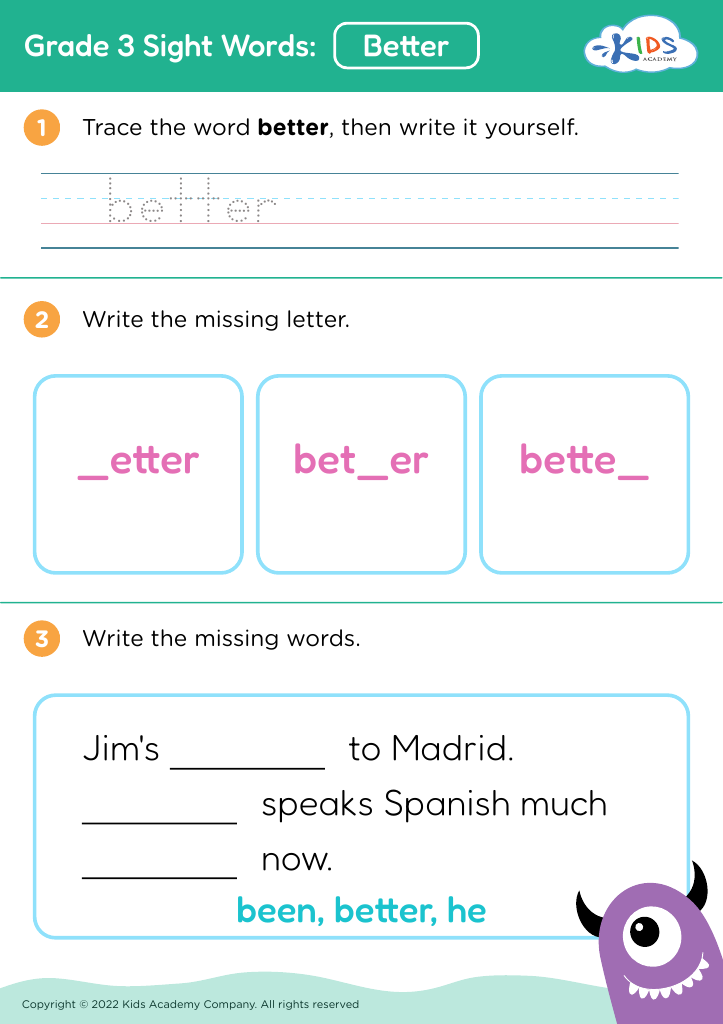
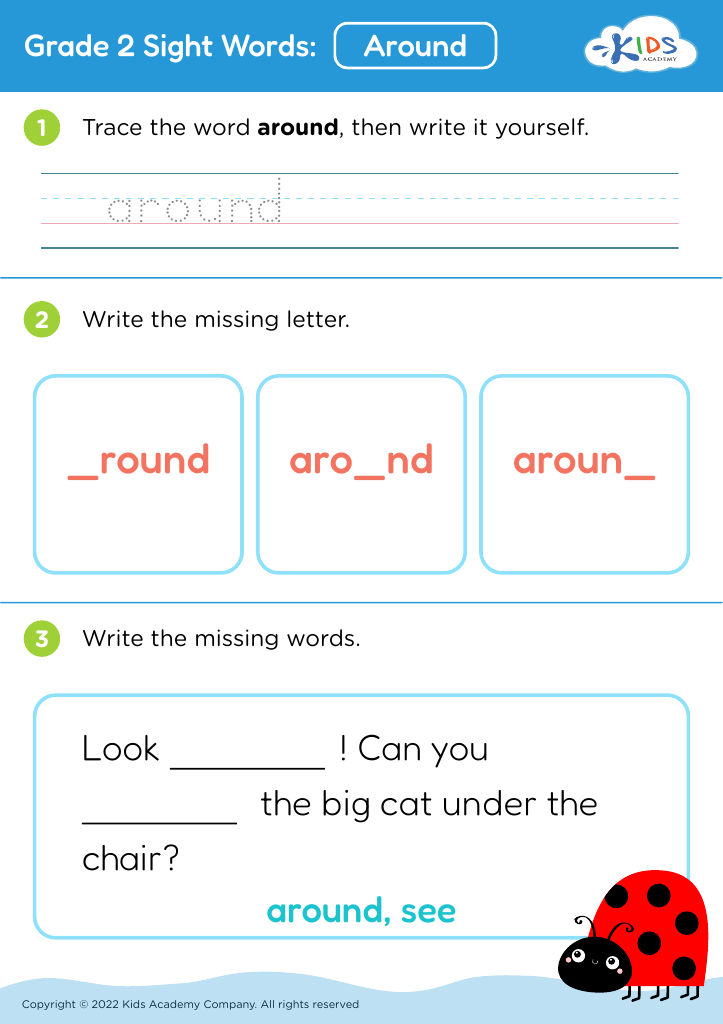
Enhance your child's foundational math abilities with our "Basic Math Skills Sight Words Worksheets" designed specifically for ages 8-9. These engaging worksheets not only reinforce essential math concepts such as addition, subtraction, and number recognition, but they also incorporate sight words to boost reading comprehension and vocabulary. Easy to use and perfect for both classroom and home learning, children will enjoy varied exercises that promote both math and literacy skills simultaneously. By integrating sight words into math practice, your child will build confidence and proficiency, setting a strong academic foundation for future learning. Download these worksheets today for fun and effective learning!
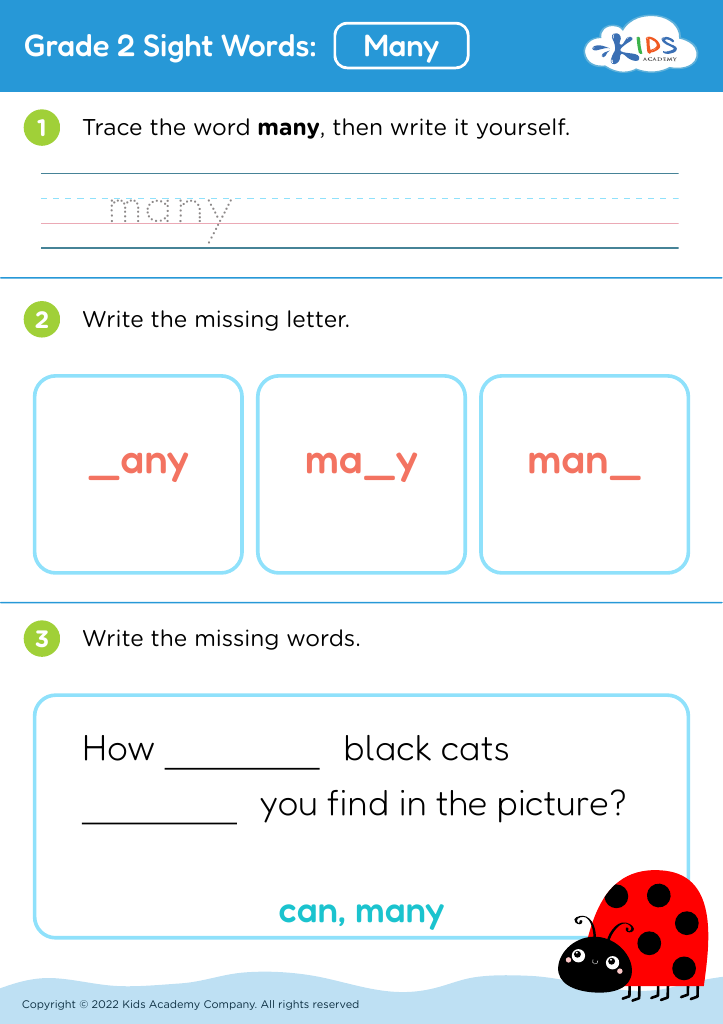











Basic math skills and sight words play a crucial role in the development of children ages 8-9, forming a solid foundation for future learning. At this age, students transition from simple arithmetic to more complex mathematical concepts. Mastering basic math skills—such as addition, subtraction, and understanding shapes—helps them solve problems, think critically, and enhances their logical reasoning. These fundamental skills are essential for real-life applications, such as budgeting, decision-making, and understanding time, ensuring students can navigate everyday challenges confidently.
Similarly, sight words are vital for developing reading fluency and comprehension. Sight words, or high-frequency words, are those that children often encounter in texts and may not sound out easily. Recognizing these words quickly enables children to read more smoothly and understand stories better, fostering a lifelong love for reading. Parents and teachers should prioritize both basic math skills and sight words, as they encourage cognitive development and build self-esteem in young learners.
By supporting children in mastering these vital skills, parents and teachers can create learners who are not only proficient academically but also equipped to face more significant challenges as they progress through their education and beyond.