Math problem-solving Sight Words Worksheets for Ages 8-9
5 filtered results
-
From - To
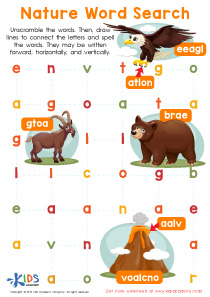
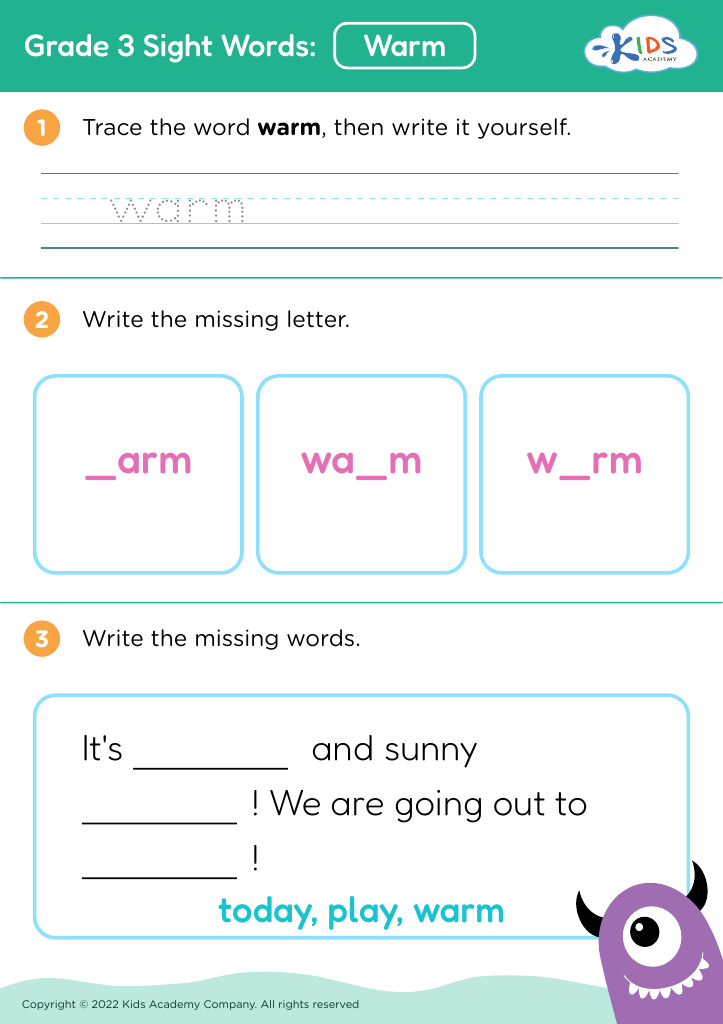
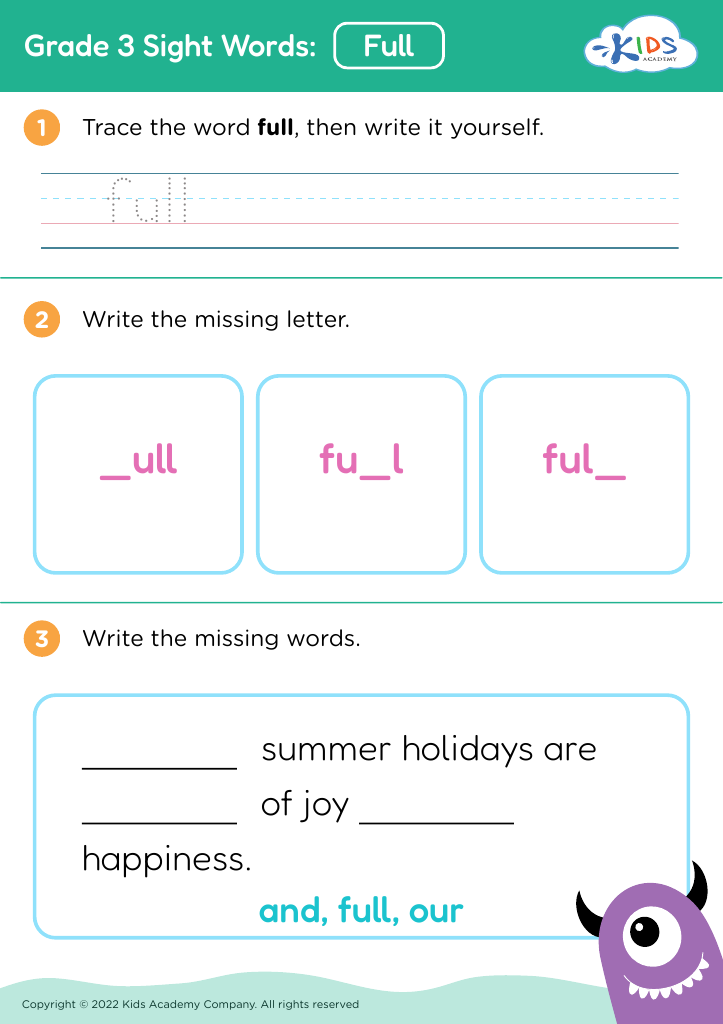
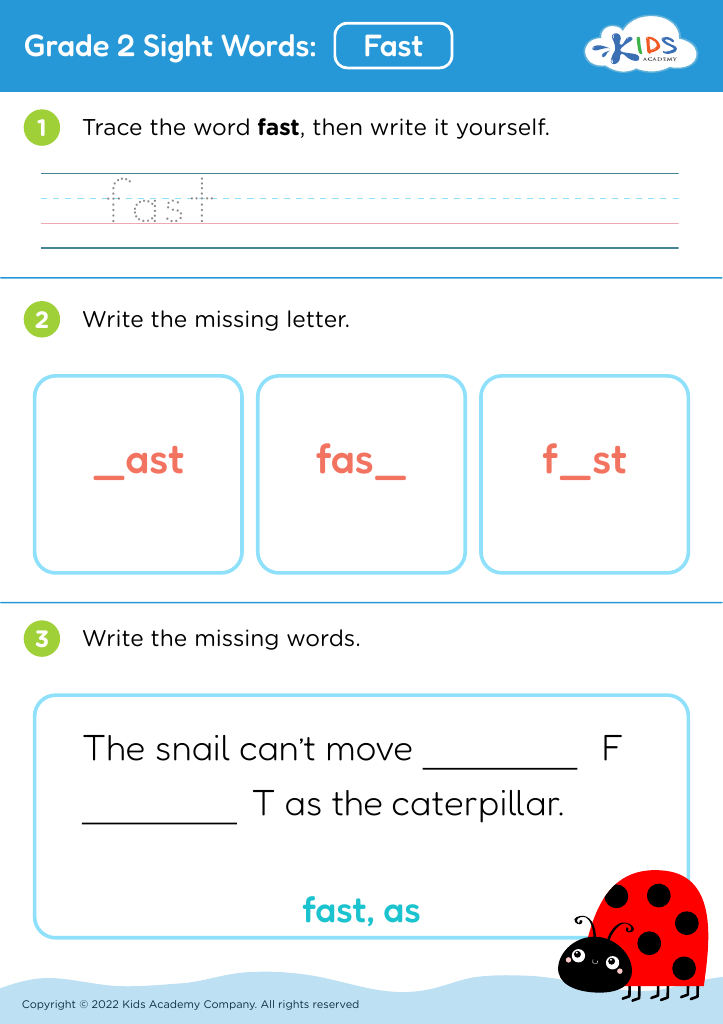
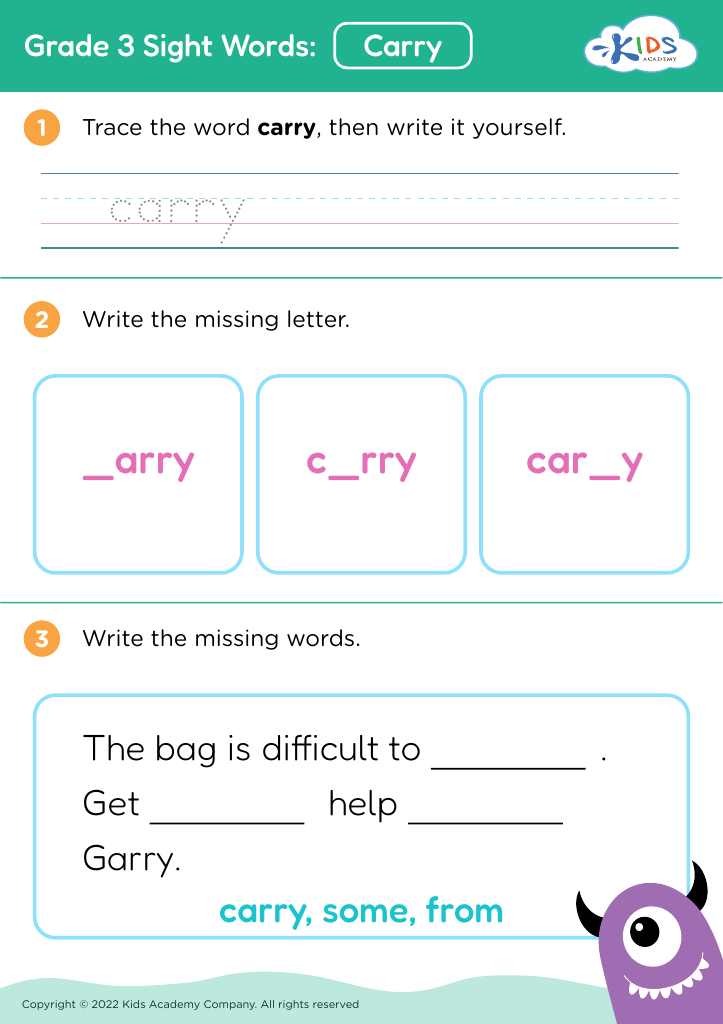
Enhance your child's math skills with our engaging Math Problem-Solving Sight Words Worksheets, specially designed for ages 8-9. These worksheets combine essential sight words and math problem-solving techniques, helping children build their vocabulary while improving their mathematical reasoning. Each sheet presents fun exercises that encourage critical thinking and reinforce both reading and math abilities. Perfect for homeschooling or classroom use, these worksheets promote interactive learning and support early learners in tackling math problems confidently. Empower your child with the tools they need to succeed in math and reading and watch their educational journey thrive!




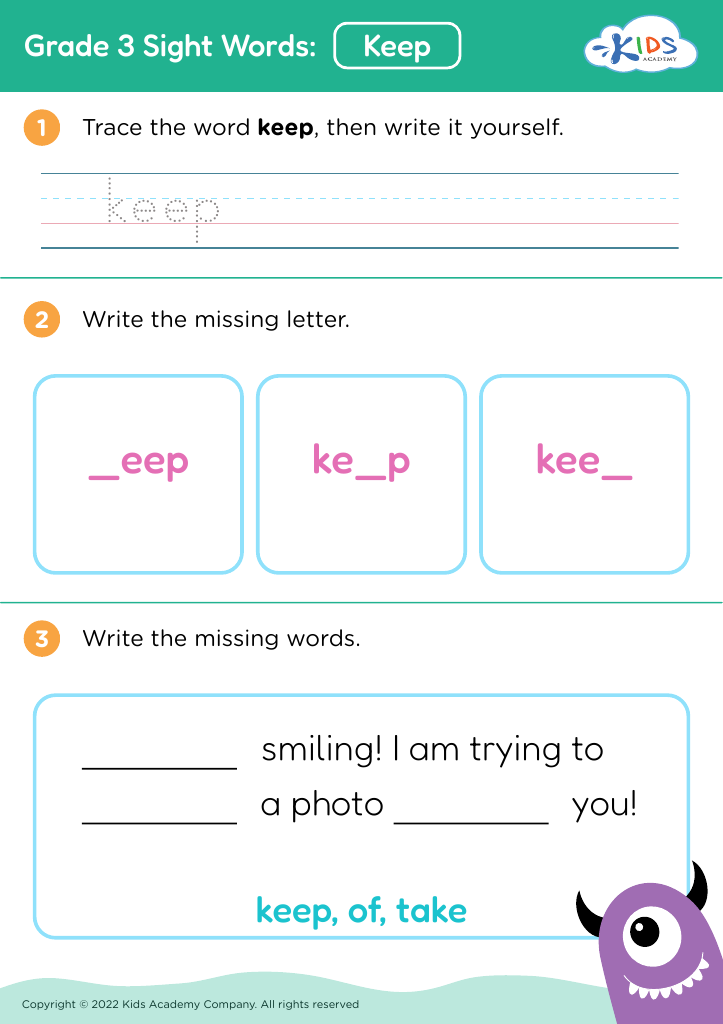




.jpg)

Math problem-solving Sight Words are crucial for children aged 8-9 as they blend literacy and numeracy skills, enhancing overall academic development. At this age, students begin tackling more complex math problems that require both understanding of mathematical concepts and the ability to interpret the language within word problems. Familiarity with sight words associated with math—like "sum," "difference," "total," and "subtract"—empowers students to navigate instructions and concepts more proficiently.
For parents and teachers, emphasizing these sight words ensures that children build a strong foundation in problem-solving. Proficiency in math terminology helps reduce anxiety around math-related tasks, promoting confidence and independence. Moreover, by integrating literacy into math instruction, we foster critical thinking skills and help children make connections between different subjects, leading to a more holistic approach to learning.
Supporting students in acquiring these sight words can significantly improve their ability to understand and solve word problems, contributing to advanced mathematical competencies as they progress in their education. In today’s educational environment, where interdisciplinary approaches are increasingly valued, nurturing both math and literacy simultaneously is essential for preparing children for future challenges.