Unlock the skills of elegant writing with our Cursive Writing Practice Worksheets designed specifically for ages 8-9! These engaging worksheets offer a variety of exercises that help children master the art of cursive letters. With clear instructions and fun activities, students can practice proper letter formation and improve their handwriting clarity. Our resources foster creativity and encourage confidence, making learning both effective and enjoyable. Perfect for home or classroom use, these worksheets are an ideal way to reinforce cursive writing skills. Start your child on their journey to exquisite penmanship today with our easy-to-follow cursive exercises!

Check out this FREE Trial Lesson on Cursive Letters for age 8-9!

T

Favorites
With answer key
Interactive
  • 8-9
  • Cursive writing practice
  • Cursive Letters
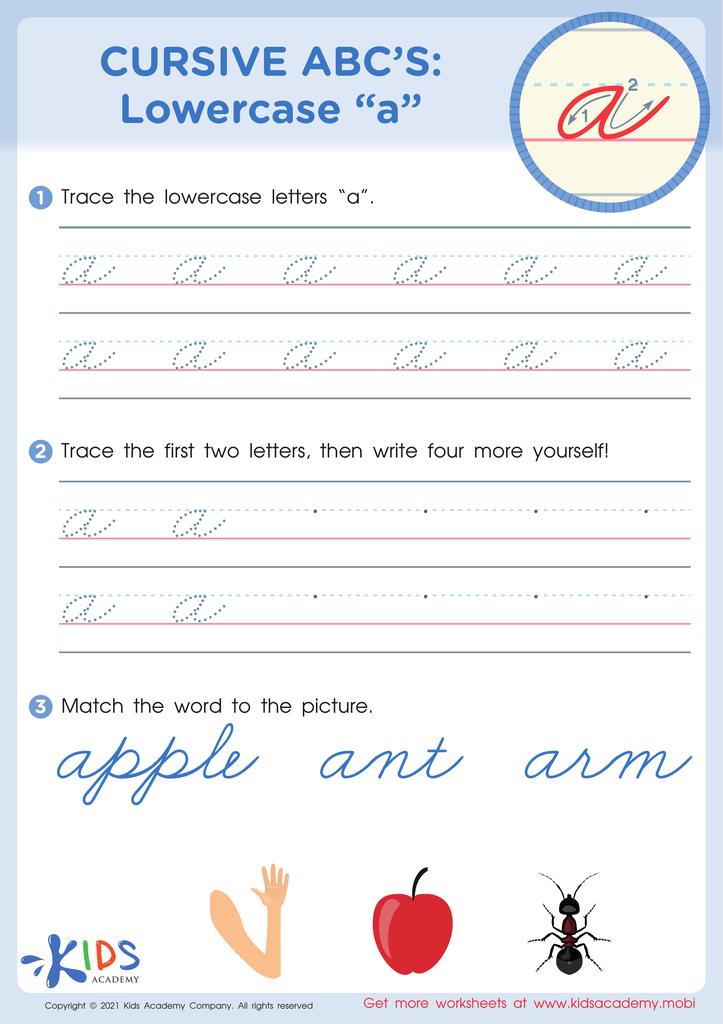
Cursive ABCs: Lowercase a

Cursive ABCs: Lowercase a

Help your children learn to write cursive letters with these free tracing sheets. They'll practice their handwriting, develop printing skills and build vocabulary. By tracing the lowercase letter “a” multiple times, they'll learn how it's formed and be ready to write it on their own. The colorful pictures at the bottom of each page also offer new words beginning with the letter 'a'.
Cursive ABCs: Lowercase a
Worksheet
Cursive ABCs: Lowercase f

Cursive ABCs: Lowercase f

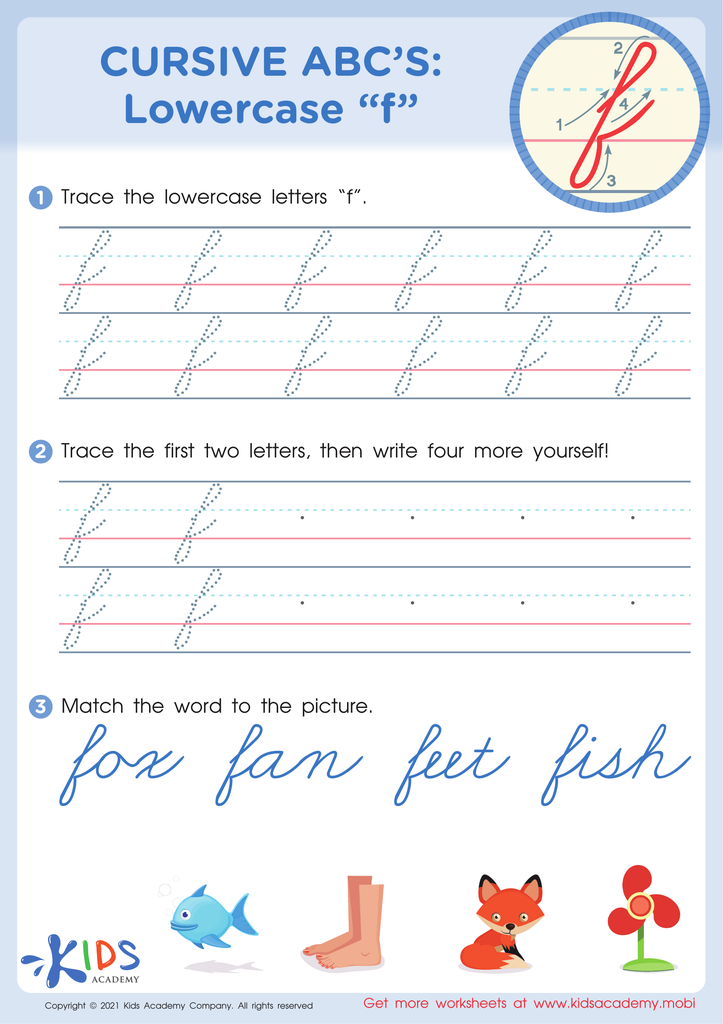
This worksheet helps your child improve letter writing and recognition. Each letter has its own form, so teaching is important. Practicing the lowercase letter 'f' helps kids memorize its shape and recognize it in words. With practice, they'll be able to write the letter correctly and identify it quickly.
Cursive ABCs: Lowercase f
Worksheet
Cursive ABCs: Uppercase F

Cursive ABCs: Uppercase F

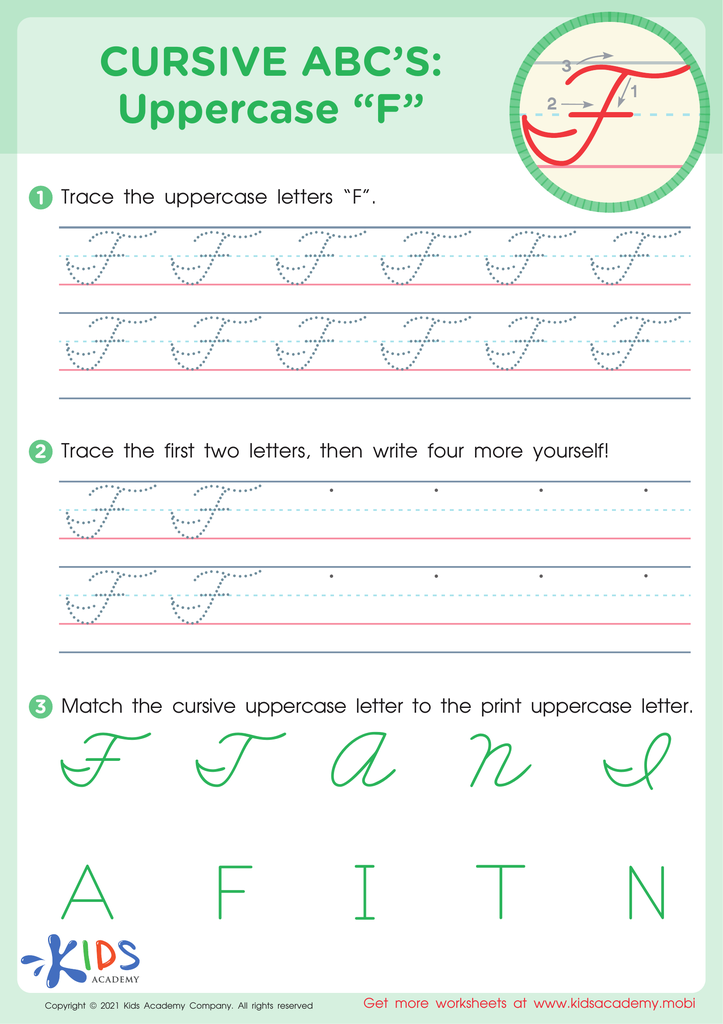
Help your kids trace the letters in these worksheets and watch their confidence grow as they learn to write cursive uppercase and lowercase letters. Ask them to identify the letters in words and give examples of words that start with an uppercase 'F', then have them write some letters on their own and assess their progress.
Cursive ABCs: Uppercase F
Worksheet
Cursive ABCs: Uppercase G

Cursive ABCs: Uppercase G

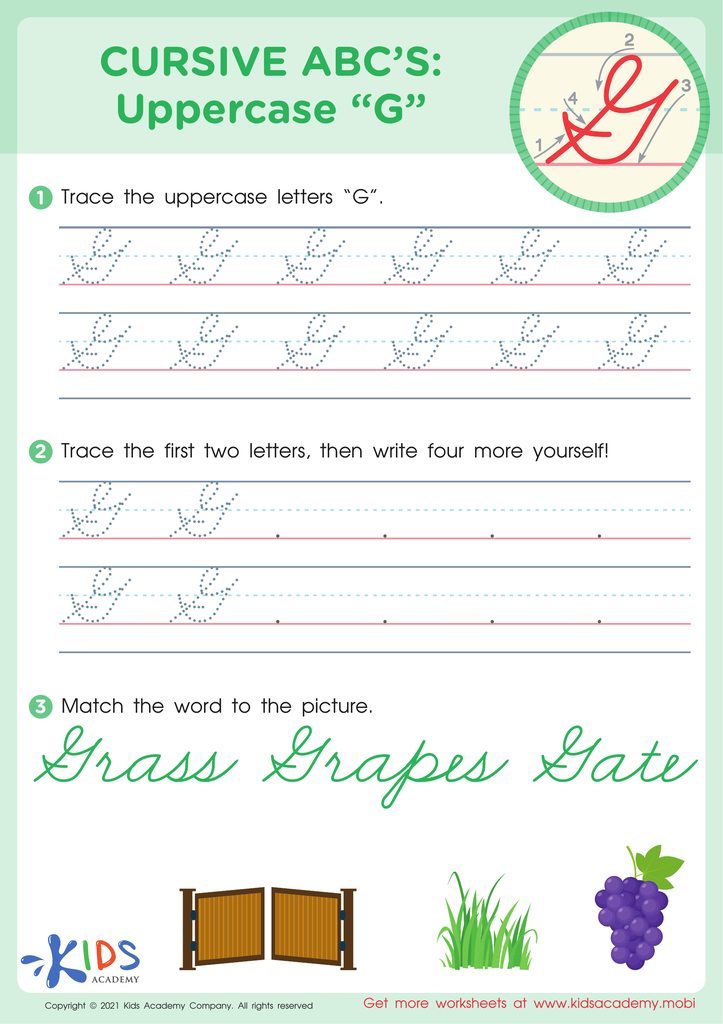
Remind your kids of words beginning with 'G' like 'girl' and 'goat'. Ask them to give examples too. Use this tracing worksheet to help your kids practice writing the cursive uppercase 'G'. It'll help them perfect their motor skills and get better at cursive letters.
Cursive ABCs: Uppercase G
Worksheet
Cursive ABCs: Uppercase B

Cursive ABCs: Uppercase B

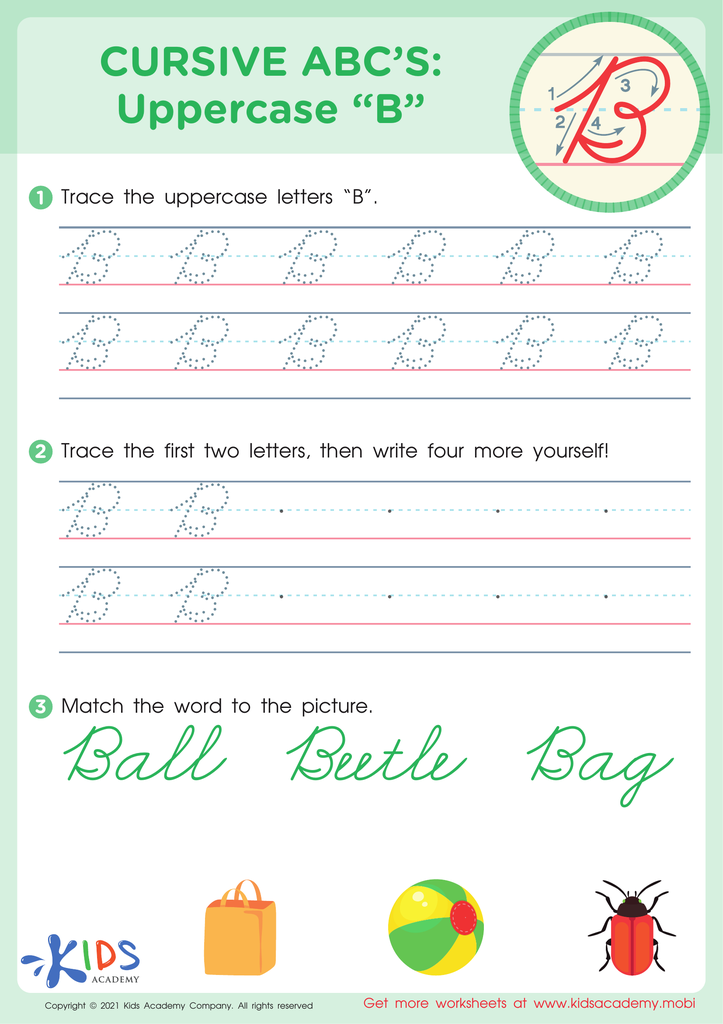
Help your kids learn the alphabet: have them identify, give examples and sound out letters, then use tracing worksheets to perfect cursive uppercase writing. Show them how to trace the letter ‘B’, then watch them write it on their own. This will give them the skills needed for further writing!
Cursive ABCs: Uppercase B
Worksheet
Cursive ABCs: Uppercase D

Cursive ABCs: Uppercase D

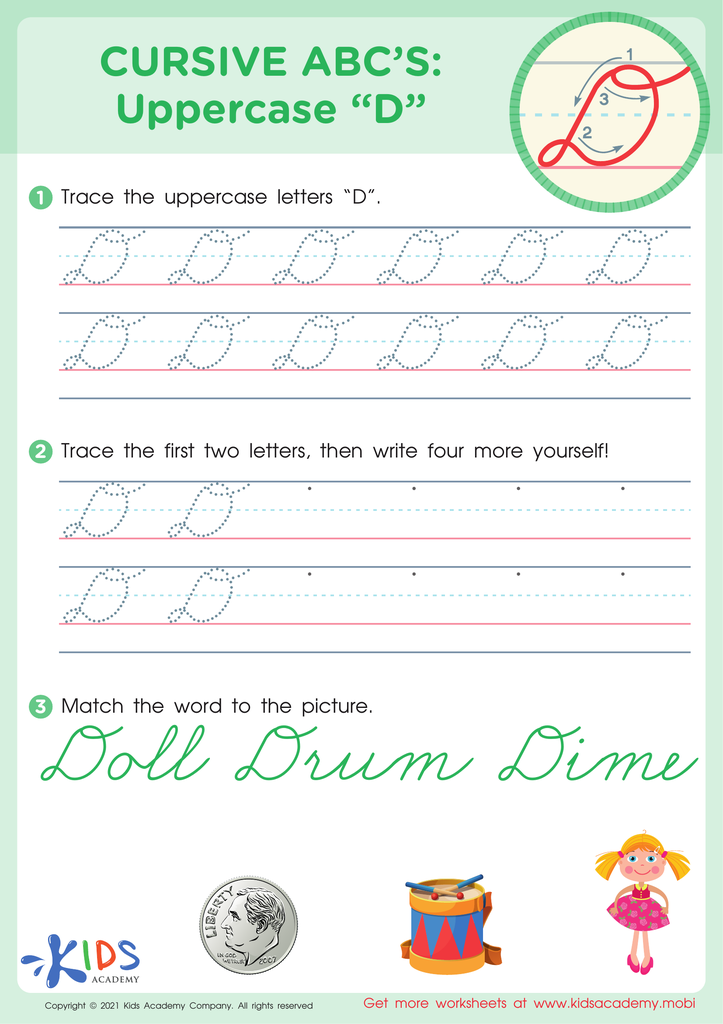
Help your kids learn to write the uppercase letter 'D' in cursive with the help of this tracing worksheet. Show them how to trace it over and over. When they're ready, let them write the letter on their own. Match pictures to words that start with 'D' and your kids will be pros in no time!
Cursive ABCs: Uppercase D
Worksheet
Cursive ABCs: Uppercase C

Cursive ABCs: Uppercase C

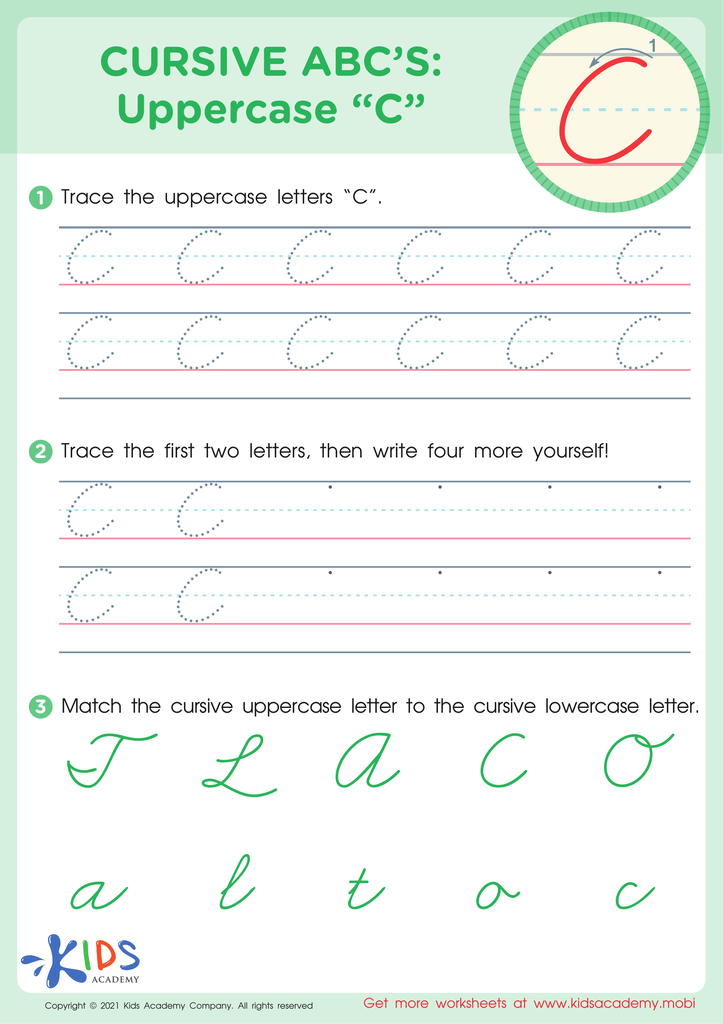
These worksheets are perfect for those wanting to improve their handwriting or learn letter recognition. The tracing exercises help younger students sharpen their writing skills and teach how to write the 'C' in cursive. First, they trace the given examples and then practice writing it solo. A letter recognition test is at the bottom of the page to check progress.
Cursive ABCs: Uppercase C
Worksheet
Cursive ABCs: Lowercase c

Cursive ABCs: Lowercase c

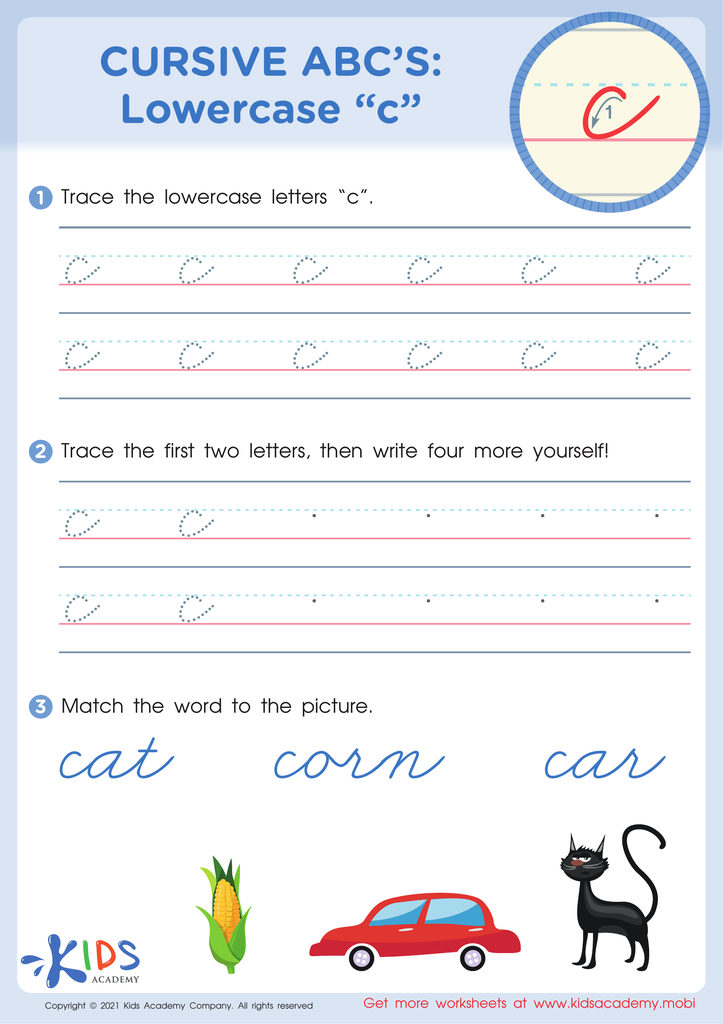
Once your child has successfully printed their letters, help them learn to recognize and write the alphabet in cursive. Struggling? This worksheet is perfect to assist them. Writing is an essential skill for kids to learn, so do all you can to help them. Use these tracing worksheets and guide them as they write the lowercase letter 'c' in cursive.
Cursive ABCs: Lowercase c
Worksheet
Cursive ABCs: Lowercase h

Cursive ABCs: Lowercase h

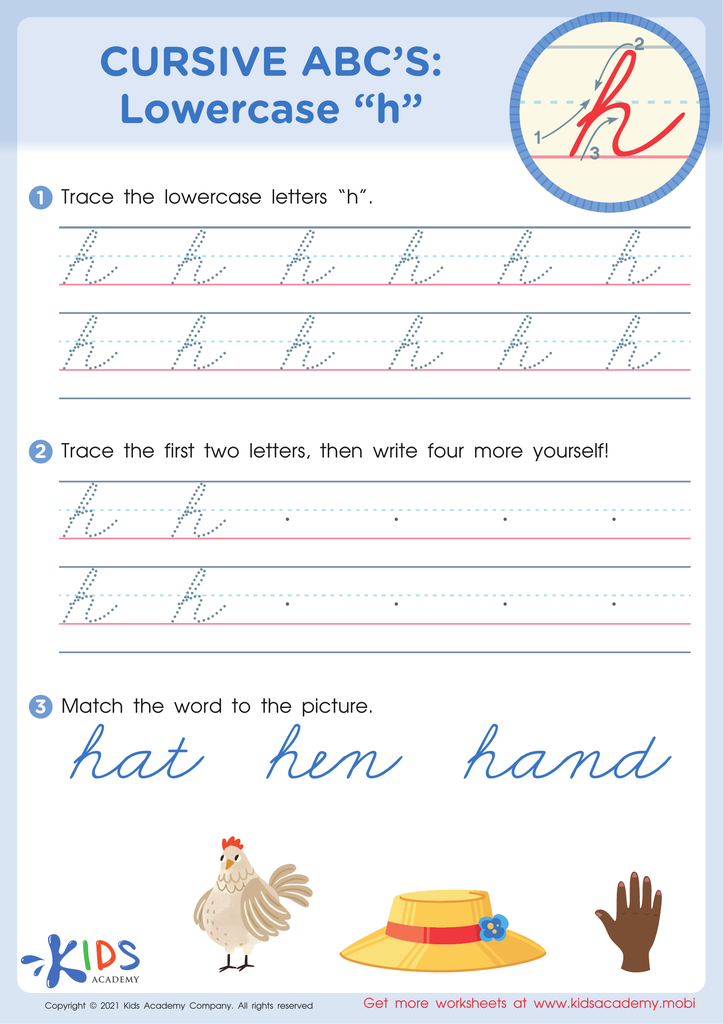
Your children will need more than just reciting the alphabet; they need to learn how to identify and write it. Cursive writing helps with neatness, and these tracing worksheets are great learning aids and offer exercises to practice writing lowercase 'h'. With these, your children get better writing skills and learn new words.
Cursive ABCs: Lowercase h
Worksheet
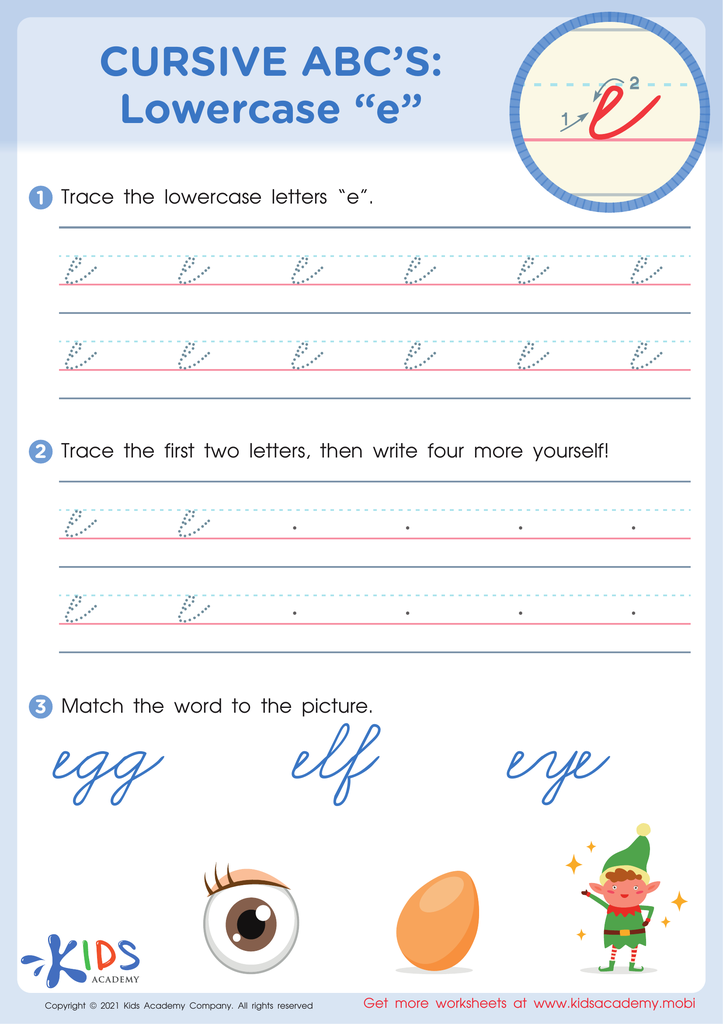
Cursive ABCs: Lowercase e

Cursive ABCs: Lowercase e

Traceable worksheets are great for kids wanting to practice writing alphabet letters. Help them improve their skills by tracing dotted lines to form 'e', then writing it on their own. They'll also learn new words beginning with letters of the alphabet.
Cursive ABCs: Lowercase e
Worksheet
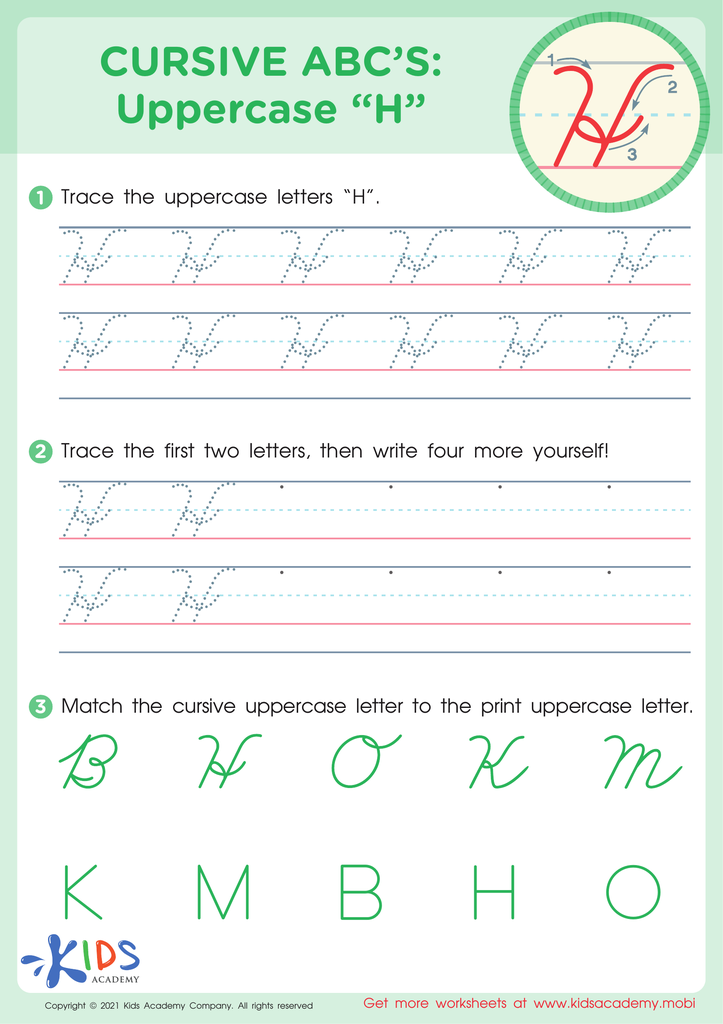
Cursive ABCs: Uppercase H

Cursive ABCs: Uppercase H

Have your child recite the alphabet and give you words beginning with H. This tracing sheet is perfect to help them improve their handwriting. Guide their hands as they trace the uppercase H, then have them practise writing it alone. At the bottom is an exercise to check their letter recognition.
Cursive ABCs: Uppercase H
Worksheet


Cursive writing practice is crucial for children ages 8-9, as it enhances their fine motor skills and cognitive development. Learning to write in cursive promotes better hand-eye coordination and muscle memory, skills that are essential during these formative years. Mastering cursive can also improve overall writing speed and fluidity, allowing students to express their thoughts more efficiently.

Furthermore, cursive writing encourages personal expression and can spark creativity. Children often find joy in crafting their unique signatures and styles, fostering a sense of ownership over their work. This personal connection to writing can enhance engagement and motivation.

Beyond physical skills, studies suggest that developing cursive writing capabilities may support reading comprehension and literacy. The unique flow and connections between letters in cursive are linked to improved cognitive processing, helping students better understand and retain information.

Finally, cursive writing connects learners to history and culture. Many historical documents are written in cursive; having the ability to read and interpret these texts broadens students' understanding of their heritage. In an era of digital communication, understanding cursive can also help children appreciate the art of handwriting, cultivating mindfulness and patience in their learning journey.