
Noun identification Grammar Worksheets for Ages 8-9
3 filtered results
Difficulty Level
Grade
Age
-
From - To
Subject
Activity
Standards
Enhance your child's understanding of nouns with our engaging Noun Identification Grammar Worksheets, designed specifically for ages 8-9! These worksheets offer a variety of fun activities that encourage young learners to recognize and categorize different types of nouns, including common and proper nouns. Each activity is tailored to develop grammar skills through hands-on practice, fostering critical thinking and creativity. Parental guidance and easy-to-follow instructions ensure an enjoyable learning experience at home or in the classroom. Download our printable worksheets today and help your child master noun identification while building a strong foundation for their writing skills!
Favorites
With answer key
Interactive
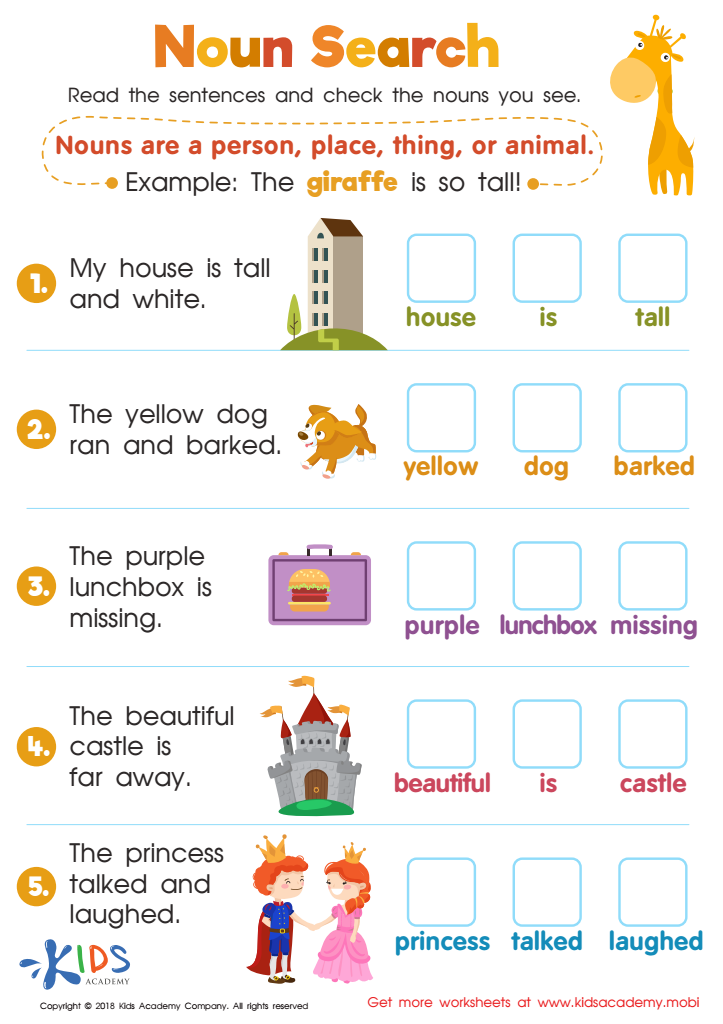
Noun Search Worksheet
Ask your kids what a noun is. If needed, remind them a noun is a name for a person, animal, place or thing. Give examples like 'dog', 'Sara', 'USA' and 'book'. Ask for more examples, then read the sentences in this worksheet and ask kids to check for nouns.
 Assign to My Students
Noun Search Worksheet
Worksheet
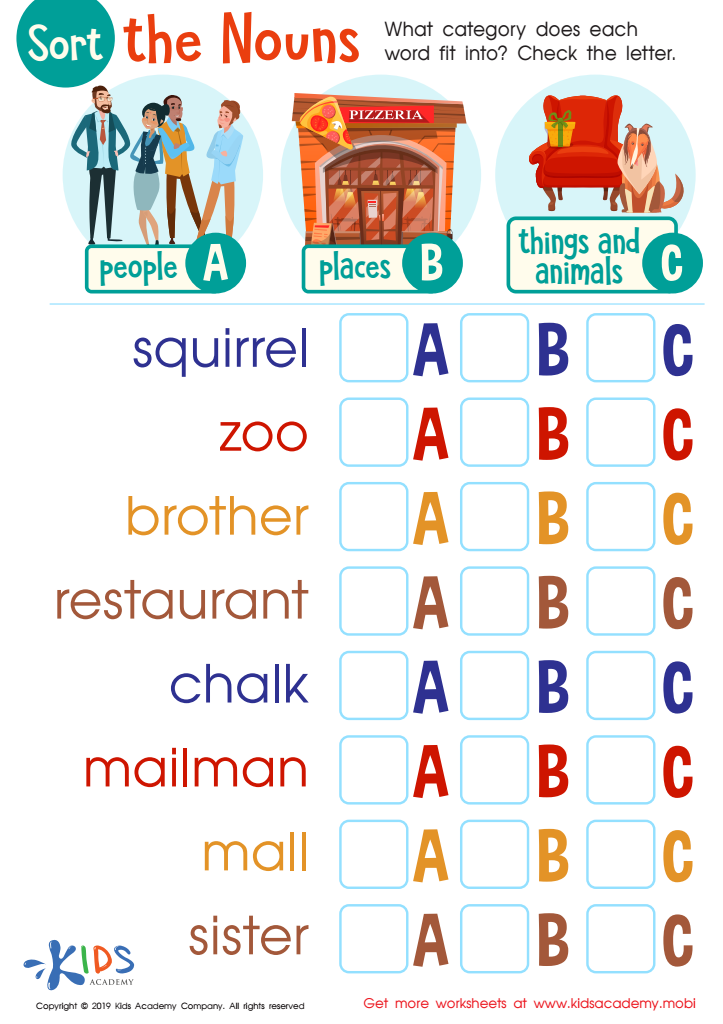
Sort the Nouns Worksheet
Nouns are words for people, places, things, and ideas. This worksheet helps kids focus on three categories: people, places, and things (including animals). All the words are nouns; the task is to match them to the correct category. Circle the answer for each!
Sort the Nouns Worksheet
Worksheet
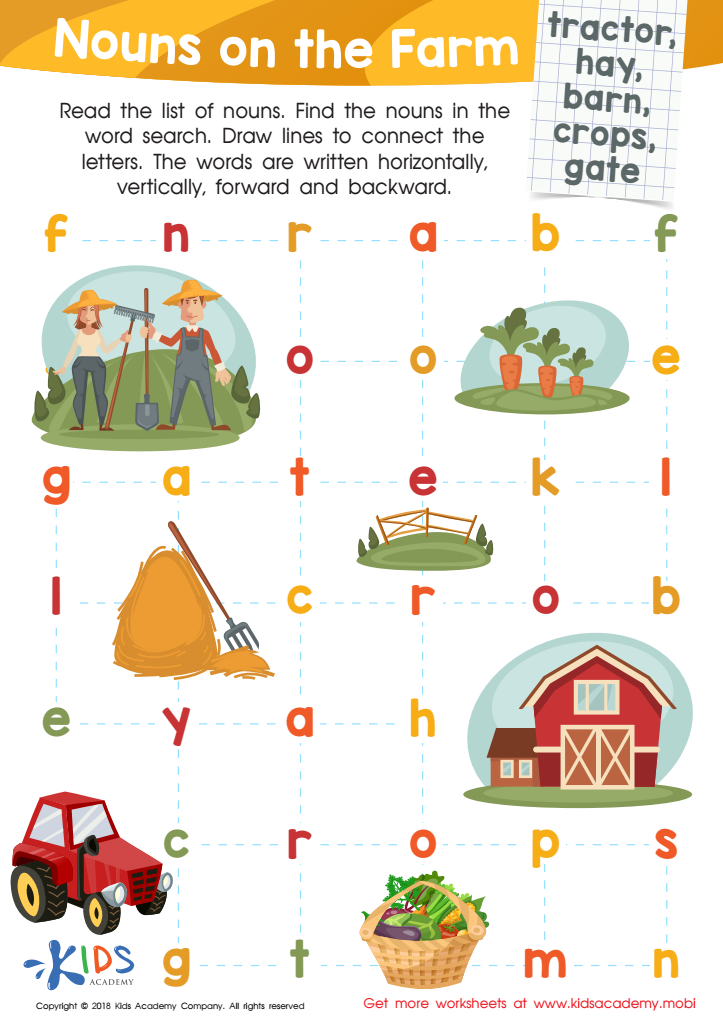
Nouns on the Farm Worksheet
Help your child learn nouns with this worksheet: Read the list to them and have them find the nouns in the word search. Draw lines to connect the letters, and explain the words can be found horizontally, vertically, forward, and backward.
Nouns on the Farm Worksheet
Worksheet
Join Kids Academy for Free
Who is primarily going to use this learning content?




.jpg)



Noun identification grammar is essential for children ages 8-9, as it lays the foundational skills necessary for effective communication and literacy. At this age, children are rapidly expanding their vocabulary and starting to write more complex sentences. Understanding nouns—simple words for people, places, things, or ideas—helps them categorize their thoughts and articulate more clearly.
For parents and teachers, focusing on noun identification fosters critical thinking skills and enhances reading comprehension. When children can identify nouns, they are better equipped to analyze sentences and understand the context of what they read. This not only enriches their understanding of assignments but also builds confidence in their academic abilities.
Moreover, mastering nouns at this stage encourages creativity in writing. Children can experiment with descriptive language and varying sentence structures, leading to more engaging stories and essays.
Finally, a solid grasp of noun identification contributes to improved grammar overall. It paves the way for a deeper study of adjectives, verbs, and other parts of speech, making it easier for children to express themselves clearly and effectively throughout their educational journey. By prioritizing noun identification, parents and teachers help create well-rounded, confident communicators for the future.








