Understanding prefixes Grammar Worksheets for Ages 8-9
6 filtered results
-
From - To
Enhance your child's language skills with our "Understanding Prefixes" grammar worksheets, specially designed for ages 8-9. These engaging and interactive resources help young learners explore the meaning and usage of common prefixes. By completing various exercises, kids will practice expanding their vocabulary and understanding how prefixes modify words. Our worksheets encourage fun and effective learning through captivating activities that fit seamlessly into your child's writing curriculum. Boost their confidence in grammar and writing while providing them with the foundational skills needed for effective communication. Discover the joy of learning with our easily downloadable and print-friendly worksheets today!
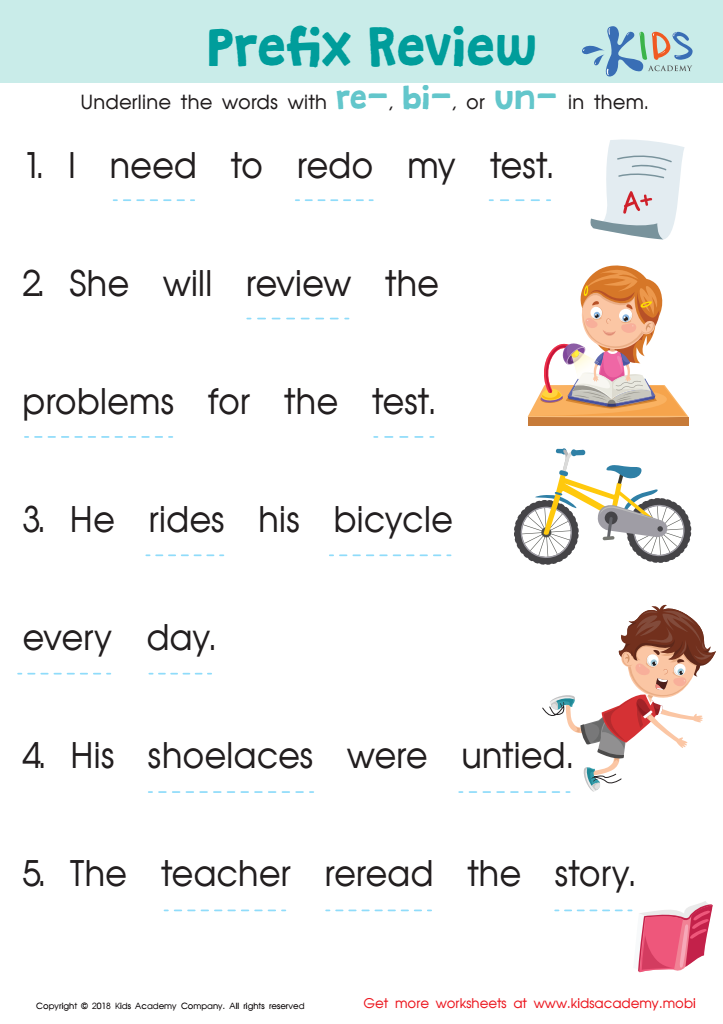
Prefix Review Worksheet
 Assign to My Students
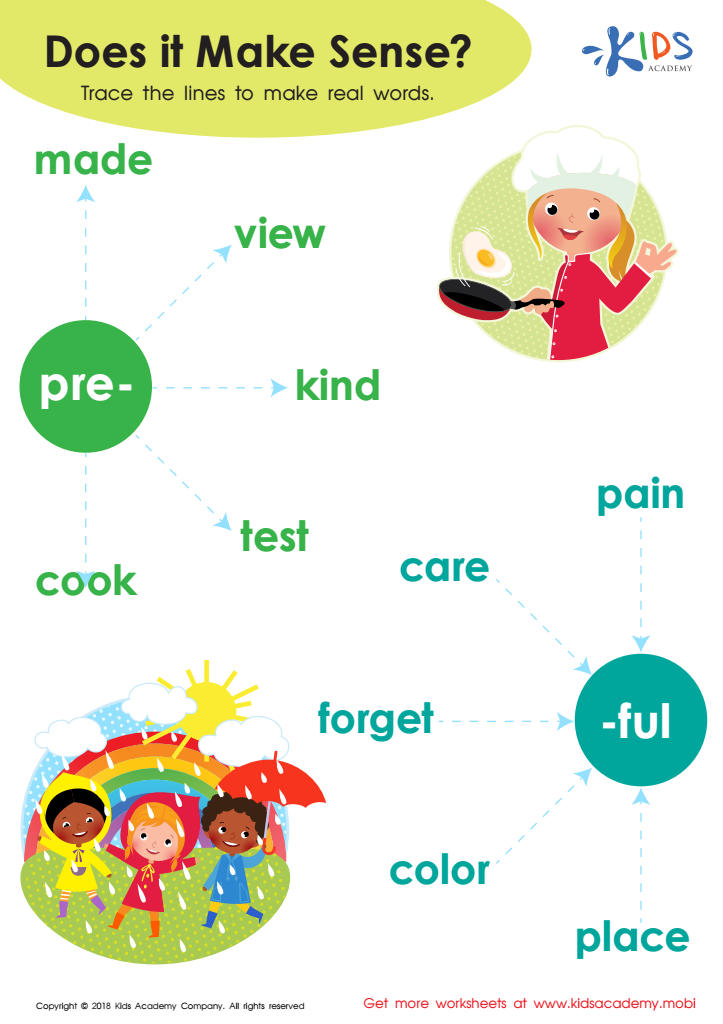
Prefix pre– and Suffix ful– Worksheet
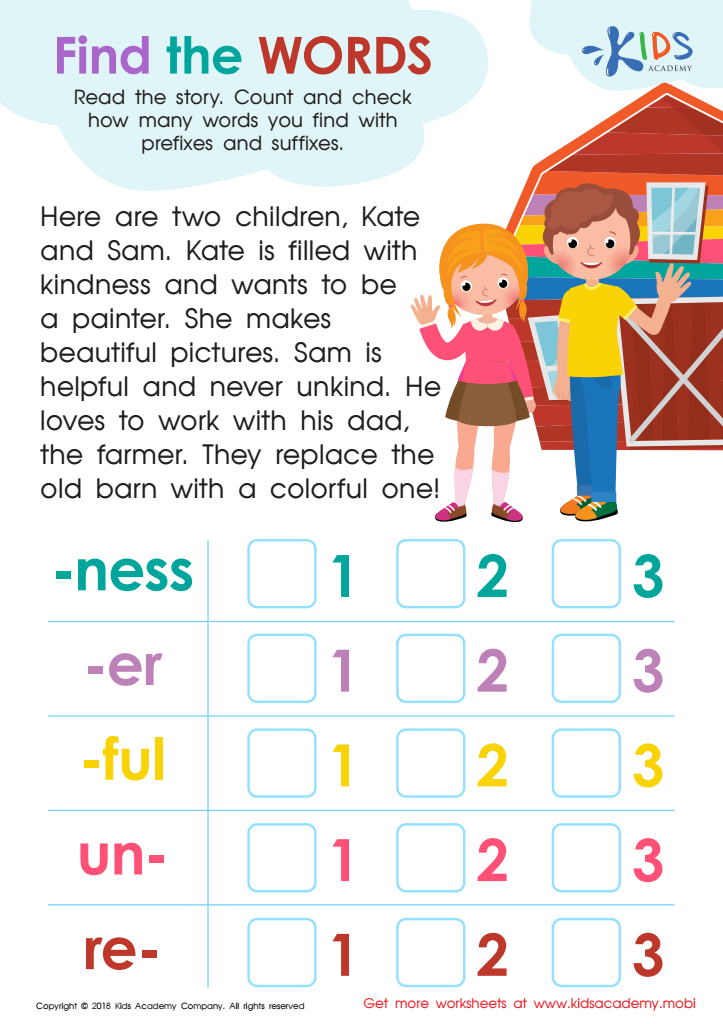
Prefix and Suffix Worksheet For Grade 3
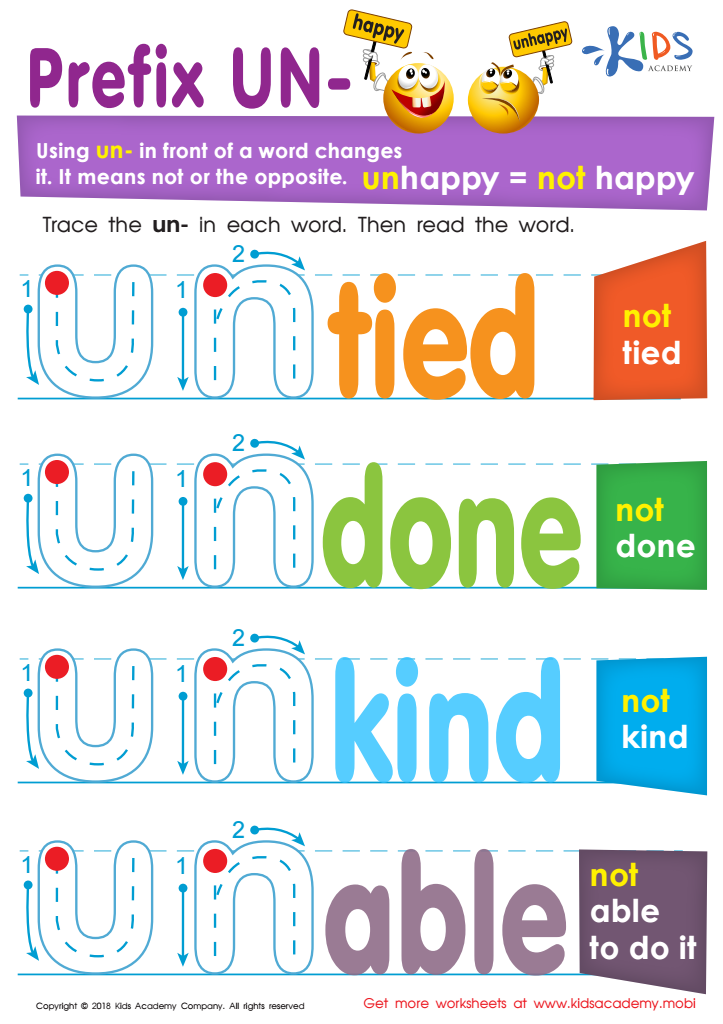
Prefix Un- Worksheet
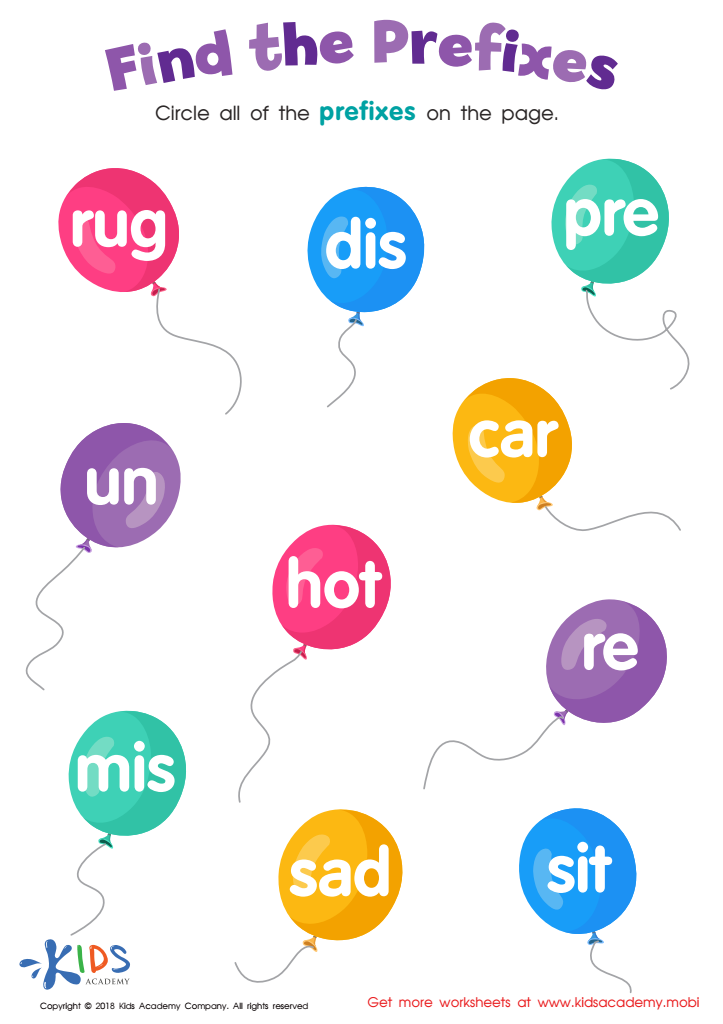
Reading: Find the Prefixes Worksheet
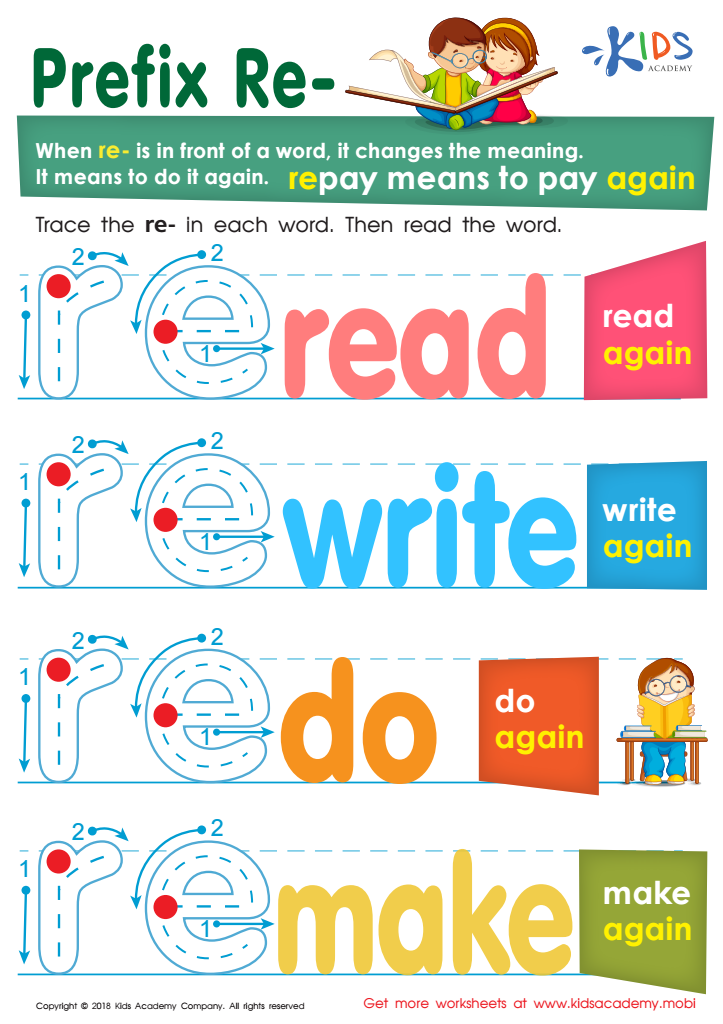
Prefix Re- Worksheet


.jpg)




Understanding prefixes is crucial for children aged 8-9, and both parents and teachers should prioritize this aspect of grammar. At this developmental stage, students are expanding their vocabulary and learning the building blocks of language. Prefixes, which are added to the beginning of words to modify their meanings, play a significant role in comprehension and communication skills.
By teaching children about prefixes, adults help them recognize patterns within words, enhancing their decoding skills that are essential for reading fluency. This knowledge empowers students to infer the meanings of unfamiliar words, significantly boosting their confidence and enthusiasm towards learning. For example, understanding that “un-” means “not” can help children decipher “unhappy” without needing to consult a dictionary.
Furthermore, the ability to manipulate prefixes contributes to children’s writing skills, enabling them to create new words and convey their thoughts more precisely. As vocabulary development is foundational for success across academic subjects, recognizing and using prefixes will facilitate better understanding in math, science, and social studies.
In summary, fostering an understanding of prefixes will not only enrich children's language abilities but also support their overall academic growth, making it imperative for parents and teachers to focus on this foundational aspect of grammar.








