Noun identification Writing Worksheets for Ages 8-9
3 filtered results
-
From - To
Boost your child's writing skills with our engaging Noun Identification Writing Worksheets designed specifically for ages 8-9. These worksheets provide a fun and interactive way for young learners to enhance their understanding of nouns, essential building blocks in grammar. Through a variety of exercises and activities, children will practice identifying common and proper nouns, improving their writing clarity and expression. Each worksheet features colorful illustrations and relatable contexts to keep your child motivated and excited about learning. Perfect for use at home or in the classroom, our easy-to-follow worksheets support language development and make grammar enjoyable! Download today and watch them thrive!
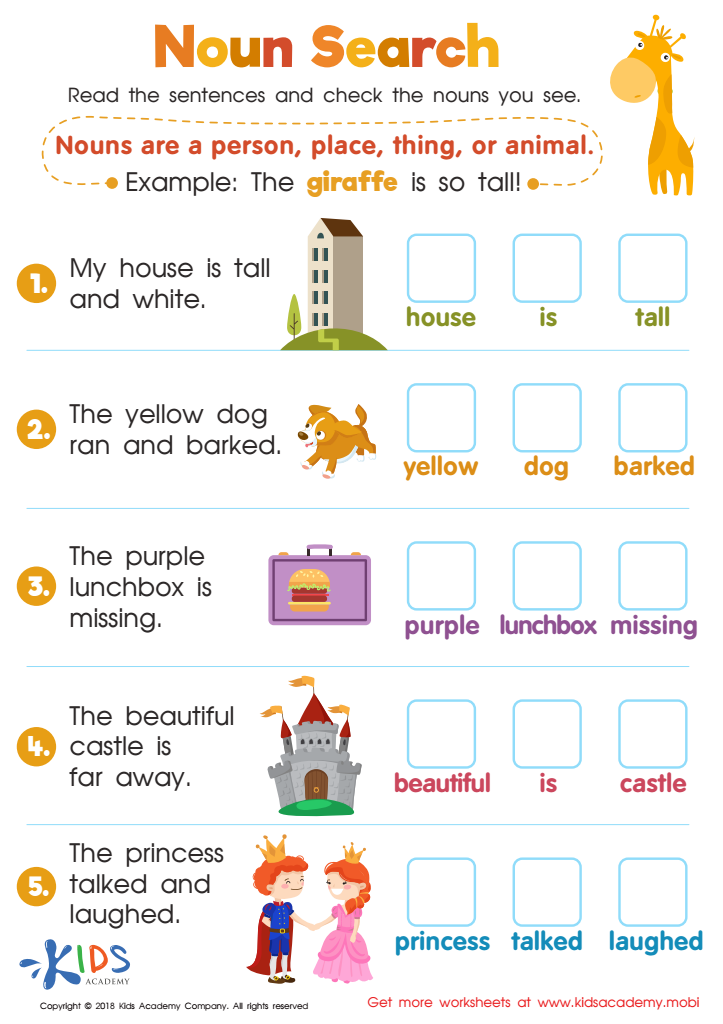
Noun Search Worksheet
 Assign to My Students
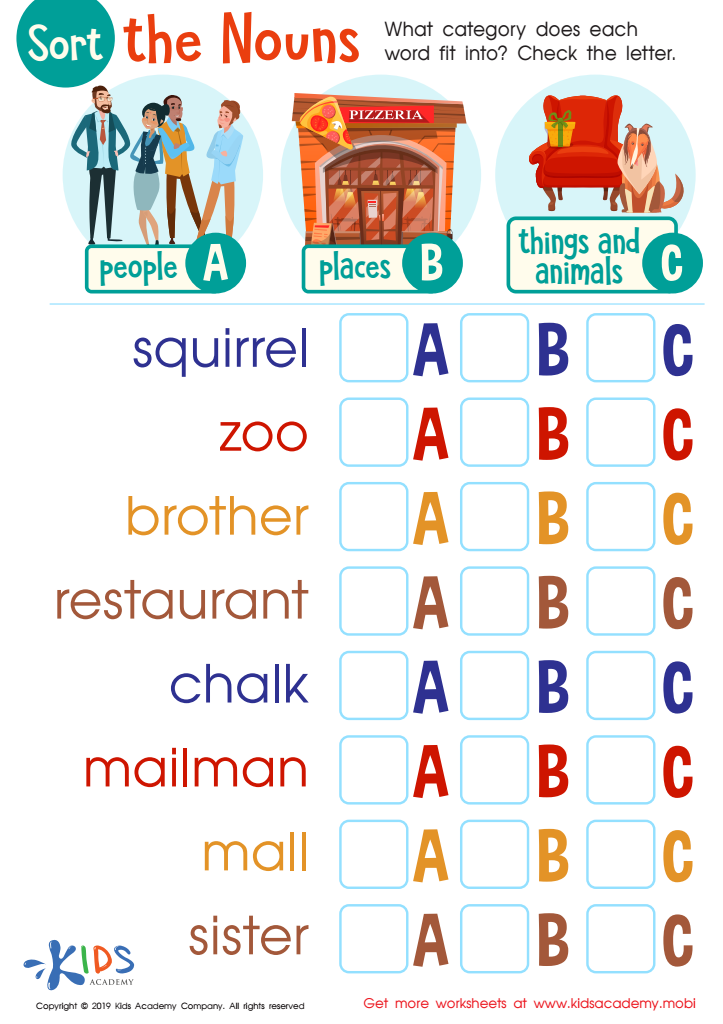
Sort the Nouns Worksheet
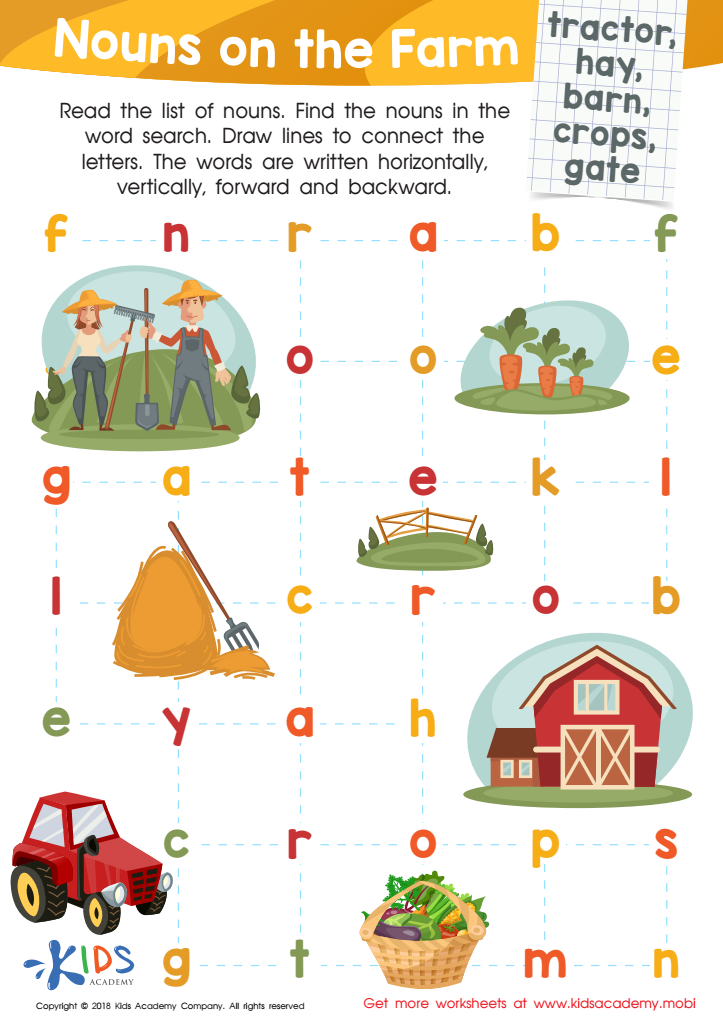
Nouns on the Farm Worksheet







Noun identification is a crucial component of language development for children aged 8-9, and both parents and teachers should prioritize it for several reasons. First, nouns are foundational elements of speech and writing; they represent people, places, things, and ideas, forming the backbone of sentences. By mastering noun identification, children improve their comprehension and expression, allowing them to communicate effectively.
Moreover, at this age, children transition from learning to read to reading to learn. Understanding nouns enhances their ability to grasp more complex texts, as they develop critical thinking and analytical skills through active engagement with the language. This identification practice also aids in enhancing vocabulary; the more nouns children identify and use, the richer their language becomes.
Additionally, knowing how to identify proper nouns versus common nouns empowers children to write with clarity and precision. It fosters creativity, helping them craft stories with more detail. As parents and teachers engage in noun identification activities, they also nurture their child's cognitive and linguistic growth, opening doors to improved academic performance.
In essence, prioritizing noun identification equips children not only with essential language skills but also with the tools needed for lifelong learning and effective communication.








