
Alphabet Learning ABC Letters Worksheets for 8-Year-Olds
3 filtered results
Difficulty Level
Grade
Age
-
From - To
Subject
Activity
Standards
Discover our Alphabet Learning ABC Letters Worksheets for 8-Year-Olds, designed to engage and educate! Tailored for young learners, these fun and interactive worksheets focus on enhancing letter recognition, handwriting skills, and phonics awareness. Each sheet features creative activities, including tracing, matching, and coloring that turn learning into a delightful adventure. Ideal for at-home practice or classroom use, our worksheets help children build a strong foundation in alphabet comprehension while boosting their confidence. Explore our collection and watch your 8-year-old excel in mastering the ABCs through play and practice!
Favorites
With answer key
Interactive
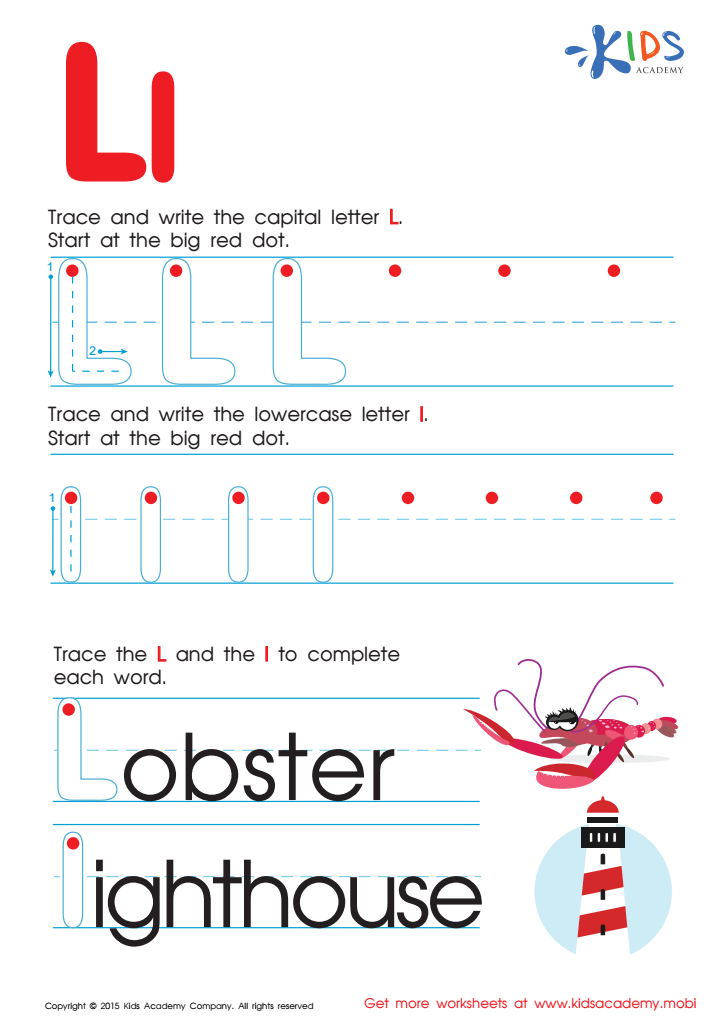
Letter L Tracing Page
Trace uppercase and lowercase letters to practice writing. Pay attention to the lowercase letters, like the "L", that are not as tall as an uppercase "I" or as short as a lowercase "i". Words like "lobster" and "lighthouse" are waiting to be completed. Enjoy!
Letter L Tracing Page
Worksheet


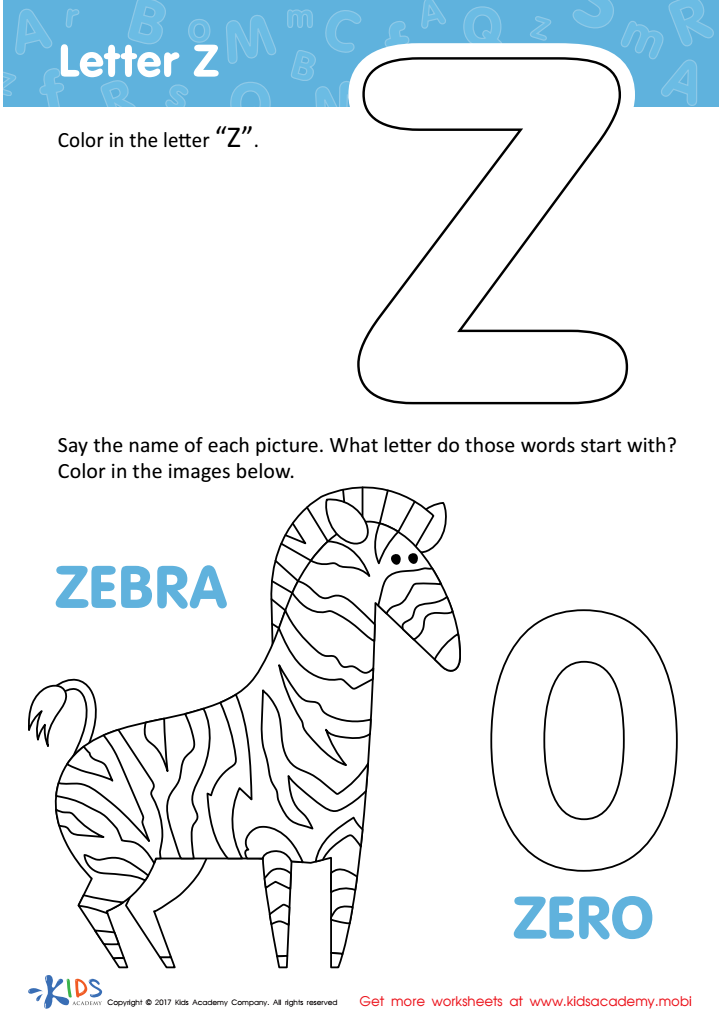
Letter Z Coloring Sheet
This coloring page featuring the letter "Z" is perfect for your child to practice letter recognition! Help them learn the unique sound it makes as they color. It'll be a fun and easy activity they won't have trouble with!
Download (PDF)
 Assign to My Students
Assign to My Students
Letter Z Coloring Sheet
Worksheet

Letter F Tracing Page
Trace "F" with your pencil! Start at the red dot and draw lines — it's fun! Check it out — it looks great! Keep practicing to make it even better. Then, try completing words. Help out the broken fan and funny frog! Get free alphabet worksheets and activities for your kids. Come see our new tracing pages!
Letter F Tracing Page
Worksheet
Join Kids Academy for Free
Who is primarily going to use this learning content?







Alphabet learning for 8-year-olds might seem too basic initially, but it remains crucial for several essential reasons that both parents and teachers should be aware of. By second or third grade, alphabet mastery tends to extend beyond simple recognition; it supports more complex language skill development, including reading fluency, spelling, and writing competence.
First, a thorough understanding of the alphabet enhances reading abilities. Children at this stage are transitioning from "learning to read" to "reading to learn," and a solid grasp of letter sounds and phonemic awareness helps decode unfamiliar words, boosting reading comprehension.
Second, it supports spelling and vocabulary growth. Familiarity with the alphabet aids children in understanding word structures and increases their ability to spell correctly. It also fosters a richer vocabulary as children confidently explore new words.
Third, writing skills benefit as well. Proper knowledge of alphabet letters and their correct sequences helps children construct sentences more efficiently and creatively, improving their overall written communication skills.
Lastly, it cultivates confidence and motivation. Children who feel adept at alphabet-related tasks are more likely to feel confident and enthusiastic about learning, setting a positive educational tone. Therefore, prioritizing alphabet learning for 8-year-olds constitutes a vital part of holistic language education, underpinning successful future academic achievements.







