Alphabetical understanding Alphabet Worksheets for 8-Year-Olds
3 filtered results
-
From - To
Enhance your child's alphabetical understanding with our specially designed Alphabet Worksheets for 8-year-olds. Developed by education experts, these engaging worksheets make learning fun and interactive, helping kids master letter recognition, sequencing, and vocabulary. Each exercise is tailored to strengthen linguistic skills and boost confidence, making the journey of learning enjoyable and effective. Our printable worksheets offer a variety of activities that keep young minds excited about exploring letters and words. Ideal for both classroom and home use, these resources are perfect for maintaining learning momentum and literacy development. Discover the joy of learning the alphabet with us!
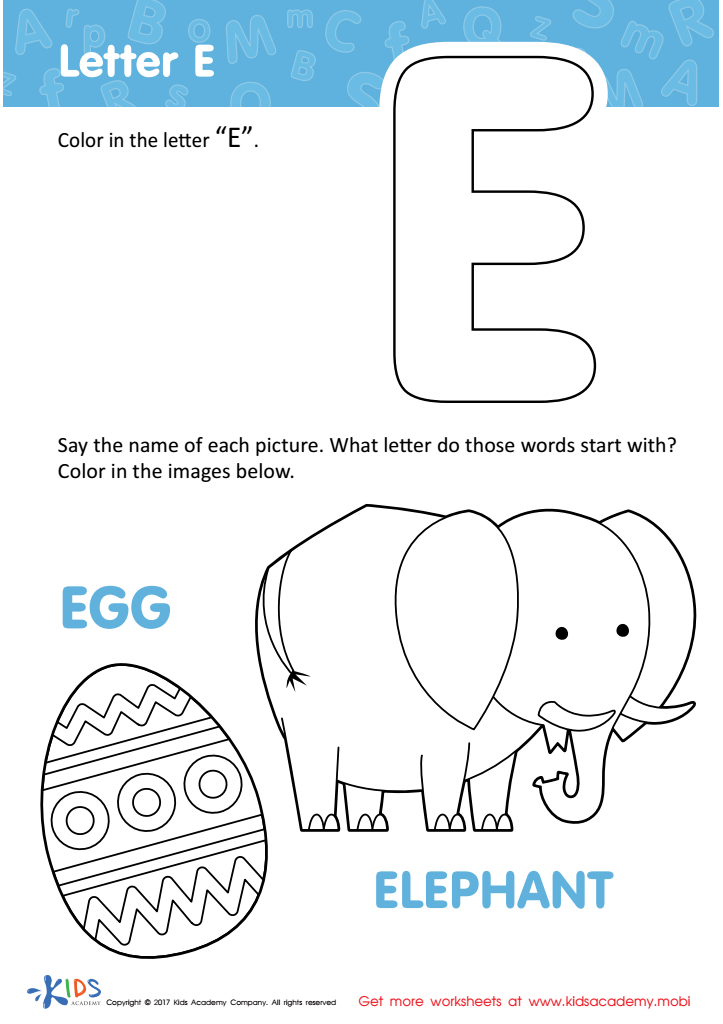
Letter E Coloring Sheet
 Assign to My Students
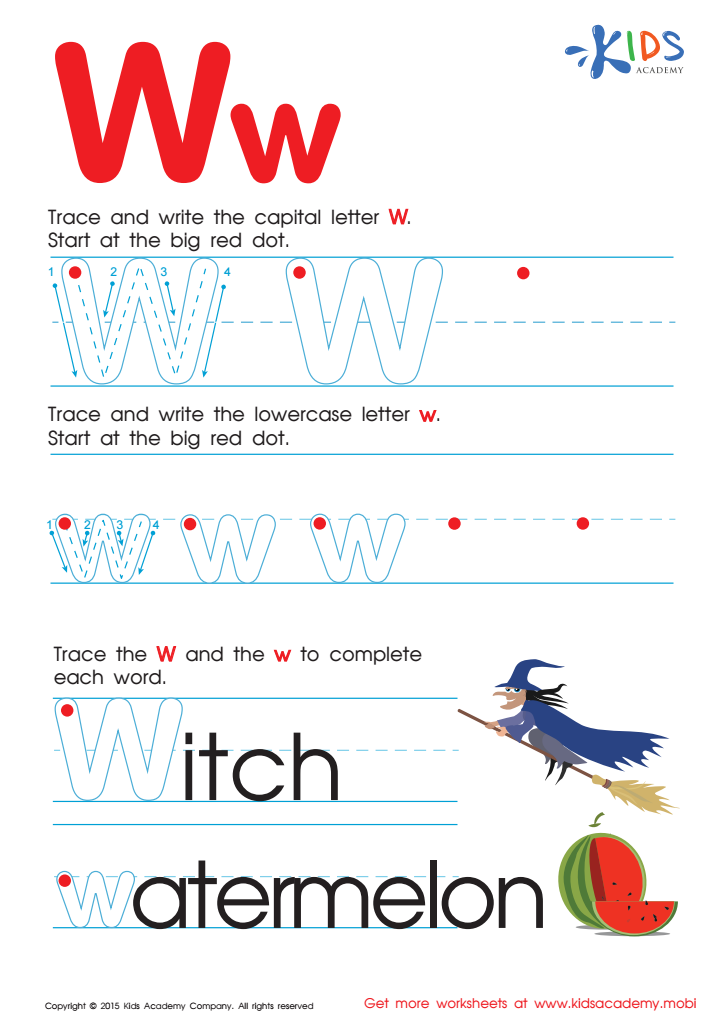
Letter W Tracing Page
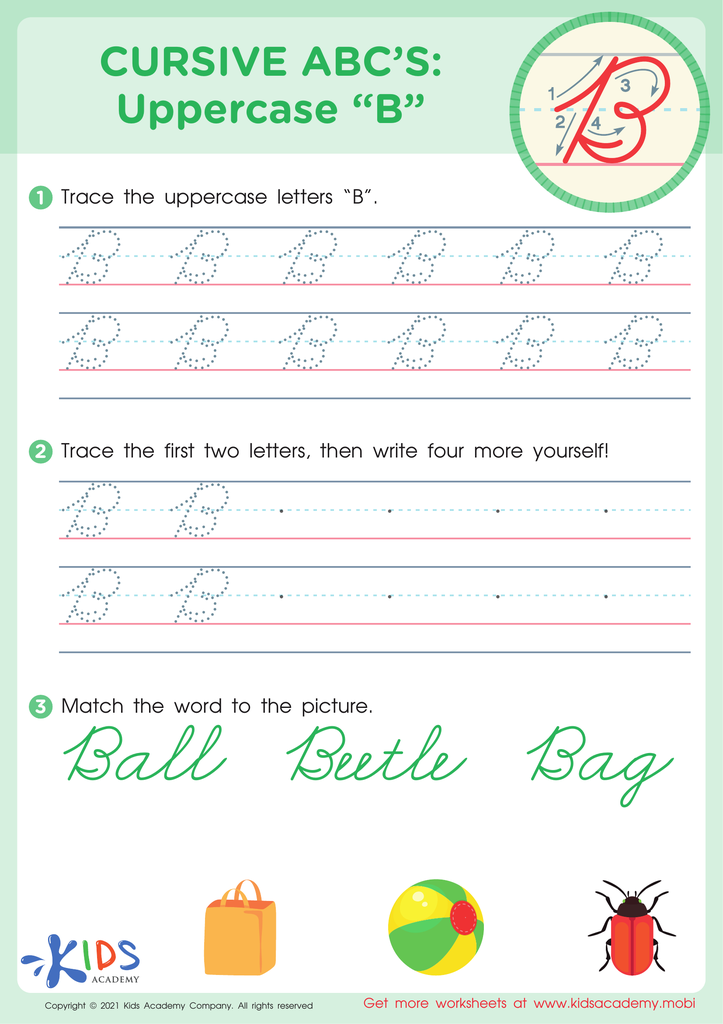
Cursive ABCs: Uppercase B








Alphabetical understanding is foundational for a child's education, especially around the age of 8 when reading and writing skills are rapidly developing. Parents and teachers should care about this because it underpins literacy, essential for academic success and everyday functioning. Mastery of the alphabet enables children to recognize, differentiate, and sequence letters, aiding in word formation and spelling. This understanding enriches their vocabulary, enhances reading fluency, and improves comprehension, which in turn fosters a love for reading—a critical precursor to lifelong learning.
Moreover, alphabetical understanding supports self-confidence and independence. Children who grasp this concept can efficiently use a variety of resources like dictionaries, indexes in textbooks, and libraries, promoting both learning and problem-solving skills. These skills are vital for academic tasks, from simple book reports to advanced research projects.
Finally, alphabetical literacy connects to broader cognitive development, facilitating pattern recognition, memory, and even logical reasoning. By investing in their child's or student's alphabet skills, parents and teachers set a strong foundation for more complex language acquisition and cognitive pursuits, thus sparking curiosity and a robust academic journey. The ability to understand and use the alphabet proficiently significantly influences school performance and future educational endeavors.







