
Letter tracing skills Letter Recognition Worksheets for 8-Year-Olds
3 filtered results
Difficulty Level
Grade
Age
-
From - To
Subject
Activity
Standards
Enhance your 8-year-old's literacy journey with our engaging Letter Tracing Skills and Letter Recognition Worksheets! Designed specifically for young learners, these worksheets make mastering the alphabet fun and interactive. Kids will practice tracing letters, developing fine motor skills while reinforcing letter recognition. Our resources feature colorful illustrations and engaging activities that captivate children's attention, helping them to remember both uppercase and lowercase letters. Ideal for homeschooling or classroom use, these worksheets support phonemic awareness, preparing your child for reading and writing success. Explore our thoughtfully crafted worksheets to ensure a strong foundation in literacy for your child today!
Favorites
With answer key
Interactive
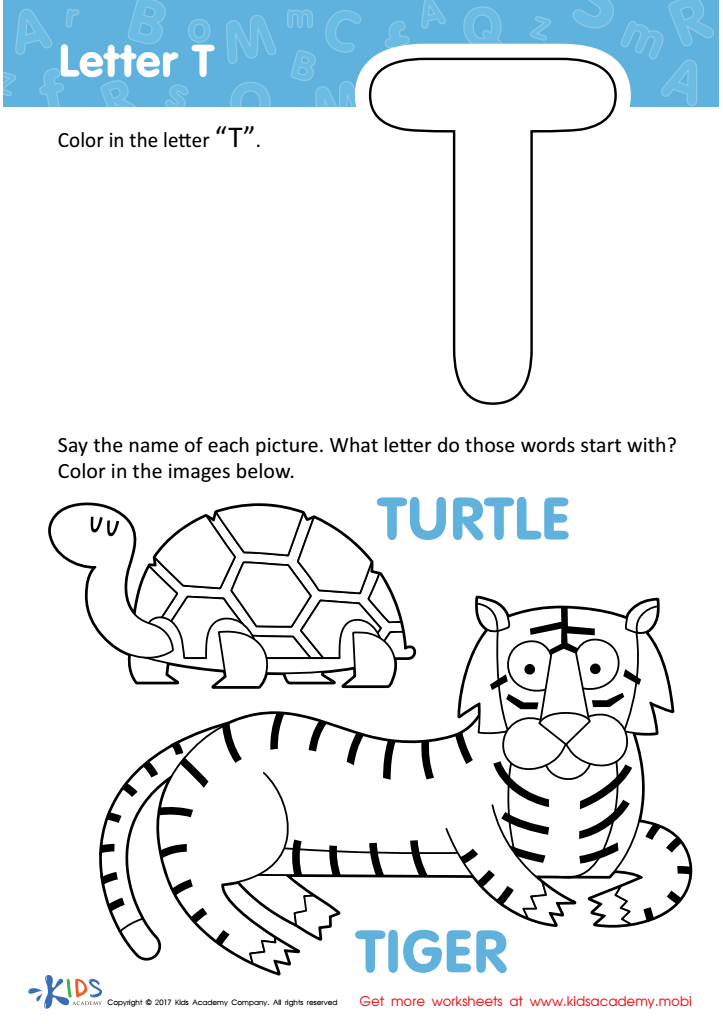
Letter T Coloring Sheet
Introduce your child to the letter "T" and its animals – turtles and tigers! With this coloring page, you can stimulate your child's imagination and creativity, while helping them recognize the letter "T". Have fun with your child and get coloring!
Download (PDF)
 Assign to My Students
Assign to My Students
Letter T Coloring Sheet
Worksheet
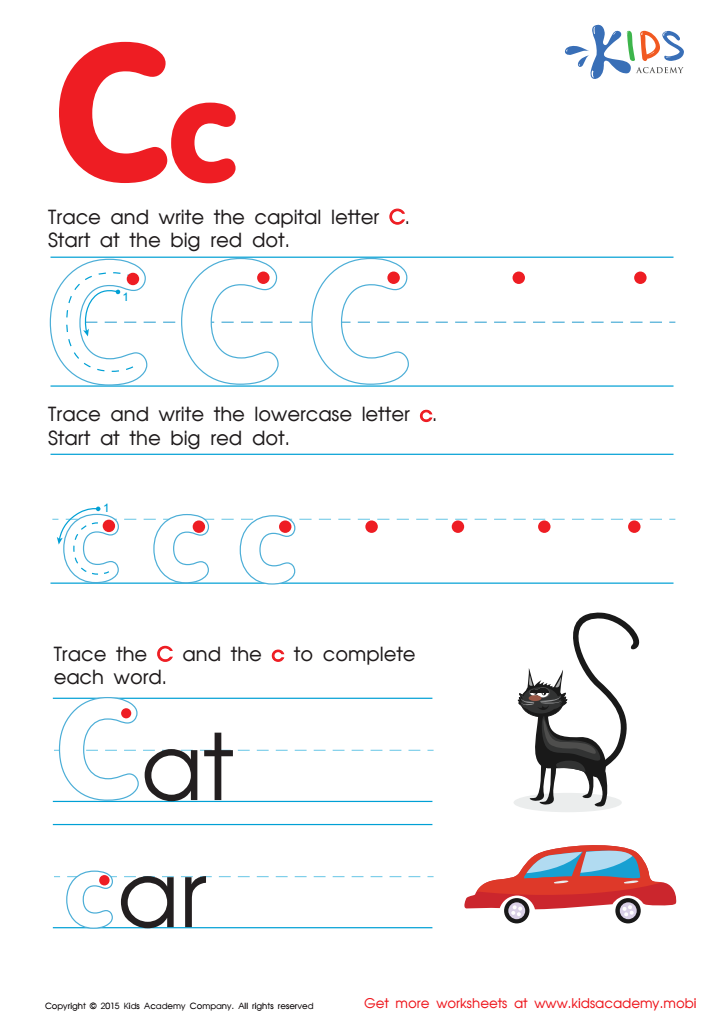
Letter C Tracing Page
Trace and write the letter 'C'! Put the pencil at the red dot then follow the lines – the capital letter first then the lowercase one. Cats love it and so will you! Get more free printables to practice tracing and writing.
Letter C Tracing Page
Worksheet
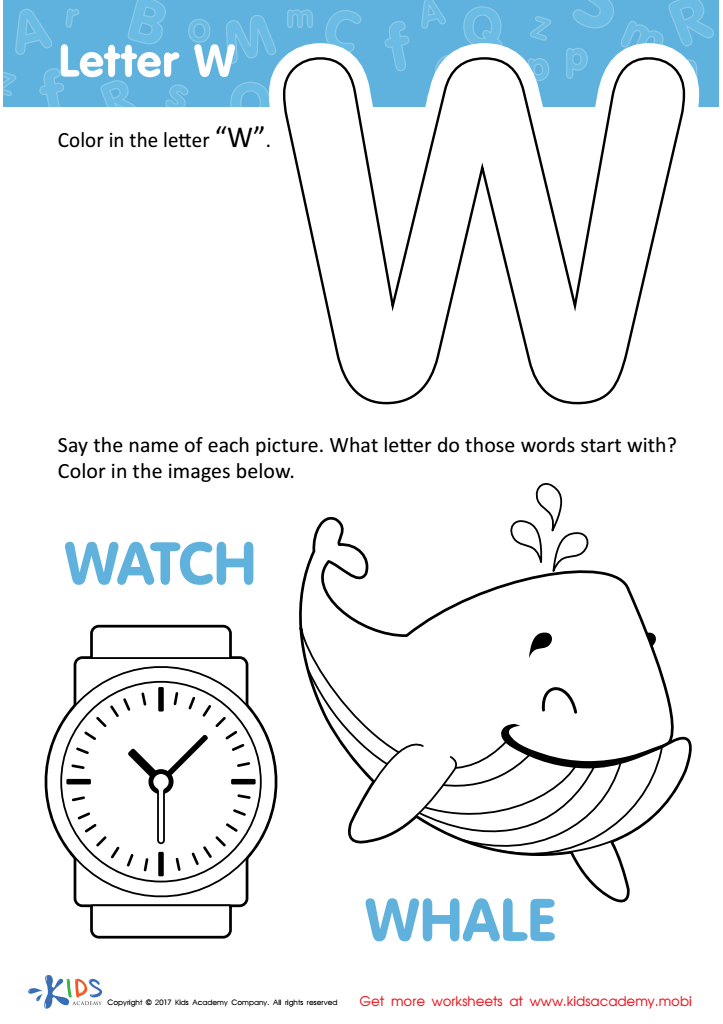
Letter W Coloring Sheet
Let your child have fun with this letter "W" coloring page! They can use their imagination to color the whale and discover the letter and its sound. Give them a helping hand to make it a whale of a time!
Download (PDF)
Assign to My Students
Assign to My Students
Letter W Coloring Sheet
Worksheet
Join Kids Academy for Free
Who is primarily going to use this learning content?








Letter tracing and letter recognition are foundational skills that significantly influence a child's literacy development. For 8-year-olds, mastery of these skills is crucial as they transition from learning to read to reading to learn. Parents and teachers should prioritize these skills because they enhance a child's ability to form letters correctly, which influences handwriting clarity and overall academic performance.
Letter tracing engages young learners by reinforcing the correct shapes and sounds of letters, establishing muscle memory which facilitates easier writing in the future. Moreover, strong letter recognition skills are vital for reading fluency. Children who can quickly recognize letters are better equipped to decode words and comprehend text, enabling them to participate actively in classroom discussions and activities.
Furthermore, a solid foundation in letter skills boosts confidence in children's abilities. This confidence encourages a love for reading and writing, fostering a positive attitude towards learning. Ultimately, by emphasizing letter tracing and recognition, parents and teachers not only support the development of essential literacy skills but also ignite a lifelong passion for reading and writing, crucial for success in all areas of education and personal growth.







