Spelling practice Long And Short Vowel Worksheets for 8-Year-Olds
3 filtered results
Difficulty Level
Grade
Age
-
From - To
Subject
Activity
Standards
Enhance your child's spelling abilities with our specially designed "Spelling Practice: Long and Short Vowel Worksheets" tailored for 8-year-olds. These printable worksheets from Kids Academy help young learners distinguish between long and short vowel sounds, an essential skill for mastering spelling. Engaging activities and fun exercises make learning enjoyable, ensuring children grasp vowel phonics and improve their reading and writing skills. Perfect for both classroom and at-home practice, these worksheets offer a solid foundation for your child's language development. Download and start fostering a love for learning today!
Favorites
With answer key
Interactive
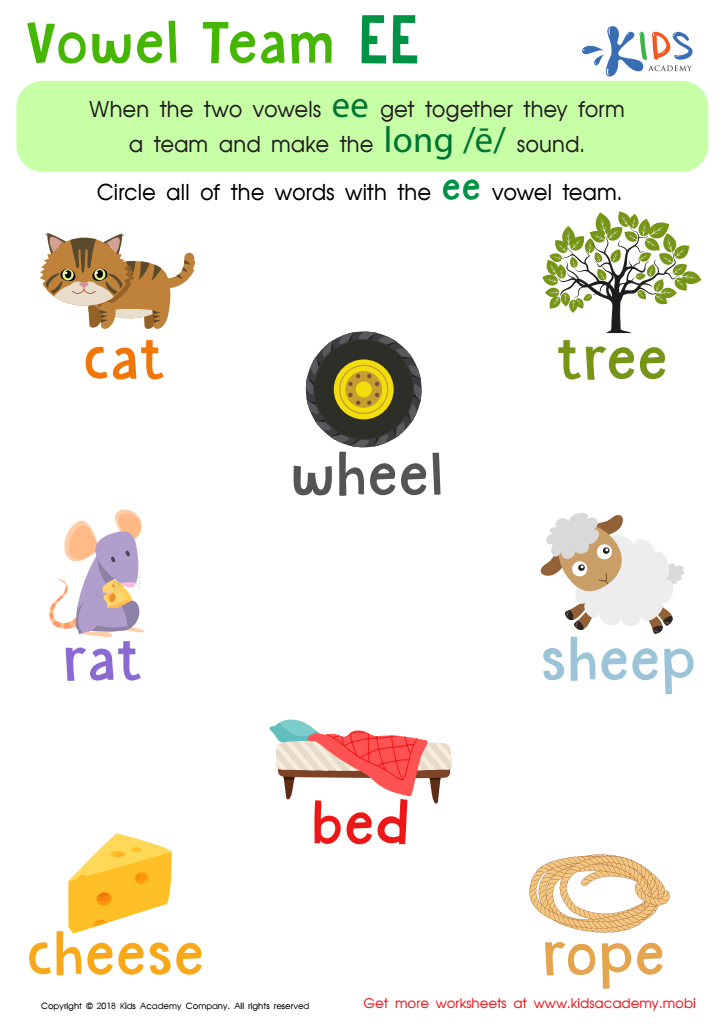
Reading: Vowel Team EE Worksheet
This worksheet is perfect for helping young learners master the /ee/ vowel team. It shows the first vowel with a long sound and the second vowel silent. It also provides pictures for unfamiliar words for readers of all levels. It's an ideal resource for teaching phonics skills.
 Assign to My Students
Reading: Vowel Team EE Worksheet
Worksheet
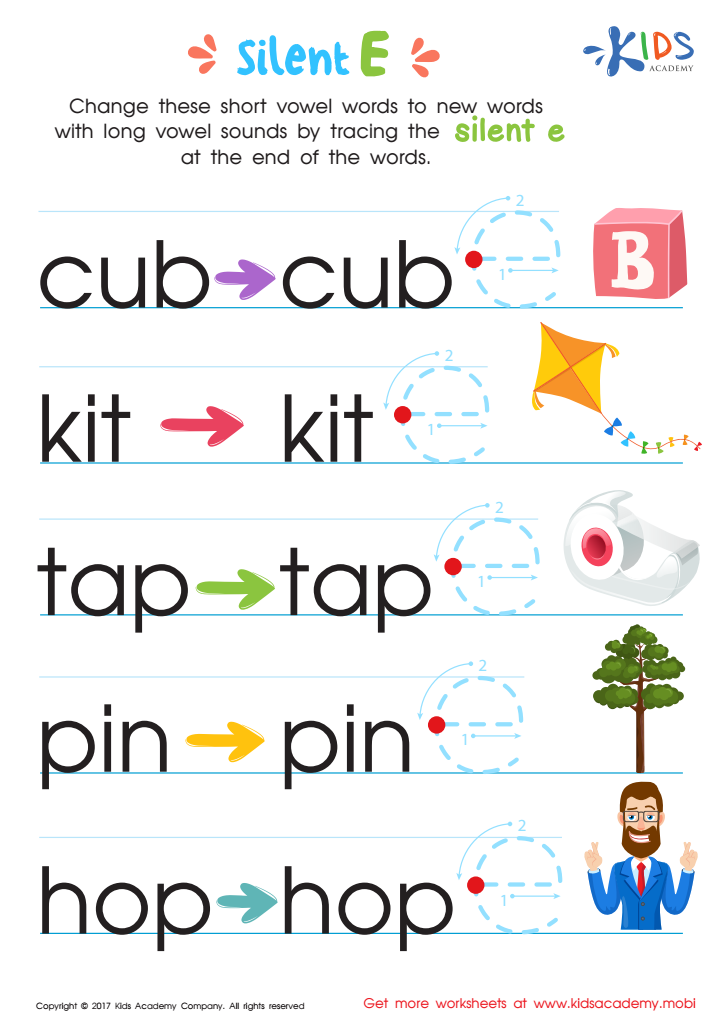
Silent E Words Worksheet
The letter e is amazing - it changes words without making a sound! Boost spelling and phonics with this Silent e worksheet from Kids Academy - fun and colorful!
Silent E Words Worksheet
Worksheet
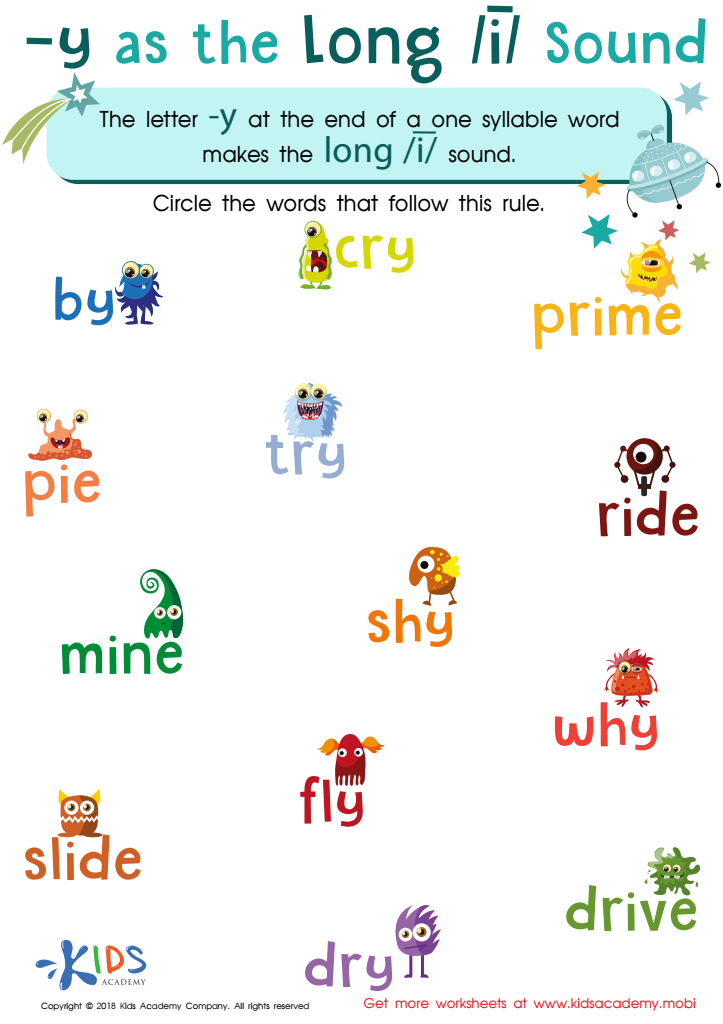
Reading: Y as Long I Worksheet
Students need practice and exposure to letters that make different sounds for decoding and reading success. This printable is a great resource for language arts classes: it explains that words ending with Y and having only one syllable make the long I sound. Students will circle all words with Y that have this sound.
Reading: Y as Long I Worksheet
Worksheet
Join Kids Academy for Free
Who is primarily going to use this learning content?




Spelling practice focusing on long and short vowels is crucial for 8-year-olds because it fundamentally supports their literacy development. At this age, children are transitioning from simple phonetic reading to more complex word recognition and usage. Understanding the distinction between long and short vowels helps refine their decoding skills, crucial for reading fluency and comprehension.
From a cognitive perspective, differentiating between vowel sounds enhances auditory discrimination, which is foundational for phonological awareness—a critical predictor of future reading success. This practice also supports vocabulary growth, since many words change in meaning and pronunciation with different vowel lengths (e.g., "hop" vs. "hope"). Thus, improved phonetic skills bolster both spoken and written communication.
Furthermore, consistent spelling practice influences confidence and academic achievement. When children master these skills, they are better equipped to handle higher-level reading and writing tasks, reducing frustration and promoting a positive attitude towards learning. Additionally, it establishes a strong literacy foundation that benefits them throughout their education.
For teachers and parents, emphasizing these skills early ensures that children have the essential tools for literacy excellence. It demonstrates a proactive approach to addressing learning needs, fostering an environment where each child can thrive academically and personally.