
Phonics recognition Vowels Worksheets for 8-Year-Olds
3 filtered results
Difficulty Level
Grade
Age
-
From - To
Subject
Activity
Standards
Enhance your child's reading skills with our Phonics Recognition Vowels Worksheets designed for 8-year-olds! These engaging and interactive worksheets focus on helping children identify, differentiate, and understand vowel sounds, which are essential for early literacy development. Each worksheet features colorful illustrations and fun activities that make learning enjoyable, allowing kids to practice their phonics skills in a supportive environment. By reinforcing vowel recognition, these worksheets lay the foundation for confident reading and spelling. Perfect for both classroom and home use, our resources are tailored to cater to diverse learning styles and ensure every child thrives in their phonics journey. Get started today!
Favorites
With answer key
Interactive
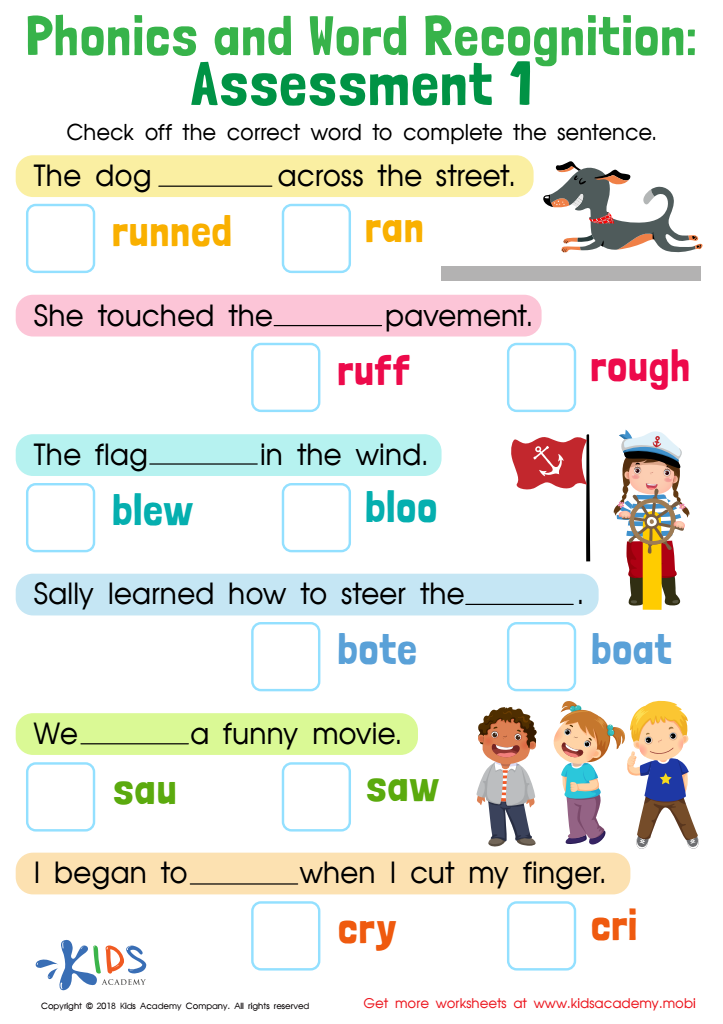
Phonics and Word Recognition: Assessment 1 Worksheet
This worksheet tests phonetics and word recognition. Students should be familiar with past tense verbs. Read incomplete sentences, then read multiple options and help students select the correct one.
 Assign to My Students
Phonics and Word Recognition: Assessment 1 Worksheet
Worksheet
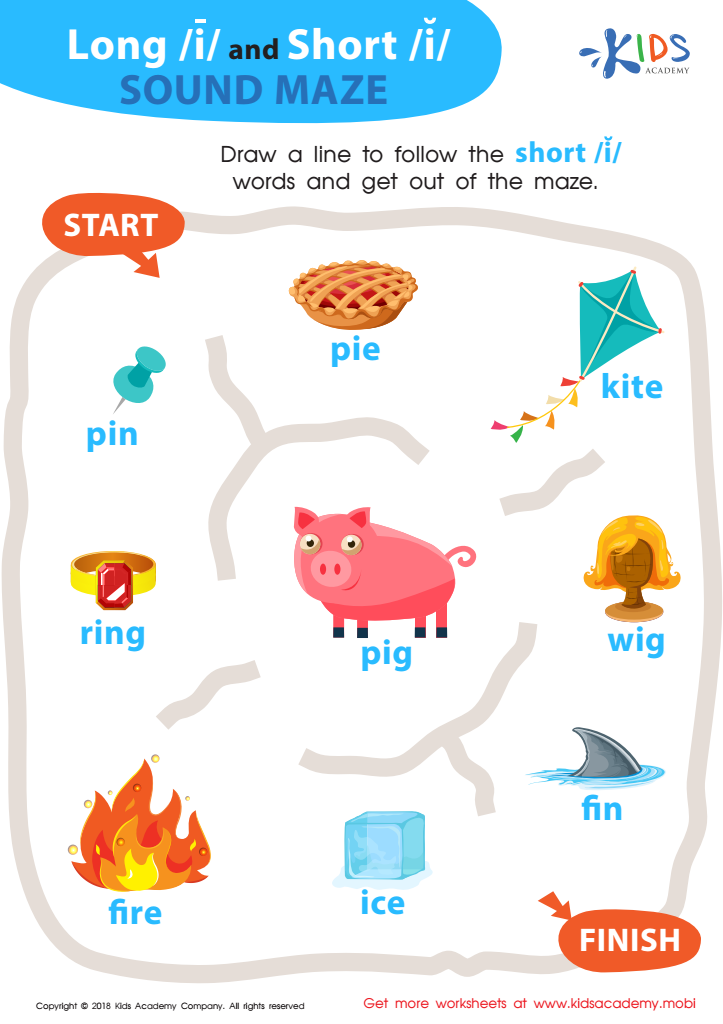
Reading: Long I and Short I Sound Maze Worksheet
Question your students if the worksheet is entertaining. They may respond negatively! Nonetheless, this activity will bring satisfaction while learning the distinction between a long and short I sound. Students read the words in the maze and only follow the words with the short I sound to finish the exercise. Grasping the difference between long and short vowels is demanding, but this worksheet helps students understand this reading skill.
Reading: Long I and Short I Sound Maze Worksheet
Worksheet
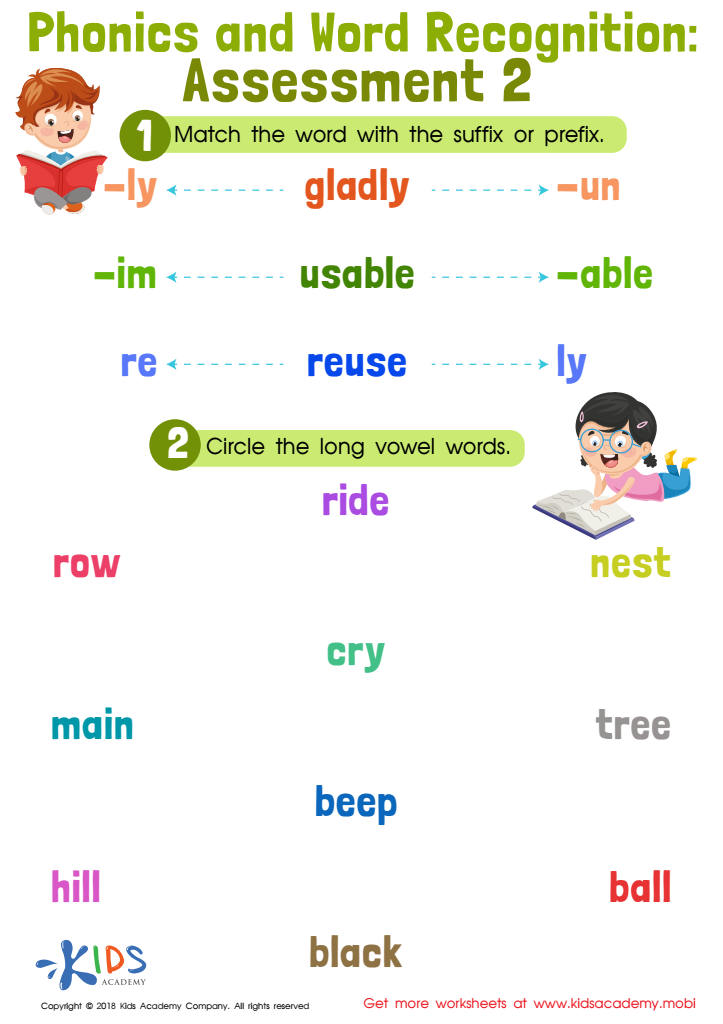
Phonics and Word Recognition: Assessment 2
Give kids common examples of suffixes and prefixes, such as "un-," "unhappy," "ness," "happyness." Ask them to match each word in the word recognition exercise to the correct suffix or prefix. Test phonetic understanding by having them circle the long vowel sounds.
Phonics and Word Recognition: Assessment 2
Worksheet
Join Kids Academy for Free
Who is primarily going to use this learning content?





Phonics recognition, particularly with vowels, is crucial for 8-year-olds as it lays the foundation for reading fluency, comprehension, and overall literacy skills. At this age, children are transitioning from learning to read to reading to learn, making a strong grasp of phonics essential. Vowels are foundational components of words, and understanding how they function within different contexts enhances spelling and word recognition.
Parents and teachers should emphasize phonics recognition because it directly impacts a child's ability to decode new words confidently. Mastery of vowel sounds helps children navigate complex texts, enriching their vocabulary and comprehension skills. Furthermore, a solid phonics base fosters a love of reading and enhances communication skills, as children learn to articulate their thoughts more effectively.
Developing phonics recognition also has a significant effect on academic success across all subjects, as literacy permeates every area of learning. Increased confidence in reading encourages children to engage with texts more frequently, leading to improved cognitive development. In summary, phonics recognition of vowels is not just about reading; it is an essential skill that influences a child’s confidence, academic performance, and lifelong learning habits. Parents and teachers play a vital role in nurturing this key aspect of literacy.







