
Alphabetical order understanding Worksheets for 8-Year-Olds
5 filtered results
Difficulty Level
Grade
Age
-
From - To
Subject
Activity
Standards
Help your 8-year-olds master alphabetical order with our engaging worksheets! Designed to reinforce their understanding of letter sequencing, these worksheets provide fun exercises that encourage kids to sort words and phrases alphabetically. Through a variety of activities, including matching, filling in blanks, and word searches, students will develop their skills in organizing information efficiently. Our user-friendly format makes it easy for teachers and parents to track progress, while colorful illustrations capture children’s attention. Perfect for classroom use or at-home learning, these worksheets will enhance literacy skills—and make learning exciting! Boost your child's confidence in reading with our alphabetical order worksheets today!
Favorites
With answer key
Interactive
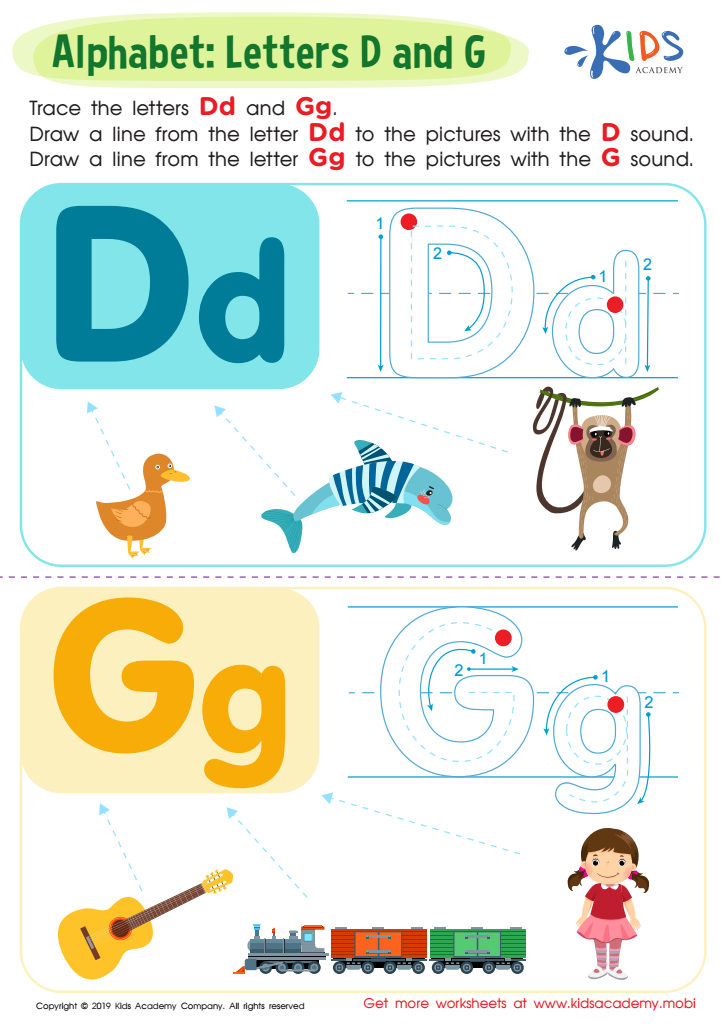
Letter D and G Tracing Worksheet
Kids can explore their imagination with the 'Alphabet: Letters D and G' worksheet! They'll trace capital and lowercase "D" and "G" and trace a line from the words. Colorful animals and objects make the task more fun and entertaining!
Letter D and G Tracing Worksheet
Worksheet
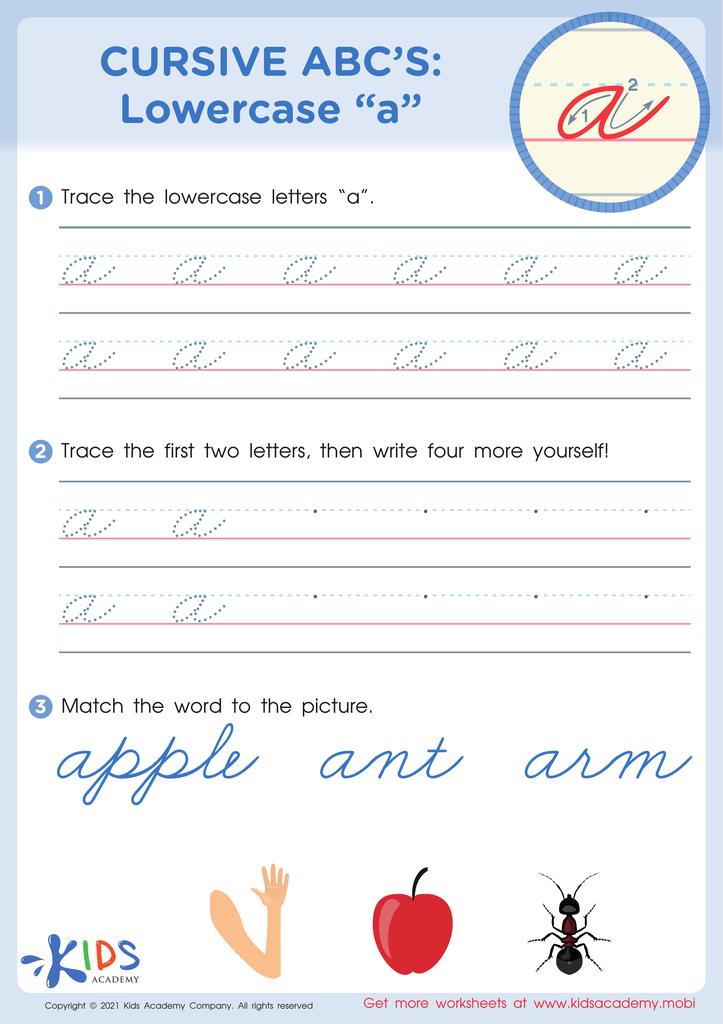
Cursive ABCs: Lowercase a
Help your children learn to write cursive letters with these free tracing sheets. They'll practice their handwriting, develop printing skills and build vocabulary. By tracing the lowercase letter “a” multiple times, they'll learn how it's formed and be ready to write it on their own. The colorful pictures at the bottom of each page also offer new words beginning with the letter 'a'.
Cursive ABCs: Lowercase a
Worksheet
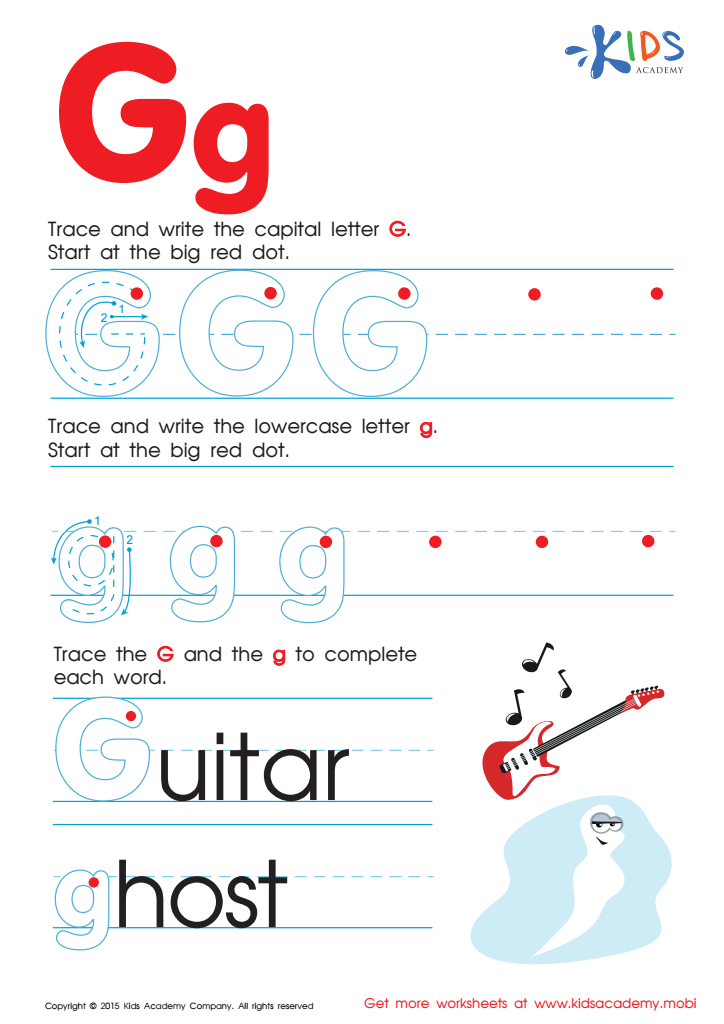
Letter G Tracing Page
Get ready to trace the letter "G" – with a big red spot as the starting point, trace the lines and watch the letter appear. Uppercase and lowercase letters are both easy and fun to write. Give it a go and finish the word "go". Play the guitar and say "hello" to a funny ghost!
Letter G Tracing Page
Worksheet
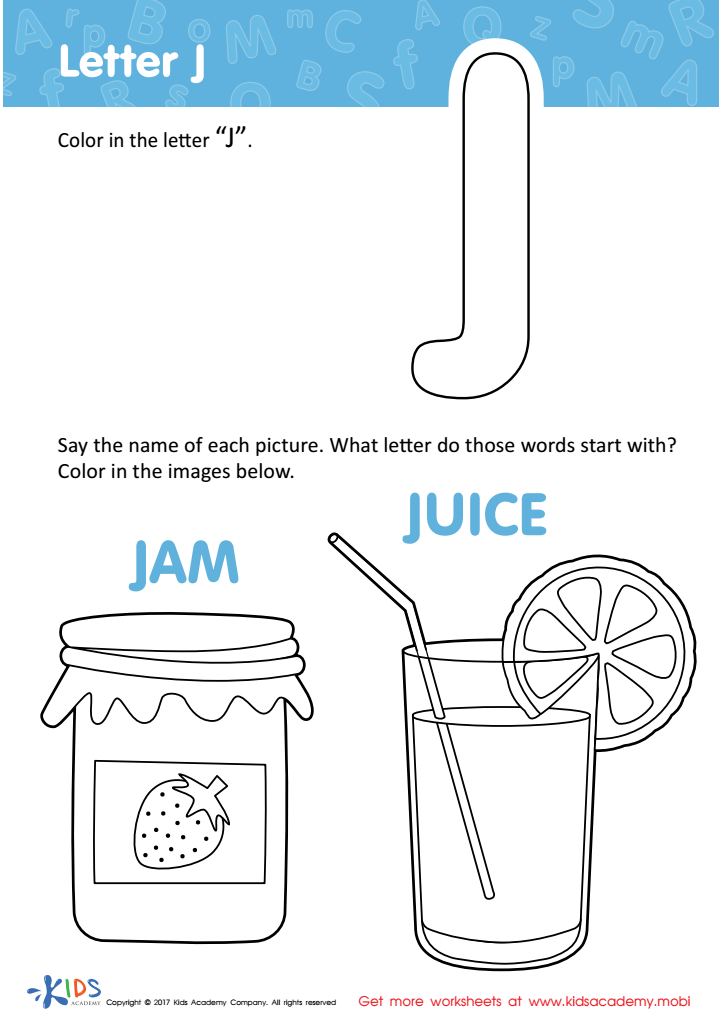
Letter J Coloring Sheet
Practice the letter 'J' with your little one with this fun coloring page! Pictures of jar, juice, jam and jelly make it an enjoyable experience for kids. Learning the letter and coloring is fun for even the youngest learners.
Download (PDF)
 Assign to My Students
Assign to My Students
Letter J Coloring Sheet
Worksheet
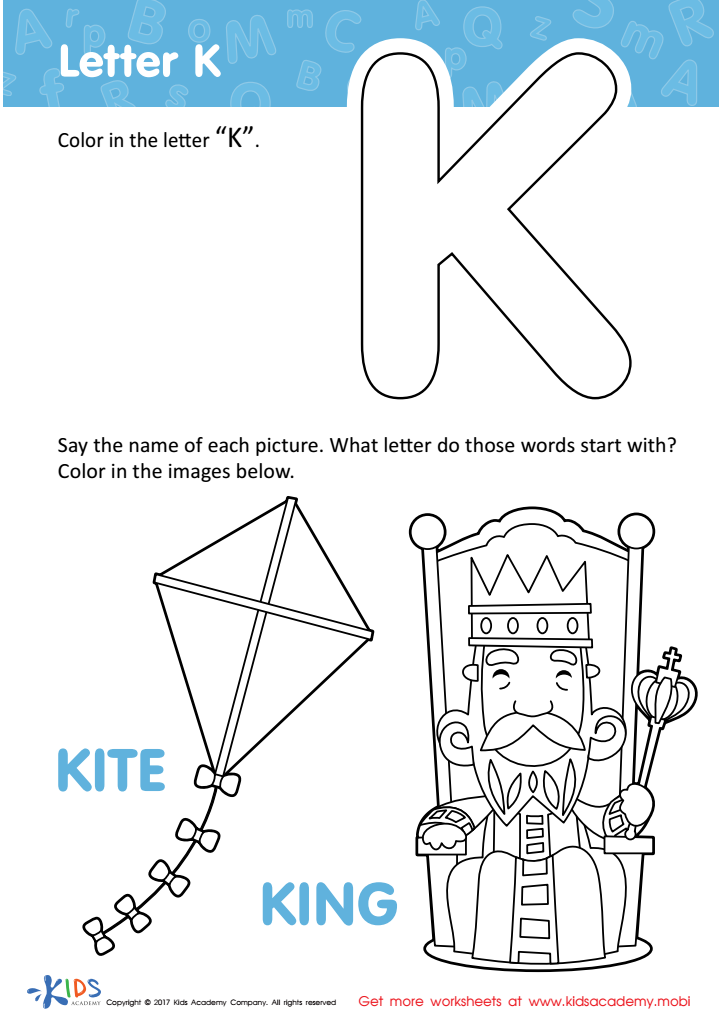
Letter K Coloring Sheet
This letter K coloring page captivates your child's creativity while learning the letter! Showcasing a king and kite, common words for their age group, it's sure to spark their imagination.
Download (PDF)
Assign to My Students
Assign to My Students
Letter K Coloring Sheet
Worksheet
Join Kids Academy for Free
Who is primarily going to use this learning content?







.jpg)
Understanding alphabetical order is crucial for 8-year-olds as it lays the foundation for literacy and organizational skills. At this age, children are transitioning from learning to read to reading to learn, and being able to locate information efficiently is vital. Alphabetical order helps students navigate dictionaries, encyclopedias, and digital resources confidently. Mastery of this skill enhances their ability to find words and concepts quickly, opening doors to deeper comprehension and exploration.
Moreover, it fosters critical thinking and memory skills by encouraging children to think about the relationships between letters and words. It promotes attention to detail as they learn to recognize the sequential arrangement of letters. Encouraging the understanding of alphabetical order also supports language development and vocabulary building, as students become more familiar with word structures and usages.
For teachers and parents, cultivating this skill is instrumental in engaging children with reading resources and activities, thus fostering a lifelong love for learning. Ultimately, a solid grasp of alphabetical order equips children with the tools to succeed academically and enhances their confidence in their abilities to communicate and access information effectively.








