
Basic multiplication Worksheets for 8-Year-Olds
3 filtered results
Difficulty Level
Grade
Age
-
From - To
Subject
Activity
Standards
Explore our engaging Basic Multiplication Worksheets designed specifically for 8-year-olds! These worksheets offer a variety of practice problems that help young learners build a strong foundation in multiplication. With colorful illustrations and kid-friendly formats, your child will enjoy working on essential skills while boosting confidence in math. Our resources cater to different learning styles, featuring number grids, word problems, and fun exercises that make learning multiplication enjoyable. Perfect for classroom or homeschool use, our worksheets ensure children grasp crucial concepts while having fun. Get started today and watch your child's math skills flourish with effective and interactive multiplication practice!
Favorites
With answer key
Interactive
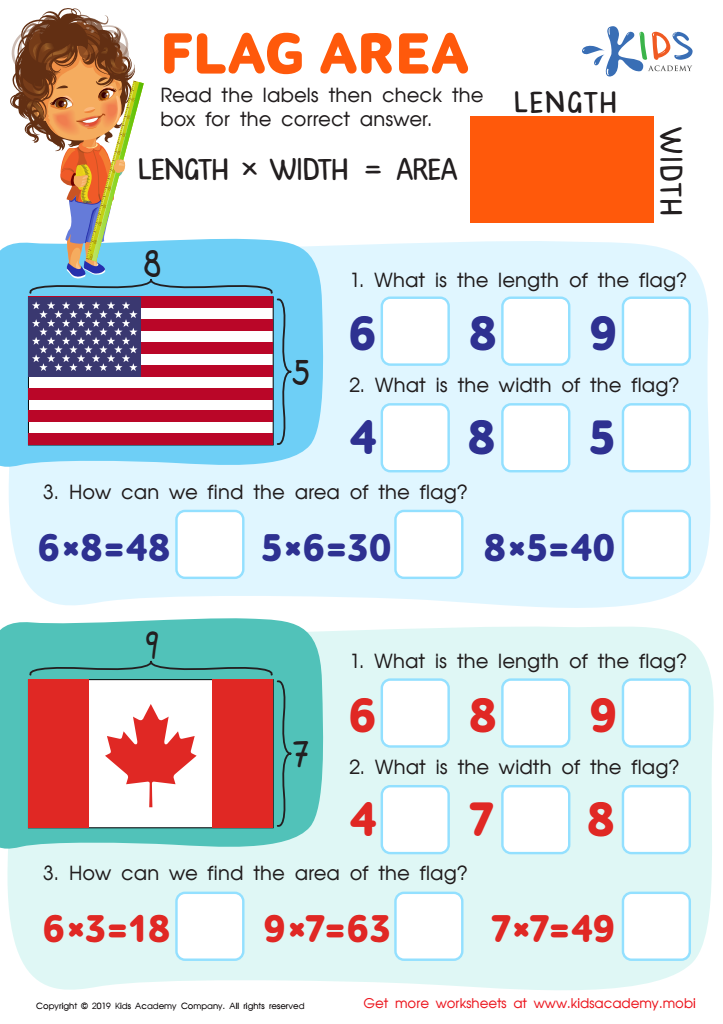
Flag Area Worksheet
Test your child's knowledge of flags by asking which ones they can identify in the image. Then, study the worksheet together. There are 6 questions with labels. Have them read each label and check the box for the correct answer.
 Assign to My Students
Flag Area Worksheet
Worksheet
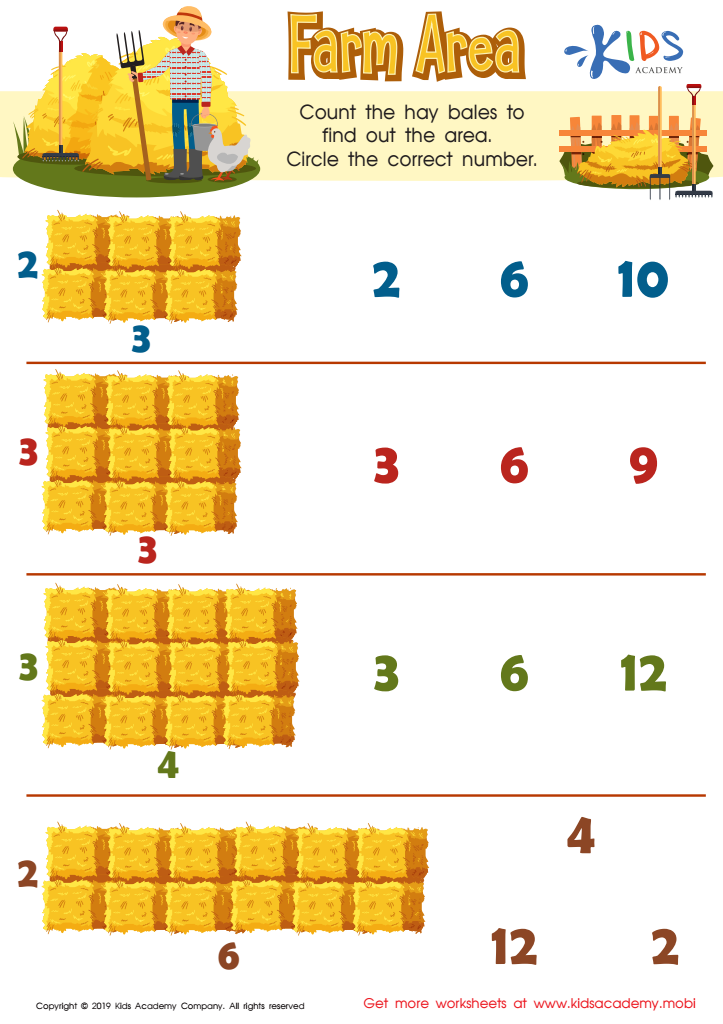
Farm Area Worksheet
Take your kids to a farm and ask them what their favorite part was! Show them this picture with hay bales and have them count them. Find the area then circle the correct number. It's a fun way to learn math and experience a farm!
Farm Area Worksheet
Worksheet
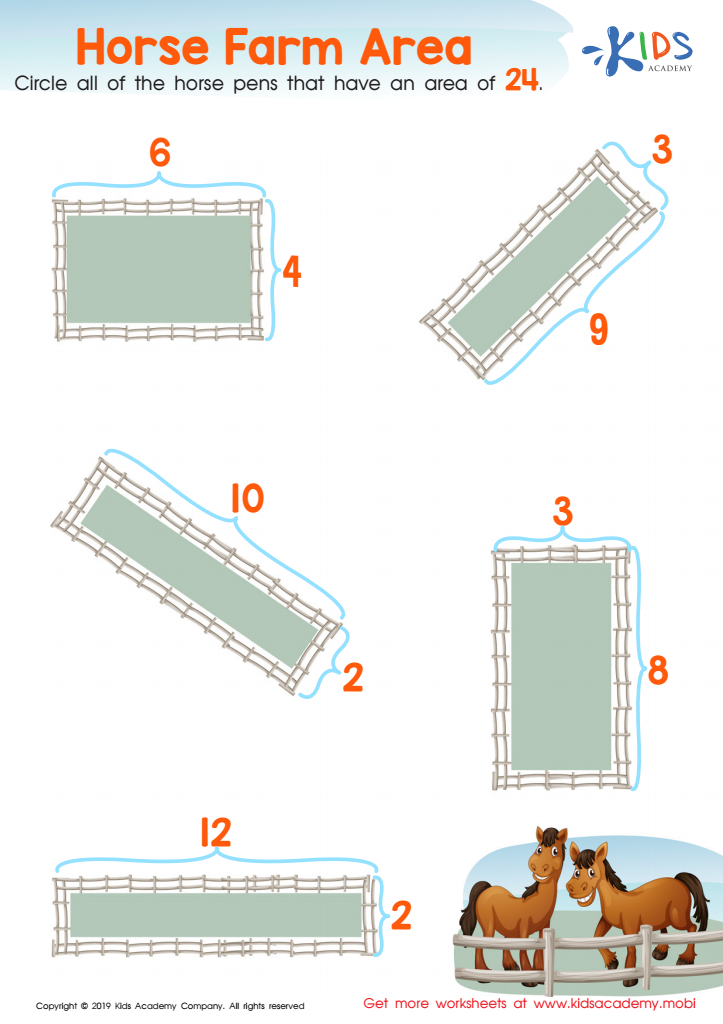
Horse Farm Area Worksheet
Take your kids to a horse farm! They'll love it – there's lots to explore, plus they can ride horses. Then challenge them with a geometry worksheet: help them calculate the area of all the horse pens, then circle the ones with an area of 24.
Horse Farm Area Worksheet
Worksheet
Join Kids Academy for Free
Who is primarily going to use this learning content?





.jpg)
Basic multiplication is a critical skill for 8-year-olds as it lays the foundation for future mathematical understanding. At this age, children are transitioning from simple arithmetic to more complex problem-solving, making multiplication a vital part of their learning journey.
Firstly, mastering multiplication fosters number sense and enhances mental math skills. When children understand and remember their multiplication tables, they can perform calculations more quickly and confidently, freeing up cognitive resources to tackle more complex tasks.
Secondly, multiplication is not just a standalone skill; it serves as a gateway to other mathematical concepts such as division, fractions, and even algebra. A solid grasp of multiplication can prevent future learning gaps in mathematics, ensuring students are better prepared for higher-level math operations.
Additionally, multiplication skills support real-life problem-solving, such as figuring out quantities in recipes or understanding shopping discounts. This practical application connects learning to daily life, making math relevant and meaningful.
Finally, when parents and teachers emphasize the importance of multiplication, children feel validated in their efforts, boosting their motivation and confidence in math. Investing time in developing these skills is essential for fostering a positive attitude toward mathematics and lifelong learning.








