Comparing objects Worksheets for 8-Year-Olds
3 filtered results
-
From - To
Discover our engaging "Comparing Objects Worksheets for 8-Year-Olds," designed to enhance your child's observational and critical thinking skills. These worksheets offer exciting activities that encourage children to analyze and compare various objects based on size, shape, color, and weight. As they complete each task, kids will develop their analytical skills while having fun! Our worksheets are perfect for classroom use or at-home learning, helping to solidify key concepts in a creative and interactive way. With vibrant visuals and relatable examples, your child will enjoy exploring differences and similarities in no time. Download now and spark their curiosity!
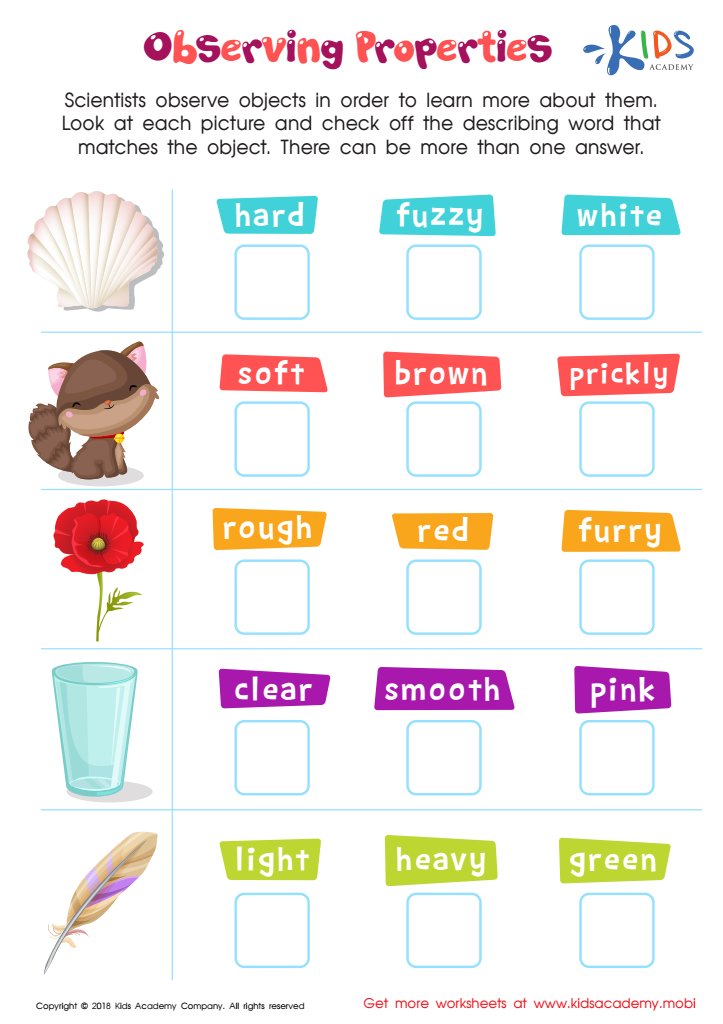
Observing Properties Worksheet
 Assign to My Students







Comparing objects is a fundamental skill for 8-year-olds that parents and teachers should prioritize because it fosters critical thinking and cognitive development. At this age, children are beginning to understand more complex concepts, and comparing objects helps them grasp mathematical principles such as measurement, weight, and volume. Engaging them in activities that involve comparing size, color, quantity, or attributes cultivates their analytical skills and enhances their ability to make informed decisions.
Additionally, these activities promote language development, as children learn to articulate their observations and reasoning. It encourages them to ask questions, leading to curiosity and exploration—essential components of a lifelong love for learning. Moreover, in a social context, comparing objects enables children to engage with peers, facilitate discussions, and build collaborative skills while expressing their viewpoints respectfully.
Ultimately, by nurturing this skill, parents and teachers equip children with the tools needed for problem-solving and reasoning in both academic and everyday situations, laying a strong foundation as they progress in their education. Engaging kids in meaningful comparison tasks can also make learning playful and enjoyable, significantly boosting their confidence and enthusiasm for further learning experiences.








