
Differentiating goods/services Worksheets for 8-Year-Olds
3 filtered results
Difficulty Level
Grade
Age
-
From - To
Subject
Activity
Standards
Our Differentiating Goods/Services Worksheets for 8-year-olds offer an engaging and educational way to help young learners understand the differences between goods and services. Suitable for classroom activities or home learning, these printable worksheets encourage kids to analyze various examples and identify which category they belong to. By completing these worksheets, children develop critical thinking skills while gaining a better understanding of economics in a fun, interactive manner. These resources are perfect for teachers and parents aiming to elevate their students' comprehension of everyday economic concepts. Ensure your child gets a head start on financial literacy with our thoughtfully designed materials.
Favorites
With answer key
Interactive
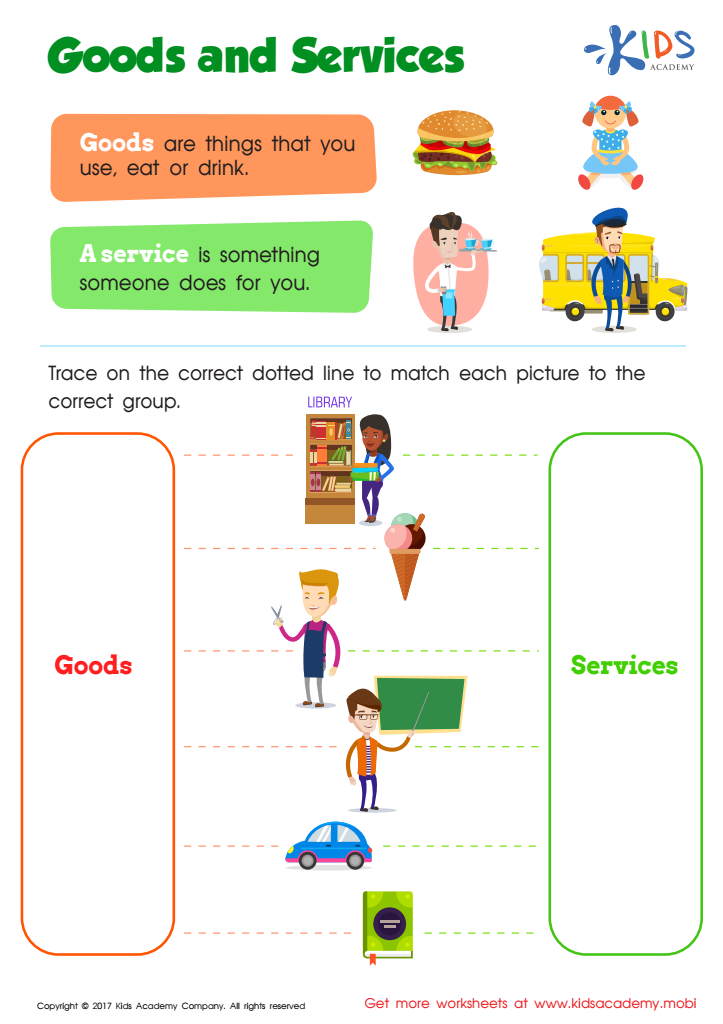
 Assign to My Students
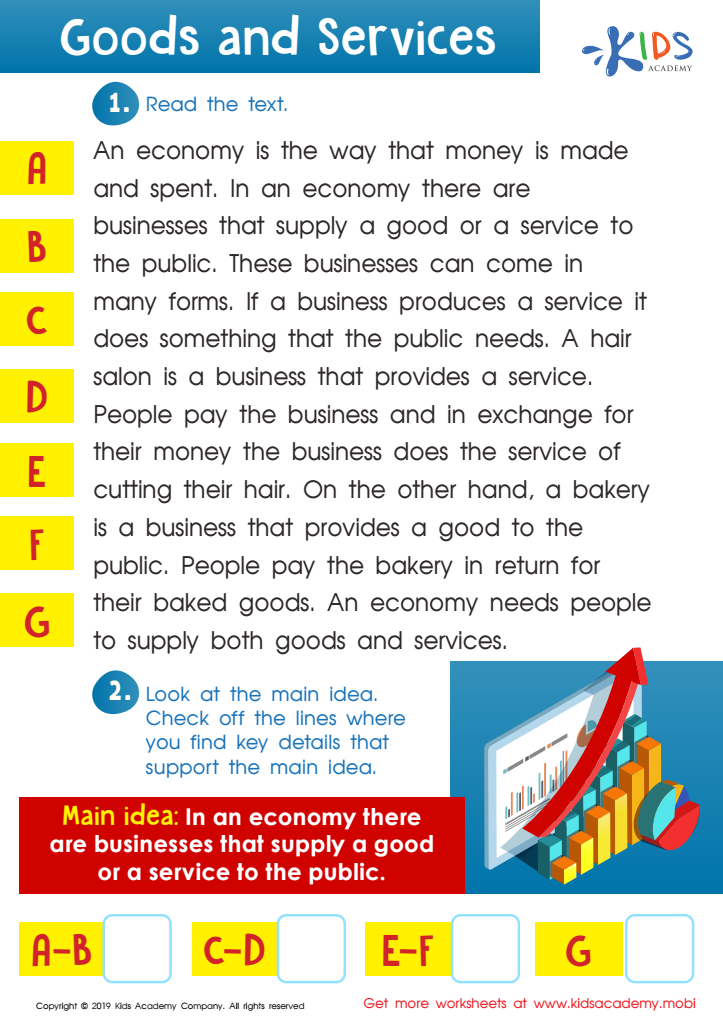
Goods and Services Worksheet
Teach your kids about the economy and businesses with this worksheet. Ask them if they know what goods and services are. After they complete the worksheet, they'll have a better understanding. Read the text to them and guide them step-by-step through the instructions. Help them learn!
Goods and Services Worksheet
Worksheet
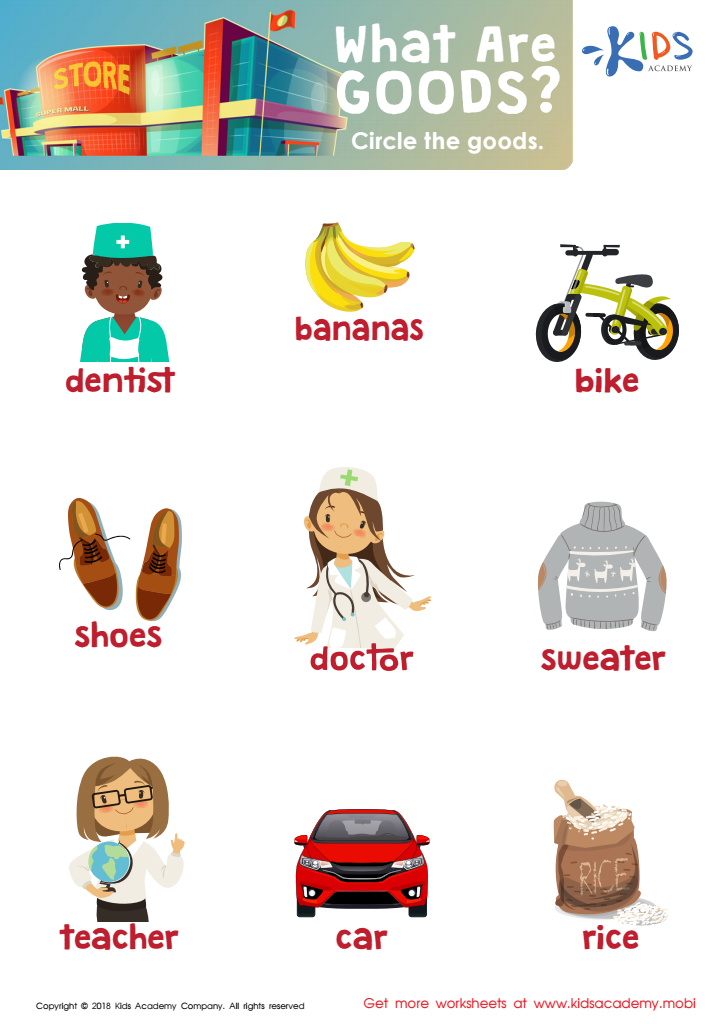
What Are Goods? Worksheet
Introduce your child to economics with this social studies worksheet! It helps kids differentiate between goods and services. Have them look at each picture, discuss what it does, and decide whether it's an object or a service. Encourage them to think carefully and circle the goods. It's a great way to start teaching the basics of economics.
What Are Goods? Worksheet
Worksheet
Join Kids Academy for Free
Who is primarily going to use this learning content?







Differentiating goods and services is crucial for 8-year-olds to build foundational economic understanding and life skills. At this age, children are beginning to grasp more complex concepts, and distinguishing between goods (physical items) and services (tasks performed) aids in their cognitive development. This differentiation enhances their ability to make informed decisions, a skill they will carry into adulthood.
Teachers and parents should care because it also fosters critical thinking and budgeting skills. By learning that goods require production and services involve labor, children start appreciating the value of resources and efforts, promoting a sense of gratitude and responsibility. For instance, recognizing that a toy (a good) is bought in store, whereas a haircut (a service) is to get maintained through professionals. This helps children understand the broader economic world they will eventually navigate.
Moreover, it encourages empathy and appreciation for different professions and roles within society, promoting respect and reducing prejudice. It aligns with curricula focusing on societal roles, satisfies curiosity about how the world works, and supports the development of practical life skills like planning and weighing choices. Ultimately, it lays an essential groundwork for financial literacy and informed consumer behavior, critical traits in our increasingly complex economy.








