Learning number patterns Worksheets for 8-Year-Olds
3 filtered results
-
From - To
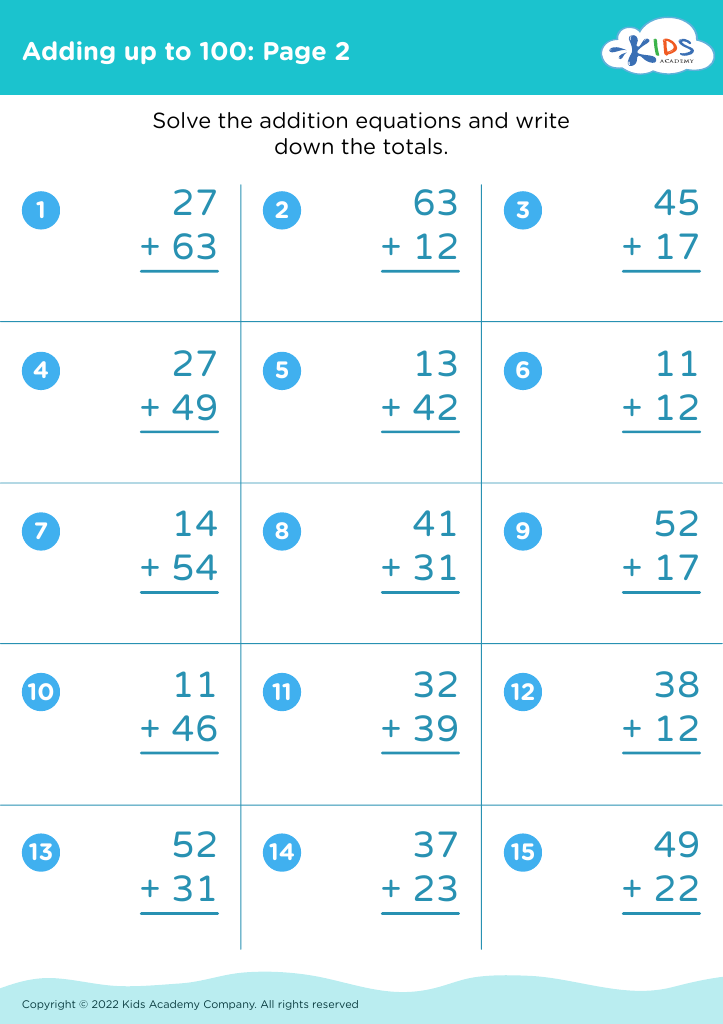
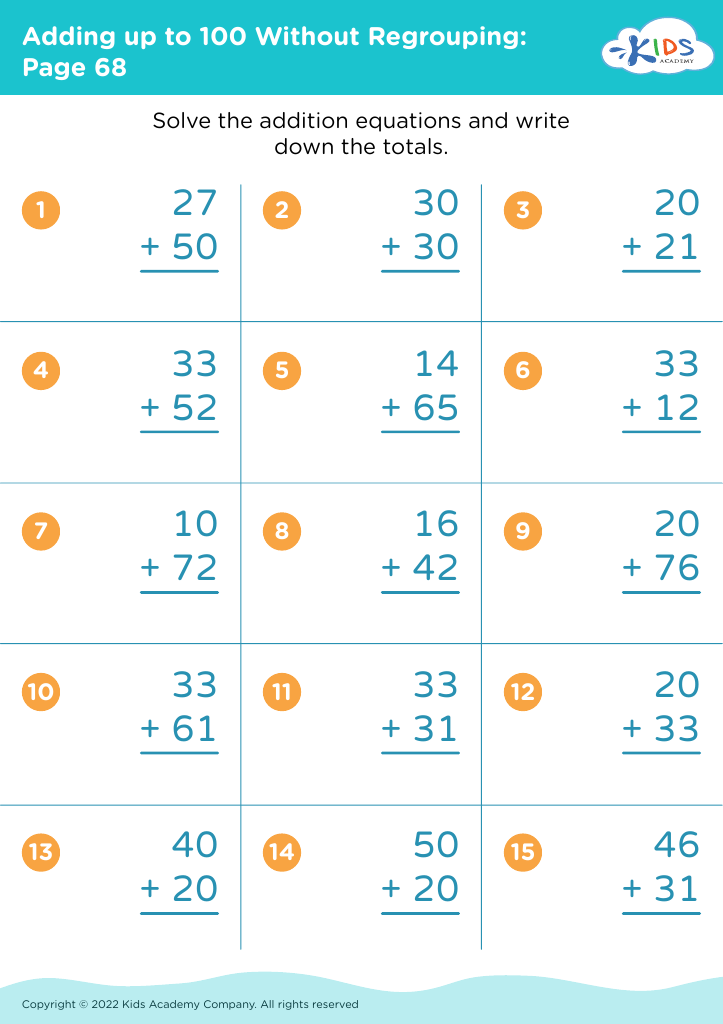
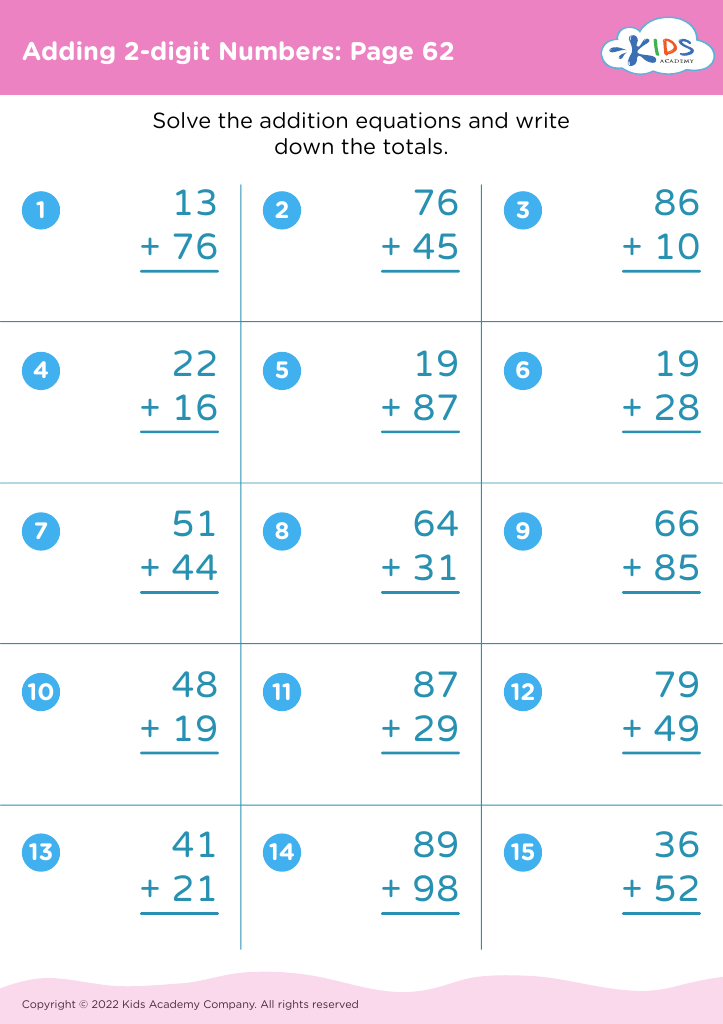
Discover our engaging Learning Number Patterns Worksheets specifically designed for 8-year-olds! These worksheets provide a fun and interactive way for children to explore numerical sequences and enhance their math skills. By identifying, continuing, and creating number patterns, kids will develop critical thinking and problem-solving abilities essential for their academic growth. Our vibrant and age-appropriate worksheets keep learning enjoyable while reinforcing foundational math concepts. Ideal for classroom activities, homeschooling, or extra practice at home, these resources help build confidence in young learners. Spark curiosity and strengthen math skills with our diverse number pattern worksheets today! Perfect for budding mathematicians!






Learning number patterns is essential for 8-year-olds as it lays a crucial foundation for mathematical understanding. At this stage, children start developing critical thinking, problem-solving, and analytical skills, all of which are integral to future learning in mathematics and everyday life. Recognizing, analyzing, and predicting number patterns helps students grasp concepts such as addition, subtraction, multiplication, and division more effectively.
Understanding number patterns also fosters cognitive skills such as logic and reasoning. As students identify relationships between numbers, they develop a deeper comprehension of sequences and their applications, which is vital not only in mathematics but also in subjects like science and technology. Learning about patterns enhances their ability to approach complex problems systematically.
Furthermore, mastering number patterns helps build confidence in young learners. When children see their progress in recognizing and creating patterns, it boosts their self-esteem and motivates them to engage more deeply with mathematics. Teachers and parents can leverage number patterns as a fun and interactive way to encourage a positive attitude toward math, making it a playful, exploratory subject rather than a daunting one. This foundational skill not only aids in academic success but also equips children for logical reasoning required in daily life.








