
Matching skills Worksheets for 8-Year-Olds
8 filtered results
Difficulty Level
Grade
Age
-
From - To
Subject
Activity
Standards
Discover our engaging Matching Skills Worksheets for 8-Year-Olds, designed to enhance critical thinking and cognitive development. These visually appealing worksheets help children improve their matching abilities through fun activities. With a variety of themes, kids can connect images, words, and patterns while enjoying learning. Perfect for teachers and parents seeking to reinforce essential skills, our worksheets provide a great way to foster concentration and attention to detail. With easy-to-follow instructions, children will gain confidence as they complete each activity. Explore our collection today and make learning a delightful experience for your child!
Favorites
With answer key
Interactive
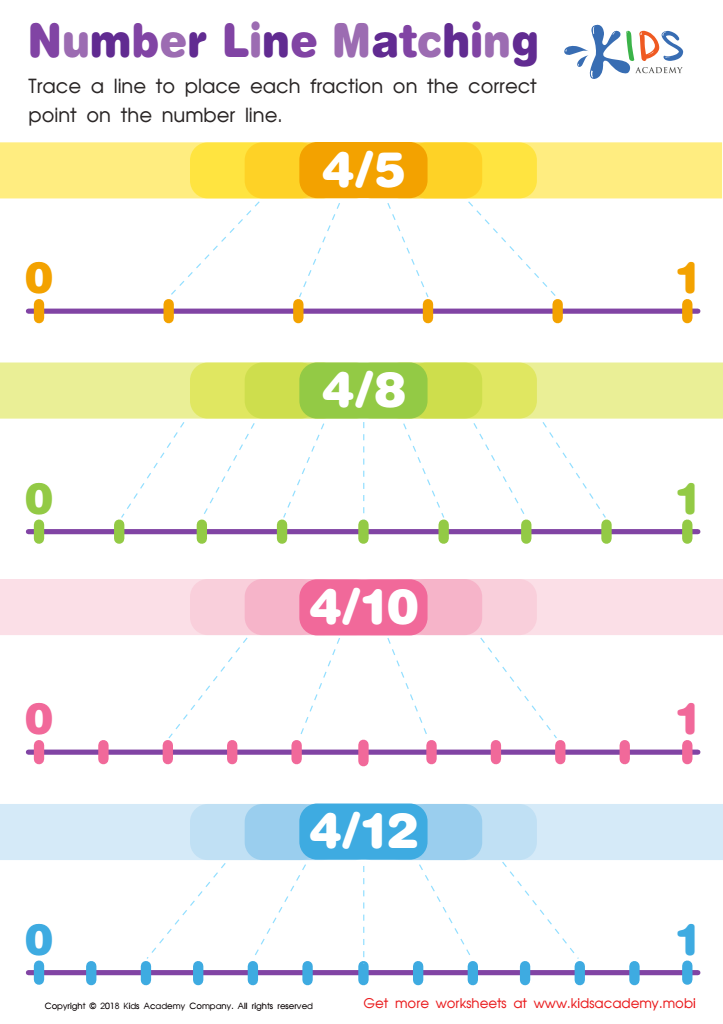
Number Line Matching Worksheet
Math can be fun! Have your child count points on the number line, then identify and trace fractions above it. It's a great way for them to learn and have some fun!
 Assign to My Students
Number Line Matching Worksheet
Worksheet
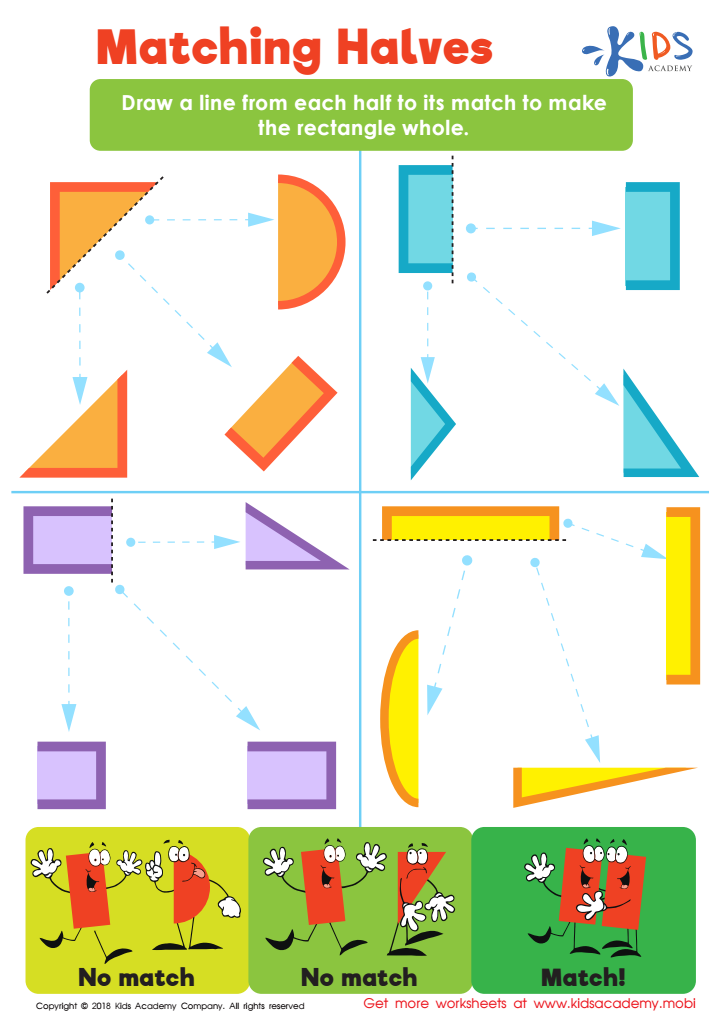
Matching Halves Worksheet
See how your child fares in matching two halves to form a complete rectangle. Provide them with four options, and ask them to draw a line connecting the two correct halves. Put their shape knowledge to the test with this simple worksheet!
Matching Halves Worksheet
Worksheet
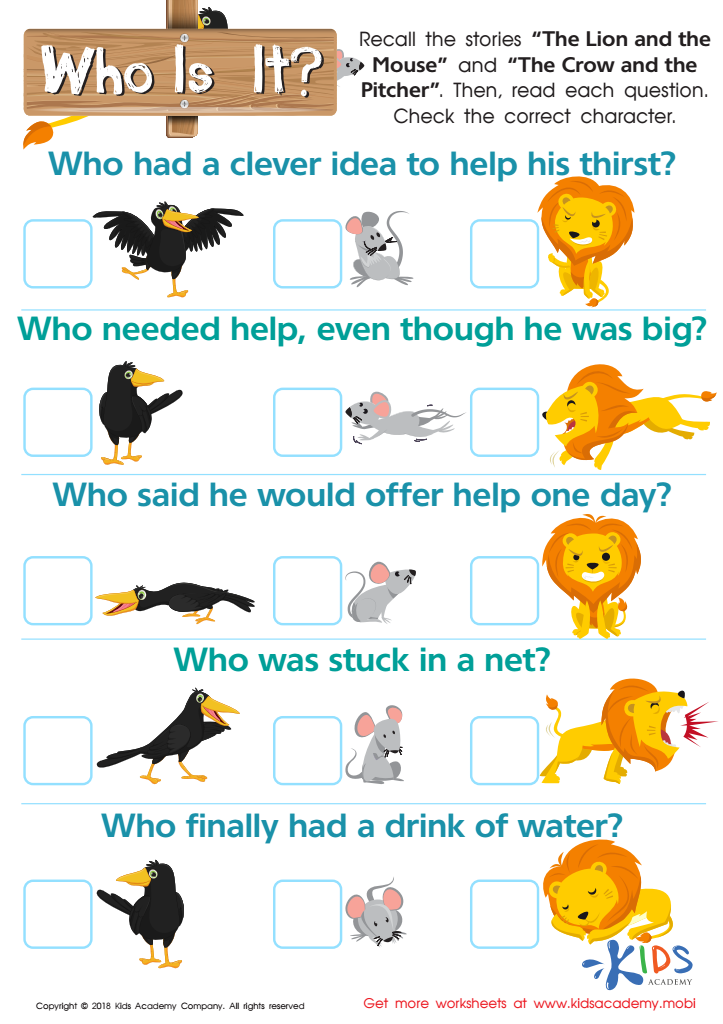
Who Is It? Worksheet
This worksheet helps students recall details from The Crow and the Pitcher and The Lion and the Mouse stories. Students will answer questions about the characters' actions. Use it to assess their understanding of both stories, as this is a key comprehension skill.
Who Is It? Worksheet
Worksheet
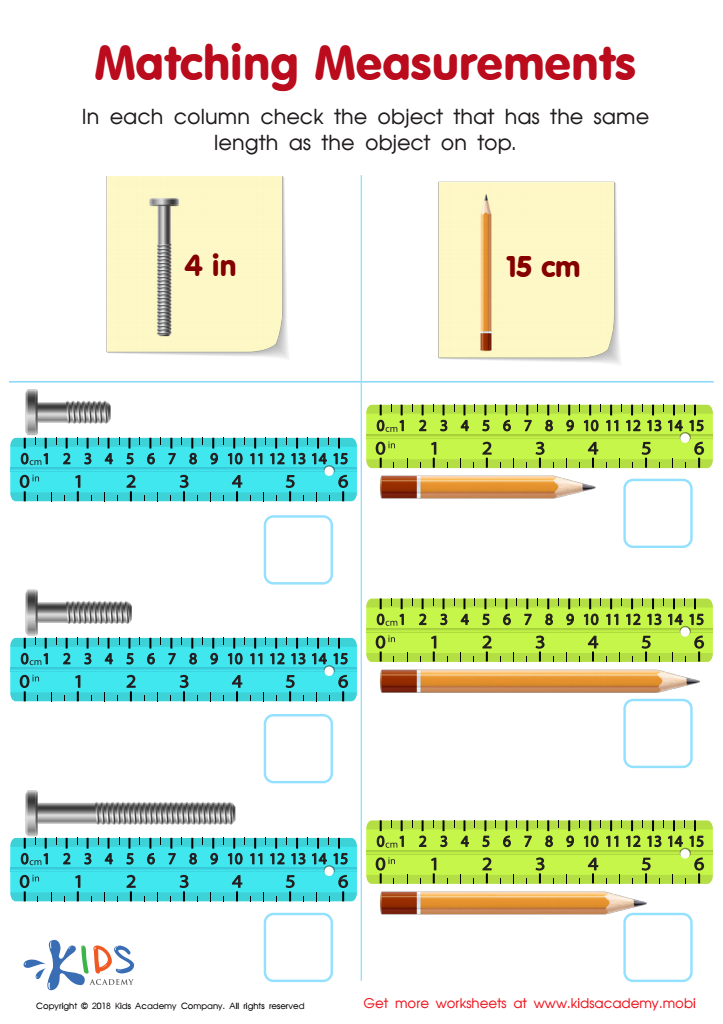
Matching Measurements Worksheet
Get your students to measure different objects with this colorful worksheet. At the top of each column is a prefilled object. Ask them to look at the pictures below each column and identify the objects that are of the same length as the one at the top.
Matching Measurements Worksheet
Worksheet
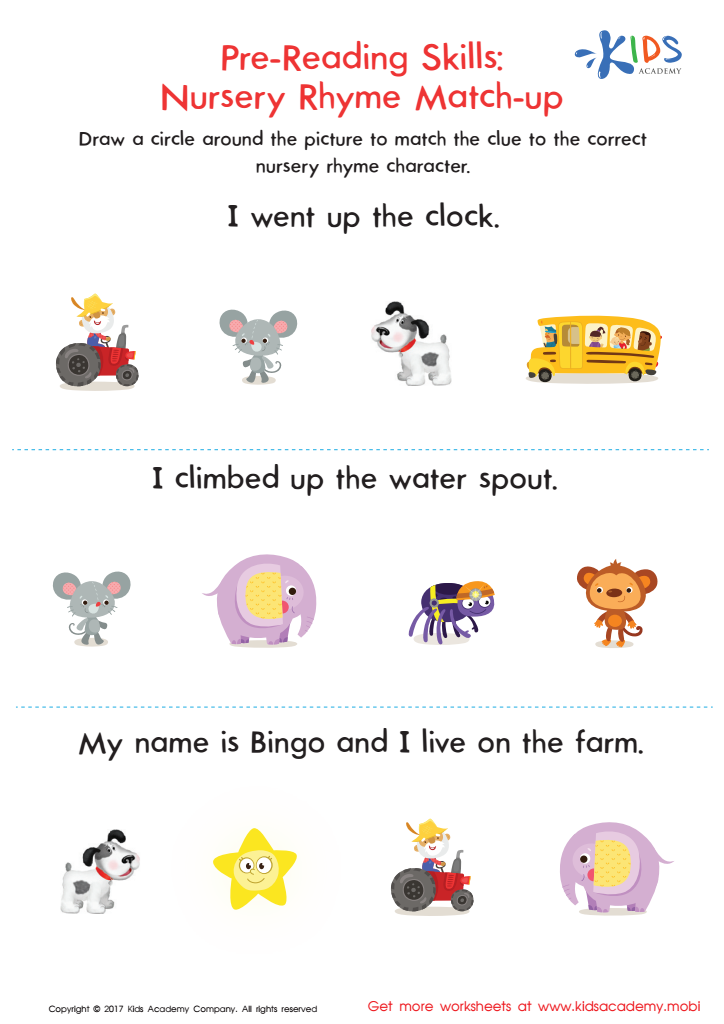
Nursery Rhyme Match–Up Worksheet
This worksheet helps kids build pre-reading skills using stories they know and love! By connecting with prior knowledge, kids can develop ideas about characters and set the stage for reading strategies.
Nursery Rhyme Match–Up Worksheet
Worksheet
Join Kids Academy for Free
Who is primarily going to use this learning content?






.jpg)
Matching skills are a fundamental aspect of cognitive development for 8-year-olds, serving as building blocks for more complex learning. Parents and teachers should care about these skills because they directly influence a child's ability to recognize patterns, categorize information, and develop critical thinking abilities. At this age, children are forming essential connections between concepts, and strong matching skills can enhance their overall academic success.
Furthermore, engaging in matching activities promotes social interaction and collaborative play. This is important for developing communication skills, teamwork, and emotional intelligence—all pivotal traits for future learning environments. It also helps to build a foundation for subjects such as math and science, where recognizing relationships between numbers or variables can lead to better problem-solving skills.
Additionally, matching tasks can aid in literacy development, as children learn to connect images with words or ideas. By prioritizing matching skills, parents and teachers can create an enriching environment that supports holistic growth, preparing children for future challenges both academically and socially. Ultimately, fostering these skills enhances a child's confidence, encourages exploration, and instills a love for learning that will benefit them throughout their education and beyond.








