Practice counting Worksheets for 8-Year-Olds
6 filtered results
-
From - To
Discover engaging practice counting worksheets designed for 8-year-olds! Our collection provides fun and interactive ways to enhance your child's counting skills, promoting essential math concepts in a friendly learning environment. Each printable worksheet comes with colorful illustrations and varied counting exercises tailored to reinforce number recognition, sequencing, and basic addition. These resources encourage independent practice while allowing for hands-on involvement, making learning both effective and enjoyable. Whether at home or in the classroom, our worksheets are perfect for developing a strong mathematical foundation. Explore our exciting counting worksheets today and watch your child's confidence soar as they master counting with ease!
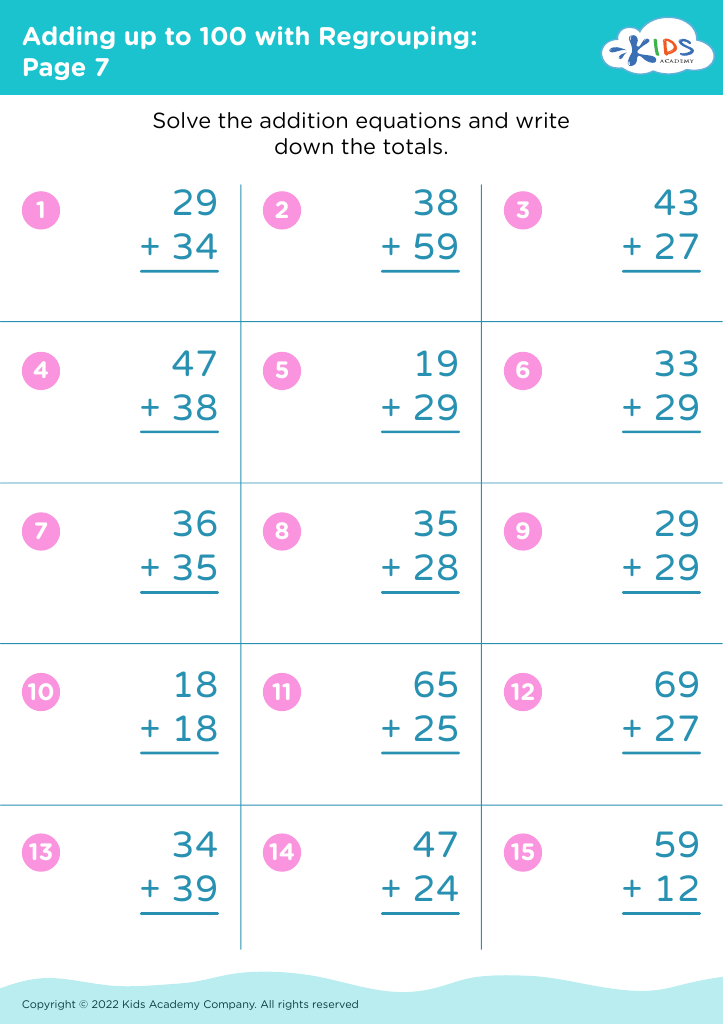
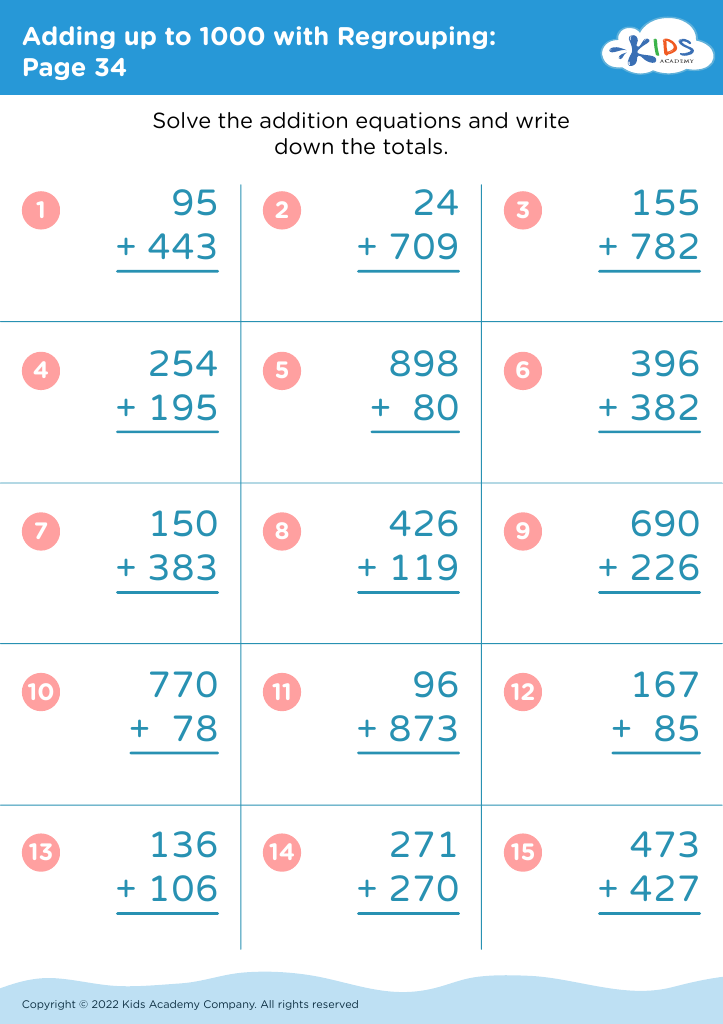
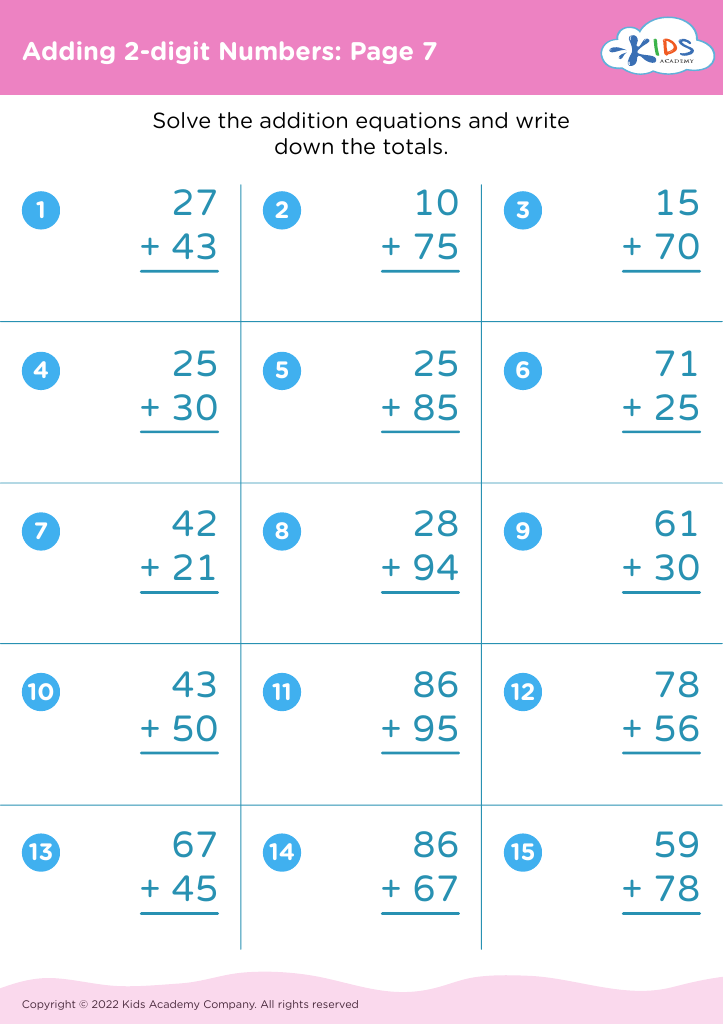
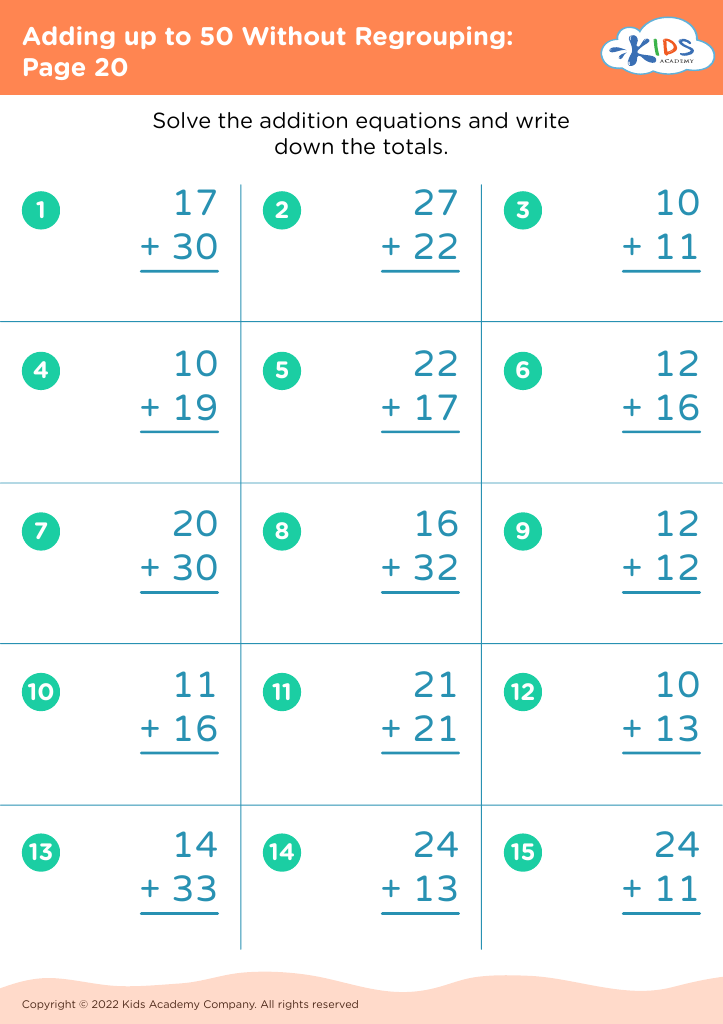
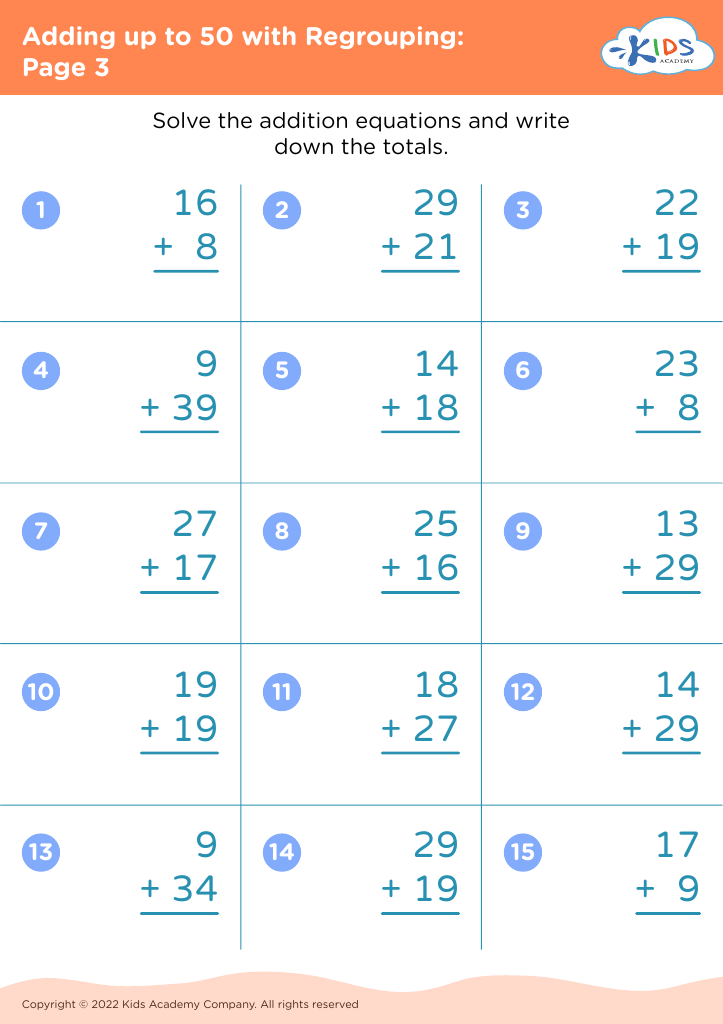
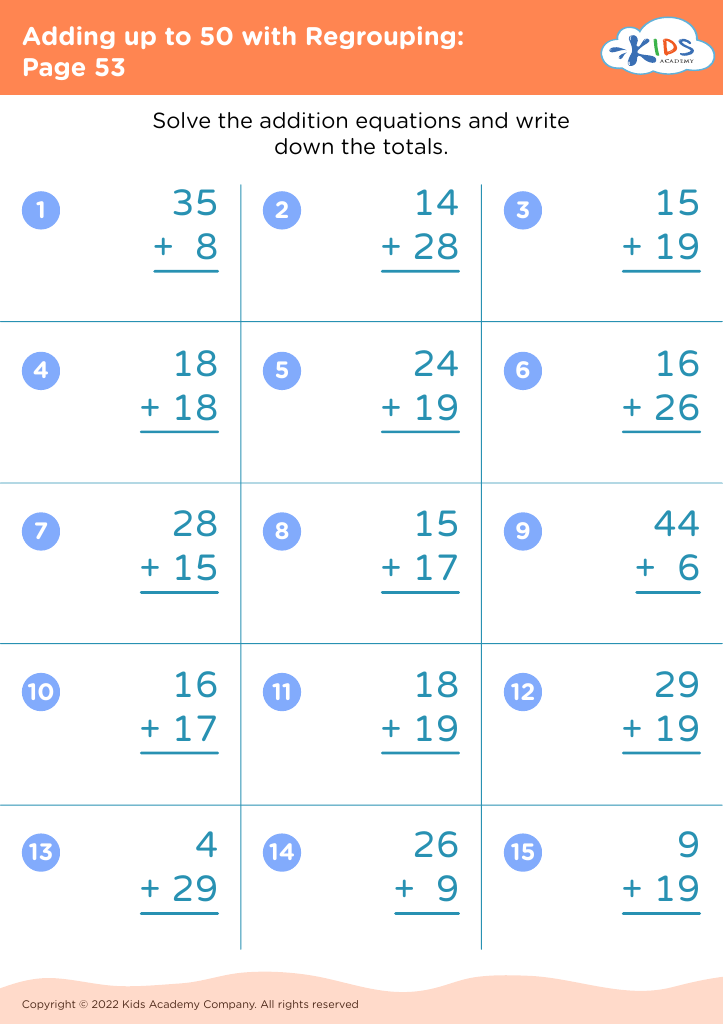








Practicing counting is essential for 8-year-olds as it lays the foundation for more advanced mathematical concepts. At this age, children are typically transitioning from basic arithmetic to more complex operations, such as addition, subtraction, multiplication, and division. Strong counting skills enhance their ability to understand these concepts, fostering number sense and a deeper comprehension of mathematics.
Furthermore, counting practice enhances cognitive development and critical thinking. It encourages problem-solving skills and helps children recognize patterns in numbers. This skill is crucial not just in math, but in everyday life situations, such as budgeting their allowance or measuring ingredients while cooking.
In addition, involving parents and teachers in the counting practice enriches the child's learning experience. It strengthens the parent-child bond and creates a supportive environment for learning. For teachers, emphasizing counting can lead to improved classroom performance, as children who master counting skills are more likely to excel in math assessments and assignments.
Ultimately, fostering counting skills is about more than just numbers; it builds confidence and a positive attitude toward mathematics, which influences their academic journey and develops a lifelong appreciation for learning. Therefore, investing time in counting practice is both valuable and necessary for children's overall educational growth.








