Problem-solving ability Worksheets for 8-Year-Olds
3 filtered results
-
From - To
Discover our engaging collection of problem-solving ability worksheets designed for 8-year-olds! At Kids Academy, we make learning fun and interactive, helping children sharpen their critical thinking and reasoning skills. Our extensive range of printable worksheets covers various topics, from math puzzles to logic games, ensuring that young learners stay motivated and challenged. Each activity is crafted to enhance decision-making, creativity, and strategic planning. Perfect for both classroom and at-home learning, these worksheets align with educational standards to reinforce your child’s problem-solving skills. Empower your child today with tools that make learning rewarding and enjoyable!
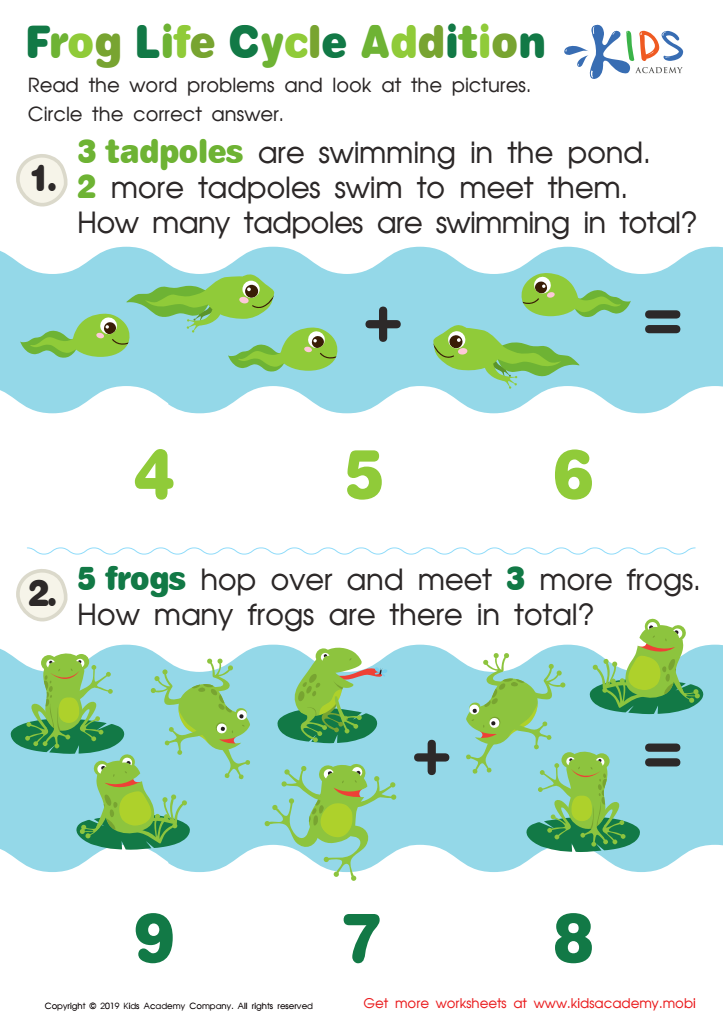
Frog Life Cycle Addition Worksheet
 Assign to My Students
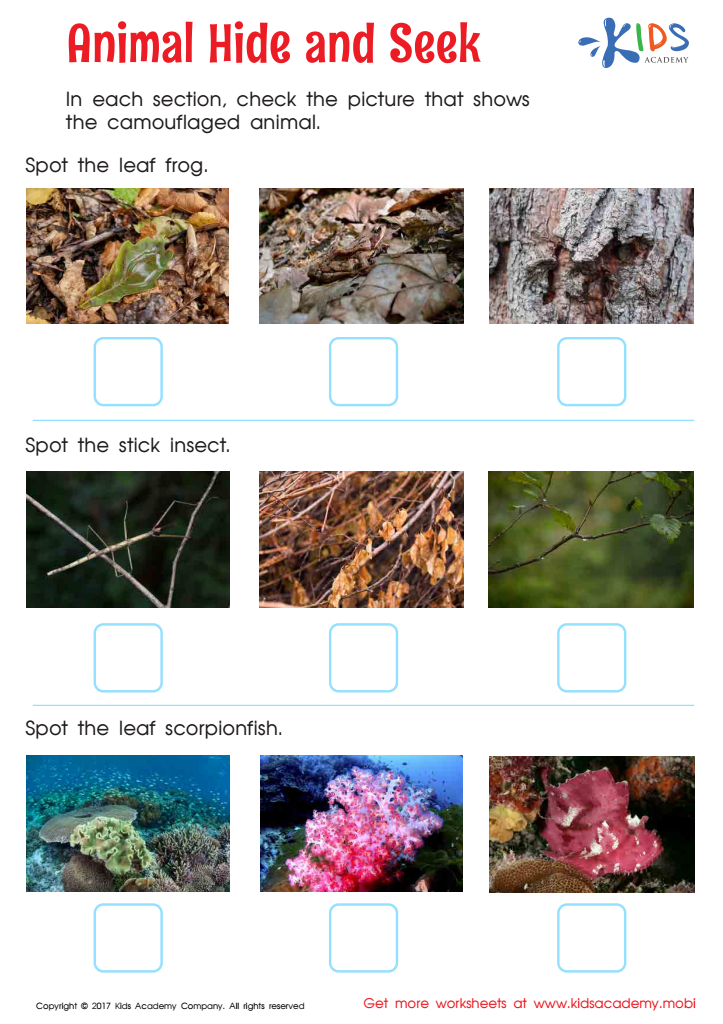
Animal Hide and Seek Worksheet







Problem-solving ability is a crucial skill for 8-year-olds because it lays the foundation for academic success and personal development. At this age, children's cognitive abilities are rapidly growing, making it an ideal time to develop critical thinking and reasoning skills. When parents and teachers prioritize problem-solving, they are helping children learn how to navigate challenges both in and out of the classroom.
One significant benefit is that problem-solving fosters independence and confidence. Children who tackle problems learn to approach difficulties with a can-do attitude, which boosts their self-esteem. This resilience prepared them for more complex issues in later stages of education and life.
In addition, problem-solving enhances creativity and flexibility. Children learn to think outside the box and consider multiple solutions. This skill is invaluable in academics, where students must adapt to new concepts and different types of assignments.
Moreover, focusing on problem-solving improves social interactions. Children learn to resolve conflicts through understanding and negotiation, which results in better friendships and teamwork abilities. These outcomes contribute to a well-rounded individual who can thrive in various settings.
Parents and teachers should care deeply about this skill because it equips children with the tools needed for lifelong learning and adaptability, essential traits in a constantly changing world.








