
Reading clocks Worksheets for 8-Year-Olds
5 filtered results
Difficulty Level
Grade
Age
-
From - To
Subject
Activity
Standards
Enhance your child's time-telling skills with our engaging Reading Clocks Worksheets designed specifically for 8-year-olds! These fun and interactive worksheets provide a variety of activities focused on understanding analog and digital clocks. From learning to read the hour and minute hands, to solving time-related word problems, each worksheet promotes critical thinking and boosts confidence in telling time. Perfect for classroom use or homeschooling, our materials cater to diverse learning styles and ensure enjoyable practice for your young learner. Help them master the essentials of reading clocks with our thoughtfully crafted resources that make learning a delight! Get started today!
Favorites
With answer key
Interactive
Dinner Time! Worksheet
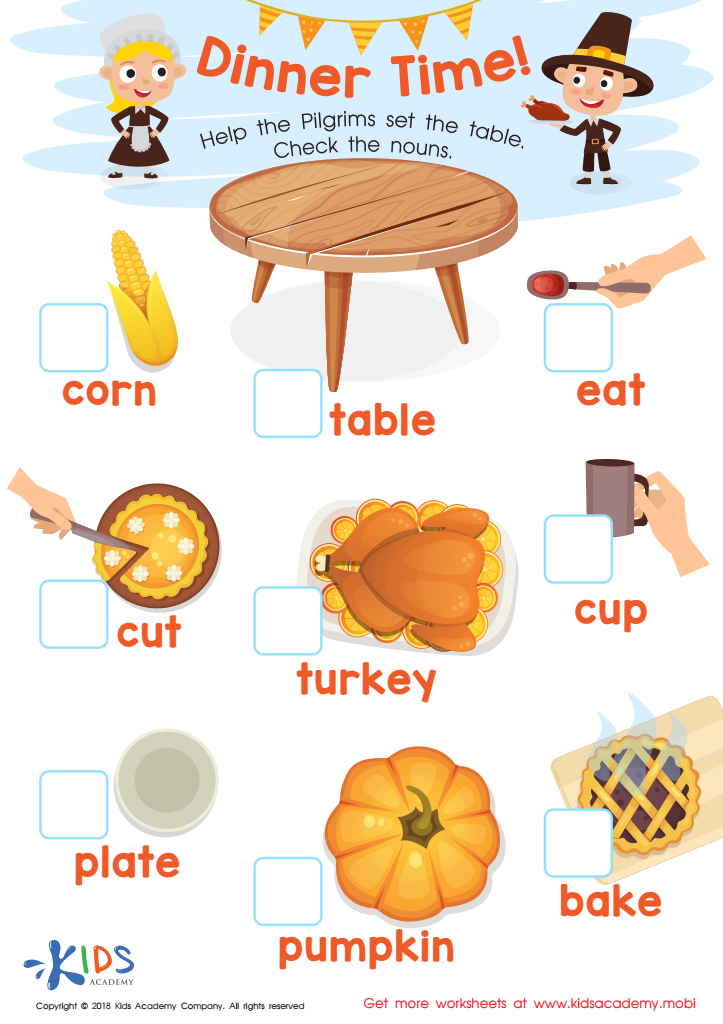
Help your child learn about the Pilgrims by completing this worksheet! The Pilgrims set sail on the Mayflower in 1620 and colonized America, meeting the Native Americans already living there and picking up some of their traditions, like Thanksgiving dinner. Check the nouns in the picture and help your child set the table with the celebratory turkey!
 Assign to My Students
Dinner Time! Worksheet
Worksheet
Time Periods Worksheet
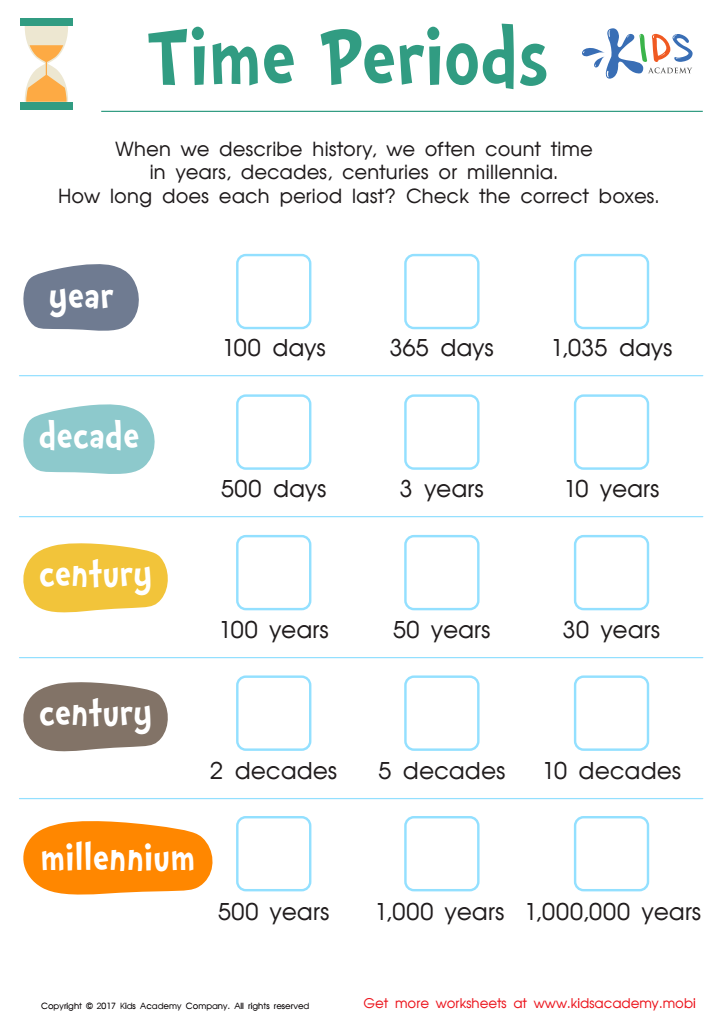
Introduce your child to the concept of time periods with this worksheet! It quizzes kids on groupings of time such as decades and centuries, helping them understand that the earth was here long before them! Download the PDF to get started.
Time Periods Worksheet
Worksheet
Join Kids Academy for Free
Who is primarily going to use this learning content?








Teaching 8-year-olds to read clocks is crucial for their cognitive and social development. At this age, children are building essential life skills, and understanding time plays a significant role in their daily routines. Knowing how to read both analog and digital clocks helps them manage their schedules better, understand the concept of time management, and develop responsibility.
Parents and teachers should be invested in this learning process because it fosters independence. When children can tell time, they can keep track of playdates, school timings, and extracurricular activities all by themselves. This empowers them and boosts their confidence.
Furthermore, learning to read a clock enhances math skills, as it involves concepts such as addition, subtraction, and fractions. It also encourages logical thinking and problem-solving, laying the groundwork for more complex mathematical concepts in the future.
Moreover, understanding time enriches daily conversations and interactions. It allows children to participate actively in family activities, such as helping set up routines and planning events. In essence, supporting children in reading clocks equips them not only with a essential skills for navigating their world but also builds a foundation for accountability and self-management, essential attributes for their future.








