Recognizing number patterns Worksheets for 8-Year-Olds
4 filtered results
-
From - To
Discover our engaging worksheets designed to help 8-year-olds master recognizing number patterns! These resources provide a fun and interactive way for children to identify and extend number sequences, enhancing their mathematical skills. With colorful illustrations and a variety of challenges, each worksheet caters to different learning styles, making math enjoyable and accessible. Perfect for use at home or in the classroom, our printable resources encourage independent learning and critical thinking. Watch your child's confidence grow as they tackle these exciting activities, setting the foundation for future mathematical success. Start exploring today and make learning patterns a fun experience!
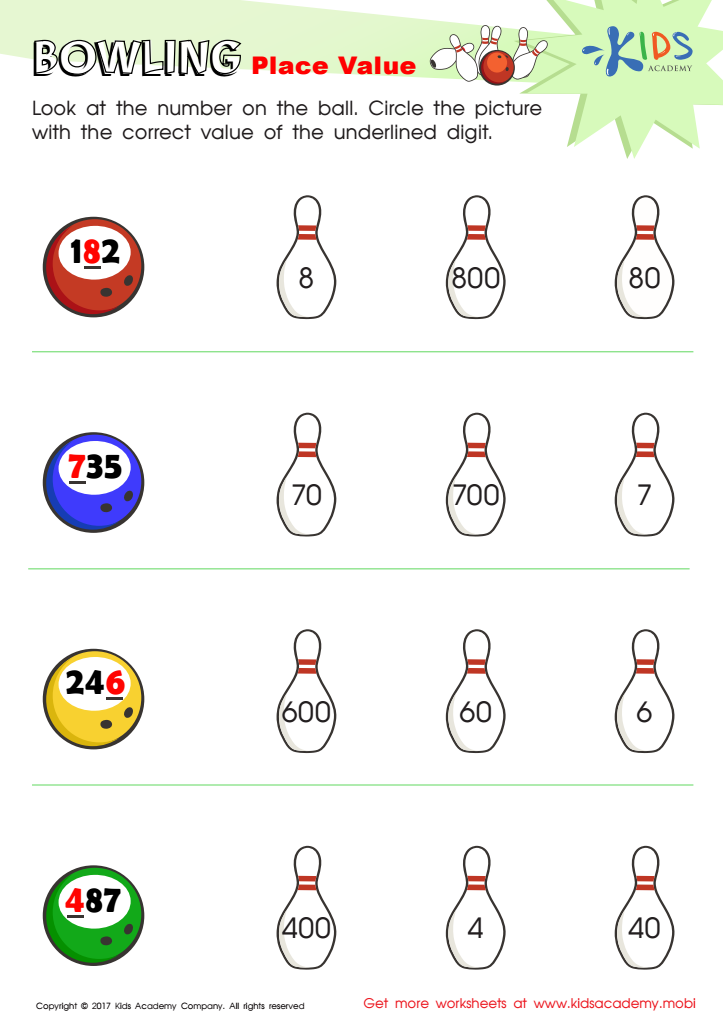
Place Value Worksheet
 Assign to My Students
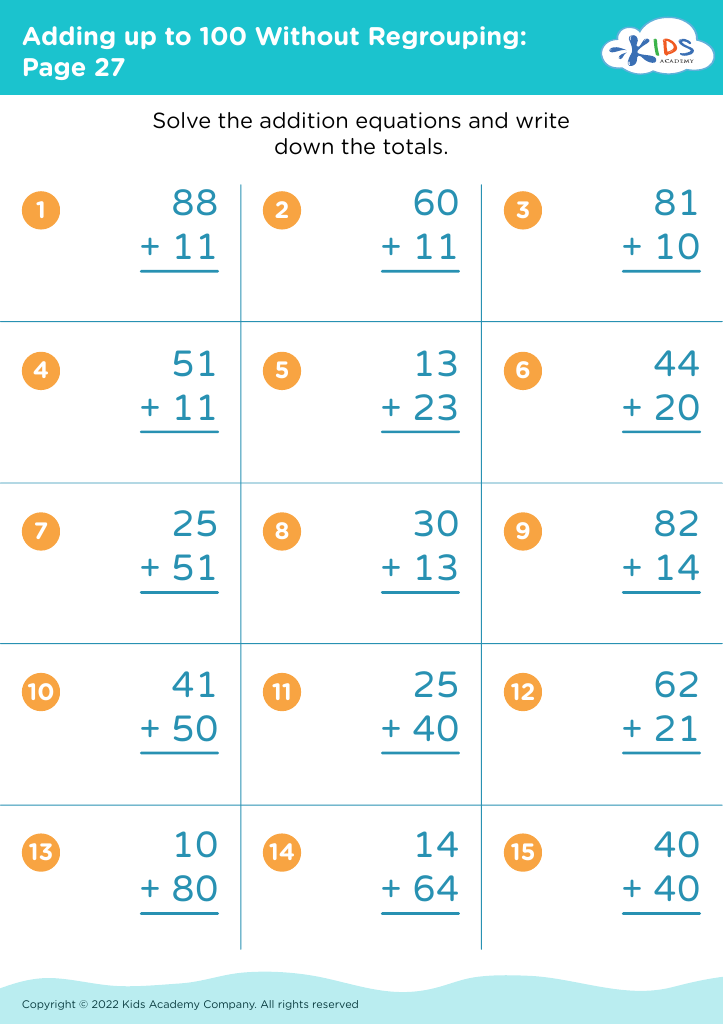
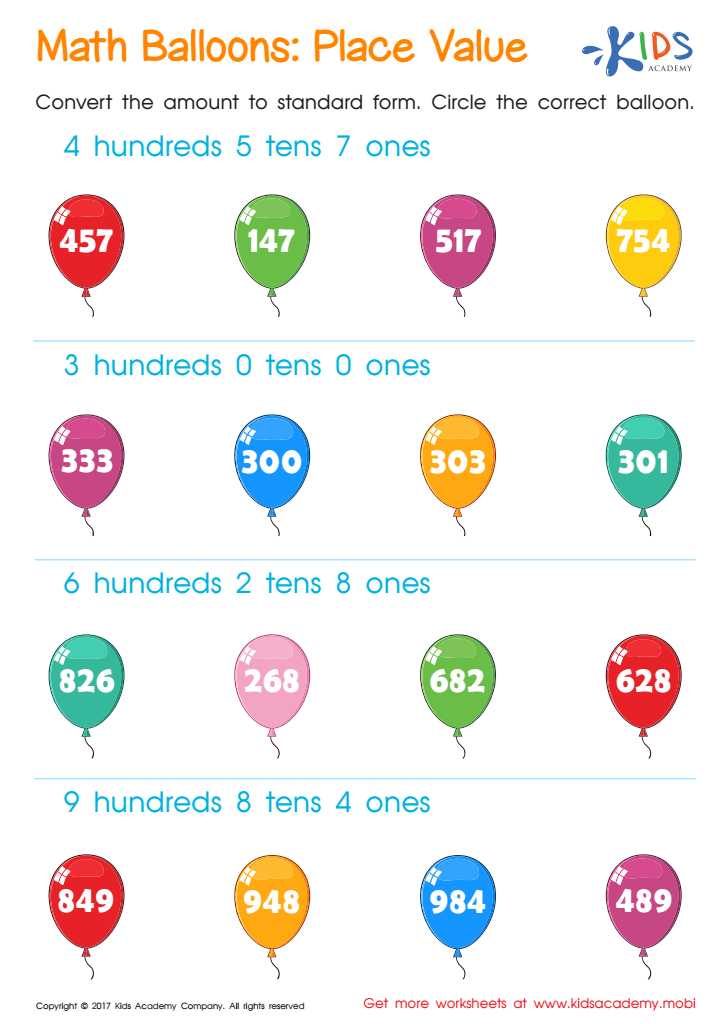
Place Value Printable Worksheet
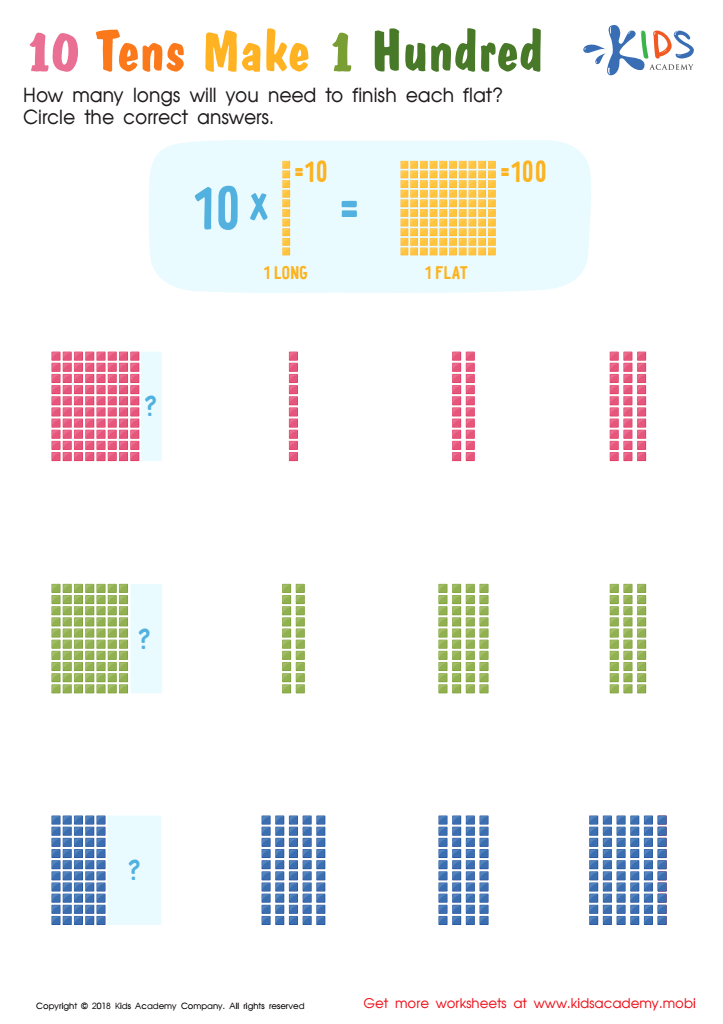
10 Tens Make 1 Hundred Worksheet





Recognizing number patterns is a fundamental skill for eight-year-olds that plays a crucial role in their mathematical development and overall critical thinking. Parents and teachers should prioritize this skill for several reasons.
Firstly, understanding number patterns enhances children's ability to comprehend more complex mathematical concepts such as addition, subtraction, multiplication, and division. When students can identify patterns, they become more adept at problem-solving and can apply these skills across various mathematical operations.
Furthermore, pattern recognition fosters logical thinking and reasoning skills. As children learn to predict what comes next in a sequence, they develop their analytical abilities, which are essential for science and engineering fields in the future.
Additionally, recognizing patterns contributes to children's confidence and perseverance in math. Children who see connections in numbers are more likely to engage with mathematics positively, which can inspire a lifelong love for the subject.
Finally, acknowledging patterns is not limited to mathematics; it supports skills in reading and writing by helping children identify sequences in stories and logical structures in texts. Overall, recognizing number patterns equips children with essential tools for academic success and everyday problem-solving, making it a vital focus for parents and teachers alike.








