
Sound discrimination Worksheets for 8-Year-Olds
3 filtered results
Difficulty Level
Grade
Age
-
From - To
Subject
Activity
Standards
Discover our engaging sound discrimination worksheets tailored for 8-year-olds! These worksheets are designed to enhance auditory skills by helping children distinguish between different sounds, an essential component of literacy development. Featuring fun and interactive activities, students will listen to and identify varying sounds, fostering both phonemic awareness and critical listening skills. Our resources cater to diverse learning styles, making it easy to integrate these worksheets into your classroom or home study sessions. Let's make learning enjoyable as your child improves their sound recognition abilities! Download and get started today to support your child’s journey towards becoming a confident reader!
Favorites
With answer key
Interactive
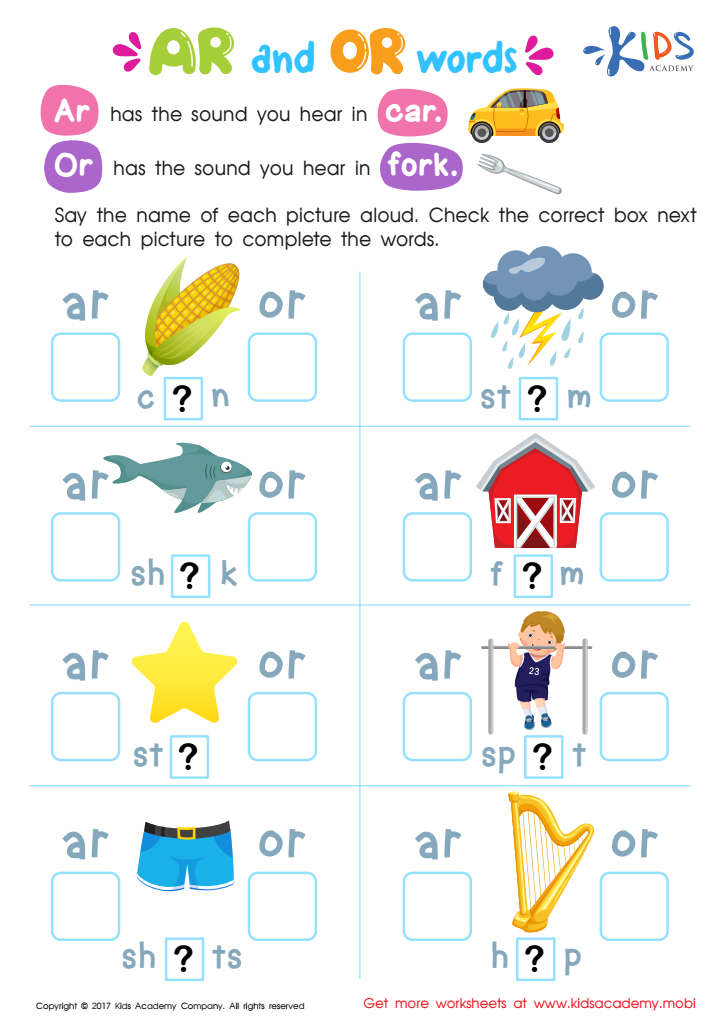
Ar and Or Words Phonics Worksheet
Master the distinct digraphs 'ar' and 'or' with this fun phonics worksheet from Kids Academy! With meaningful illustrations, it'll guide your child to choose the right one. Get ready for the great results!
 Assign to My Students
Ar and Or Words Phonics Worksheet
Worksheet
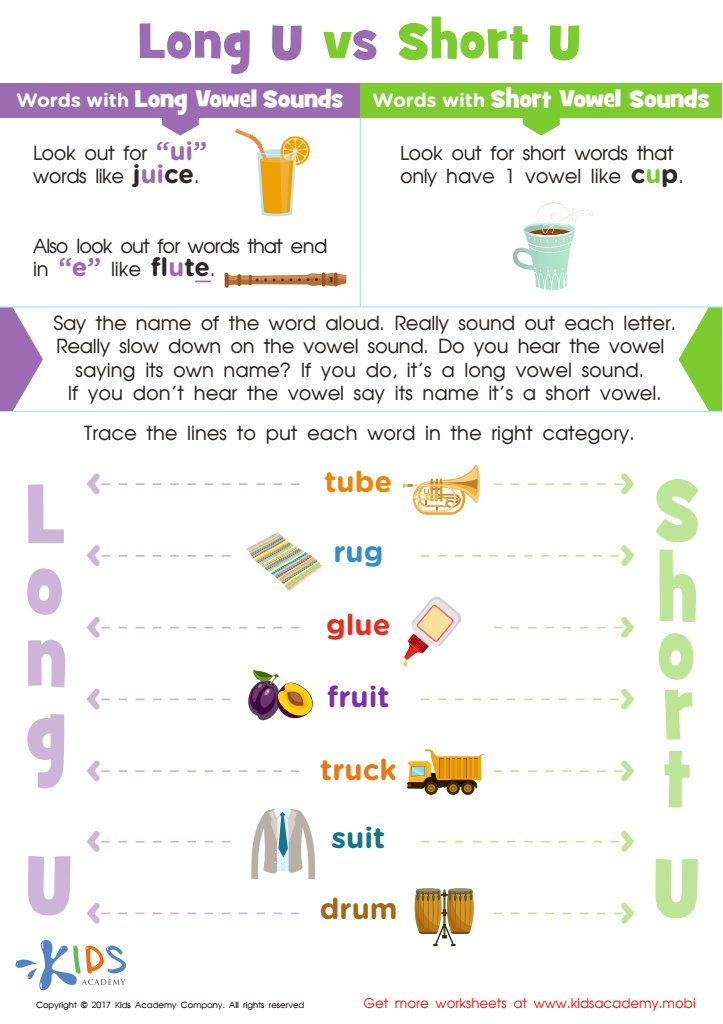
Long and Short Vowel U Spelling Worksheet
Help your child learn long and short vowel sounds with this fun long and short vowel U worksheet! Kids can become proficient spellers by mastering simple spelling tricks and sounding out letters.
Long and Short Vowel U Spelling Worksheet
Worksheet
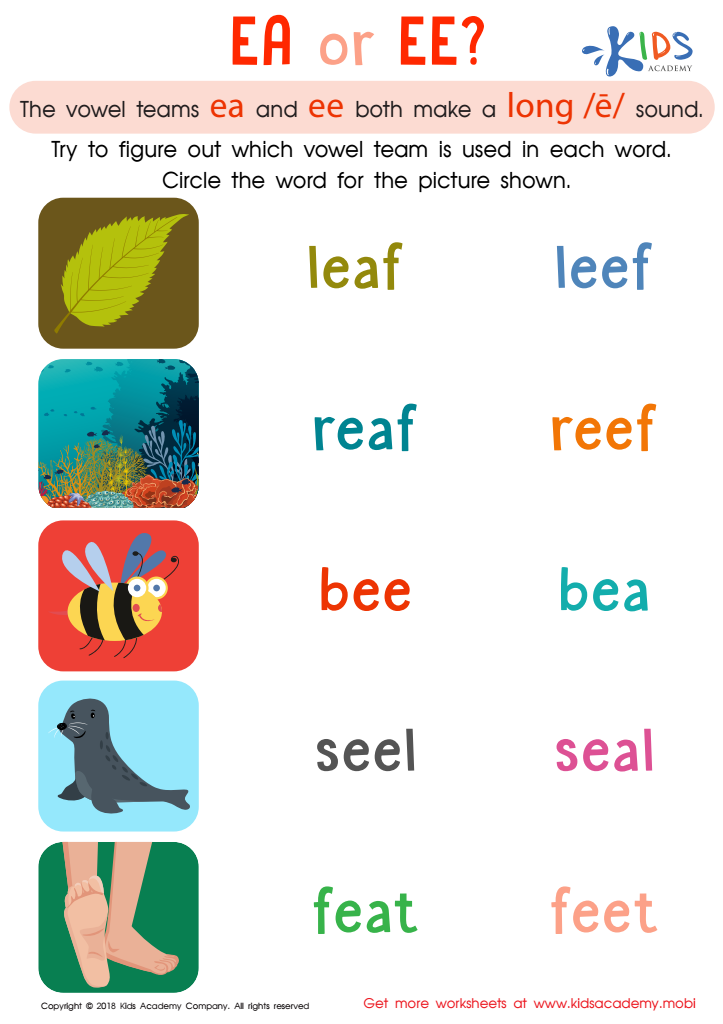
Reading: EA and EE Worksheet
Confused by the long E sound's varying spellings? Give students practice with this printable. It will improve their reading and spelling skills by helping them identify the correct spellings for words with the /ee/ and /ea/ vowel teams. Clear up the confusion and sharpen their skills.
Reading: EA and EE Worksheet
Worksheet
Join Kids Academy for Free
Who is primarily going to use this learning content?








Sound discrimination, the ability to distinguish between different sounds, is vital for 8-year-olds as it lays the foundation for essential literacy skills, communication, and overall academic success. At this age, children are honing their reading and writing abilities, and sound discrimination plays a critical role in these processes. When children can differentiate between similar sounds, they become more proficient in phonics, aiding their decoding skills and improving their ability to read complex texts.
Furthermore, sound discrimination contributes significantly to language development. As children learn to identify distinct phonemes, they enhance their vocabulary and articulation, fostering more effective communication. While playing with sounds through rhymes and rhythmic activities, teachers and parents can also enhance listening skills and auditory processing, vital for following instructions and participating in classroom discussions.
Additionally, sound discrimination affects social interactions and emotional development. Children who struggle with this skill may experience challenges in communicating with peers, potentially leading to frustration or behavioral issues. By focusing on sound discrimination, parents and teachers can nurture a supportive learning environment that enhances not just literacy, but also self-esteem and social skills, ultimately setting children up for lifelong success in both academics and personal relationships.








