Enhance your 8-year-old's language skills with our engaging "Understanding Adjectives Worksheets". Designed to make learning fun, these worksheets help children grasp the use of adjectives in sentences, boosting their ability to describe nouns vividly. Through exciting activities, colorful illustrations, and interactive tasks, these printables ensure kids not only learn to identify adjectives but also understand their importance in making writing more descriptive and vibrant. Ideal for both classroom and home learning, our worksheets provide a solid foundation for young learners to excel in their writing and reading comprehension skills. Download now and watch their confidence soar!

Check out this FREE "Understanding adjectives" Trial Lesson for age 8!

Adjectives and Adverbs

Favorites
With answer key
Interactive
  • 8
  • Understanding adjectives
Comparative and superlative adjective worksheet for grade 3

Comparative and Superlative Worksheet

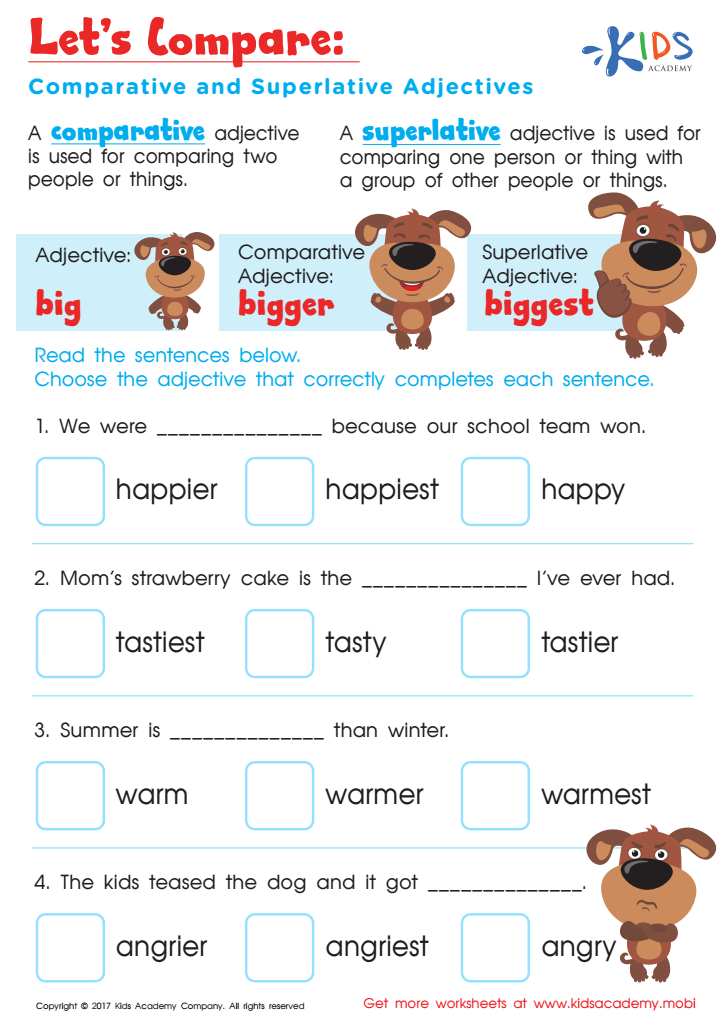
Kids can discover the difference between comparative and superlative adjectives and practice using them correctly - is it big, bigger, or biggest? Perfect for grade 3.
Comparative and Superlative Worksheet
Worksheet
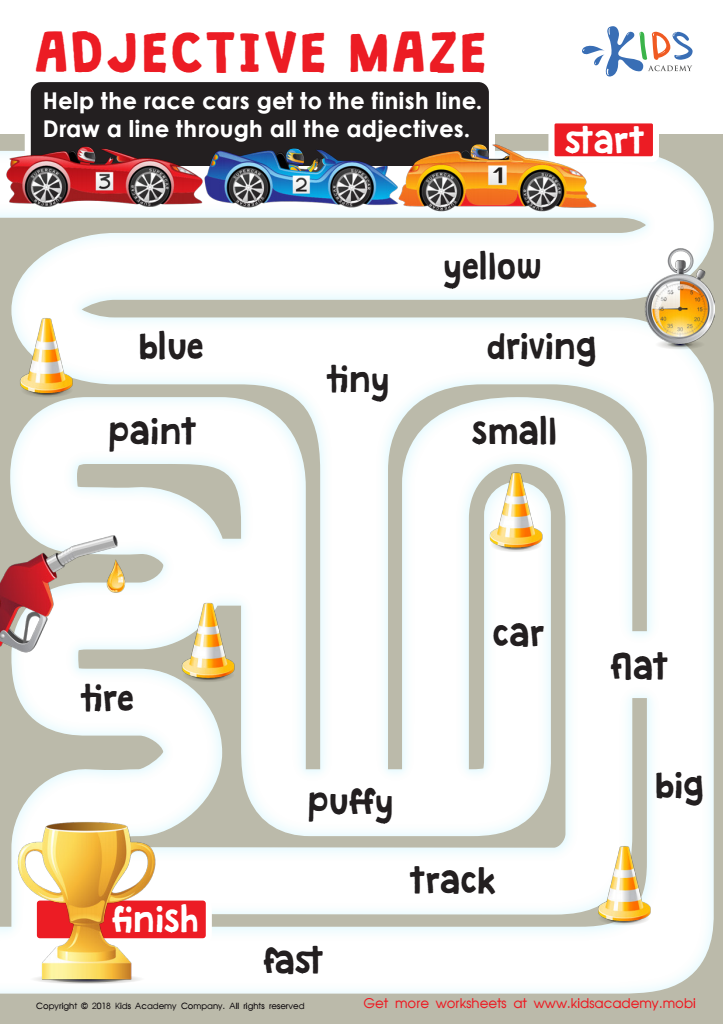
Adjective Maze Worksheet

Adjective Maze Worksheet

Race your pencil to the finish line with Kids Academy's exciting maze worksheet! Remind your little racer that adjectives describe nouns - looks, sounds, and more. On your mark, get ready - zoom through the track and circle each adjective you see!
Adjective Maze Worksheet
Worksheet
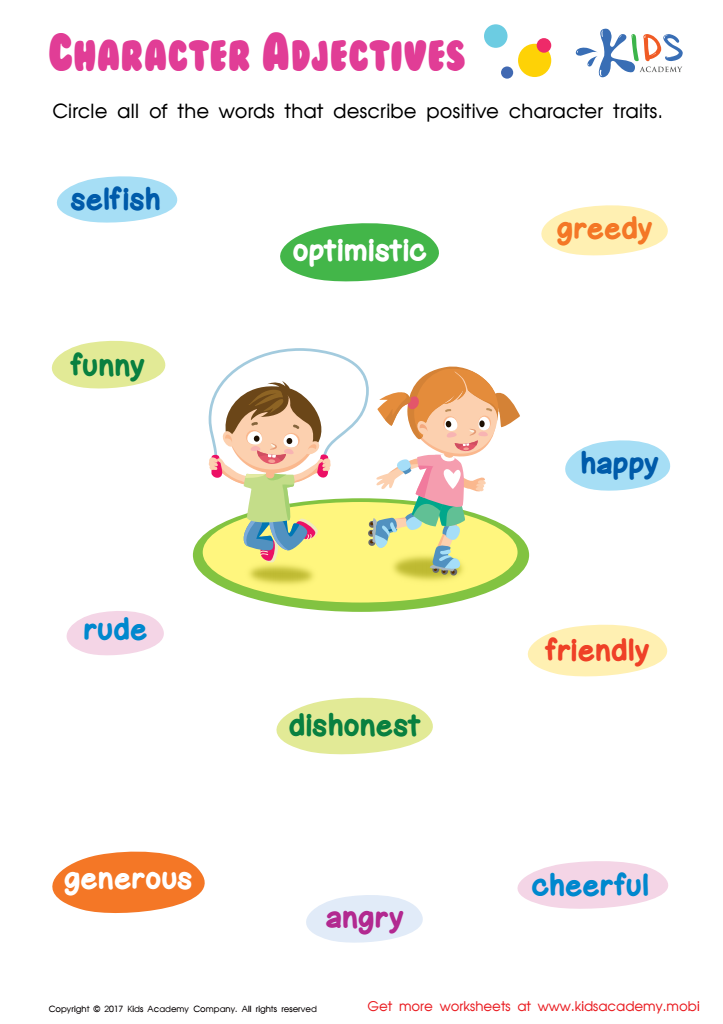
Character Adjectives Worksheet PDF

Character Adjectives Worksheet

Help your child express their feelings easily with this PDF worksheet! It focuses on character adjectives and increases their vocabulary, so they can confidently articulate positive emotions.
Character Adjectives Worksheet
Worksheet
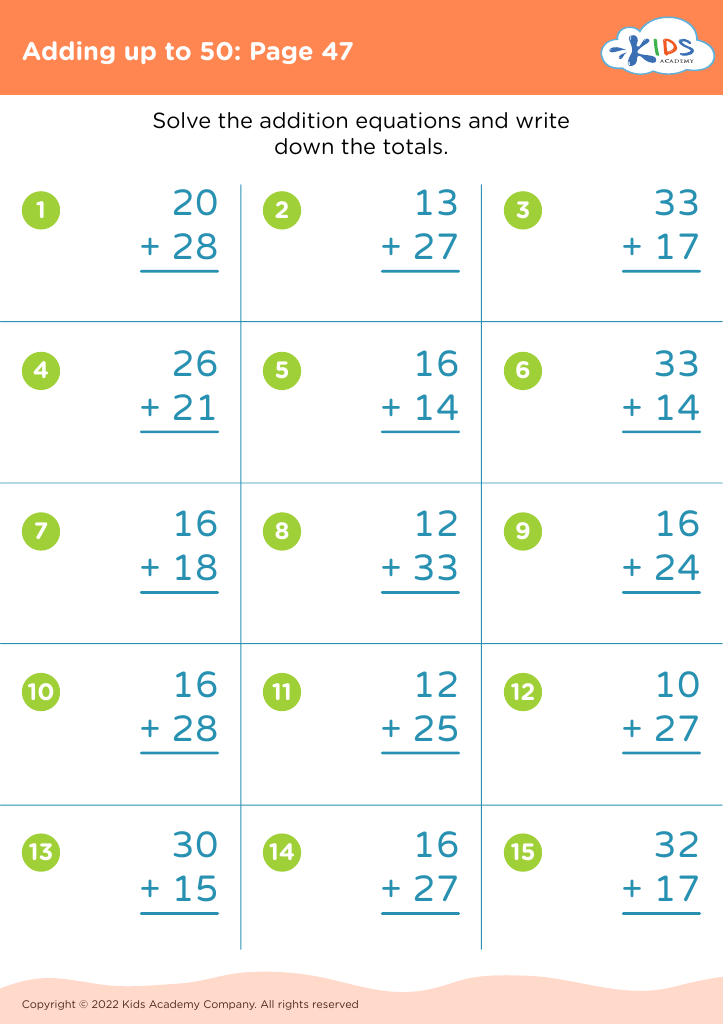
Adding up to 50: Page 47

Adding up to 50: Page 47

Adding up to 50: Page 47
Worksheet
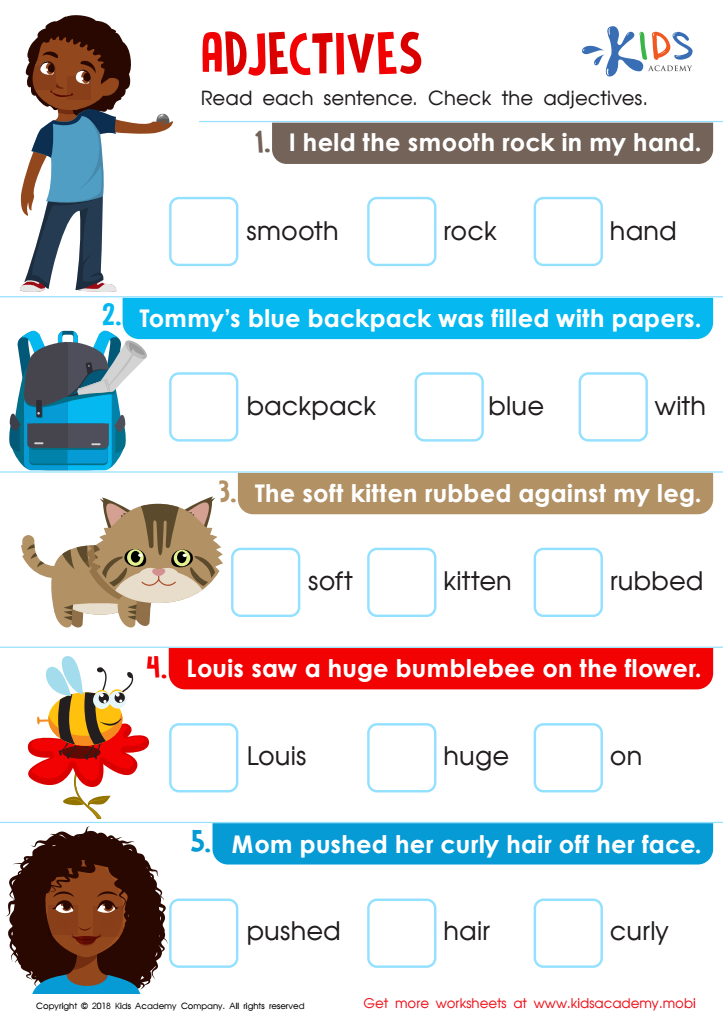
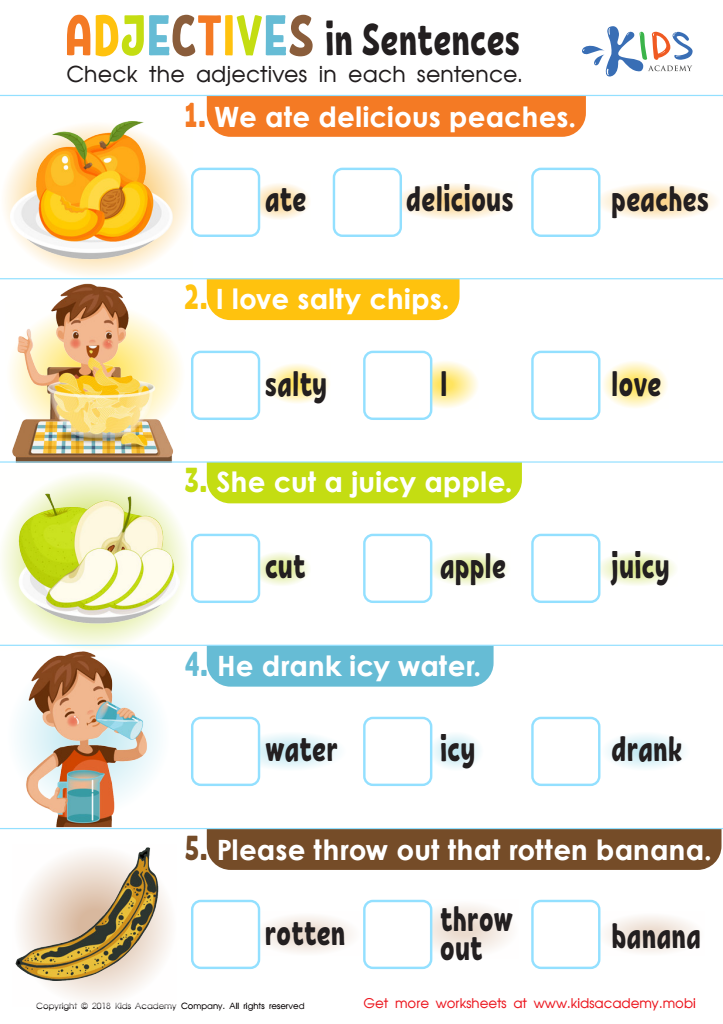
Adjectives Worksheet
Adjectives Worksheet

Adjectives are words that describe a noun. Examples include "beautiful" and "good". Ask your students to use these adjectives in a sentence and have them identify the adjectives in five sentences on a worksheet. Point out that adjectives are essential to understand, and have them check their answers.
Adjectives Worksheet
Worksheet
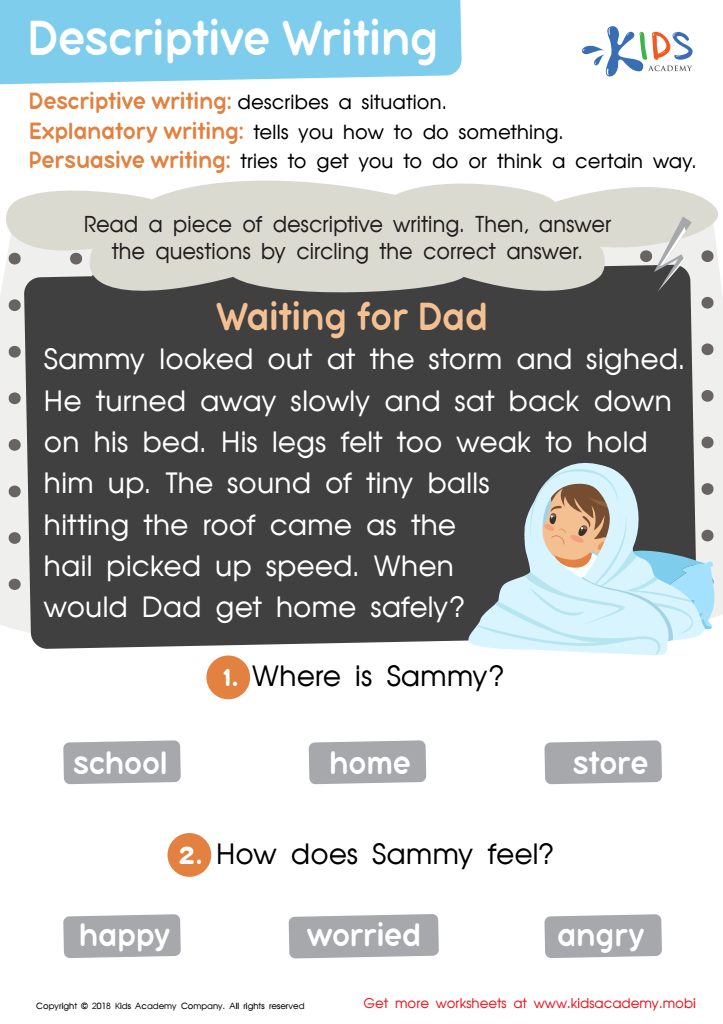
Descriptive Writing Worksheet: Part 2
Descriptive Writing Worksheet: Part 2

In this worksheet, your kids will explore writing styles like descriptive, explanatory and persuasive. Read them the descriptive text, then have them answer the questions. Writing is an art – it's a way to express emotions, tell stories and share information.
Descriptive Writing Worksheet: Part 2
Worksheet
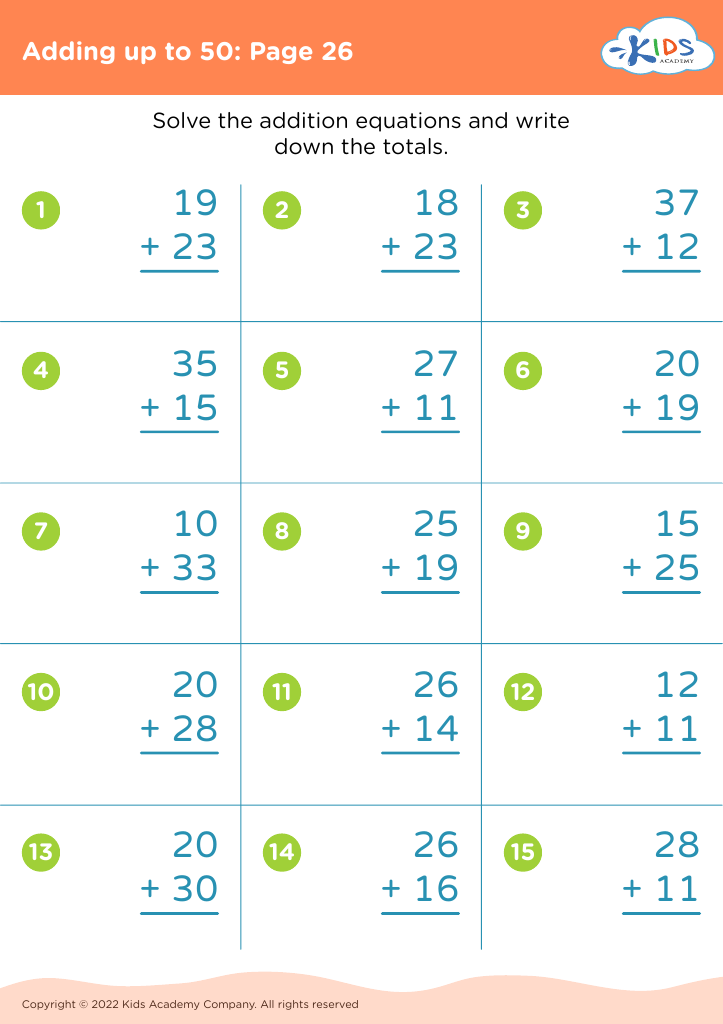
Adding up to 50: Page 26

Adding up to 50: Page 26

Adding up to 50: Page 26
Worksheet
Adjectives in Sentences Worksheet


Adjectives in Sentences Worksheet

Our learners can find it hard to use writing to add detail, but adjectives can help. With this fun worksheet, kids can identify adjectives that describe food and drink. Guide them through each sentence, discussing the words and having them choose the one that gives information about the food/drink.
Adjectives in Sentences Worksheet

Worksheet
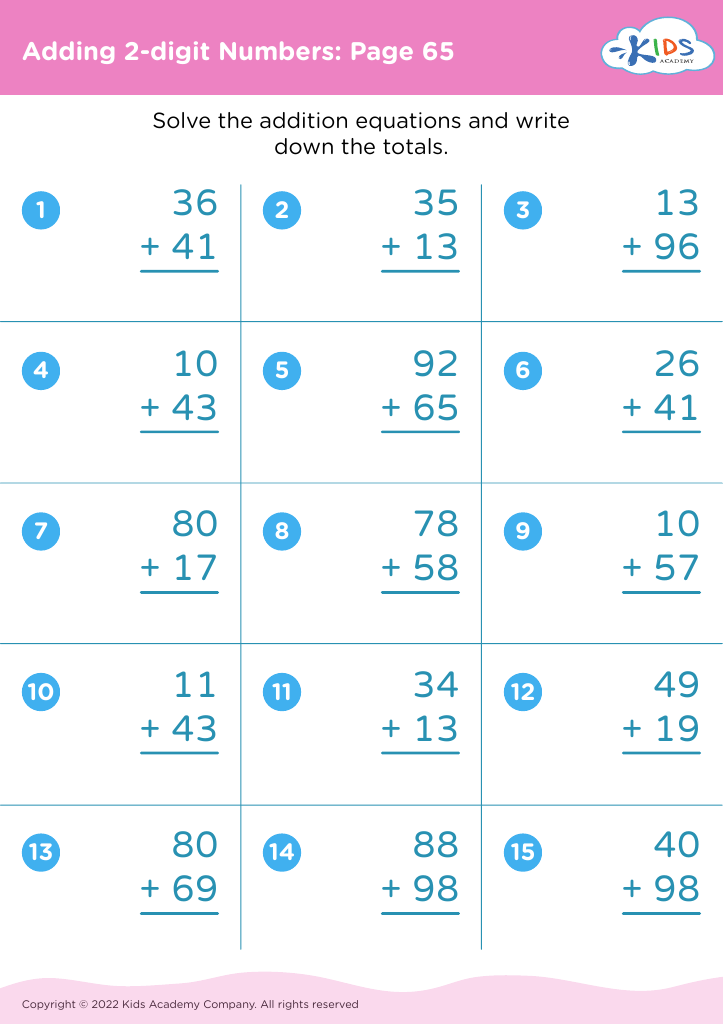
Adding 2-digit Numbers: Page 65

Adding 2-digit Numbers: Page 65

Adding 2-digit Numbers: Page 65
Worksheet
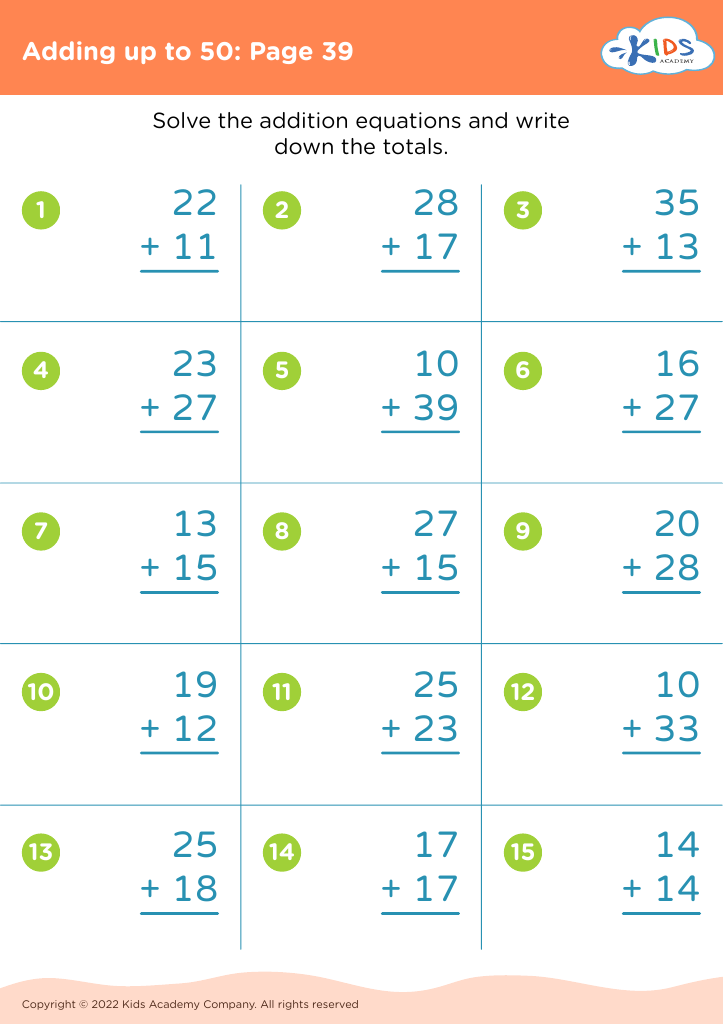
Adding up to 50: Page 39

Adding up to 50: Page 39

Adding up to 50: Page 39
Worksheet
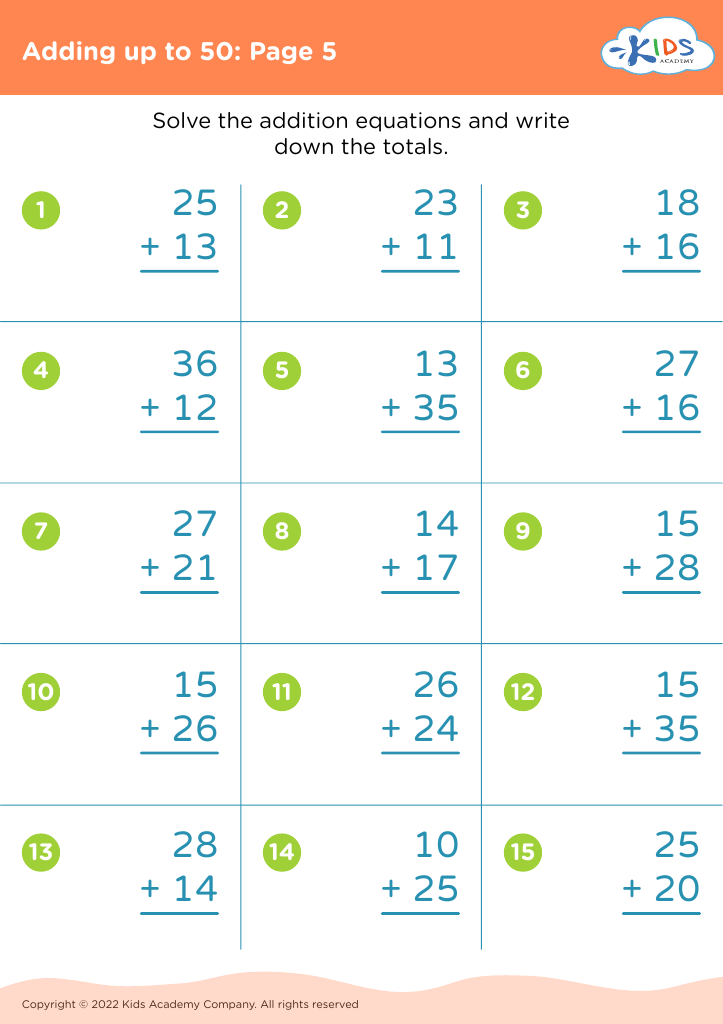
Adding up to 50: Page 5

Adding up to 50: Page 5

Adding up to 50: Page 5
Worksheet


Understanding adjectives is vital for 8-year-olds for many important reasons. First and foremost, adjectives help children develop their descriptive language skills. When they can describe objects, people, and environments more vividly, their communication becomes clearer and more engaging. This is crucial not only in daily interactions but also in their budding writing skills, making their stories and explanations more detailed and interesting.

Moreover, learning about adjectives enhances vocabulary and cognitive development. Adventuring into the world of adjectives opens up exposure to new words, which bolster learning across all subjects. A robust vocabulary is linked to better reading comprehension and academic performance, laying down a foundation for future success.

Adjectives also help children in understanding and expressing emotions. Being able to differentiate between a "happy" face and a "joyful" face guides children to navigate social interactions more effectively. They can understand and convey subtle nuances in emotional states, which fosters emotional intelligence and empathy.

Finally, engaging with adjectives in a learning setting encourages curiosity and creativity. As children explore different and more nuanced descriptions, they learn to think more critically and creatively about the world around them. Therefore, strong adjective comprehension enriches language, cognitive abilities, emotional intelligence, and creativity—all essential components in children's holistic development.