Understanding economics Worksheets for 8-Year-Olds
3 filtered results
-
From - To
Unlock the world of economics for 8-year-olds with our engaging Understanding Economics Worksheets! Designed to make learning fun and accessible, these worksheets introduce essential concepts such as money, banking, and trading. Each activity fosters critical thinking and real-world application, allowing young learners to grasp the basics of economic principles in an engaging way. Filled with colorful illustrations and easy-to-follow instructions, our worksheets promote comprehension and retention. Perfect for classroom settings or at-home learning, these resources nurture curious minds and help children develop foundational skills essential for understanding their world. Start the journey into economics today and watch their enthusiasm grow!
 Assign to My Students
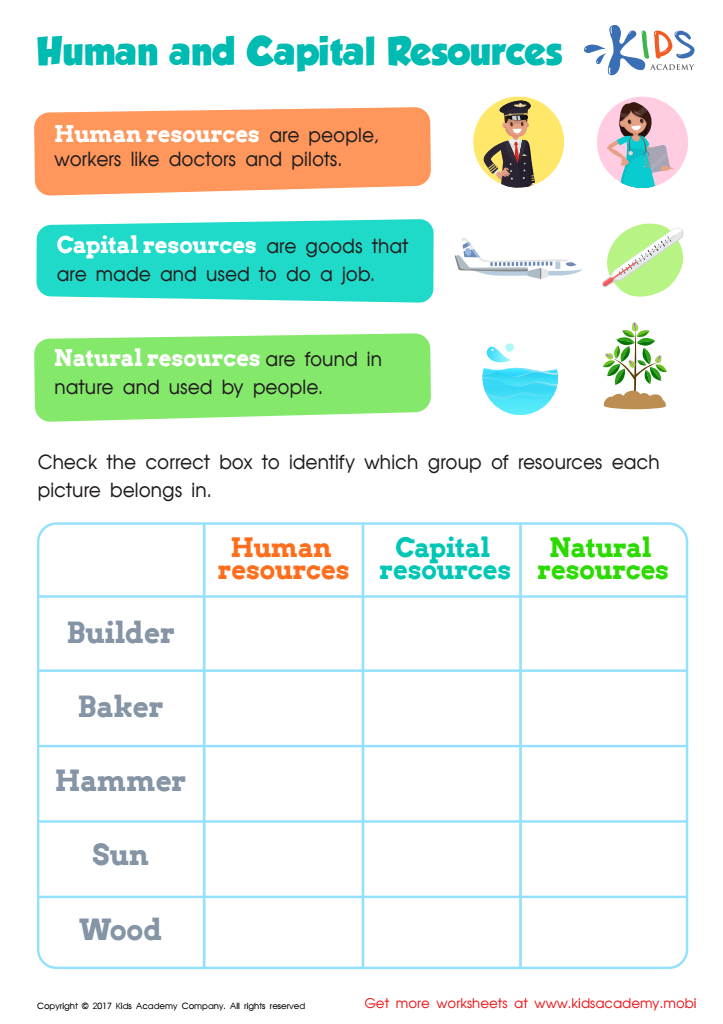
Human and Capital Resources Worksheet
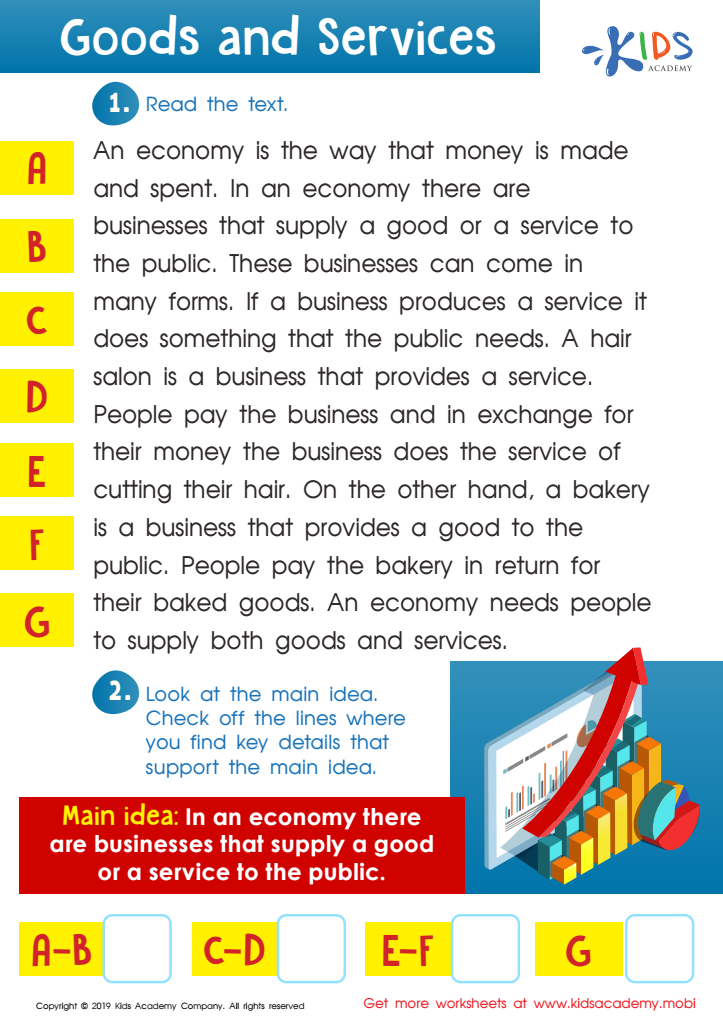
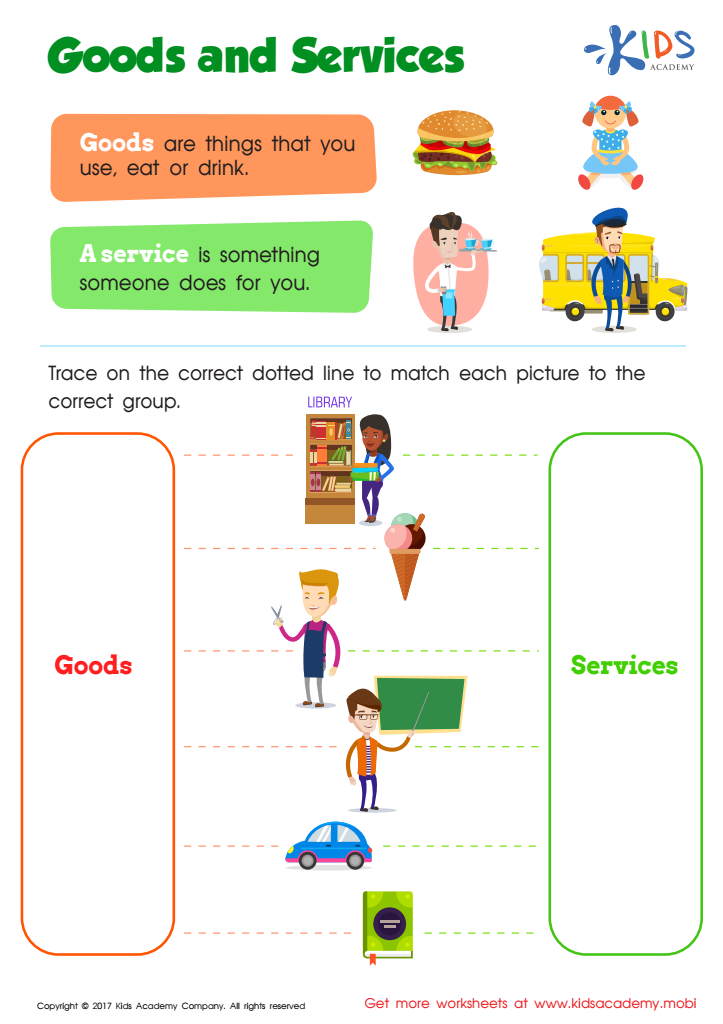
Goods and Services Worksheet








Understanding economics at an early age is crucial for children as it lays the foundation for responsible decision-making in the future. Parents and teachers should care about this because economic concepts are integral to everyday life, shaping how individuals interact with their community, manage finances, and make choices about spending and saving. Teaching these ideas to 8-year-olds can demystify complex notions, making them accessible and relatable through games, storytelling, and real-life examples.
Additionally, fostering economic literacy encourages critical thinking and problem-solving skills. It helps children grasp the value of resources, understand the importance of needs versus wants, and recognize the role of trade and money in society. This knowledge not only empowers kids to make informed choices but also instills a sense of responsibility regarding their financial habits.
Lastly, as today's children are tomorrow's leaders, instilling economic awareness fosters a generation capable of engaging with and addressing broader societal issues like poverty and sustainability. Engaging students early promotes equity, enabling them to participate actively in their local and global economies—a vital skill in an increasingly interconnected world. Encouraging this understanding can lead to a more informed, responsible, and resourceful citizenry in the future.








