Understanding times tables Worksheets for 8-Year-Olds
6 filtered results
-
From - To
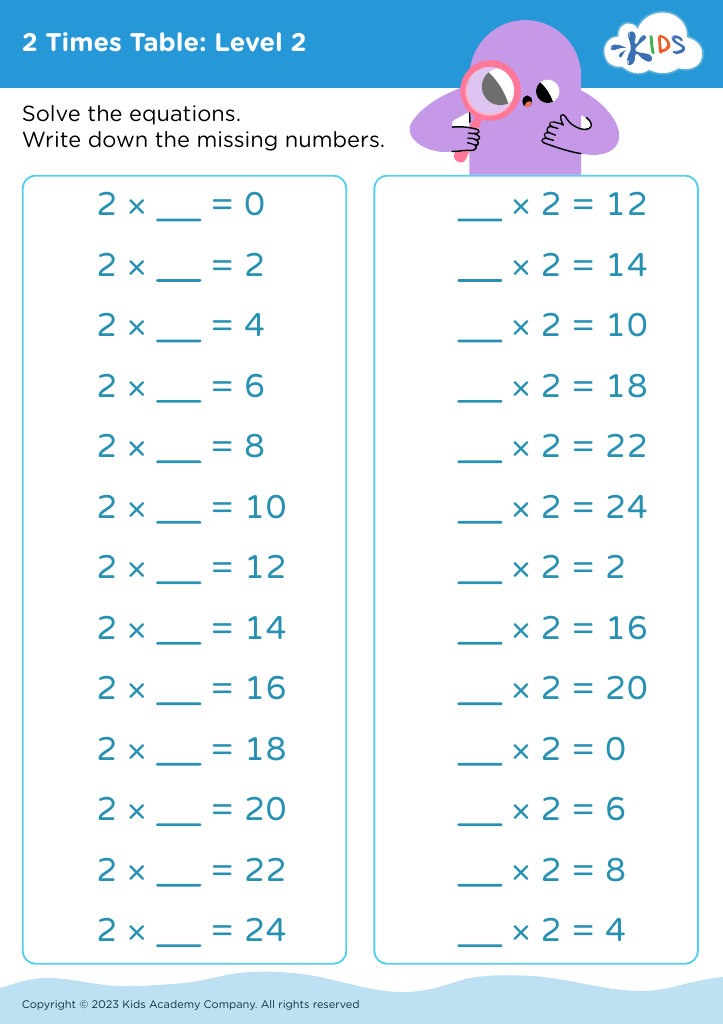
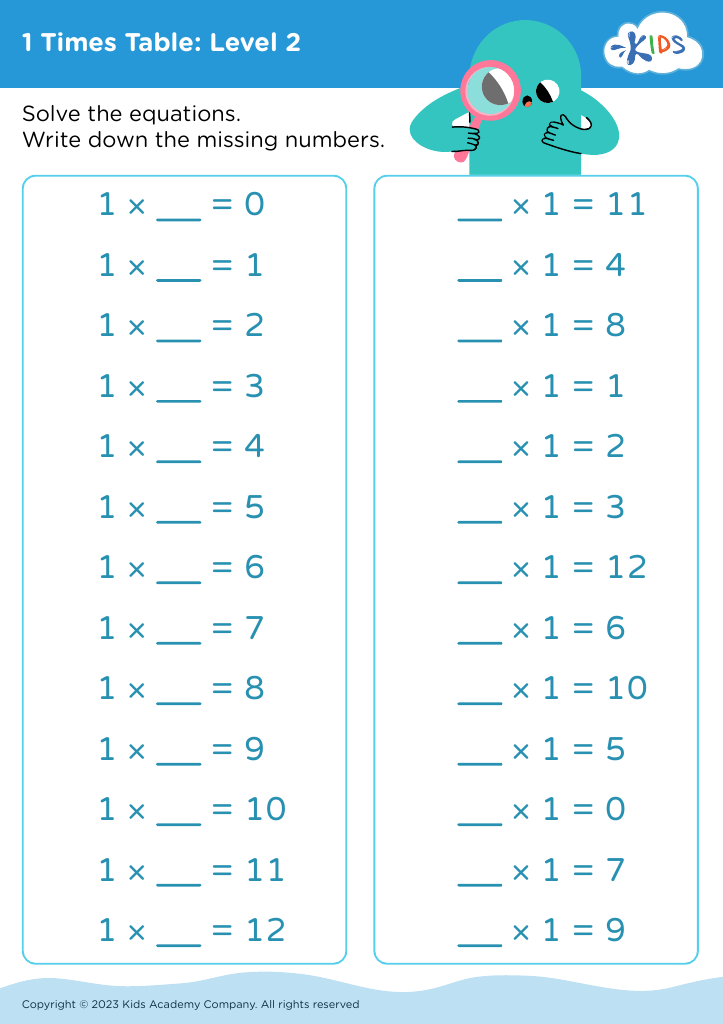
Welcome to our "Understanding Times Tables Worksheets for 8-Year-Olds" section! These engaging worksheets are designed to help young learners master multiplication concepts in a fun and interactive way. Perfect for enhancing math skills, our carefully crafted activities include visual aids, games, and step-by-step exercises that make learning times tables enjoyable. As children practice regularly, they will build confidence and fluency in multiplication. Ideal for both classroom and home use, these resources cater to diverse learning styles, ensuring every child can grasp this essential mathematical foundation. Start exploring our comprehensive collection and watch your child's multiplication skills flourish!
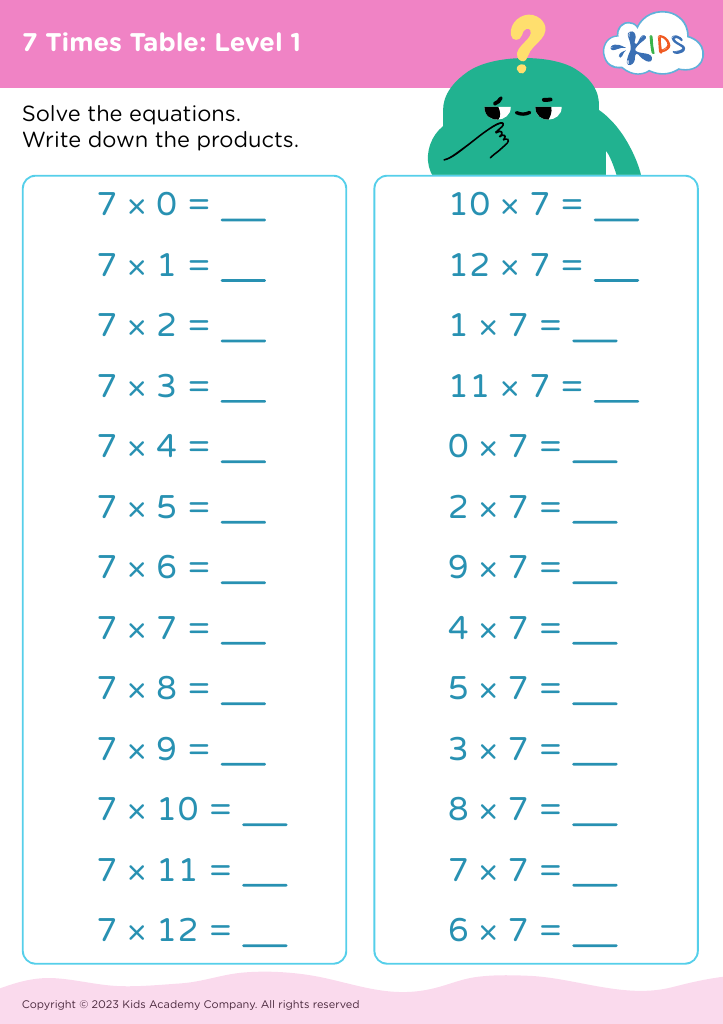
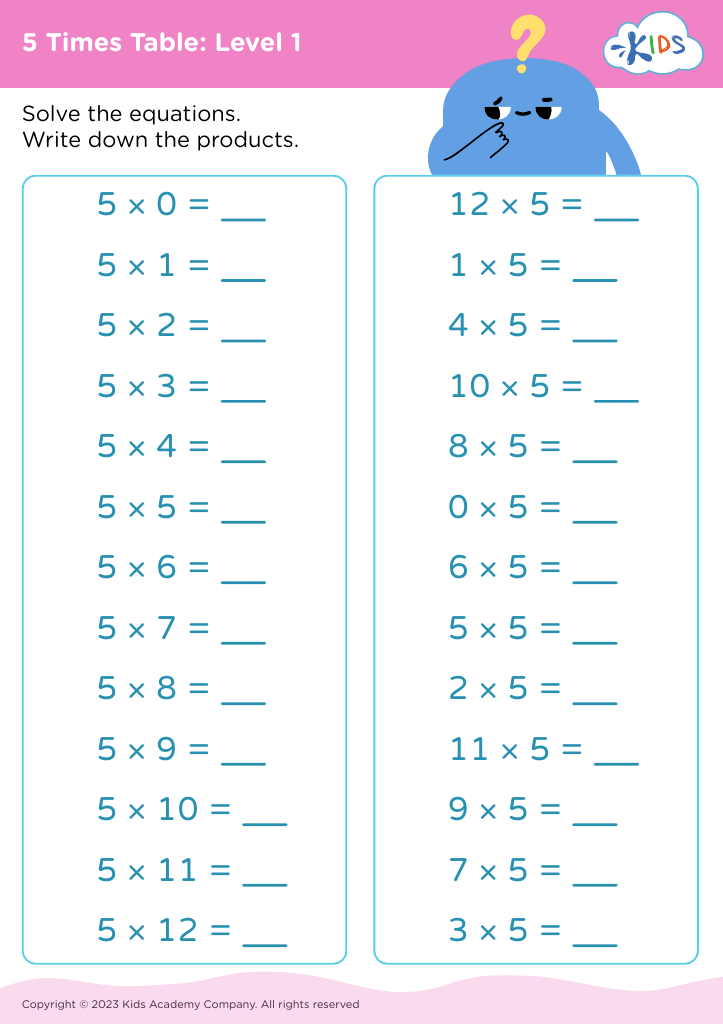
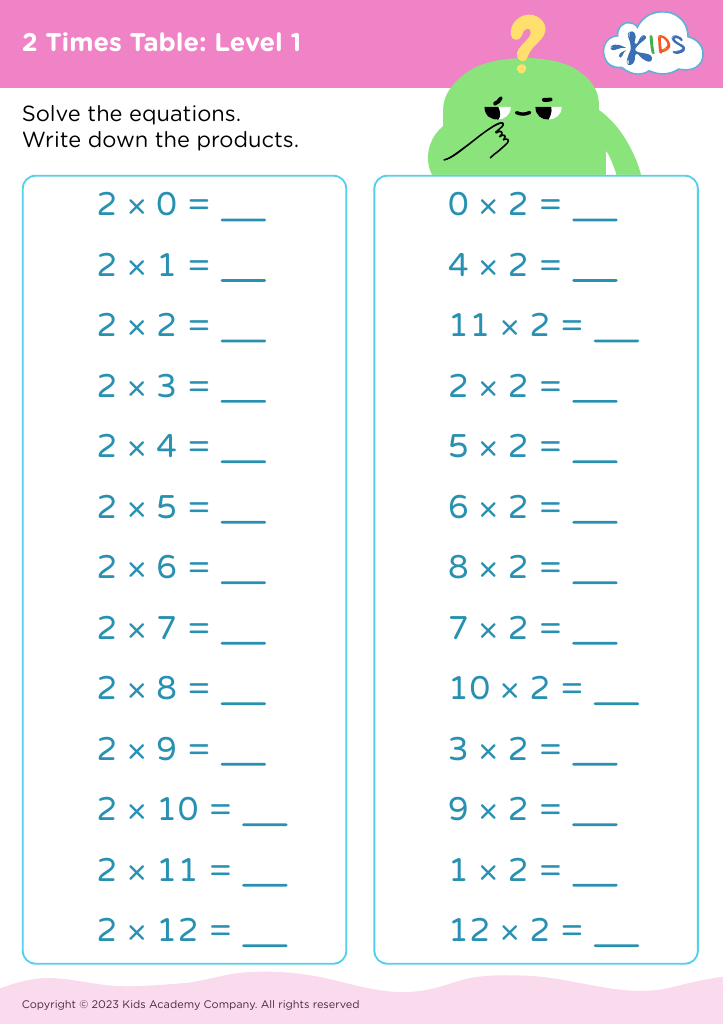
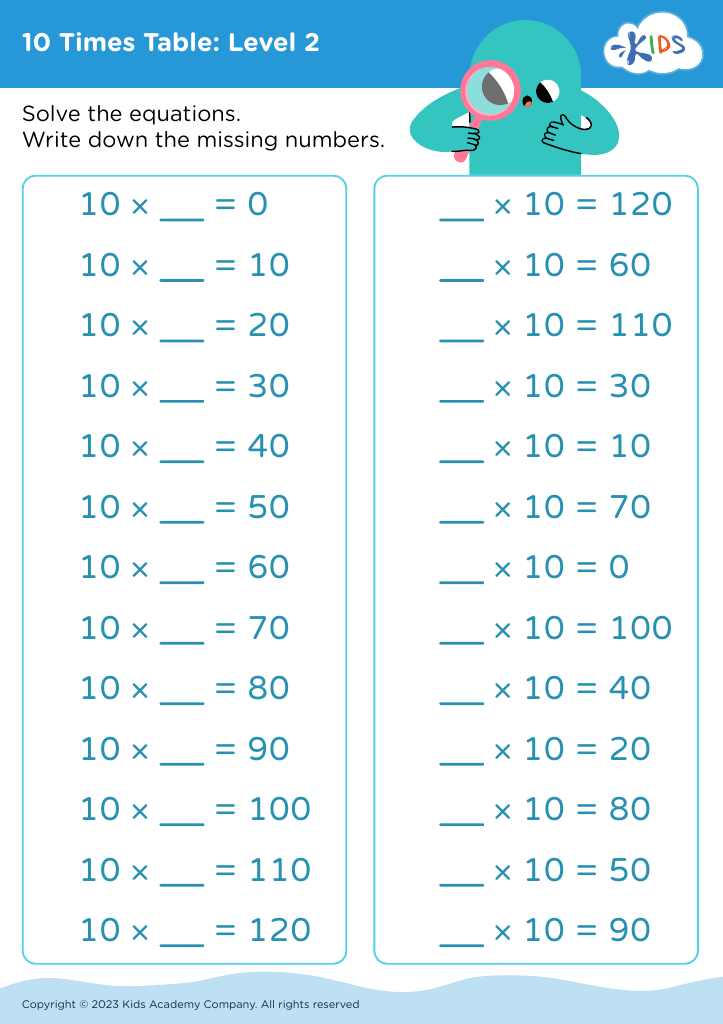







Understanding times tables is essential for 8-year-olds as it lays the groundwork for their future mathematical skills and overall academic success. At this age, children typically transition from simple arithmetic to more complex concepts, making multiplication a foundational skill. Mastering times tables boosts a child's confidence in their math abilities, paving the way for tackling challenging subjects like division, fractions, and even algebra later on.
Moreover, knowing multiplication tables can enhance problem-solving skills and foster logical thinking. Parents and teachers should also recognize that fluency in multiplication can significantly improve performance in daily tasks, such as calculating costs during shopping or sharing objects equally among friends.
Additionally, children proficient in their times tables can focus on more advanced problem-solving techniques instead of spending time trying to memorize basic facts. This ultimately leads to a more profound conceptual understanding of numbers and relationships, facilitating lifelong learning.
Investing time in helping children master their times tables ensures they develop a solid mathematical foundation, which is crucial not only in their academic journey but also in their everyday lives. Encouragement and consistent practice from both parents and teachers are key in supporting this critical learning experience.








