Basic Math Skills Adding 2-digit Numbers Worksheets for 8-Year-Olds
3 filtered results
-
From - To
Our expertly designed worksheets for 8-year-olds make learning to add 2-digit numbers fun and engaging. Each worksheet focuses on building basic math skills, ensuring that children grasp the essential concepts of arithmetic. With colorful images and clear instructions, students can practice and reinforce their addition abilities effectively. Perfect for classroom or at-home learning, these worksheets accommodate different learning styles and paces. By repeatedly solving addition problems, kids will gain confidence and accuracy in their math skills. Ignite your child's passion for learning with our fantastic resource tailored to their educational needs.
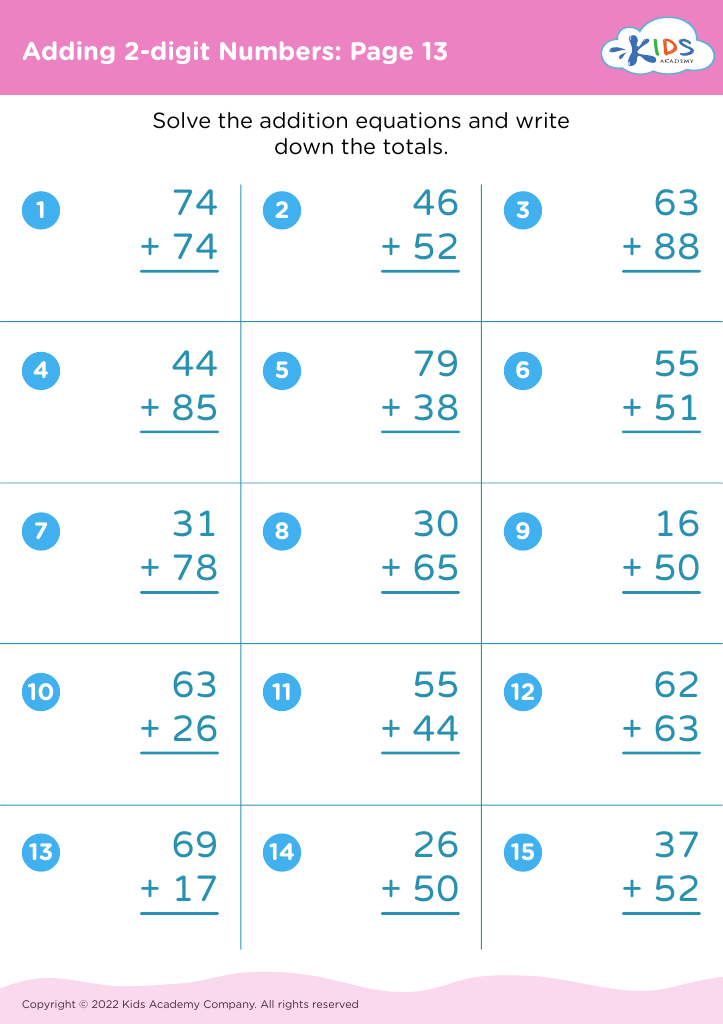
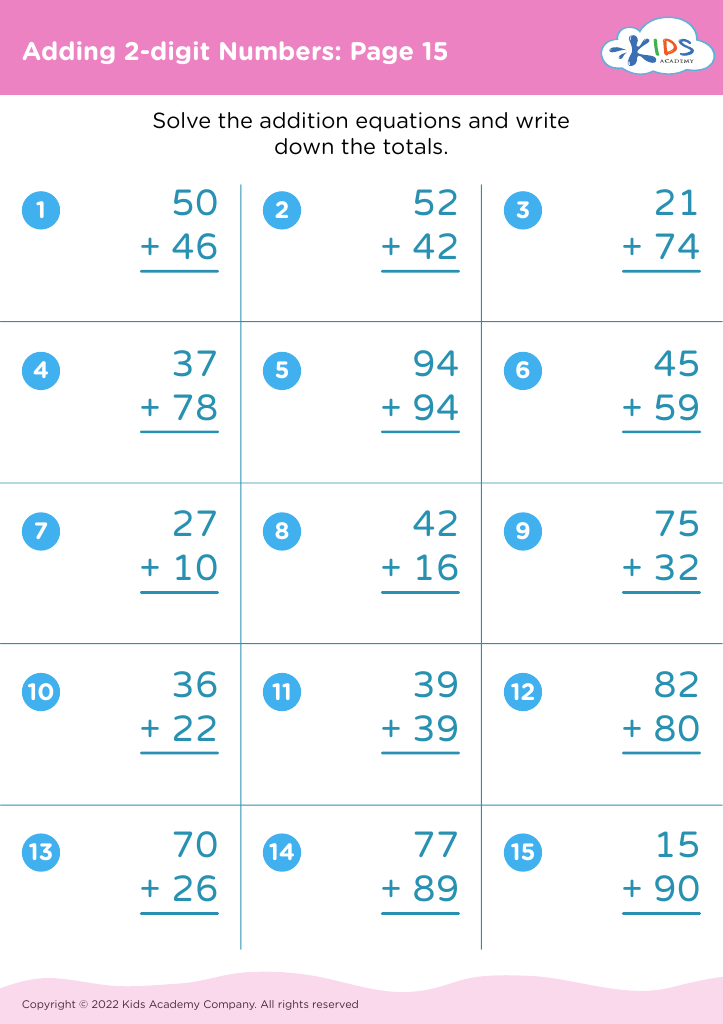
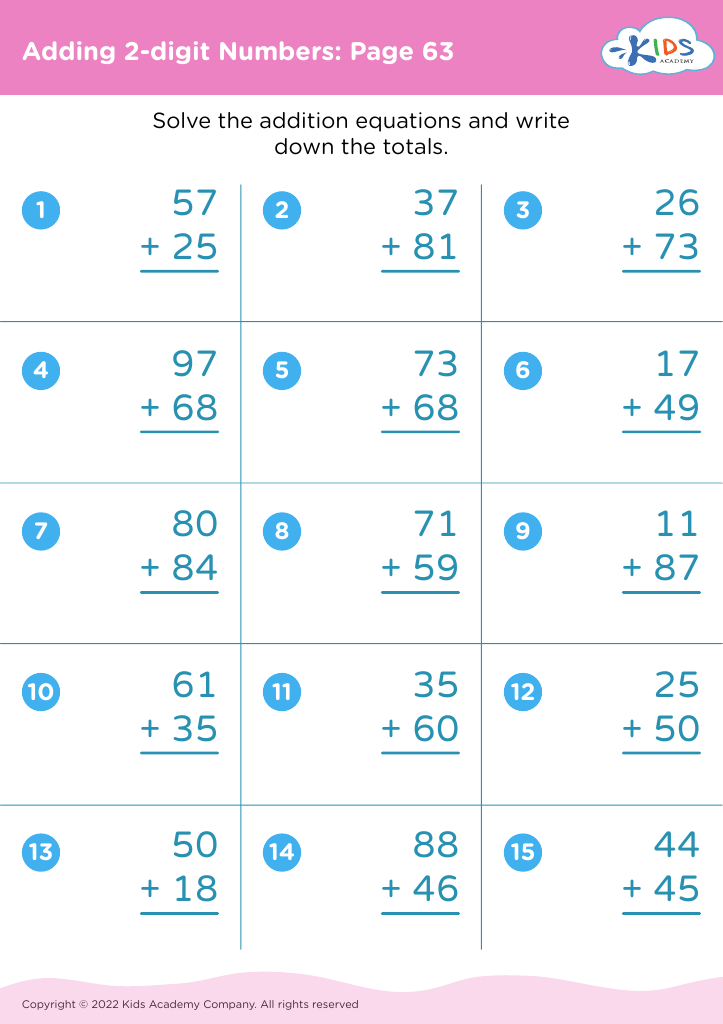








Basic math skills like adding 2-digit numbers are essential for 8-year-olds, forming the cornerstone of their mathematical understanding and acting as a gateway to more advanced arithmetic. Mastering this skill boosts a child's confidence, enhancing their ability to tackle increasingly complex problems, both academically and in real-life scenarios.
When parents and teachers emphasize these skills, they are not just teaching numbers; they are instilling critical thinking, problem-solving abilities, and the capacity to make sense of the world quantitatively. Our daily lives, from managing money to measuring ingredients in a recipe, require the ability to perform basic calculations. Building this foundation early ensures that children are well-prepared for future math topics, including multiplication, division, fractions, and decimals.
Another critical aspect is the effect on academic success. Students proficient in basic math are better able to follow classroom instructions, participate in activities, and feel a sense of achievement. This promotes a positive attitude towards learning, fosters persistence, and reduces math anxiety.
Additionally, math competency is linked to better outcomes in STEM (Science, Technology, Engineering, Mathematics) fields, which are increasingly vital in modern society. By focusing on these skills, parents and teachers ensure that children can build the robust mathematical foundation needed for lifelong learning and career success.








