Develop fine motor skills Adding up to 100 Misc Worksheets for 8-Year-Olds
4 filtered results
-
From - To
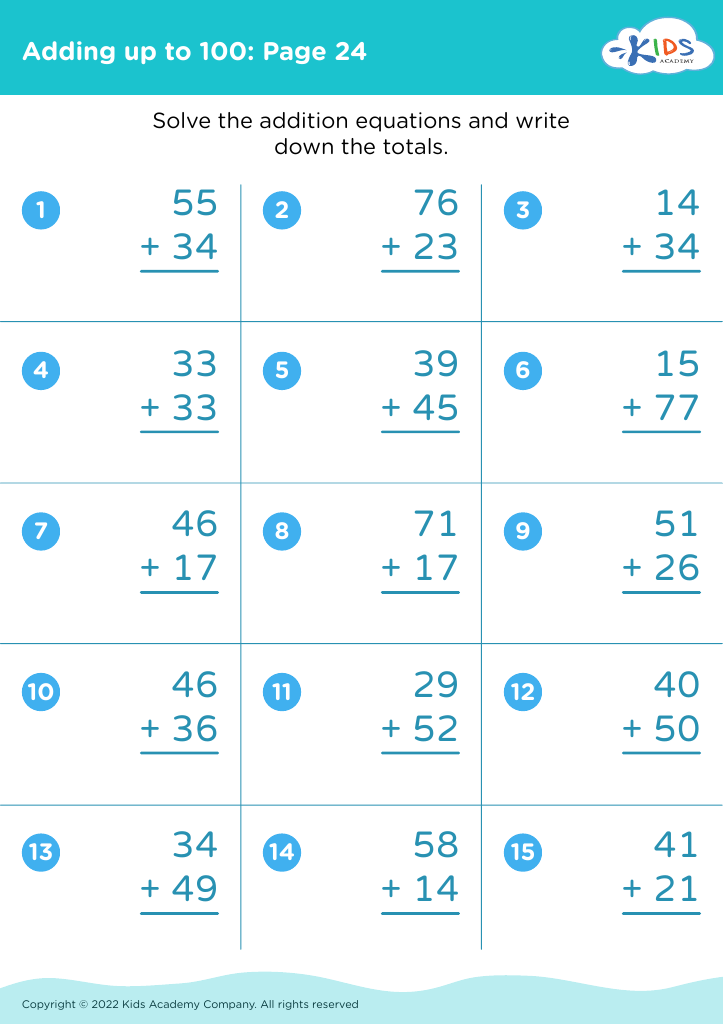
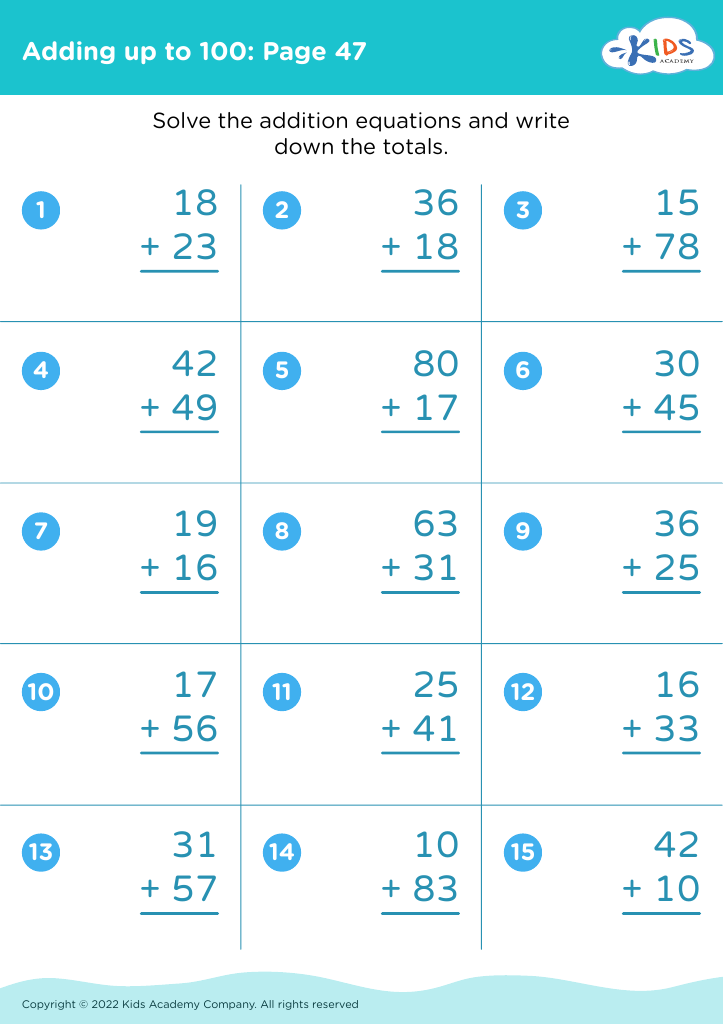
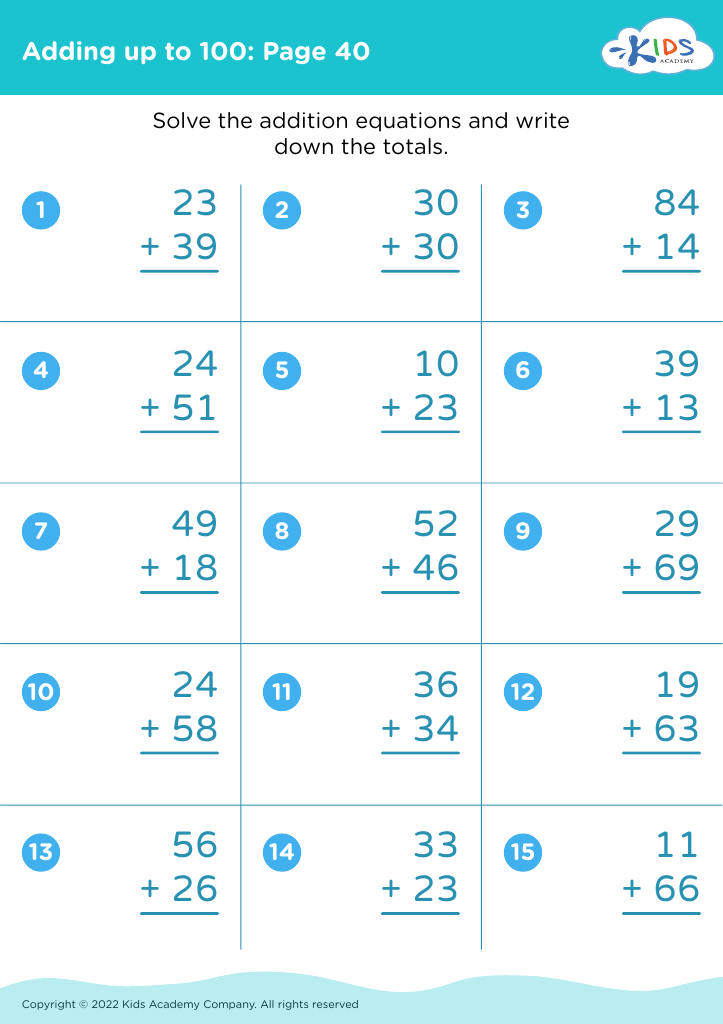
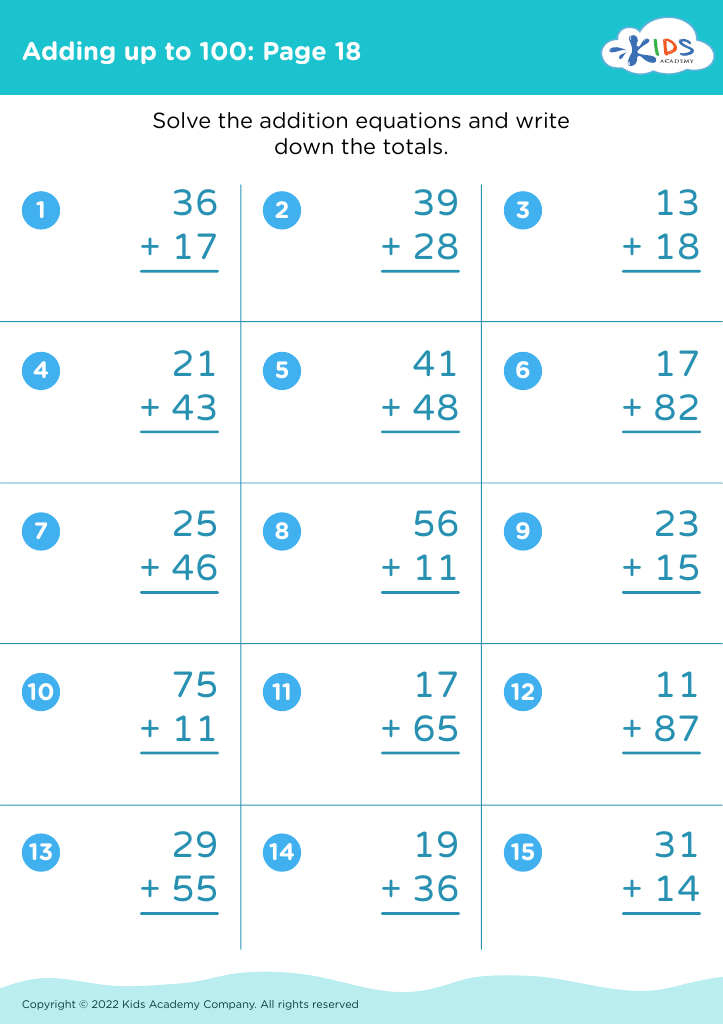
Enhance your child’s fine motor skills with our "Adding Up to 100 Misc Worksheets" designed specifically for 8-year-olds. These engaging and interactive worksheets combine math practice with fun activities, helping children develop their handwriting, dexterity, and hand-eye coordination. As they work through colorful pages filled with addition problems and creative exercises, kids will gain confidence in their math abilities while improving their fine motor control. Perfect for at-home or classroom use, our resource promises both educational value and an enjoyable learning experience. Download the worksheets today and watch your child excel in both math and motor skills!


Developing fine motor skills is crucial for 8-year-olds as it directly impacts their academic and everyday functioning. Fine motor skills involve the use of small muscles in the hands and fingers, which are essential for tasks such as writing, cutting, and manipulating small objects. As children engage in activities that foster these skills, they build the dexterity and coordination necessary for more complex tasks later in life.
Strong fine motor skills contribute significantly to a child's ability to perform well in school. Improved handwriting and accuracy in completing assignments can boost a child's confidence and willingness to participate in classroom activities. Furthermore, fine motor development is closely linked to cognitive growth. Activities that enhance these skills, like drawing or crafting, also help improve hand-eye coordination and concentration.
Moreover, when children excel in fine motor skills, they often feel a sense of accomplishment, fostering a positive self-image and reducing frustration during tasks. Parents and teachers should prioritize activities that build these skills, as they lay the foundation for success in later academic years and everyday life. Encouraging play with building toys, art, or even simple tasks like buttoning shirts can make a significant difference in their overall development.