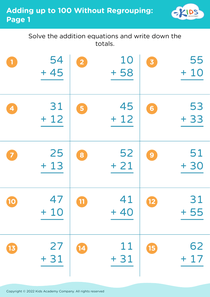
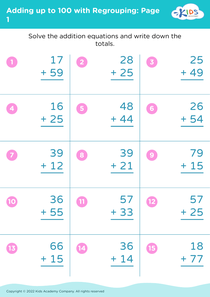
Number Recognition Adding up to 100 Misc Worksheets for 8-Year-Olds
8 filtered results
-
From - To
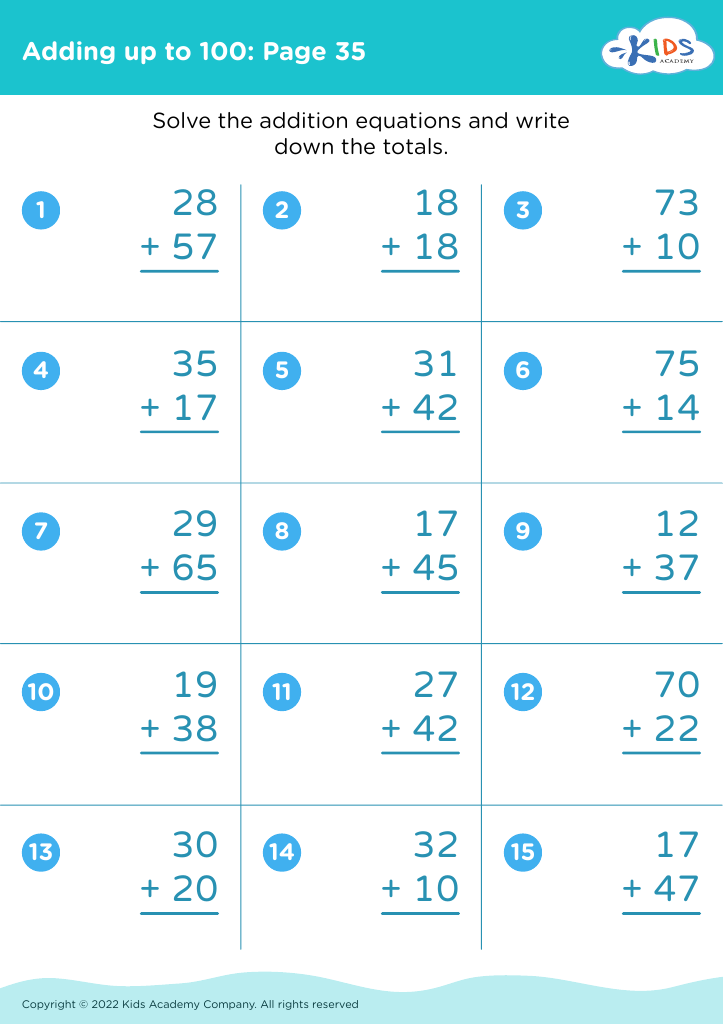
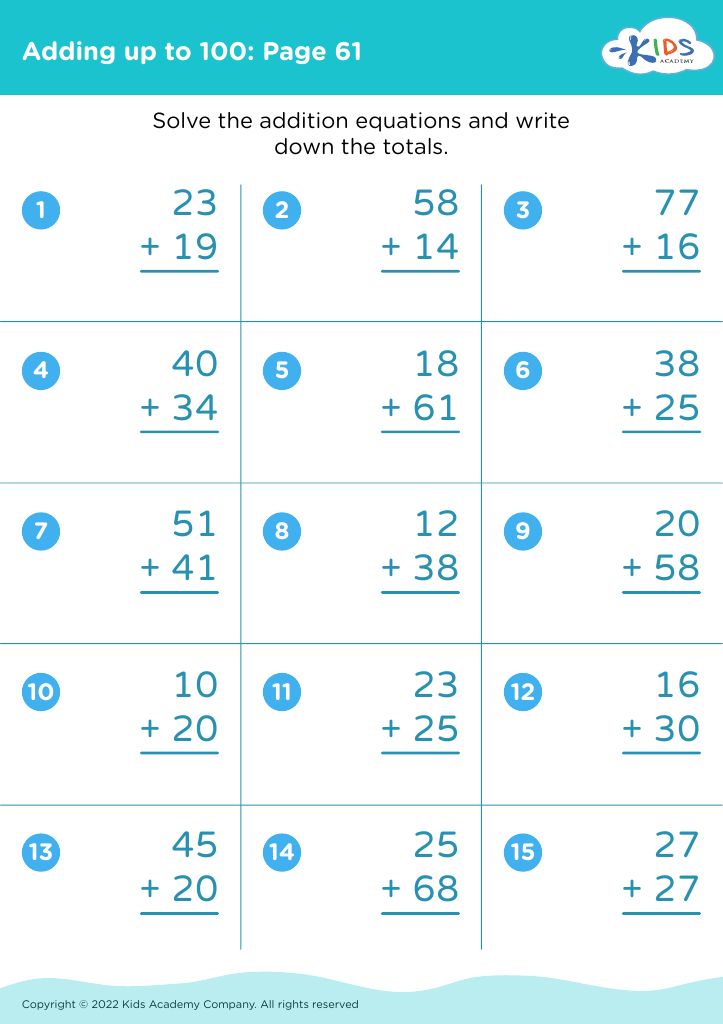
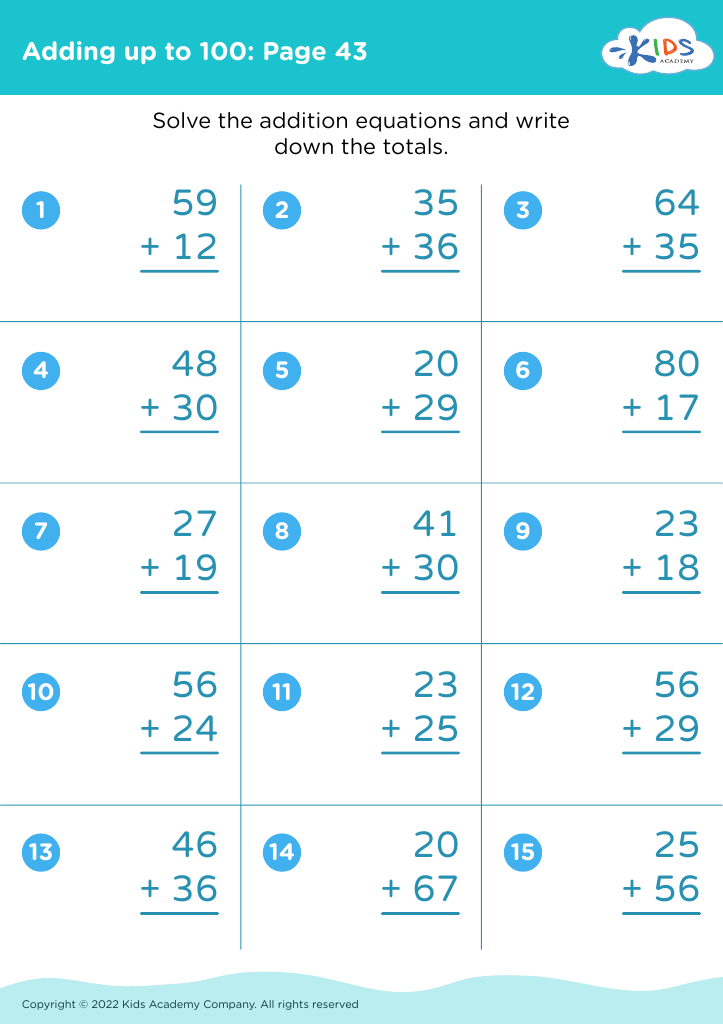
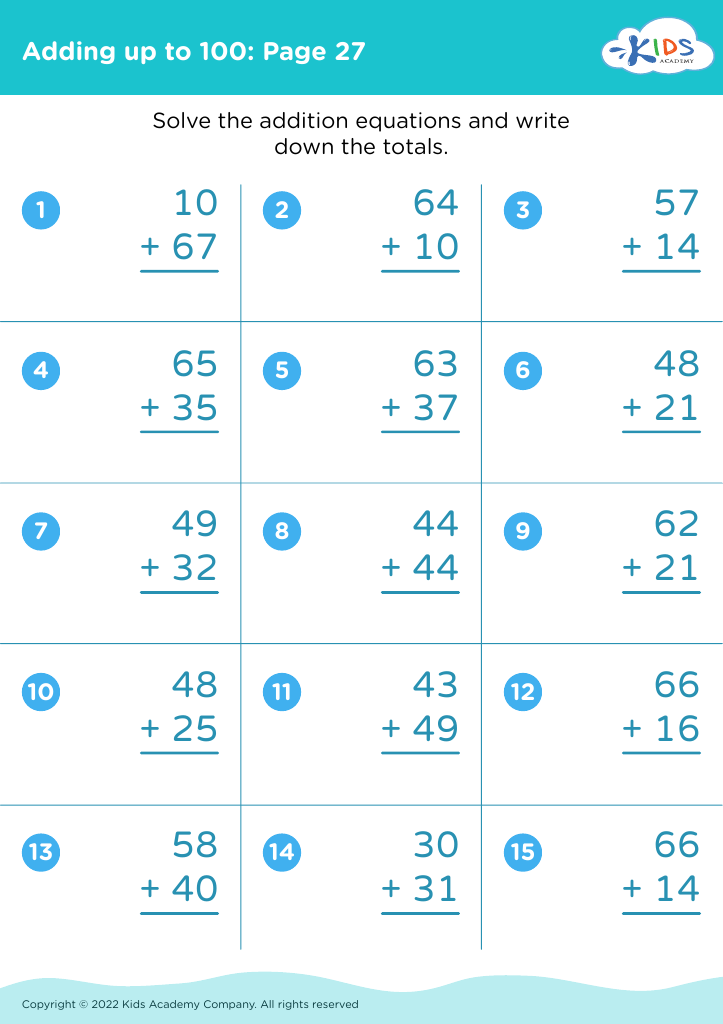
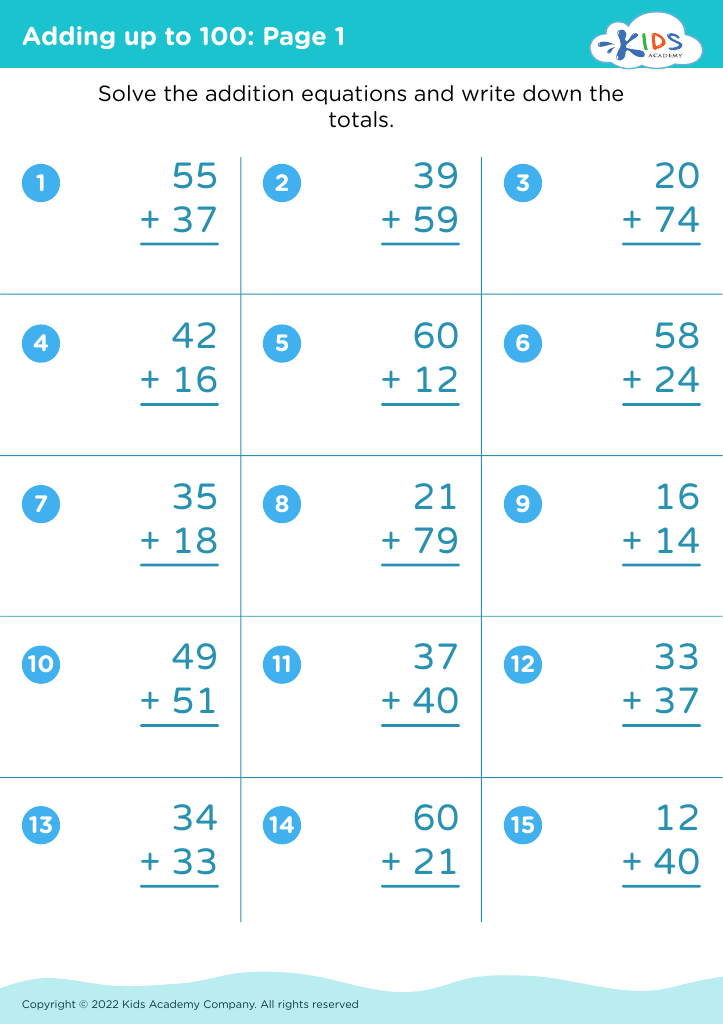
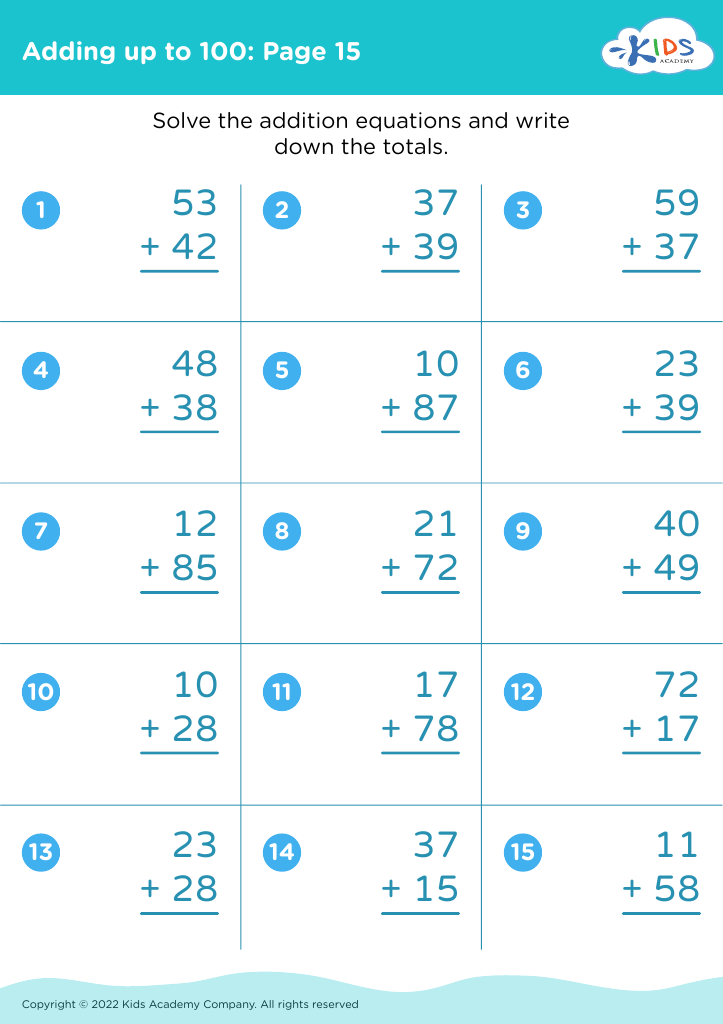
Explore our engaging Number Recognition Adding up to 100 Misc Worksheets, perfect for 8-year-olds! These worksheets are designed to help children master number recognition and develop their addition skills up to 100. Through fun exercises and interactive activities, kids will gain confidence and improve their math abilities, preparing them for more advanced concepts. Our printables feature vibrant visuals and varied challenges to keep young learners motivated and interested. Ideal for both classroom and home use, these worksheets offer an excellent resource for strengthening foundational math skills. Visit Kids Academy to download and give your child the gift of fun learning today!
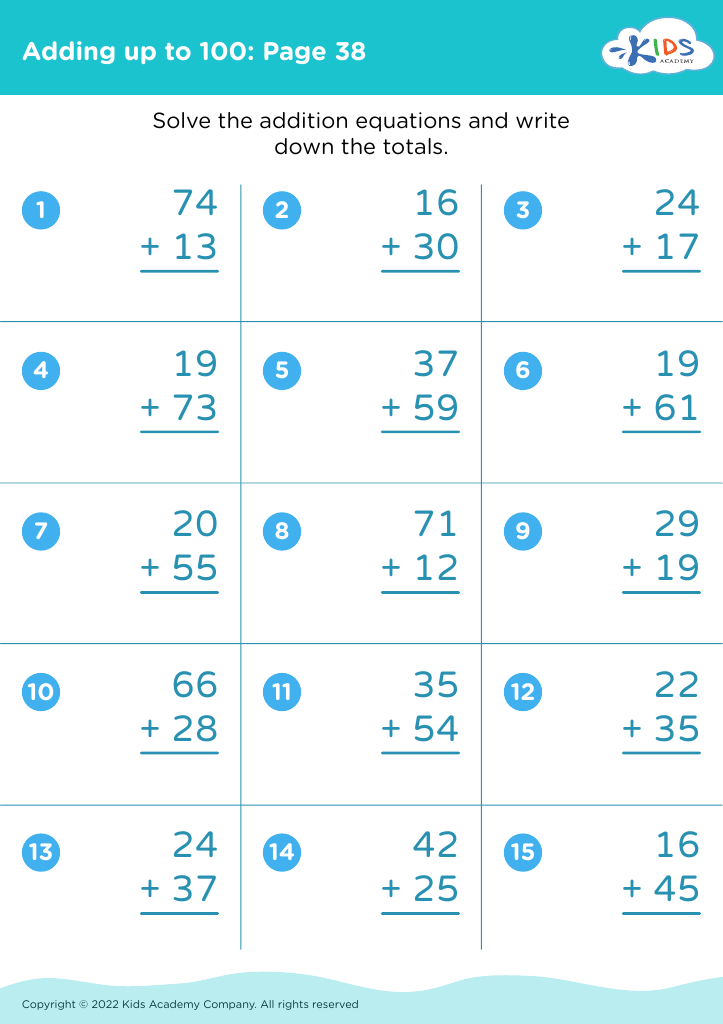
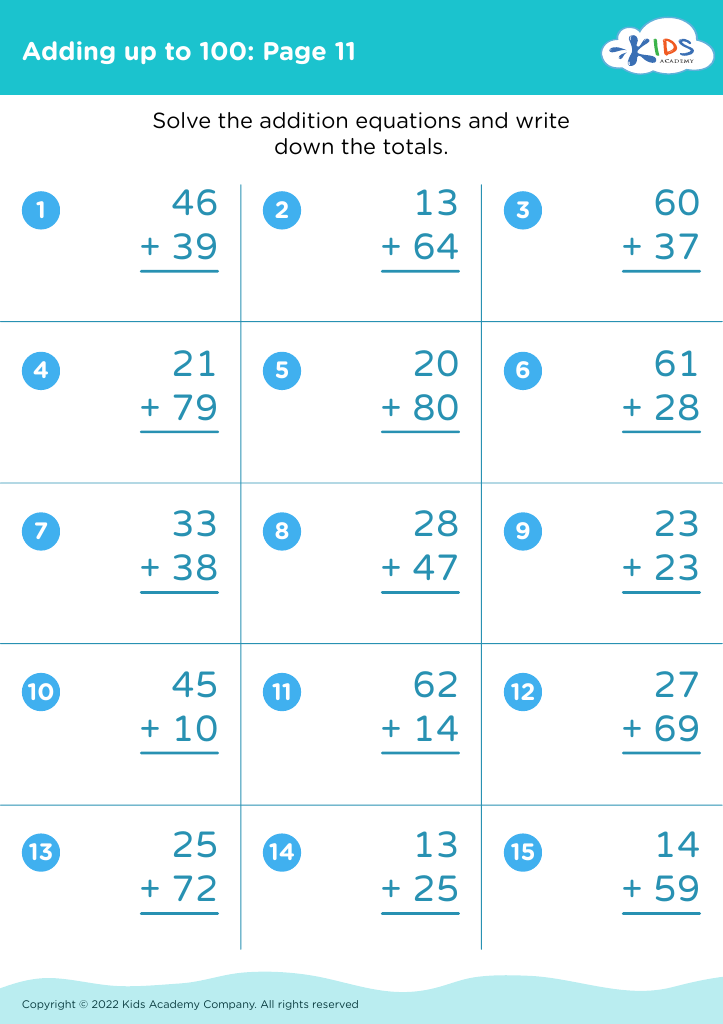


Teaching number recognition and basic addition up to 100 to 8-year-olds is crucial for several reasons. First, it builds a strong mathematical foundation. These skills are cornerstones for understanding more complex math concepts such as multiplication, division, and fractions. Without a firm grasp of basic number recognition, children may struggle with elementary math, jeopardizing their future academic success.
Second, competence in basic math boosts a child's confidence. When kids know that they can tackle math problems, they are more likely to approach other subjects with the same confidence, fostering a love for learning. Building these skills in a supportive environment reduces math-related anxiety, which is a common issue among students.
Additionally, understanding numbers and basic arithmetic enhances everyday problem-solving skills. From calculating the change while shopping to distributing snacks equally among friends, math is an integral part of daily activities. Children who are comfortable with these tasks are more likely to become independent, capable individuals.
Finally, strong math skills developed at an early age improve cognitive abilities such as logical thinking and pattern recognition. Parents and teachers should therefore prioritize number recognition and addition up to 100, as they significantly contribute to a child's well-rounded development and future success.